
Château La Lagune: Tasting every vintage from 2004 to 2017
There is a lot happening at this pioneer of organics and biodynamics among Médoc classified estates, says Jane Anson, who has tasted through more than a decade of La Lagune vintages.


It’s not always easy for Château La Lagune and the other four 1855 classified estates that are outside the major appellations.
The AOC Haut-Médoc on the label automatically seems to knock them down a level, even though in the mid-19th century there was no such thing as appellations.
La Lagune is a third growth estate in the 1855 Classification, and the highest ranked among this band of five Haut-Médoc estates. On paper, that also puts its above a host of the peninsula’s very biggest names, from Batailley, Grand Puy Lacoste and Dauzac to Pontet Canet and Lynch Bages, which are all fifth growths.
All of which makes it a sensible strategy of Caroline Frey, co-owner of La Lagune, to ensure that the estate stands out on its own terms.
Scroll down for Jane Anson’s Château La Lagune vertical tasting notes and scores
One of the most striking ways in which La Lagune does this is simply through Frey’s presence at the top of the estate, not just as co-owner but as qualified oenologist and winemaker. I would say this is an under-appreciated aspect.
She doesn’t live at La Lagune full-time, because she and the Frey family also owns properties in Burgundy, the Rhône and Switzerland.
But, she is involved in the technical side of winemaking in a way that is not the case with most owners of Bordeaux classified châteaux. Examples elsewhere would be Pauline Vauthier at Château Ausone and Annabelle Cruse-Bardinet at Château Corbin over in St-Emilion, although this is by no means an exhaustive list.
Frey is not just a qualified oenologist, she also continues to study and was back at school in Switzerland last year for training in geo-biology.
This is a field of research that explores the interaction between biological and environmental evolution, covering subjects such as how microbial life affects ecosystems; think soil and terroir. Frey has been using her interest to help make La Lagune stand out from its peers.
The property has been certified organic with Ecocert since the 2016 vintage, and is in its second year of biodynamic conversion through the Biodyvin programme.
Finding organic and biodynamic certified châteaux among the 1855 red wine names remains a minority sport, although La Lagune has good company in Latour, Palmer, Pontet Canet, Ferrière, Haut-Bages Libérale and Durfort Vivens.
Frey has taken this philosophy beyond the borders of her estate, with a full biodiversity programme that extends into the uncultivated lands in the area.

Today, around Frey’s wine estates in Bordeaux, Burgundy and the Rhône, there are 50ha of wildlife refuges, including 37ha here at the Jalles du Médoc that is classified for the protection of fauna and flora across forest, humid prairies, and streams.
A partnership with the bird protection group LPO (La Ligue pour la Protection des Oiseaux) sees tracking and annual inventories of insects, amphibians and birds.
‘We started off with 3ha of biodiversity zones around the edges of our vineyards,’ Frey told me this week from Switzerland, where she has been staying for much of the enforced lockdown, with special permits to visit her French vineyards.
‘We are now replanting trees among the vines themselves, as would have been seen in past centuries, to accommodate the local bat populations. Bats need trees to regulate their sonar navigation, and as they also hunt grape caterpillars, we wanted to give them a warm welcome.
‘We have a programme for planting an array of fruit trees and shrubs, because without trees the bats will stay away – the vine rows are not high enough for them to use.’
Other vineyard changes are more traditional. They have included raising canopy cover, and so vine posts, by 30cm between 2000 and 2003, to allow for better photosynthesis to help the grapes gain in tannins and anthocyanins, as well as sugar.
A current project is replacing copper use against mildew with forms of clay or algae, while another is isolating the natural yeasts found in the vineyard to identify which are best suited to fermentation.
The team also plans to field graft 1ha of rare varieties Castets and Manning Noir, which were seen in Bordeaux in the 19th century, although that has been pushed back a year because the current social distancing rules don’t allow for close work in the vineyard.
‘We are looking at future proofing our vineyard against a warming climate, and I am more interested in these ancient varieties than by resistant varieties created through hybrids,’ says Frey.
‘Many of the older varieties were abandoned because they didn’t ripen sufficiently, or had acidity that was too marked – both characteristics that would be interesting today.’
Fact file: Château La Lagune
Owned by: The Frey family since 2000, run by Caroline Frey.
Total plantings: 120ha. A single block of 95ha around the Château is used for the first wine and ‘Moulin de la Lagune’ Second wine: There is 25ha in Cussac, Médoc, that has been used for ‘Mademoiselle L’ since 2004.
Varietal plantings: 60% Cabernet Sauvignon, 30% Merlot, 10% Petit Verdot.
Age: One of the oldest estates in the Médoc. The village of La Lagune is mentioned in archives from 1525.
Team: Consultant Christophe Olivier, and biodynamic consultant Vincent Masson.
Environmental Programmes
– 2004 Sustainable agriculture
– 2008 ISO 14001
– 2013 Organic Conversion
– 2015 Certified High Environmental Value.
– 2016 First Certified Organic Vintage of Chateau La Lagune
– 2016 First Refuge of Biodiversity.
– 2018 Certification 9001
– 2021 Expected Certification Biodyvin
Before speaking to Frey, I mentioned on Twitter that I was doing this tasting, and the reply that most struck me was one asking if La Lagune was still a Médoc wine that tastes like a Graves.
My answer, and one that is borne out through the wines tasted here, is that it has the same balance and juicy frame that you find in the best Pessac-Léognans, but also the best Margaux.
You’re not going to find the massive swaggering tannins of a Pauillac here, nor the more powerful and sometimes rustic fruits that come from the more plentiful clays of St-Estèphe.
La Lagune, which is one of the closest classified estates to the city of Bordeaux, lies on one of the pure gravel terraces of the southern Médoc. Here, warm but fine and deep gravel is underpinned by clay but also by sand.
This accounts for the wine’s more stripped-back style in many ways, with floral aromatics emphasised in older vintages by a shorter ageing than some neighbouring estates; 12 months until quite recently, although this has now been extended.
There is clear depth and character to La Lagune, which generally contains one of the highest amounts of Petit Verdot in the 1855 ranking. That can make the wines seem pretty closed in their early years, with heavy spice, before the graceful character comes through.
La Lagune’s 12ha of Petit Verdot vines are unusual, propagated entirely by massal selection and on average 60 years old. They are recognised as so successful that the National Institute of Agricultural Research (INRA), has been working to produce a new clone from these vines to replace the current commercially-available clone, which can suffer from overly high yields.
Massal selection is part of the intelligent, thoughtful winemaking from Frey that makes La Lagune such an interesting estate to follow.
For me, the fact that she also makes wine in the Rhône, at Domaines Paul Jaboulet Ainé, and in Burgundy, at Château de Corton André, only increases the interest of what is happening here.
Experience in all three regions increases understanding and exchange, and I believe this also works for other châteaux, such as Latour with its estates in Burgundy, the Rhône, and Napa Valley.
Of the wines tasted here, the concentration and success of certain vintages is unmissable – notably the 2010, 2015 and 2016.
But, I was also happy to find more gentle victories in smaller vintages. On the 2004, for example, I noted its old school flavours of soft earth and cured leather, with brambly fruits.
In its quiet way, this wine showed exactly why Médoc classifieds can give so much pleasure for so many decades, without ever seeming to try too hard.
See Jane Anson’s Château La Lagune vertical tasting notes and scores
You may also like
Margaux vertical: Tasting 11 years of Château Cantenac BrownBordeaux 2019 vintage: Clues on what to expectPessac-Léognan: From Larrivet Haut-Brion to hidden gemsBiodynamic St-Emilion: Tasting a decade of Château Fonplégade wines
Château La Lagune, Haut-Médoc, 3ème Cru Classé, Bordeaux, France, 2004
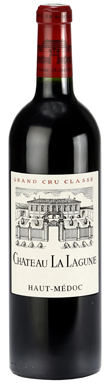

Pretty classic old school Médoc flavours here; soft undergrowth, earth and cured leather alongside soft brambly fruits with a lovely juicy finish. In a quiet...
2004
Château La LaguneHaut-Médoc

Château La Lagune, Haut-Médoc, 3ème Cru Classé, Bordeaux, France, 2005
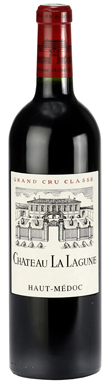
Much deeper in colour than the 2004, this is more concentrated than the previous vintage but still showcases elegant balance, and again is such a...
2005
Château La LaguneHaut-Médoc
Château La Lagune, Haut-Médoc, 3ème Cru Classé, Bordeaux, France, 2006
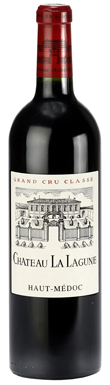
The 2006 La Lagune is delightfully fragrant on the first attack with abundant notes of sweet blackberry and mulberry with hints of fresh flowers and...
2006
Château La LaguneHaut-Médoc
Château La Lagune, Haut-Médoc, 3ème Cru Classé, Bordeaux, France, 2007
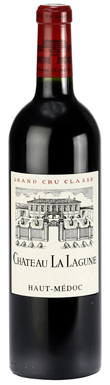
Surprising perhaps, but this is tasting better than the 2006 right now and was in fact one of the surprises of the lineup. It's extremely...
2007
Château La LaguneHaut-Médoc
Château La Lagune, Haut-Médoc, 3ème Cru Classé, Bordeaux, France, 2008
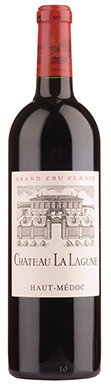
This has a lot in common with the 2006 in terms of its gentle construction that takes time to unfurl, and its slightly subdued character...
2008
Château La LaguneHaut-Médoc
Château La Lagune, Haut-Médoc, 3ème Cru Classé, Bordeaux, France, 2009
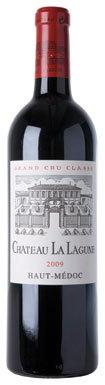
Softening and become ready to drink, with tobacco and earthy notes, seductive brambly fruits and a rich raspberry coulis. The warmth of the vintage is...
2009
Château La LaguneHaut-Médoc
Château La Lagune, Haut-Médoc, 3ème Cru Classé, Bordeaux, France, 2010
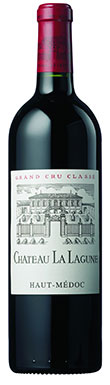
Brambled menthol and spice, this is elegant and juicy and has plenty of life ahead of it. Showcases the aromatic complexity that comes with age...
2010
Château La LaguneHaut-Médoc
Château La Lagune, Haut-Médoc, 3ème Cru Classé, Bordeaux, France, 2011
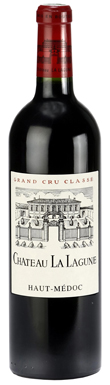
Once again an extremely drinkable 2011, with soft tannins, touches of liquorice and chocolate and soft leather. More evolved than the 2010 but I see...
2011
Château La LaguneHaut-Médoc
Château La Lagune, Haut-Médoc, 3ème Cru Classé, Bordeaux, France, 2012
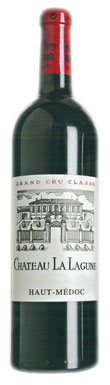
91
A great quality 2012, these are pretty serious tannins that are still very much on form, holding the cassis and bilberry fruit together, with clear black pepper and saffron notes filling out the mid palate. Packed with gourmet richness, a lovely wine. 50% new oak.
2012
Château La LaguneHaut-Médoc
Château La Lagune, Haut-Médoc, 3ème Cru Classé, Bordeaux, France, 2014
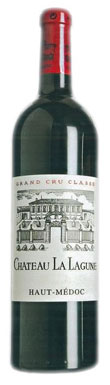
The 2104 is closed right now - it takes a good 15 minutes to really open, revealing an excellent wine with layers of liquorice and...
2014
Château La LaguneHaut-Médoc
Château La Lagune, Haut-Médoc, 3ème Cru Classé, Bordeaux, France, 2015
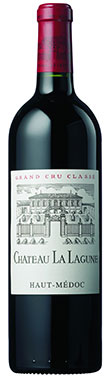
This showcases just how well the Margaux (or Margaux-adjacent) area did in 2015. The finessed quality of the tannins stands out as a signature of...
2015
Château La LaguneHaut-Médoc
Château La Lagune, Haut-Médoc, 3ème Cru Classé, Bordeaux, France, 2016
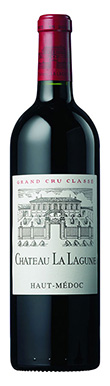
Classic in style, with savoury and spicy notes of leather, grilled meat and tobacco, countered by cherry, plum and pomegranate. Slightly chunky and dry, with...
2016
Château La LaguneHaut-Médoc
Château La Lagune, Haut-Médoc, 3ème Cru Classé, Bordeaux, France, 2017
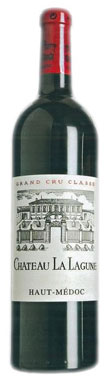
Classic balance of dark fruit with touches of oak and blue flowers. Powerful palate, spicy, rich and intense.
2017
Château La LaguneHaut-Médoc
