
Anson: Tasting Château Palmer wines across three decades
Read Jane Anson's report of the first Decanter virtual masterclass, held with the Margaux third growth estate's CEO, Thomas Duroux, and including a tasting of Palmer and Alter Ego wines.


This tasting of Château Palmer wines had originally been scheduled for the Decanter Fine Wine Encounter in London.
Instead, Decanter’s first virtual masterclass saw guests tuning in from Hong Kong, Romania, Estonia, USA, Canada, Greece, Italy, Netherlands, Belgium, the UK and beyond; a wonderful way to underline that, even if we are missing the in-person tastings, we can still find ways to connect around a glass of wine.
The two wines reveal different facets and personalities of Margaux terroir, but the tasting also showed the evolution of this Margaux 1855 third growth that easily sits among the very best estates of Bordeaux.
Scroll down for Jane Anson’s Château Palmer and Alter Ego tasting notes and scores
Taking us through the wines was estate CEO Thomas Duroux, who joined Palmer aged 34 in 2004 after making wine at Ornellaia in Tuscany, Domaine Pazjos in Tokaj and with Robert Mondavi in the south of France.
His wide-ranging experience has made him particularly well suited to the challenges of running a Bordeaux classified estate today, where there needs to be a careful balance between being respectful to traditions and heritage and being unafraid to innovate and evolve.
Château Palmer factfile
1855 classification: Third Growth
Total area under vine: 55 hectares, with 40% going to Château Palmer’s grand vin and another 40% for its second wine, Alter Ego. The remaining 20% changes between the two depending on vintage.
Owners: Mahler-Besse and Sichel families, co-owners since 1938.
Director / CEO: Thomas Duroux
History: Named after Major-General Charles Palmer, who bought the property (then Château de Gasq) in 1814. He was a member of the 10th Hussars and was in Bordeaux following the Battle of Orthez in the Peninsular Wars.
‘I started out back in 2004 by observing the first vintage and trying to understand,’ Duroux told us.
‘But I wanted to prove myself, and so asked the (winemaking) team to go deeper in extracting colour and tannins in the first few vats than they were used to do. After 48 hours of tasting the results I immediately saw that it was totally wrong, and stepped back.
‘For me that was a very good lesson for what you need to do when you arrive somewhere like Palmer. It takes time to understand the style of the place and of the wines. And that’s because it took 400 years to build.
‘That is one of the main differences with a place like Ornellaia, where so much was new. But at the same time, if you are just the keeper of history then you don’t go deeper into the interpretation of the place.
‘So after another three or four years I was able to slowly but surely to change little things, not to change the style or do my version of Château Palmer but to go deeper into the complexity of the place, and to put this into the glass. We do all we can to put this landscape in a glass of wine.’
There is no question that Duroux, working alongside owners the Sichel and Mahler-Besse families, has managed that.
This is not least by introducing organic and biodynamic farming across the vineyard. As of 2018, Palmer is fully certified in both and has taken a leadership role in showing how these iconic properties can safeguard the health of their terroir for future generations.
Palmer and Alter Ego compared
The tasting highlighted the differences between the estate’s two wines.
Watch the video of the Palmer virtual tasting
Alter Ego was known as ‘La Réserve de la Général’ until 1998.
‘This was the date of the name change, but the concept of today’s Alter Ego, that is built with a very specific philosophy, came around a decade later,’ Duroux said.
It was particularly instructive to see the evolution of Alter Ego when tasting the 1999 and 2009.
‘For Alter Ego we will do all we can to preserve the fruit character,’ said Duroux. ‘[We] make a harvest decision based on aromatic ripeness rather than tannic ripeness, then in the cellar we ferment at lower temperature, extract less, with a shorter maceration time.’
‘We take into account the terroir of specific plots for both wines, and at the end of the day 80% of what happens in the cellar is really orientated either to Palmer or Alter Ego, with the rest changeable depending on the year.
‘We try to make a wine for itself rather than the negative selection of what is not used for the other one.’
Palmer’s grand vin in contrast is picked for full tannic ripeness, which translates into structure, ageing ability and complexity. You see the difference in the glass in terms of its richer texture and its depth of expression.
While in this tasting the Alter Ego 2009 showed just how well the wine can age, it can begin to be approached after five years. The main estate wine of Château Palmer is really only beginning to open up at 10 years old.
This was an exceptional insight into the wines’ personalities, and an evening full of interesting asides – not least Duroux’s wine choices for Christmas.
‘I celebrated my 50th a few months ago,’ he told us. ‘My good friends have given me some good bottles from 1970 that I will be opening over the Christmas period; Palmer, Latour, Haut-Bailly, Lynch Bages and Giscours.
‘[We will also have] an Italian wine for dessert, Malvasia delle Lipari Passito from Nino Caravaglio from Salina island north of Sicily.’
See Jane Anson’s Château Palmer and Alter Ego tasting notes and scores
More articles by Jane Anson:
Comparing six Pomerol châteaux in every vintage from 2012 to 2017
Tasting Château Angélus wines from 2000 to 2009
Taking advantage of Bordeaux ‘off vintages’
Château Palmer, Margaux, 3ème Cru Classé, Bordeaux, France, 2015
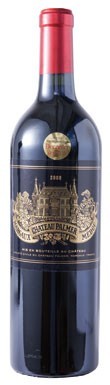

Six months from the last time I tasted this wine and it is a little more closed than it was, as the 2015s begin to...
2015
Château PalmerMargaux

Château Palmer, Alter Ego, Margaux, Bordeaux, France, 2015
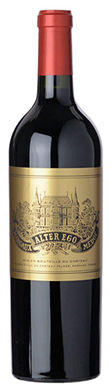
The first one of these three Alter Egos to have Petit Verdot in the blend and it works really well, adding a swirl of cinnamon...
2015
Château PalmerMargaux
Château Palmer, Margaux, 3ème Cru Classé, Bordeaux, France, 2009
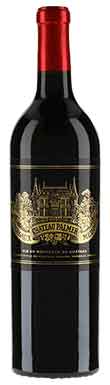
Bursting with potential for decades of enjoyment as it just hovers around its drinking window at 11 years old. Still extremely young, with fleshy black...
2009
Château PalmerMargaux
Château Palmer, Alter Ego, Margaux, Bordeaux, France, 2009
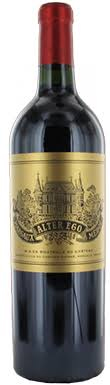
An enticing Alter Ego, that still has plenty of smoked grilled oak and a ton of upfront sweet liquorice root, blackberry and cassis fruits, along...
2009
Château PalmerMargaux
Château Palmer, Margaux, 3ème Cru Classé, Bordeaux, France, 1999
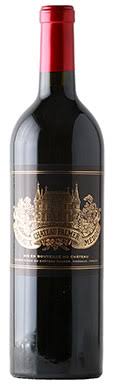
1999 was not an easy year for wine growers, but Palmer was seen right from the start as being one of the successes of the...
1999
Château PalmerMargaux
Château Palmer, Alter Ego, Margaux, Bordeaux, France, 1999
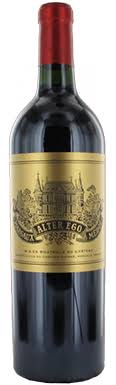
There is a high Merlot content in this Alter Ego, and it is fully integrated at this point with tertiary notes of cigar smoke, cinnamon,...
1999
Château PalmerMargaux
