
Criolla: 15 great buys from South America’s trailblazing family of grapes
South America’s Criolla varieties are carving a well-deserved space on the global stage, after years of being overlooked. Discover what makes them so exciting, then seek out our expert’s top buys.


The Criolla revolution of South America is still in its infancy – despite these being the oldest varieties on the continent.
It was only in 2007 that the first commercial export of País (also known as Criolla Chica and Mission) wine came from Chile, and momentum has slowly built since.
My editor generously allowed me to feature several wines not yet available internationally – it was still a nascent revival. Seven years on, the opposite is true: narrowing the list to just 15 wines was the real challenge.
Scroll down for a selection of criolla wines
Local roots

The Criolla renaissance is real – but its survival is far from guaranteed. Despite the renewed interest, these varieties are still disappearing at a rapid pace, unable to compete commercially with the consumer recognition and ready acceptance of Malbec or Cabernet Sauvignon.
Criolla varieties are South America’s native grape family.
While still largely absent from wine education and often overlooked as too niche, as I discovered during work for my Master of Wine thesis they make up more than 18% of Chile’s vineyards (according to the country’s national agricultural service SAG) and more than 30% of Argentina’s wine varieties (INV national viticulture institute), totalling more than 82,700ha – with at least 10,000ha more in production across Bolivia and Peru.
So, not quite as niche as some would suggest…
These varieties have always been big business for South America, and they built the foundations of the wine industry.
The early Spanish settlers principally brought Moscatel de Alejandría and Listán Prieto vines; and over a period of 500 years these crossed between themselves and evolved on the continent to form the Criolla family, a group of native varieties not planted anywhere else. Yet.
Research presented last year by Chile’s agricultural research institute INIA and Argentina’s INTA national institute of agricultural technology identified more than 100 distinct Criolla varieties in Chile and Argentina alone, and that is likely just the tip of the iceberg.
The Criolla varieties have long been valued for their high yields, but today they are also prized for their hardiness in the face of a changing climate – they are typically resistant to drought and disease, and climate-resilient. Not all are suited to fine wine, but many are proving their potential (see box).
País – the original

The three Criolla grapes that have driven the current quality revival are the red grape País and white grapes Torrontés and Moscatel de Alejandría.
País, also known as Criolla Chica in Argentina, Mission (US), Negra Criolla (Peru) and Misionera (Bolivia), is Spain’s Listán Prieto.
Alongside the internationally planted Moscatel de Alejandría (Muscat of Alexandria), it was among the first Vitis vinifera varieties to arrive in South America.
While there’s some debate about calling these Spanish imports ‘native’ or Criolla, to my mind their 500-year adaptation, selection and mutation on the continent justifies the label. Most winemakers agree.
With more than 10,300ha in 2022, País is Chile’s fifth most-planted variety. Argentina, Bolivia and Peru also have small but increasingly valued plantings.
País stands out for its deeper colour and firmer tannins compared with most pink or light red Criollas. (A recent crossing with Malbec, dubbed ‘Criolla #1’, may soon rival that claim, though.)
Handled with care – treated more like Pinot Noir than Cabernet Sauvignon – País nowadays produces wines that seduce with fine tannins, light body and distinctive notes of herbs, wildflowers and bramble fruit.
Know your Criollas: Five key varieties

País
Also known as: Criolla Chica, Mission, Listán Prieto Tastes like Wild herbs, red berries, florals and bramble.
Mostly produces: Medium-bodied reds
Main regions: Secano Interior Chile (Maule, Itata, Bío Bío), plus pockets in Argentina, Peru and Bolivia
Criolla Grande
Tastes like: Subtle notes of strawberries and cherry
Mostly produces: Light-bodied pinks and light reds
Main regions: Mendoza, San Juan
Torrontés Riojano
Tastes like: Jasmine, orange blossom, lychee, citrus
Mostly produces: Light-bodied whites
Main regions: Throughout Argentina
Pedro Gimenez
Also known as: Jiménez, Ximénez (but genetically different to Spain’s PX)
Tastes like: Subtle citrus, white flowers
Mostly produces: Light-bodied whites
Main regions: Mendoza, San Juan, Elqui
Moscatel de Alejandria
Also known as: Muscat of Alexandria
Tastes like: Aromatic and floral, although more savoury, earthy notes in Chile. Dried flowers, stone fruit
Mostly produces: Medium-bodied whites
Main regions: Secano Interior Chile, Peru, Bolivia
Local natives
These are already some of the most exciting reds in South America, which is no mean feat considering the variety has only been taken seriously for less than a decade.
Unlike País, Torrontés is genuinely native – a cross of Criolla Chica and Moscatel de Alejandría, it was born in Argentina (with some plantings beyond).
The name Torrontés stands for three different varieties: Torrontés Riojano, Sanjuanino and Mendocino.
Riojano is the most lionised, with 6,867ha in 2024 (according to INV – 80% of Argentina’s Torrontés) planted throughout Argentina’s wine regions. Its floral aromatics – jasmine, orange blossom, lychee – make it Argentina’s signature white.
Sanjuanino (15% of plantings) is increasingly used for skin-contact wines in San Juan – its lighter, more savoury aromatics and fuller body suit this style. Mendocino remains underwhelming, and scarce.
What Torrontés represents to Argentina, Moscatel de Alejandría is to Chile. Accounting for 3.8% of vineyards (some 5,280ha), it’s essential for the distillation of local spirit pisco and increasingly for wine.
In Itata and Bío Bío, producers such as De Martino, Miguel Torres and Roberto Henríquez are redefining the variety with savoury, structured whites – often aged in tinajas (locally made clay amphorae) and made with some skin contact.
Chile’s old-vine Moscatel often defies global expectations of the variety, and local massal selections (vines reproduced by taking cuttings from high-quality existing vine stock) are typically earthier, showing greater volume and acidity than fruity, light-bodied Moscatels found elsewhere.
Uniting nations

Criolla field blends are also common, especially in Criolla heartlands such as eastern Mendoza in Argentina and the Secano Interior of Chile.
In Peru, too, field blends of their famous pisco varieties (all Criolla) are more frequently being vinified as still wines, often with some skin contact, flor ageing or oxidative ageing.
In Bolivia’s ancient Cinti valley, vineyards are often co-planted not just with multiple grape varieties but with fruit trees and pink peppercorn trees (molle), which give a distinctive character and aromatic profile.
The revival of interest in these native varieties echoes movements happening around the world – from Georgia to Greece – and the Criolla wines of South America could become the continent’s most authentic voice. They offer a sense of place and heritage that is uniquely, and unmistakably, South American.
The 15 wines that follow represent the front line of that movement – a quality revolution that has been hard-fought but fast-paced. In another eight years, I suspect Criolla will be playing on an entirely new level…
[Sources: SAG annual report 2022; INV 2024]

You can pre-order Amanda Barnes MW’s forthcoming book (£35) on Criolla varieties at southamerica wineguide.com/criolla-book
A continent of flavours: Barnes’ pick of 15 Criolla wines to discover
Related articles
- Great Cabernets of South America
- South America newsletter: Sign up today
- The curious case of Carmenère in Italy
La Cayetana, Criolla Blanca, Mendoza, Argentina, 2022
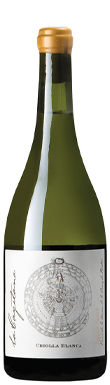

Pedro Giménez is one of the most-planted white grape varieties in Argentina, yet rarely appears on labels. This is one of the best examples of...
2022
La Cayetana

A Los Viñateros Bravos, Arbol Arriba, Itata Valley, Chile, 2022
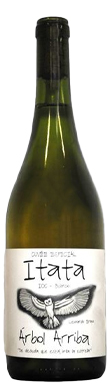
If you were to be told this is Chilean Torrontés, you’d never believe it. Leonardo Erazo’s wine is far more mineral and sinewy than any...
2022
A Los Viñateros Bravos
El Enemigo, Gran Enemigo Torrontés, Uco Valley, Gualtallary, Mendoza, Argentina, 2019
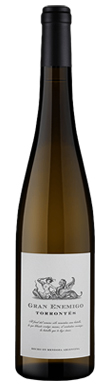
Perhaps the most surprising Torrontés you’ll ever taste. Aged in oak under a veil of flor, with more than five years of bottle age, and...
2019
El EnemigoUco Valley
Susana Balbo, Signature Barrel Fermented Torrontés, Uco Valley, Altamira, Mendoza, Argentina, 2024
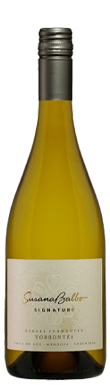
The ‘Queen of Torrontés’, Susana Balbo has never shied away from experimenting with this variety. She has become increasingly focused on the potential of new...
2024
Susana BalboUco Valley
De Martino, Viejas Tinajas Blanco, Itata Valley, Chile, 2022
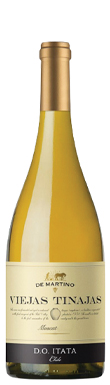
De Martino pioneered a revival in the use of ancient Chilean amphorae – tinajas – for both Cinsault and Moscatel de Alejandría. This 2022 is...
2022
De Martino
Lucas Niven, Criolla Argentina Naranjo de Moscatel, Mendoza, Argentina, 2022
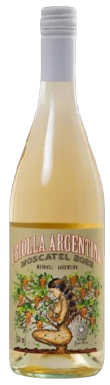
Lucas Niven is undoubtedly the most prolific Criolla producer out there in terms of the vast range of varieties and styles he makes. This orange...
2022
Lucas Niven
Ana Maria Cumsille, Aguila Vino de Parcela País Itata, Itata Valley, Chile, 2022
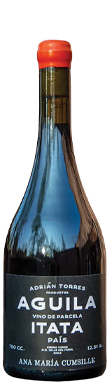
Ana María Cumsille is a long-time champion of the old vines of southern Chile and her grower series is one that really helps to put...
2022
Ana Maria Cumsille
Cara Sur, Parcela La Totora, San Juan, Argentina, 2021
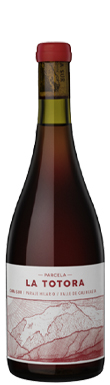
This is the top wine of Sebastián Zuccardi and Pancho Bugallo’s old-vine project in the heights of Barreal, north of Mendoza, where their centenarian vines...
2021
Cara Sur
J Bouchon, País Salvaje, Maule Valley, Chile, 2023
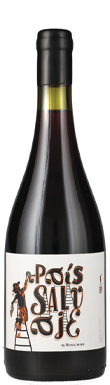
This was a landmark wine when it broke the rules of traditional País viticulture in Maule. The ‘vineyard’ for this wine overlooks a traditional plot...
2023
J Bouchon
Miguel Torres Chile, Millapoa, Bío Bío Valley, Chile, 2022
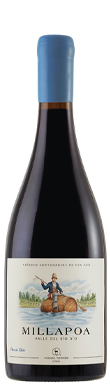
Miguel Torres Chile led the industry revolution for País in Chile and is still the largest producer of País in the world. Winemaker Eduardo Jordán...
2022
Miguel Torres Chile
Bayala Lavaque, Criolla Chica, Calchaquí Valley, Salta, Argentina, 2019
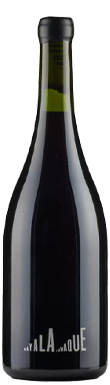
This could be one of the most expensive Criolla wines to date, but in my view it warrants its price. Made by Pancho Lavaque, a...
2019
Bayala LavaqueCalchaquí Valley
Cadus, Tunuyán Criolla Chica, Uco Valley, Mendoza, Argentina, 2023
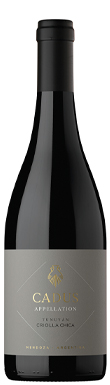
Santiago Mayorga was one of the first winemakers in a large winery in Argentina to take a risk in selling a wine labelled Criolla. He...
2023
CadusUco Valley
Matias Morcos, Criolla, Mendoza, Argentina, 2023
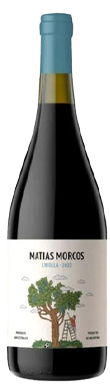
Third-generation Matías Morcos is a key figure in a growing group of young winemakers in eastern Mendoza who are reviving the fortunes of the plethora...
2023
Matias Morcos
Pedro Parra, Vinista País, Itata Valley, Chile, 2022
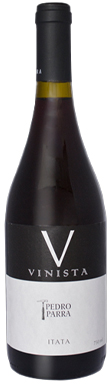
While soil scientist Parra, known as the terroir doctor, focuses mainly on Cinsault in Itata, this País from centenarian vineyards planted on granite and basalt...
2022
Pedro Parra
Mauricio Gonzalez, Pipeño Tinto, Bío Bío Valley, Chile, 2023
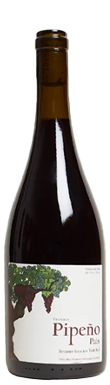
Mauricio Gonzalez and his wife Daniela embody the artisanal spirit of small producers in southern Chile, continuing the ancient tradition of making Pipeño – the...
2023
Mauricio Gonzalez
