
Cru Americana: 10 of America’s finest vineyards
As the American wine industry matures, its standout vineyards are beginning to, well, stand out. Here we encapsulate 10 of the nation’s most revered sites.


What does it take to turn a mere patch of vines into something truly extraordinary? In places such as France, the answer is as much political as it is cultural – think grands crus, the product of centuries of tradition and strict regulation.
In the US, however, no such hierarchy exists.
Yet, if greatness in wine truly begins with a profound sense of place, a vineyard so distinct and expressive that it imprints itself on every bottle, vintage after vintage, then America’s most compelling sites are slowly but surely asserting their case.
Not through formal classification, but through daring minds, patient hands, vibrant topography that communicates the character and dynamism of a region or place – or perhaps all of these combined.
Scroll down for notes and scores of 10 wonderful wines from America’s finest vineyards
‘Part of our strength is that there’s a lot of fluidity and still plenty of opportunity to observe the sites we already know more closely, refine our practices and discover smaller, lesser-known sites that are absolutely worthy but perhaps not yet recognised,’ says Ted Lemon winemaker and co-founder of West Sonoma Coast’s famed Littorai.
Among the vineyards that have risen to prominence across the US, the following 10 stand out for their distinctiveness and their growing reputations – consistently offering something unique, they have already earned themselves a place of significance in US viticulture…
Heintz
Sonoma Coast, California
Planted area 22ha

‘That vineyard holds acidity very well. It has this lovely, gradual, steady ripening quality,’ says Ted Lemon, highlighting why Heintz has become synonymous with the piercing acidity that has helped revive Californian Chardonnay in recent years – bright, lean and unapologetically fresh.
Located east of Occidental and about 10km from the Pacific, the vineyard sits in a sweet spot at the intersection of three different AVAs: Sonoma Coast, Russian River Valley and Green Valley. It seems to capture the best of all worlds – coastal fog, higher elevation (about 250m) and just the right amount of warmth to promote ideal ripening.
The site has been in the Heintz family for more than 100 years, dating back to 1912, but it was only planted with vines in the early 1980s, primarily using Wente clones. For years, the family mostly sold their fruit to large wineries.
Currently managed by Charles Heintz, a third-generation grower, the Heintz vineyard has quietly shifted focus, establishing contracts with smaller producers such as Littorai and Williams Selyem, and sparkling wine makers such as Ultramarine.
This transition has introduced a more hands-on approach to farming, block by block, moving away from high yields in favour of a craft that prioritises quality over quantity.
Hirsch
West Sonoma Coast, California
Planted area 29ha

The drive up Bohan Dillon Road in northern California hints at what awaits at the summit.
Right above the Pacific, rising from the marine fog at an elevation above 370m, the Hirsch vineyards rest where the Sonoma Coast meets wilderness. It’s a place of extremes, perched atop the San Andreas Fault – steep slopes, fractured and diverse soils, intense sunshine, high if erratic rainfall and winds that never quite settle.
Yet, against all odds, the wines from this site carry an enduring grace and a powerful elegance. ‘It’s a uniquely shaped piece of land,’ says Jasmine Hirsch, second-generation winemaker and daughter of David Hirsch, the land’s pioneer.
When David planted the first vines in 1980, he didn’t have a master plan – just a feeling that this remote, unruly land could produce something special.
After experimenting with Riesling, he received advice from his viticulturist friend Jim Beauregard, who was visiting from the Santa Cruz mountains, regarding the site’s potential for Pinot Noir.
Beauregard even gifted him cuttings – a mix of Pommard and Wädenswil clones, which have their origins respectively in France and Switzerland. And the rest, as they say, is history, with the vineyards now covering an area of 29ha (72 acres) across more than 60 blocks, all farmed individually.
‘There’s no great terroir without great ownership,’ says Ted Lemon, who has been the longest continuous purchaser of Hirsch fruit, starting back in 1994.
‘At Hirsch, you have all these different spurs and hilltops with varied orientations – something that wouldn’t necessarily make sense in a European, pre-climate change context. It’s David’s resolute stubbornness and his willingness to understand what suits the vineyard best that sets it apart.’
Las Piedras
St Helena, Napa Valley, California
Planted area 8.9ha

Las Piedras may not be the first vineyard that comes to mind among Beckstoffer Vineyards’ remarkable stable of renowned Napa properties, but if you ask around, many winemakers will say that it shows the most distinctive terroir of them all.
Acquired in 1983, Las Piedras (‘The Stones’) is part of Beckstoffer’s heritage vineyards collection. ‘It’s definitely the most individual in Beckstoffer’s lineup,’ says Matt Sands, winemaker at Lithology, who has been making wine from Las Piedras grapes since 2015. Andy Beckstoffer himself agrees, noting that many of his buyers consider it a ‘true grand cru’.
‘The idea of investing in terroir was risky, and I don’t want to take too much credit for it because it takes a village, but it worked out,’ reflects Beckstoffer.
Originally part of the Mexican land grants, it was the first vineyard in what is now the St Helena AVA and was initially planted to Mission grapes (País/Criolla, the earliest Vitis vinifera variety to be grown in the Americas).
Las Piedras is celebrated for its striking minerality, benefiting from the gravelly, loamy, alluvial soils, which provide good drainage and natural vine stress. The result is wines that consistently earn top scores, with 100-point ratings from leading producers appearing time and time again.
‘You get a mix of vibrant red and black fruits, deep concentration, an underlying earthiness and a distinct freshness with a mineral edge. It’s a captivating vineyard,’ Sands concludes.
Sanford & Benedict
Sta Rita Hills, Santa Barbara County, California
Planted area 60.7ha (20.6ha early 1970s original plantings)

Sanford & Benedict isn’t just part of the Sta Rita Hills story – it helped write some of its first chapters.
As the first site planted to Pinot Noir in Santa Barbara County, it set the stage for the region’s rise, with its influence stretching far beyond its vineyard rows and leaving an indelible mark on the wine world.
Planted own-rooted by Michael Benedict and Richard Sanford (first to Riesling and Cabernet Sauvignon in 1971, then to Pinot Noir and Chardonnay in 1973), the vineyard has provided cuttings that have spread widely across the region.
‘As Michael shared with me over the years, any time a neighbouring vineyard owner asked for cuttings, he was happy to share,’ says John Terlato, vice chairman of the Terlato Group, which purchased the vineyard in 2007.
Sanford & Benedict lies just 16km from the Pacific, where it’s enveloped in a cool, marine layer of air that tempers the relentless Central Coast sun, a delicate balance of brisk ocean breezes meeting sun-drenched afternoons. Its deep marine soils boast a remarkable water-holding capacity.
The legacy of Sanford & Benedict is not only rooted in its history but also in its boundless potential.
Terlato notes that even wines from the mid- to late 1970s still exhibit a ‘rare depth, precision and youthful vibrancy. The potential couldn’t have been more evident, and they still have a great deal of runway ahead,’ underscoring the vineyard’s remarkable ability to produce wines with exceptional longevity and character.
Savoy
Anderson Valley, Mendocino, California
Planted area 21ha

‘It’s the one right across from the hardware store,’ locals will say, reminding us that great terroir doesn’t always come with a view. ‘It’s nothing flashy, but the fruit is spellbinding,’ says Kenneth Juhasz, founder and winemaker at Auteur Wines.
If Savoy’s outward appearance doesn’t turn heads, its inner beauty – soil, climate, farming – has attracted people for decades and has helped elevate Anderson Valley to one of California’s top Pinot Noir regions.
The 21ha vineyard sits on a mix of valley floor and gentle southwest-facing slopes. It was first planted in 1991 by Richard Savoy, a true Burgundy devotee – often described as eccentric by those who know him.
Ted Lemon, who has been producing a Savoy Pinot Noir for Littorai (based further south at Sebastopol) since 1995 – dramatically influencing the site’s development – credits this to years of farming with organic methods, and the vineyard’s soil diversity and moderate climate.
‘To me, the wine reflects that same unassuming quality of the site,’ Lemon observes. ‘It’s never the flashiest wine we make, but it’s always among the wines that age the best.’
Vine Hill Ranch
Oakville, Napa Valley, California
Planted area 29ha

Vine Hill Ranch is Napa Valley’s backstage pass to some of the world’s most prized Cabernet Sauvignon – a source for some of Napa’s most prestigious winemakers, supplying grapes to labels such as Harlan’s Bond label, Colgin Cellars and other ‘cult’ Napa Cabs.
The blend of volcanic rock and loamy clay soils across seven distinct blocks, different clonal and rootstock combinations, and an east-facing exposure on the benchlands are just a few reasons this site has earned its well-deserved reputation in Napa Valley.
Though the estate has been farmed since the late 1800s, it was the Phillips family who truly cemented its reputation as a premier source of top-quality Cabernet Sauvignon, starting in the 1950s when Bruce Kelham, maternal grandfather of current owner Bruce Phillips, bought the property.
Replanting in the late 1980s – prompted by the damage wrought by phylloxera and guided by Bruce’s father Bob Phillips – reshaped the vineyard’s structure and solidified its commitment to Cabernet excellence.
‘This is a special place,’ says Bruce. ‘In a single vineyard, we capture the true Oakville character, from plush red fruit, vibrant acidity and silky tannins on the benchlands to deeper blue-fruited notes and more pronounced tannic structure as you move upslope. Along the forest perimeter, the wines develop a savoury complexity. It’s a remarkable expression of site, and we continue to evolve the farming with each vintage to honour it.’
Eyrie
Dundee Hills, Willamette Valley, Oregon
Planted area 4.5ha

In the history of American wine, few stories are as bold as that of Eyrie’s original vineyard in Oregon’s Dundee Hills.
Armed with hundreds of grape cuttings and a dream, then 25-year-old David Lett rolled into the Willamette Valley in 1965 and planted the first Vitis vinifera vineyard in the region – unknowingly setting the stage for what may just become the most revered place for American Pinot Noir.
‘When I look at the decisions my dad made at that time, being new to the region, about the best place to plant Pinot Noir here, it’s almost spooky how correct he was,’ says Jason Lett,
David’s son, second-generation grower and winemaker at Eyrie since 2005. The proof is in the vineyard, which has turned out to be a masterclass in precision – currently at 4.5ha, it rises from 80m to 125m and is framed by trees including oak, pine and a Douglas fir where red-tailed hawks nest every year, inspiring the vineyard’s name.
Intentionality has been Eyrie’s guiding principle all along. From the start, the vineyard was organically farmed (certified in 2013) – no irrigation, no herbicides, no shortcuts – long before sustainability was a buzzword in the wine world.
David’s commitment to showcasing the true potential of Oregon Pinot Noir through Eyrie has inspired a generation of growers and winemakers to pursue authenticity in viticulture. ‘Eyrie has this really magical interplay of earthy components, lyrical fruit and a lightness in colour – something that stays true from one vintage to the next,’ Jason says.
Cailloux
Walla Walla Valley, Oregon
Planted area 3.4ha

Cailloux makes a bold first impression, much like vigneron Christophe Baron. When he planted the 4ha plot near Milton-Freewater city in 1997, local scepticism ran high, but Baron’s defiance drove him forward. ‘They called me crazy. Well, they still do,’ he jokes.
Cailloux’s ground is covered with stones (hence the name, from the French); the vines seem to wrestle their way through these cobbles, embodying a struggle that has become the vineyard’s signature.
While there is a little Cabernet Sauvignon (two acres, or 0.8ha) and half as much Viognier, it’s primarily planted with Syrah, which produces wines that are intensely earthy, savoury and unmistakably unique – ‘funky’, many would say. ‘If you want to create a great wine, you must start with a great foundation, a great terroir.
After that, it’s all about how you treat the site,’ explains Baron, who has been farming Cailloux organically since the beginning and pioneered biodynamic practices in Walla Walla in 2002 (certified since 2004).
‘I never used forces of death in my vineyard,’ he adds, referring to herbicides, fungicides and pesticides. ‘He’s created something truly unique. The wines from Cailloux are built to last. It’s undoubtedly a piece of American wine history,’ reflects Linda Milagros, wine director at fine-dining destination Canlis in Seattle.
Boushey
Yakima Valley, Columbia Valley, Washington
Planted area 65ha

Boushey makes a compelling case for the idea that terroir is as much about the hands that shape it as the land itself.
Dick and Luanne Boushey planted their first vines in 1980 on a site that’s layered with silt loam, windblown loess and ancient flood deposits over fractured basalt, all in one of the cooler corners of the Yakima Valley AVA.
Sure, the geology, coupled with the moderate temperatures of the south-facing slopes of the Rattlesnake hills, add to the site’s complexity, but it’s undoubtedly Dick’s unwavering dedication, over a period of more than four decades, that makes Boushey, well, Boushey.
Over the years, the site has earned a reputation for producing some of Washington’s finest Syrahs. The farming appears to be marked by a profound ‘sensitivity to the vines’. ‘He connects with the vines almost on an emotional level,’ observes James Mantone, winemaker at Syncline Winery.
Boushey produces distinctly different fruit from that of the surrounding vineyards – with an elegant umami and cream profile.
‘It’s not as if he’s farming in just one type of soil,’ Mantone continues. ‘As you go up behind his house, you encounter gravelly soils; as you come down, you find more loamy soils. Yet, despite that variation, there’s a consistency – a sort of “Bousheyness”.
Magdalena
Seneca Lake, Finger Lakes, New York
Planted area 5.9ha

The consistent quality of Magdalena vineyard – driven by organic farming and currently transitioning to biodynamics – only strengthens its growing reputation. Magdalena reliably produces wines of distinction and character, regardless of the year’s conditions.
Magdalena’s location on Seneca lake, on a 60ha property about 800m from its western shore, is pivotal to its success.
‘When we started to explore sites in the Finger Lakes, it was based on how warm the site was – not only ripening, but also how warm it is in the winter,’ explains Oskar Bynke, co-owner of Hermann J Wiemer Vineyard. ‘The lake’s airflow protects the vines from frost, making it both a warm site for winter and a ripe one for growing – an ideal combination.’
Planting began in 1999 with Riesling, Chardonnay and Pinot Noir, followed by Gewürztraminer, Lemberger and Cabernet Franc. The site is now emerging as a standout vineyard for the last of these.
‘The intense afternoon sun, along with the 327 clone of Cabernet Franc – originally from Bordeaux – leads to a more refined profile, highlighting red fruit and floral notes rather than just ripeness,’ says Allison Slute, founder of the Cab Franc Chronicles substack. ‘This unique combination really sets the site apart.
10 wonderful wines from America’s finest vineyards
Related articles
- North America newsletter: Sign up today
- AI may help Napa wineries adapt to ‘climate chaos’
- Decanter’s insiders picks: Five special wines to look out for at DFWE New York
Ultramarine, Heintz Vineyard Blanc de Blancs Brut, Sonoma Coast, California, USA, 2019
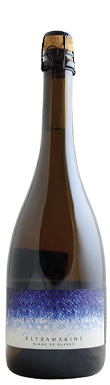

<p>The terroir-focused sparkling wine label co-owned by Michael Cruse, also of Cruse Wine Co. is bright and crisp, showcasing the Heintz vineyard's signature acidity. The...
2019
UltramarineSonoma Coast

Arnot-Roberts, Sandford & Benedict Vineyard Chardonnay, Santa Barbara County, Sta Rita Hills, California, USA, 2023
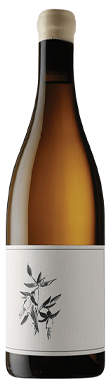
Classic aromas of pear, honey and citrus, enhanced by briny salinity and flavours of dried seaweed that lead to a slightly savoury finish. Medium-bodied, with...
2023
Arnot-RobertsSanta Barbara County
Eyrie Vineyards, South Block Reserve Pinot Noir, Willamette Valley, Dundee Hills, Oregon, USA, 2019
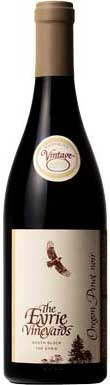
The 2019 bottling from Oregon's most hallowed vineyard ground is a stunning display from the most recent cool vintage in the Willamette Valley. Fresh-cut strawberries,...
2019
Eyrie VineyardsWillamette Valley
Hirsch Vineyards, Raschen Ridge Pinot Noir, West Sonoma Coast, California, USA, 2022
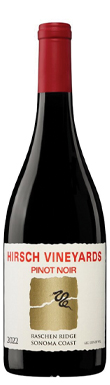
Incredibly vibrant while also offering a sense of ease and finesse. Expressive tannins play nicely with juicy fruit flavours. Bold flavours of blood orange and...
2022
Hirsch VineyardsWest Sonoma Coast
Cayuse Vineyards, Cailloux Vineyard Syrah, Columbia Valley, Walla Walla Valley, Oregon, USA, 2021
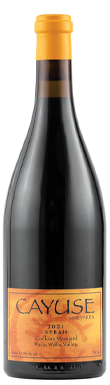
Meaty undertones, roasted nori and black olive brine, all colliding with effusively lifted red fruit. The palate shows a concentration of black fruits, briny smoked...
2021
Cayuse VineyardsColumbia Valley
WT Vintners, Boushey Vineyard Syrah, Columbia Valley, Yakima Valley, Washington, USA, 2021
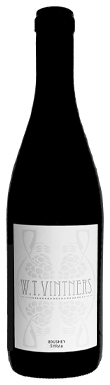
Gorgeous florals marked by dried lavender and smoky violets with mulberries and fresh mint notes. The palate brings signature Boushey, marking the wine with a...
2021
WT VintnersColumbia Valley
Littorai, Savoy Vineyard Pinot Noir, Mendocino County, Anderson Valley, Sonoma Coast, California, USA, 2022
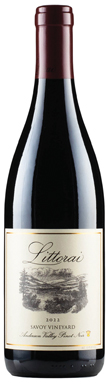
The 22-barrel sample of Savoy shows great berry and herbal character. It finishes wonderfully with mint, anise and thyme. Savoy was planted in the early...
2022
LittoraiMendocino County
Tor, Vine Hill Ranch Vineyard Cabernet Sauvignon, Napa Valley, Oakville, California, USA, 2022
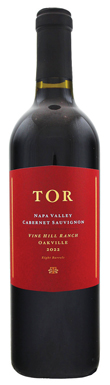
A nicely aromatic wine, it leads with high-toned rose petals, sagebrush and a hint of brandied cherry. Medium- to full-bodied, it boasts assertive tannins with...
2022
TorNapa Valley
Lithology, Beckstoffer Las Piedras Vineyard Cabernet Sauvignon, Napa Valley, St Helena, California, USA, 2022
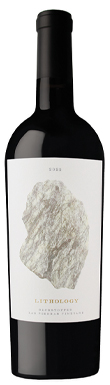
Wonderfully unctuous, full and expressive. Easygoing red- and black-toned fruit lays the foundation, framed by fine, velvety tannins with a distinct cacao-powder texture. Ultra-fine and...
2022
LithologyNapa Valley
Hermann J Wiemer, Cabernet Franc Magdalena Vineyard, Finger Lakes, New York State, USA, 2022
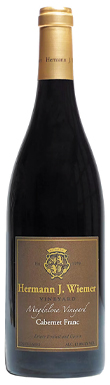
A compelling Finger Lakes Cabernet Franc from a 1ha block of Hermann J Wiemer’s Magdalena vineyard. Dried herbs and cracked pepper on the nose. The...
2022
Hermann J WiemerFinger Lakes
Ultramarine, Heintz Vineyard Blanc de Blancs Brut, Sonoma Coast, California, USA, 2019
<p>The terroir-focused sparkling wine label co-owned by Michael Cruse, also of Cruse Wine Co. is bright and crisp, showcasing the Heintz vineyard's signature acidity. The...
2019
UltramarineSonoma Coast
Arnot-Roberts, Sandford & Benedict Vineyard Chardonnay, Santa Barbara County, Sta Rita Hills, California, USA, 2023
Classic aromas of pear, honey and citrus, enhanced by briny salinity and flavours of dried seaweed that lead to a slightly savoury finish. Medium-bodied, with...
2023
Arnot-RobertsSanta Barbara County
Eyrie Vineyards, South Block Reserve Pinot Noir, Willamette Valley, Dundee Hills, Oregon, USA, 2019
The 2019 bottling from Oregon's most hallowed vineyard ground is a stunning display from the most recent cool vintage in the Willamette Valley. Fresh-cut strawberries,...
2019
Eyrie VineyardsWillamette Valley
Hirsch Vineyards, Raschen Ridge Pinot Noir, West Sonoma Coast, California, USA, 2022
Incredibly vibrant while also offering a sense of ease and finesse. Expressive tannins play nicely with juicy fruit flavours. Bold flavours of blood orange and...
2022
Hirsch VineyardsWest Sonoma Coast
Cayuse Vineyards, Cailloux Vineyard Syrah, Columbia Valley, Walla Walla Valley, Oregon, USA, 2021
Meaty undertones, roasted nori and black olive brine, all colliding with effusively lifted red fruit. The palate shows a concentration of black fruits, briny smoked...
2021
Cayuse VineyardsColumbia Valley
WT Vintners, Boushey Vineyard Syrah, Columbia Valley, Yakima Valley, Washington, USA, 2021
Gorgeous florals marked by dried lavender and smoky violets with mulberries and fresh mint notes. The palate brings signature Boushey, marking the wine with a...
2021
WT VintnersColumbia Valley
Littorai, Savoy Vineyard Pinot Noir, Mendocino County, Anderson Valley, Sonoma Coast, California, USA, 2022
The 22-barrel sample of Savoy shows great berry and herbal character. It finishes wonderfully with mint, anise and thyme. Savoy was planted in the early...
2022
LittoraiMendocino County
Tor, Vine Hill Ranch Vineyard Cabernet Sauvignon, Napa Valley, Oakville, California, USA, 2022
A nicely aromatic wine, it leads with high-toned rose petals, sagebrush and a hint of brandied cherry. Medium- to full-bodied, it boasts assertive tannins with...
2022
TorNapa Valley
Lithology, Beckstoffer Las Piedras Vineyard Cabernet Sauvignon, Napa Valley, St Helena, California, USA, 2022
Wonderfully unctuous, full and expressive. Easygoing red- and black-toned fruit lays the foundation, framed by fine, velvety tannins with a distinct cacao-powder texture. Ultra-fine and...
2022
LithologyNapa Valley
Hermann J Wiemer, Cabernet Franc Magdalena Vineyard, Finger Lakes, New York State, USA, 2022
A compelling Finger Lakes Cabernet Franc from a 1ha block of Hermann J Wiemer’s Magdalena vineyard. Dried herbs and cracked pepper on the nose. The...
2022
Hermann J WiemerFinger Lakes
