
Dauvissat: The wizard of Chablis
Charles Curtis MW takes a visit to Domaine Dauvissat to meet the sprightly Vincent Dauvissat, who crafts magical Chablis from his exceptional terroirs.

A quick glance at Vincent Dauvissat, and one might be forgiven for suspecting that he is a wizard.
This impression is reinforced by his tall, thin frame, crown of white hair, and twinkling eyes.
With notes and scores for 12 vintages of Domaine Vincent Dauvissat below
He does, in fact, work magic with his wines, coaxing each year a sublime range from his admirable holdings in Chablis.
His skill is remarkably consistent, through good years and less good, and the wines are at the top of the pyramid in Chablis and among the best white wines made anywhere.
His skill alone would merit admiration, but he is also among the most generous winemakers that I know, often pulling an old bottle from a bin in the corner to illustrate a point in our discussion.
In this way I have been offered over the years precious bottles that date as far back as 1989 that demonstrate the longevity of his lovely wines.
Estate history
The domaine was founded Vincent’s grandfather Robert in the 1920s. Robert was among the first to bottle his Chablis at the domaine in 1931.
His father René (brother-in-law to François Raveneau) began to work at the domaine in 1950, during the difficult years after the war when Chablis was at its nadir.
In the 19th century the greater region around Auxerre was roughly 40,000 hectares, shipping mostly ordinary wine to Paris for daily consumption.
This wide swathe of plantings collapsed after phylloxera, the Great Depression, and two World Wars. By 1955 the entire region was just 500 hectares.
It was a challenging time for Chablis, yet René Dauvissat was successful in building a powerhouse domaine that would endure for future generations.
Sales of Chablis worldwide started to take off after the 1960s, and plantings began to increase.
This was driven in part by more sophisticated frost control, disease prevention through modern pesticides, and fertilizers, which enabled the region to produce at high levels.
But it took a toll on the quality of the wines.
Vincent started to work with his father in 1976 and took over responsibility completely in 1979.
He eschewed the prevailing trends of his generation and has run his domaine using organic and biodynamic principals since 2002.
He is enough of an iconoclast, however, to eschew official certification as well.
He was joined full time in 2013 by his son Ghislain and his daughter Etiennette, although they had worked at the domaine for years already.
Organic instincts
‘Organic is a personal choice,’ he has told me more than once, ‘I don’t do it for anyone else,’ going on to add: ‘The [biodynamic] practices are followed with the utmost care.’
In the vineyard he uses his instincts: ‘The most important thing is not to listen to anyone.’
He sorts meticulously, so that even in a relatively healthy year such as 2023 he reported 15% losses due to mildew and sour rot.
In a seriously difficult year such as 2024, however, yields can be catastrophically small.
Because of his devotion to organic practices, he lost 90% of his production and did not harvest anything in his 1.4 hectares of Les Clos.
He said: ‘The heavier marl and clay soils soaked up the water and the mildew exploded.’
The year was also a complete loss in Petit Chablis and Montée de Tonnerre.
Gut instincts
Once the grapes are in the winery, he continues to take his own counsel.
‘I never look at the level of malic. That’s for oenologues,’ he declares.
Yet the balance of the resulting wines is exquisite.
Like many winemakers in Chablis, he was obliged to chaptalise in 2024.
But, he notes: ‘Once I brought it up 0.5 degrees, and then the balance was just like 2014.’
The grapes are pressed as whole bunches in a pneumatic press and vinified in enameled steel tanks (and a small percentage in new casks) before ageing in casks, both old and new.
No sulfur is added until after malolactic conversion when the wines are racked to tank before bottling.
The lie of the land
Domaine Vincent Dauvissat farms just over 12ha of vines. This includes a hectare of Petit Chablis, located on the Portlandian capstone of the grand cru slope.
There are just over 3ha of village-level Chablis spread across four parcels, including several that face premier cru Forêts facing north-west.
He blends this with a small amount of the premier cru Troëmes (part of the larger Beauroy cru). Both are located on the left bank of the Serein, in the heart of the Chablis appellation.
The most important holding among the premier crus is Forêts, which he spells ‘La Forest’ on the label.
He owns 3.7ha of vines here, spread over seven principal areas. Forêts is part of the larger umbrella appellation of Montmains, but at Dauvissat it is always singled out.
Forêts is a moderately steep part of the hill at its centre. Meanwhile, lieu-dit Montmains itself lies southwest of Forêts at a higher elevation.
It is much larger and is located at the northern edge of the hill as it slopes down toward the Serein and Butteaux (also a subdivision of Montmains).
North of Montmains is Vaillons, closer to the village of Chablis itself. As with the latter, Vaillons is composed of several different lieux-dits, and is the largest of the umbrella appellations on the left bank.
Dauvissat has 1.4ha of vines devoted to his Vaillons bottling, although only 1.1ha are currently in production.
These parcels are located in the lieux-dits of Chatains and Beugnons. The grapes are from 60-year-old vines in deeper marl soils.
Another subdivision of Vaillons is the lieu-dit Sécher, where Dauvissat has another 0.4ha of vines that were planted in 1972 (he spells the name ‘Séchet’).
He explains that the soils are thinner here and give a wine of great finesse and delicacy which is why he bottles these grapes separately.
Across the river
On the other side of the river Serein Dauvissat farms 0.30ha of Montée de Tonnerre in a single parcel planted in 1960 and partly replanted in 1972.
Although the Right Bank of the Serein is thought to produce more powerful, structured wines, Dauvissat explains: ‘We’re in the [lieu-dit] Côte de Brechain and not on the marl soils – we have more limestone pebbles, and a south-west exposition. We are not really in the heart of the appellation.’
The grand cru holdings of the domaine are the pride of the estate. There is a single 0.8ha block of Les Preuses planted in 1970.
It lies up the slope from the holdings of William Fèvre just below La Moutonne and the Vaudésir valley.
It boasts a south-facing exposition and marl soils that have more pebbles and less clay than the slopes of Les Clos.
The result is a wine that is perhaps less powerful but more elegant than Les Clos, and is consistently among my favourites from this domaine.
It is without question, however, Dauvissat’s 1.4ha of Les Clos that produce his most sought-after wine.
Most of the vines are at the top of the slope, interspersed with those owned by William Fèvre, but he also owns a parcel at mid-slope nearer the border with Blanchot.
The blend of these four parcels produces one of the greatest wines of Chablis.
The wines
The Dauvissat style is elegant and discreet. These are wines of great finesse, yet they do not lack in concentration.
The Petit Chablis is a fine introduction to the region, and the village bottling is a delicious representation of the classic racy left bank terroir.
Each of the four premier crus continue this style, but with a distinct expression of place, while the grand crus are the fullest expression of the house style.
The wines a contrast to the powerful wines produced by the other leader of the region, Domaine Raveneau.
The two styles are both delicious and both age well. Both rank at the highest level of white Burgundy.
Domaine Vincent Dauvissat, however, will always remain a touchstone for those who appreciate wines of finesse, elegance, and precision.
Domaine Vincent Dauvissat:
Related articles
- Chablis 2023: Vintage Report
- Collector’s Guide: White Burgundy
- Domaine Ravenau: Chablis’ greatest wine
Domaine Vincent Dauvissat, Chablis, Les Preuses Grand Cru, Burgundy, France, 1996
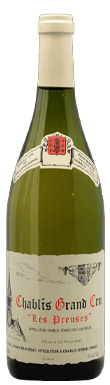

Vincent Dauvissat remarks that 1996 might be the 'vintage of a lifetime' in Chablis, and his Preuses is undoubtedly among the best I have had....
1996
Domaine Vincent DauvissatChablis

Domaine Vincent Dauvissat, Chablis, Les Clos Grand Cru, Burgundy, France, 1998
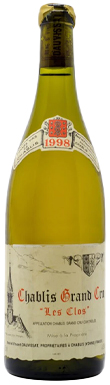
Having just passed the quarter-century mark, the 1998 Les Clos is just now starting to reveal its potential. The bouquet ranges from apricots, nectarines and...
1998
Domaine Vincent DauvissatChablis
Domaine Vincent Dauvissat, Chablis, 1er Cru Forêts, Burgundy, France, 1990
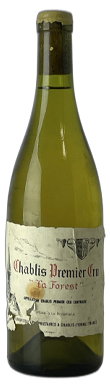
This remains stunning after 35 years in the cellar, with notes of apricot, toasted hazelnuts, cocoa and a hint of butter. The texture is ripe,...
1990
Domaine Vincent DauvissatChablis
Domaine Vincent Dauvissat, Chablis, Les Clos Grand Cru, Burgundy, France, 2023
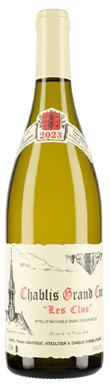
This was relatively closed out of barrel – imposing and powerful, but not seductive. A year after bottling, it has blossomed into stupendous wine with...
2023
Domaine Vincent DauvissatChablis
Domaine Vincent Dauvissat, Chablis, 1er Cru Montée de Tonnerre, Burgundy, France, 2011
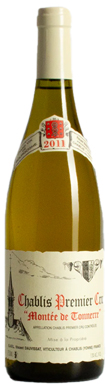
A profoundly mineral nose, although it is not lacking in fruit expression, with a suggestion of lime peel, nectarine and passion fruit. There is a...
2011
Domaine Vincent DauvissatChablis
Domaine Vincent Dauvissat, Chablis, Burgundy, France, 2010
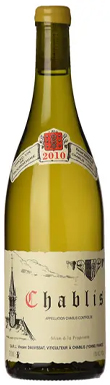
Surprisingly youthful. The aromas are initially somewhat shy, but opens on the palate with notes of lemon peel, greengage plums and an almost pungent, flinty...
2010
Domaine Vincent DauvissatChablis
Domaine Vincent Dauvissat, Chablis, 1er Cru Forêts, Burgundy, France, 2018
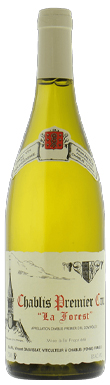
Forward, lush aromas of melon, guava and ripe apricots touched with honey. The texture is voluptuous, full in body, just enough acidity and a substantial...
2018
Domaine Vincent DauvissatChablis
Domaine Vincent Dauvissat, Chablis, 1er Cru Montée de Tonnerre, Burgundy, France, 2023
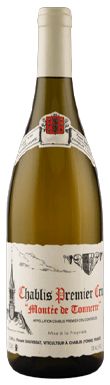
A seductive texture and an exotic appeal, with aromas of ripe Cavaillon melon and spice. The texture is rich but not overly so, and there...
2023
Domaine Vincent DauvissatChablis
Domaine Vincent Dauvissat, Chablis, 1er Cru Vaillons, Burgundy, France, 2015
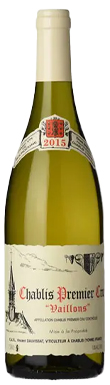
Warm vintage, warm terroir, the 2015 Vaillons has aromas of ripe apple, quince and apricot, with notes of acacia flowers. The ripe flavours continue on...
2015
Domaine Vincent DauvissatChablis
Domaine Vincent Dauvissat, Chablis, Burgundy, France, 2023
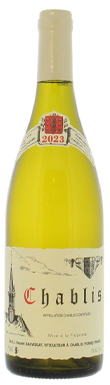
This classic expression of Chablis boasts aromas of ripe apple and grapefruit, oyster shell and minerals. The texture is lively and bright, with a classic...
2023
Domaine Vincent DauvissatChablis
Domaine Vincent Dauvissat, Chablis, 1er Cru Sechets, Burgundy, France, 2012
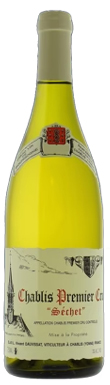
Opens with notes of mandarin peel, honey and saffron. The texture is ripe and dense, showing admirable concentration and rewarding length. The flavours are a...
2012
Domaine Vincent DauvissatChablis
Domaine Vincent Dauvissat, Chablis, Petit Chablis, Burgundy, France, 2006
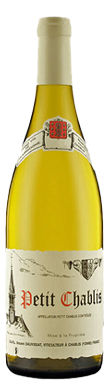
At almost 20 years old, this is a revelation. The bouquet reveals a slightly exotic note of mirabelle plums and passion fruit, with hints of...
2006
Domaine Vincent DauvissatChablis