
Discovering Givry: regional profile plus 20 wines to seek out
This lesser-known Burgundy appellation in the heart of the Côte Chalonnaise region, south of the Côte de Beaune, is well worth exploring. While it’s had a somewhat chequered past, it’s now one of the best places to find high-quality, well-priced Burgundy.

Given the current fashion for everything Burgundian, the underestimated village of Givry should be at the top of the list for those seeking high-quality Burgundy that doesn’t require a bank loan to buy.
It’s a historic terroir with tremendous potential and talented producers pushing the limits of what’s possible here in the central eastern part of the Côte Chalonnaise region.
Scroll down for a selection of delicious Givry wines to try
The first vineyards in Givry date to Roman times, but their renown began in earnest with the establishment of Ferté abbey in 1113AD. Ferté was founded by the monks of Cîteaux, near Dijon, who also built the Clos de Vougeot at roughly the same time. The wines’ reputation gradually grew, and by the 14th century, wines from Givry were served at the table of Pope Clement VI in Avignon. Although the original Ferté abbey was destroyed during the 16th-century Wars of Religion, wine production continued to thrive.
By the 18th century, the priest-historian Claude Courtépée called Givry the best wine of the Côte Chalonnaise, noting that it had been the everyday wine of King Henri IV. Givry was still prized in the years following the French Revolution, and in 1832 noted authority André Jullien praised its finesse and bouquet.
The latter years of the 19th century, however, brought scourge after scourge to the region. Jacky Rigaux’s comments in the informative work La Côte Chalonnaise (October 2018, de Monza/du Meurger) tell us that grape moths were followed by powdery mildew (oidium) and finally by the phylloxera bug. Efforts to combat these problems were not always successful. Noted Givry vigneron Baron Paul Thénard tried injecting the soil with carbon disulfide to kill phylloxera, while others tried planting direct-producing hybrids. To meet demand, the growers also planted easy-to-grow Gamay.
These ineffective efforts damaged Givry’s reputation, and the village did not receive its AOC (appellation d’origine contrôlée) until 1946, and premier cru status vineyards were not recognised until 1990, despite the long history of some sites.

Givry at a glance
Grapes (area planted*) Pinot Noir (248.2ha); Chardonnay (55.4ha)
AP established Givry 1946; Givry 1er cru 1990
Soil Different types of limestone of the Oxfordian period with varying proportions of clay and marl
Producers 66, of which 18 are based in the appellation
Annual production (average†) Red 11,441hl, including 1er cru 5,647hl; White 2,755hl, including 1er cru 931hl
Source: BIVB *2018, †2014-2018
Historic landscape

Today things are beginning to change, and new investment is pouring into the region. Philippe Pascal, former CEO of Veuve Clicquot and LVMH’s watch and jewellery division, has invested to revive the vines of Ferté abbey, today called the Domaine du Cellier aux Moines. Others are also working to raise the bar, and the region has enormous natural potential.
The slopes of the Côte Chalonnaise were created by the faults caused by the uplifted block of granite called the Horst de Mont St-Vincent. The east- and southeast-facing hills formed here are less homogenous than those in the Cote d’Or further north, but this diversity can also be a strength. Some areas that have more marl and slopes facing west are suitable for Chardonnay, while those that have more limestone and slopes facing east/southeast are more suitable for Pinot Noir. The appellation includes two small villages in addition to Givry itself – Dracy-le-Fort in the north and Jambles in the south. There are also hamlets that are part of Givry including Poncey and Russilly.
Slopes in the northern part of the appellation are mostly east-facing, such as the premier cru vineyard Clos Jus in Dracy, above the main road called the Route de Buxy (D981). The vines beneath the road are split between premier cru and village appellations. Just to the south, steep slopes form a cirque or amphitheatre that surrounds the bustling village of Givry. This area includes the premiers crus La Servoisine and the Clos du Cellier aux Moines with their south-facing vines looking over the village. In contrast, the hills west of the village face southeast and include the premiers crus Les Bois Chevaux and Clos Salomon, separated by the valley called La Combe Gris.
The vineyards south of the village are divided by the valley from Poncey to Russilly. The vines surrounding Jambles and Russilly face mostly south, while those on the flat land that leads to the N80 motorway are inclined slightly northeast.
Evolution and expansion

The key to an overall understanding of the appellation is the elevation. It varies from 200m-410m, with village Givry appellation vines at the top and the base of the slope and the premiers crus running northeast-southwest along the prime mid-slope section. The top of the slope features hard limestone from the Jurassic period, and deeper marly soils are at the bottom.
The Givry appellation has been expanded several times. The original appellation was created for the vineyards that existed at the end of World War II. Authorities defined the appellation according to scientific criteria in 1988, and established an initial list of premiers crus in 1990 covering 16 climats. The list was expanded to all or part of 26 climats in 1997 and expanded again to the present 38 in 2010.
The style of the wine of Givry has also evolved. Once, the wines were rustic, with astringent tannins, earthy notes instead of fruit, and sharp acidity. Today the fruit is riper due to global warming, and advances in grape-growing and winemaking have given us wines with more elegance and finesse. The balance found in Givry now is superb, with tannins that are not as firm as one can find in Mercurey, for example, but with more structure than is common in other parts of the Côte Chalonnaise.
With the excitement and investment Givry has seen in recent years, this is one of the best places to search for top-quality, value-priced Burgundy.
Côte Chalonnaise: eight Givry producers to know

Baron Thenard
This classic, if idiosyncratic, estate merits more acclaim than it has received. For many years Thenard sold the bulk of its production to the négociant house Remoissenet, but this is no longer the case. The domaine owns a hefty 18ha in Givry and nearly 5ha in the Côte d’Or, including 1.83ha of Montrachet. The Givry holdings are primarily in premier cru sites, including the monopole Clos St-Pierre. The Pinot is destemmed and given a cold soak before fermentation in ancient open-top fermenters, then aged mainly in large foudres. The wines have a slightly rustic style but are eminently worth discovering. +33 (0)3 85 44 31 36
Domaine Chofflet
Founded in 1710, the Chofflet winery is located in Russilly, a hamlet tucked into the hills behind Givry. The domaine is directed by Jonathan Brunot, who farms a total of 14ha. The Pinot is destemmed and fermented on native yeasts in concrete vats before ageing with a modest proportion of new oak; the purity of the fruit in recent vintages has been encouraging.
Domaine de la Ferté
Owner of 6ha in Givry, including a hectare in premier cru Servoisine, next to Clos du Cellier aux Moines. The Ferté abbey monks once owned Servoisine, but the modern domaine was developed by Bertrand Devillard. Today it is directed by his children Amaury and Aurore. The family also owns Château de Chamirey in Mercurey, Domaine de la Garenne in the Mâconnais, Domaine des Perdrix in Nuits-St- Georges, and more recently was the lead partner in a joint acquisition of Domaine Rolet in the Jura. Domaine de la Ferté produces only red wine.
Domaine du Cellier aux Moines
The remaining buildings of Ferté abbey and 5ha of its vines were sold to Philippe Pascal and his family in 2004. The vineyards have been converted to organic production and are in conversion to biodynamics (certification expected in 2023), and have been replanted to Pinot Fin (an older biotype of Pinot Noir with small berries) and Très Fin propagated through massal selection (taking cuttings from existing top-quality vines). Winemaking under cellarmaster Guillaume Marko has also evolved. The harvest is now mostly fermented as whole clusters and is bottled unfined and unfiltered. Pascal’s significant investment here has made the Cellier aux Moines one of the appellation’s stars.
Domaine du Clos Salomon
The Clos Salomon is another historic Givry domaine, whose wines were served at the Papal court in the 14th century; the Clos has been owned by the du Gardin family since 1558. The family had a long history of métayeurs (sharecropping or tenant farming), but it has been managed directly by the du Gardin family for the past three generations, today by Ludovic du Gardin. The estate totals 9.6ha, with 7ha in its premier cru monopole Clos Salomon on the slopes west of the village. There is also a small production of premier cru white from La Grande Berge and some Montagny further south. +33 (0)3 85 44 32 24
Domaine François Lumpp
Lumpp owns vineyards in some of Givry’s finest sites. He established the estate in the late 1970s with his brother Vincent, but the two parted ways in 1991. François and his wife Isabelle now own plots in the premiers crus Petit Marole and Crausot in both Pinot and Chardonnay, as well as other sites including the estate’s oldest vines in Clos Jus. Grape-growing is sustainable, and the domaine has not used herbicides in 25 years. Early on, Lumpp replanted the mediocre clonal material to a quality selection done by massal selection to ensure satisfactory results.
Domaine Joblot
Charles Joblot founded Domaine Joblot before the establishment of the appellation, and the domaine is today directed by his great-granddaughter Juliette, who has been making the wines since 2012. The estate covers 14.5ha. The vines surround the village, and produce both red and white premier cru wines. Yields are kept low across the board. The Pinot is destemmed prior to fermentation, and the Chardonnay is crushed as whole clusters before fermentation in cask.
Domaine Ragot
Domaine Ragot was founded in the 18th century. Nicolas Ragot represents the eighth generation of the family, which farms 9ha in Givry. On his arrival, he stopped using herbicides and started ploughing; the domaine has been sustainably farmed for 20 years. Like many of his neighbours, he replanted to limit yields and eliminate inferior clonal material. Yields are further held in check by bud-thinning, and the harvest is rigorously sorted before being destemmed slowly to leave the grapes intact.
Givry: Know your vintages
2021 The complete opposite of the preceding year, 2021 was fraught with difficulty. Growers were struck with disastrous frosts, with some reporting losses of 80%. Hail on 19 June only added insult to injury, and the area had more rain throughout the summer than any other sector of Burgundy.
2020 Burgundy was hot and dry in 2020, nowhere more so than in the Côte Chalonnaise. Harvesters began to pick at Baron Thenard on 18 August, more than two weeks ahead of the norm. Sorting carefully for sunburn and shrivelled grapes was essential.
2019 A cold spring and late flowering with some millerandage (bunches with large and small berries) lowered yields, but the beautiful weather that followed this brief period ripened grapes to perfection.
2018 A strong localised storm with hail on 16 May reduced yields considerably in 2018. The heat of the summer concentrated the flavours of the grapes and the August harvest produced tannic, dense wines.
2017 A large crop that ripened well due to sporadic rain coupled with copious heat and sunshine. If yield was kept in check, the potential of 2017 was superb.
2016 The Côte Chalonnaise missed the frosts of the Côte de Beaune on 27 April, but mildew, cool temperatures and rain limited harvest size. Concentration was good, and wines are now opening up.
2015 An early vintage with no grave incident. This was an easy vintage across Burgundy: warm, but not excessively dry in the Côte Chalonnaise, with small amounts of rain to keep the grapes maturing. The harvest began with whites at the end of August, and the Pinots in September.
Charles Curtis MW recommends a selection of delicious Givry wines to try
Related articles
- Burgundy 2021: What to expect
- Collector’s Guide: Red Burgundy
- Burgundy’s young talent: 10 sensational producers and their wines
Clos Salomon, Blanc, Givry, 1er Cru La Grande Berge, Burgundy, France, 2020
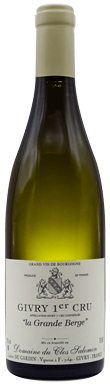

Given the heat of the 2022 vintage, there is an amazingly fresh, lemony fruit in this charming example of Givry blanc from Domaine du Clos...
2020
Clos SalomonGivry

Domaine Tatraux Jean et Fils, Blanc, Givry, 1er Cru Crausot, Burgundy, France, 2020
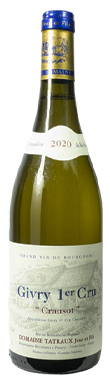
This is a wine of surprising elegance and depth from a producer that flies almost entirely under the radar. Tasted at a trade tasting in...
2020
Domaine Tatraux Jean et FilsGivry
Domaine Joblot, Blanc, Givry, 1er Cru En Veau, Burgundy, France, 2020
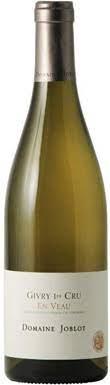
This lush white shows a rich aroma of apricot and hazelnut that is dense but not lacking in freshness. The domaine presses whole bunches and...
2020
Domaine JoblotGivry
Domaine Ragot, Blanc, Givry, Champ Pourot, Burgundy, France, 2020
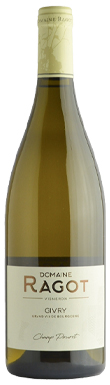
The notes of ripe apricots touched with honey, candle wax, and spice lead the initial attack, and the lush texture of this rich, dense wine...
2020
Domaine RagotGivry
Domaine du Cellier aux Moines, Givry, 1er Cru Clos du Cellier Aux Moines, Burgundy, France, 2019
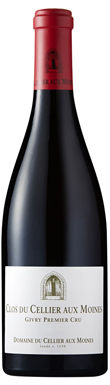
The finest Givry I have tasted from this vintage, the Domaine du Cellier aux Moines sports a dense plum and black cherry fruit, a suggestion...
2019
Domaine du Cellier aux MoinesGivry
Domaine Thenard, Givry, 1er Cru Clos St-Pierre, Burgundy, France, 2020
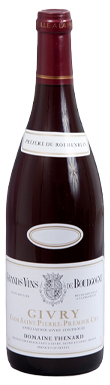
This wine is perhaps the most emblematic Givry wine from Thenard, with a ripe mulberry fruit accented with notes of earth, Havana cigar, and smoke....
2020
Domaine ThenardGivry
Clos Salomon, Givry, 1er Cru Clos Salomon, Burgundy, France, 2020
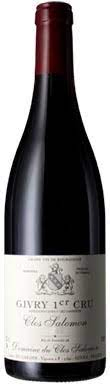
This impressive wine shows the elegance and finesse that can be produced here. An expressive, perfumed character on the palate loses nothing compared to more...
2020
Clos SalomonGivry
Domaine Joblot, Givry, 1er Cru Clos du Cellier Aux Moines, Burgundy, France, 2020
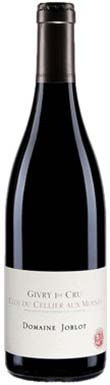
The immensely dark, concentrated plum fruit makes an impression on the first attack, complemented by notes of earth, wild herbs, and sweet oak spice. The...
2020
Domaine JoblotGivry
Domaine Ragot, Givry, 1er Cru Clos Jus, Burgundy, France, 2020
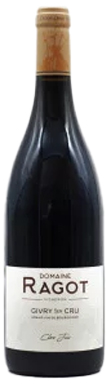
Mulberry and blackcurrant fruit is complemented here with graphite, smoke, and spice notes. The minerality stems from a high percentage of iron in the soil....
2020
Domaine RagotGivry
Domaine Thenard, Givry, 1er Cru Bois Chevaux, Burgundy, France, 2020
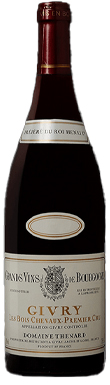
This wine is tannic, substantial, and a bit rustic, but not lacking in fruit - an attractive plummy character was concentrated by the arid conditions...
2020
Domaine ThenardGivry
Domaine Thenard, Givry, 1er Cru Cellier aux Moines, Burgundy, France, 2020
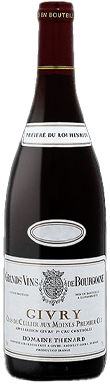
While this wine has the firmly tannic feel and slightly rustic character of the Givry wines from Thénard, there is more concentration here and a...
2020
Domaine ThenardGivry
Domaine de la Ferté, Givry, 1er Cru Clos de la Servoisine, Burgundy, France, 2020
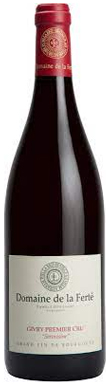
There is an appealing, if somewhat rustic, note on the nose here, with hints of earth, mineral, and wild herbs. There is also a charming...
2020
Domaine de la FertéGivry
Domaine Desvignes, Givry, 1er Cru Clos du Vernoy, Burgundy, France, 2020

This lovely wine shows a beguiling violet-scented black cherry fruit with hints of spice and earth on the nose and a beautiful silky density on...
2020
Domaine DesvignesGivry
Domaine Joblot, Givry, 1er Cru Clos Marole, Burgundy, France, 2019
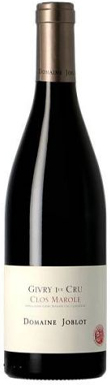
Concentrated plum and fig notes with an edge of tar, smoke, and spice make an initial impression and carry on to the palate, where the...
2019
Domaine JoblotGivry
Domaine Besson, Le Haut Colombier, Givry, Burgundy, France, 2020
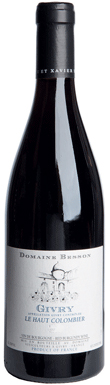
Powerful and concentrated, this impressed at a recent tasting with its deep colour, ripe plummy fruit, and earthy tannic grip. The wine has a generous...
2020
Domaine BessonGivry
Domaine Chofflet-Valdenaire, Givry, 1er Cru Clos de Choué, Burgundy, France, 2019
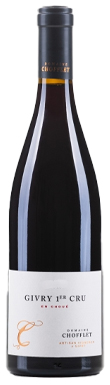
This lovely wine impressed with a perfumed plum and cherry fruit and a floral edge. There is obvious ripeness and a satiny texture on the...
2019
Domaine Chofflet-ValdenaireGivry
Domaine de la Ferté, Givry, Clos de Mortières, Burgundy, France, 2020
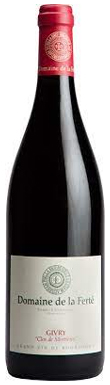
This village-level wine offers good value. Although it is a bit reduced at present, there is a charming red fruit underneath the reductive notes and...
2020
Domaine de la FertéGivry
Domaine Francois Lumpp, Givry, 1er Cru Clos Jus, Burgundy, France, 2017
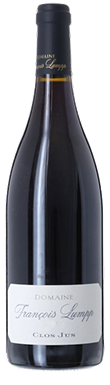
The Clos Jus from Francois Lumpp seemed surprisingly old-fashioned in the 2017 vintage. There was an earthy character that was not at all unpleasant but...
2017
Domaine Francois LumppGivry
Domaine Danjean-Berthoux, Givry, 1er Cru Clos du Cras Long, Burgundy, France, 2020
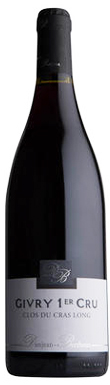
This wine displays a firm, slightly rustic style with its earthy plum and spice fruit, firm tannins, and wood spice. The grapes are destemmed and...
2020
Domaine Danjean-BerthouxGivry
Domaine Ragot, Givry, Teppe des Chenèves, Burgundy, France, 2020
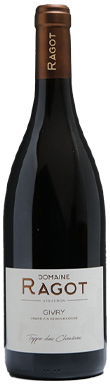
This wine is a very different style from the Clos Jus. The fruit character is more pomegranate and red cherry, with notes of rose petals...
2020
Domaine RagotGivry
Domaine Tatraux Jean et Fils, Givry, Burgundy, France, 2020
This wine has a pretty, straightforward aroma of pomegranate and strawberry fruit with a floral edge. On the palate, there is light body, fresh acidity,...
2020
Domaine Tatraux Jean et FilsGivry