
Domaines Ott: Provence rosé wine royalty
Expert Elizabeth Gabay MW charts the history of Domaines Ott and explores the winemaking philosophy at this highly regarded Provence producer, known for top rosé wines made across its three estates...


One of the best-known producers in Provence, Domaines Ott remains modest; its quality is high but there is little of the marketing razzmatazz of other high-profile estates.
Where did it all begin?
Domaines Ott ( boasts a long Provençal history. In 1896 Marcel Ott, an agricultural engineer from Strasbourg, moved to Provence to work at a vineyard in Cavalaire-sur-Mer – in an era when viticulture in general was still recovering from phylloxera.
In 1912 he bought 30-hectare estate Château de Selle, strategically located south of the then-prefecture town of Draguignan, near the railway connecting to Nice, Toulon and Marseille.
Scroll down for scores and tasting notes for 12 Domaines Ott wines
Following complete restructuring and planting, the first vintage in around 1920 was initially sold in barrels. By the 1930s, Ott was an early exporter to the US and he continued to expand in Provence by purchasing two more estates, Clos Mireille in 1936 and Château Romassan in 1956.
Since 2004, due to a large family and complicated inheritance details, Champagne Louis Roederer acquired a majority stake in the company and its investment also provided support for logistics, distribution, vineyards and cellars.
Since 2009, cousins Jean-Francois and Christian Ott – representing family’s fourth generation – have been running the three estates with a focus on quality wine rather than creating a vast empire.
The three domaines make only 800,000 bottles, compared to the millions made by some other known market leaders.
Domaines Ott: the facts
Date founded: 1912
Owned by: two-thirds Champagne Louis Roederer and one-third Ott family
Annual production: 800,000 bottles
Key vineyards: Château de Selle (Côtes de Provence, 14-ha), Clos Mireille (Côtes de Provence, 45 ha) and Château Romassan, (Bandol 75 ha)
Key wines: Château de Selle rosé and red, Clos Mireille rosé and white, Château Romassan rosé and red. Etoile – blend of all three estates
How has the style changed?
In terms of progress in both field and cellar, the local Rosé Research Centre has been invaluable, helping to raise the general level of quality.
Adapting to climate change has resulted in Ugni Blanc being replaced by Rolle since 2003 at Clos Mireille; Mourvèdre being replanted at Château de Selle since 2018; Clairette removed in Bandol since 2011 and Assyrtiko being considered.
Jean-Francois is firmly against irrigation for the very practical reason that he feels water is for drinking and food should take priority over wine.
Modern techniques for canopy management for vines destined for rosé are used on all three domaines. A bigger canopy is maintained to slow down maturity and to encourage bigger berries with thinner skins for more juice and less colour.
He has also introduced taller stake training for Mourvèdre in Bandol. Pruning is done by Marco Simonit’s company, who have made radical progress in pruning techniques to adapt to climate change and eradicate the esca vine disease.
What’s the winemaking philosophy?
Rosé production is classic. All vineyards are close to the cellars, harvesting takes place in the cool early morning, and the grapes are chilled in a cold room at around 15 degrees Celsius (59 Fahrenheit) before pressing.
Whole bunches are very gently pressed and only the coeur de grain (first juice) is used.
Fermentation starts with a pied de cuve but if there are problems starting or finishing, a neutral yeast is added. Grapefruit thiol characters are strongly avoided, ‘quelle horreur!!’, and instead of battonage during lees ageing, new tanks have been installed which allow for very gentle stirring with a propellor at the bottom of the tank.
The 2004 vintage was the last with malolactic fermentation.
Colour is central to any discussion on rosé wine. Jean-Francois says does not aim to make a pale rosé, although he does think dark rosé would be difficult to sell.
For him the time in the press is determined by the pH levels, which increase every hour the grapes are in contact with the skins.
Jean-Francois and Christian say they aim to make consistently good wines every year, adapting to changes in viticulture and vinification as well as to the changing style and taste of the market.
In the 1980s, they were already early proponents of direct press to create lighter, fresher rosés, but still fermented and aged in barrel for weight and structure.
Rosé production has grown, making up more than 80% of production at Château Romassan (since 2002) and Clos Mireille (since 2007).
The rosés are made in the same way, and the differences derive primarily from terroir and grape varieties. Rosé wines are not released until 1 April, in direct contrast to many estates who feel forced to release in January for early spring sales.
Launching ‘Etoile’ rosé
In 2019, Domaines Ott launched premium rosé wine Etoile, with production at around 6,000 bottles.
Jean-Francois regards Etoile as an intellectual curiosity that has been made for a number of years for private consumption, and was born from discussions during blending, following the question, ‘What if [the team] blended the most expressive juice from each of their three terroirs (low yields, free-run juice), to create a wine?’.
With the subsequent wine, the team hopes to provoke discussion around the character of terroir and vintage. The purity of fruit is retained through partial fermentation in inox [stainless steel] and partly in small ceramic vats shaped like eggs and spheres.
A considerable number of bottles are held back to explore ageing potential. This reflects an important trend in the world of rosé, with serious producers looking at older vintages and vertical tastings.
With Etoile, Ott recognises that wine at this higher end of the market has little relevance for most rosé drinkers, but it does stretch the boundaries of where rosé could go compared to bulk rosé which can lead the category downwards.
Jean-Francois is adamant that the domaine rosés are his best wines and they remain his top priority. Etoile is only made if there is sufficient volume, at the right quality level. Any remaining volume is sold to the affiliated négociant business By Ott.
To support the emphasis of the individual estates, a slight change of design on the label has made the name of the domaine more dominant than Domaines Ott.
See scores and tasting notes for 12 Domaines Ott wines
Related content
Provence rosé: This summer’s best buys
Great Spanish rosé wines to try
Domaines Ott, Clos Mireille, Côtes de Provence, Cru Classé, Provence, France, 2020
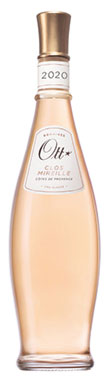

A rosé that illustrates the beauty of the white fruit end of the spectrum. Crisp Comice pears, perfumed white peaches, cobnuts, creamy lees breadth, juicy...
2020
Domaines OttCôtes de Provence

Domaines Ott, Château de Selle, Côtes de Provence, Cru Classé, Provence, France, 2019
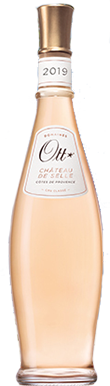
A lovely soft pale pink colour with an inviting nose, full of lemon, gooseberry and strawberry aromas. On the palate high acidity keeps things fresh,...
2019
Domaines OttCôtes de Provence
Domaines Ott, Château de Selle Coeur de Grain, Côtes de Provence, Cru Classé, Provence, France, 2015

The characters are further intensified with notes of dried apricots, peaches and honey. On the palate the fruit is intense and rich, with the nut...
2015
Domaines OttCôtes de Provence
Domaines Ott, Château de Selle, Côtes de Provence, Cru Classé, Provence, France, 2020

The nose is restrained and this restraint continues on the palate, seemingly tight and austere at first but opening up in the glass to reveal...
2020
Domaines OttCôtes de Provence
Domaines Ott, Château Romassan, Bandol, Provence, France, 2020
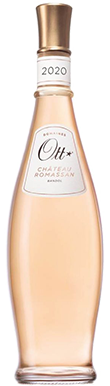
Less restrained, with aromas of perfumed pêche de vigne and honey, continuing on the palate with unctuous peach, honeysuckle, white waxy flowers, vanilla, cream, beeswax,...
2020
Domaines OttBandol
Domaines Ott, Étoile, Vin de France, Provence, France, 2020
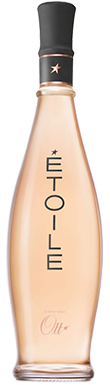
Very pale, creamy pink. The restrained floral notes of this wine's youth have developed into more evident perfumed Sorrento lemon and orange blossom aromas, a...
2020
Domaines OttVin de France
Domaines Ott, Étoile, Vin de France, Provence, France, 2019
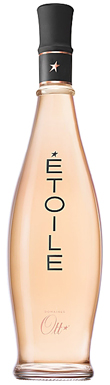
Pretty floral aromas are backed by fresh citrus and pomelo notes with a touch of candied fennel seeds. On the palate, behind the austere, slightly...
2019
Domaines OttVin de France
Domaines Ott, Clos Mireille, Côtes de Provence, Cru Classé, Provence, France, 2019
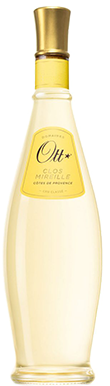
Initially processed like the rosé. Hand harvested, grapes chilled in a cold room and pressed next day. Fermentation and ageing however is in large, used,...
2019
Domaines OttCôtes de Provence
Domaines Ott, Château de Selle, Côtes de Provence, Cru Classé, Provence, France, 2019
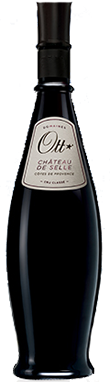
Just bottled and still very young, the aromas are restrained and it is initially still very tight on the palate. Allowing the wine to breathe...
2019
Domaines OttCôtes de Provence
Domaines Ott, Château Romassan, Bandol, Provence, France, 2019
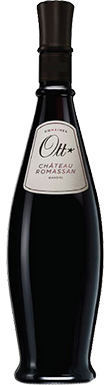
Traditional Mourvèdre aromas of spice and leather. On the palate intensely juicy blackberry and mulberry fruit with hints of spice, thyme, rosemary and lavender. Inky,...
2019
Domaines OttBandol
Domaines Ott, Château Romassan, Bandol, Provence, France, 2016
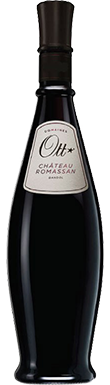
Aged in barriques which gave more evident oak character of cloves, nutmeg, cinnamon and sweet spice on the nose. On the palate it is going...
2016
Domaines OttBandol
Domaines Ott, Château Romassan, Bandol, Provence, France, 1988
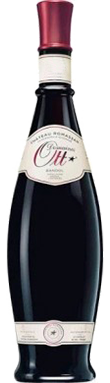
Time has softened any dried out tannins to reveal a charming, aged Bandol. Mahogany colour with aromas of leather, raisins, figs, dried fruit, black tea,...
1988
Domaines OttBandol
