
Experimental Italy: Three producers defying convention
Trailblazers in some of Italy’s most traditional areas have been ripping up the rulebook to bring about new expressions of wines, to meet the changing preferences of today’s consumers. We meet three at the vanguard in their respective regions.


In 1983, the first French oak barriques arrived in Barolo. Elio, son of Giuseppe Altare, who had founded his estate in La Morra in 1948, had seen first-hand the affluence of winemakers in Burgundy during a visit to the region in the 1970s.
The situation there was in stark contrast to that in the Langhe, northwest Italy, where producers were struggling to make ends meet.
Returning to the family estate and inspired by what he had seen, in the summer of 1978, Elio began removing unripened bunches of grapes from the vines in the manner of the Burgundian winemakers, much to his father’s horror.
Scroll down to seen notes and scores for six wines Italian wines that defy convention
This practice, known as ‘green harvesting’, sacrifices one or more bunches in order to achieve more concentration in the fruit of the remaining bunches.
But to the hard-hit winemakers in the Langhe, dropping fruit on the ground was tantamount to throwing perfectly good food in the bin… or money down the drain.
In 1983 – in what became a symbolic act – Elio put a chainsaw to his family’s ancient, large wine casks in order to make space for new barriques that were arriving from France.
This was the last straw for Giuseppe, who responded by writing Elio out of his will.
Modern mindset

Elio Altare was part of a small group of young modernistas, later dubbed the ‘Barolo Boys’ (despite one of its members being Chiara Boschis, proprietor of producer E Pira e Figli).
They clamoured for change, realising that the region’s smelly, dirty cellars and peasant philosophy of quantity over quality were holding them back, so they began adopting new methods inspired by visits to other wine regions: lower yields, shorter macerations, punchdowns instead of submerged cap fermentation, ageing in barrique instead of large cask.
Between this group of ‘terrorists’ (as I’ve heard some of the region’s more traditionally inclined producers refer to them) and the first wave of Super Tuscans (see here for the new wave being dubbed ‘SuperTuscan 2.0’), a fire was lit in the bellies of producers up and down the country, who quickly noted the commercial success of these glossy, modern Barolo wines.
A similar spirit of experimentation and innovation is evident today, even though the circumstances are very different.
Sitting on the cusp of the second quarter of the 21st century, a new language for viticulture and winemaking has emerged in response to climate issues and an evolution in consumers’ tastes.
This new lingua franca is one of balance, vitality and drinkability, empowered by holistic philosophies in vineyard and winery, and modern technology.
Below, we celebrate three winemakers who are blazing a trail, just as the modernistas of Barolo did all those years ago. Depending on your views, their wines are either a glimpse of the future or an evolutionary dead end, but what they encapsulate is progress – and for that, we can be thankful.
Alois Lageder

This 201-year-old estate located in Alto Adige (or Südtirol) really began to make a name for itself in the 1990s under the watchful eye of Alois IV (it’s a family tradition to name the eldest son in each successive generation Alois), who decided that it was about time to apply the sustainable and biodynamic philosophies he had been familiar with since childhood to the estate’s viticulture and winemaking.
A new winery, completed in 1995 in Magrè, north of Trento city, was (and remains) one of Italy’s most progressive facilities, combining contemporary architecture and natural construction materials with solar and geothermal energy sources.
By 2004, a previously unheard of 55ha of estate-owned vineyards had been converted to biodynamic cultivation. Some 60 families who supply grapes in addition to the estate production have all gradually converted to certified organics or biodynamics, too.
Fittingly, Alois IV was elected president of biodynamic agriculture association Demeter Italia from 2016 to 2020.
Since 2021, Alois Lageder has been managed by Alois V’s son Alois Clemens. It’s an impressively holistic operation, with an on-site, certified-organic restaurant, Paradeis, overseen by Alois’ daughter Helena (heading up the marketing & communication and export), and a partnership with a mountain dairy whose cattle overwinter in the vineyards in the valley, fertilising the soils before returning to the mountains in the spring.
Creative energy

Alois Lageder’s impressive range of wines (they work with more than 30 grape varieties) includes the Compositions series, which focuses on combining different treatments of the same grape in order to add complexity and interest. Porer, for instance, is a Pinot Grigio with direct press, skin contact and whole-cluster components fermented in large casks and stainless steel.
But it’s the Comet series that’s the true beating heart of experimentation at the estate: an ever-changing range consisting of rare or atypical varieties, and abounding with intriguing winemaking methods. If you’ve never come across a pét-nat made from a blend of Moscato Giallo, Tannat and Souvignier Gris (MUS.XXIII), or a Petit Manseng that has been fermenting away intermittently for several years in barriques (O-SEN XVI), you’re not alone.
While the wines in the core ranges are more readily available in wine merchants and on wine lists, really the only way to purchase these small-batch Comets is to visit Alois Lageder.
Time your trip to coincide with the Summa wine fair held every spring at the estate (scheduled for 5-6 April in 2025) and you can pick up some bottles while also tasting exceptional organic and biodynamic wines from around the world.
One of the qualities expected of exhibitors at Summa is ‘a willingness to experiment’ – however, few are as willing as the hosts themselves.
Alois Lageder, Comets O-Sen.XVI, Vigneti delle Dolomiti, Trentino-Alto Adige, Italy NV 91pts

Alois Lageder, Comets Max.XIX, Vigneti delle Dolomiti, Trentino-Alto Adige, Italy NV 92pts

Pasqua

Dubbing itself the House of the Unconventional, Pasqua has evolved from making middle-of-the-road wines typical of the area, to an avant-garde producer pushing boundaries from its base just northeast of the town of Verona in Veneto.
One of its newest projects, Y By 11 Minutes (see recommendations below), is ‘a kind of riserva’ version of the higher-volume 11 Minutes rosé, according to CEO Riccardo Pasqua. It’s a blend of carefully selected, organically farmed Corvina, Turbiana and Carmenère grapes, with small portions vinified or aged in oak.
A gastronomic rosé, it highlights local varieties of the region in a unique (and honestly, quite moreish) way, and remains pretty affordable. But that’s not the only unconventional wine Pasqua has been making in recent years.
No limits
‘Back in 2013 we decided we wanted to show to the world that we can make a “super-white”,’ Pasqua says. ‘It was a monstrous effort in terms of winemaking.’
The result is Hey French… (see below for full name), a wine with Bohemian spirit made from three organically farmed varieties – Garganega, Sauvignon Blanc and Pinot Bianco – at up to 600m above sea level on Monte Calvarina’s rich, dark volcanic soils in the Soave Classico sub-region.
Hey French is a multi-vintage blend of these three varieties; the first two Edizione releases combined four separate vintages of each variety, while Edizione III, launched earlier this year, increased the number of vintages to five (2016-2020). Edizione IV will use no fewer than seven vintages, ranging from 2013 to 2021, taking advantage of an increasing catalogue of back vintages available to play with.
Pasqua is the first to admit that Hey French is a wine that’s yet to fully find its feet, but I get the feeling that he and the winemaking team really enjoy the process of fine-tuning.
‘It’s one of the craziest projects we’ve ever done!’ he enthuses.
Pasqua, Hey French – You Could Have Made This But You Didn’t, Edizione IV
Veneto, Italy NV 92pts

Pasqua, Y By 11 Minutes Rosé, Trevenezie, Veneto, Italy 2021 91pts

Cigliano di Sopra

In Chianti Classico, oenology graduates Maddalena Fucile and Matteo Vaccari are making waves at their small estate, Cigliano di Sopra, based in the commune of San Casciano in Val di Pesa.
Working in a cramped and dingy 15th-century cellar beneath the beautiful old stone farmhouse owned by Maddalena’s family – who in the past sold wine in bulk – they are hemmed in by barriques and small barrels, simply because they are easier to move by hand through the small complex of rooms.
There are now also two 15hl Austrian Stockinger casks, purchased slightly used and first utilised for the 2022 vintage of Chianti Classico.
Their 7ha of vines circle the top of the hill, surrounding the property and benefiting from many different exposures. The soil (known locally as macigno) is deep and alluvial, with sandy deposits, limestone and a reasonable proportion of river stones.
The pair have worked organically since they began in 2016, achieving certification in 2020, and they follow various biodynamic practices.
In 2022, bees were introduced with the aim of making honey and increasing biodiversity in what already feels like an area teeming with life: there are three natural springs on the property, and the hill is enclosed by two rivers, while some of the vineyards are surrounded by verdant woodland.
At the very beginning of the project, they planted a small vineyard of Canaiolo. ‘We think Canaiolo in a very small [2%-3%] amount is a very good thing,’ Fucile told me last year when I visited the estate.
They are also experimenting with co-fermenting 80% Sangiovese and 20% Canaiolo, with a portion of the Sangiovese picked earlier than usual.
Canaiolo – part of Chianti’s original ‘recipe’ laid out by Barone Bettino Ricasoli in the 19th century – is becoming more popular with winemakers in Chianti Classico after decades of decline, thanks to new and better clones and a naturally strong resistance to grapevine diseases; the latter of which particularly appeals to estates working organically and biodynamically.
Bunch of inspiration

Fucile and Vaccari travelled to the USA in 2017 to gain experience working alongside winemaking business partners Rajat Parr and Sashi Moorman in California and Oregon. For them, as for Parr and Moorman, Burgundy is a huge inspiration.
‘Many wines have been vital in our winemaking,’ Vaccari told me. ‘The Burgundian style is a big influence… for a wine to be able to be drunk but also able to age – that is the goal here.’
The pair practise a low-intervention philosophy that gives breathing space for the vines and the wines. In a further nod to their peers in Burgundy, they include 20%-40% whole-bunch fruit for their Chianti Classico – depending on vintage – while the inaugural release of their single-vineyard Chianti Classico Riserva Vigneto Branca uses 100% whole-bunch fruit.
Both wines naturally undergo a semi-carbonic fermentation and a long 35- to 40-day maceration in open-top fermenters, with gentle pumpovers and punchdowns. Matteo explained that this achieves some of the ‘fruity impact of carbonic wine’ while also helping to preserve the fruit without the need for excessive sulphur dioxide additions. It also helps to soften the tannins and achieve more drinkability.
‘If you don’t give oxygen to Sangiovese, you get harsh tannins.’ Few others, if any, are fully whole-bunch fermenting Sangiovese, but the results here are simply stunning.
Fattoria Cigliano di Sopra, Vigneto Branca, Chianti Classico Riserva, Tuscany, Italy 2021 95pts

Fattoria Cigliano di Sopra, Chianti Classico, Tuscany, Italy 2022 93pts

See notes and scores for six brilliantly boundary-pushing Italian wines
Wines are ordered by colour then score
Related articles
Pasqua, Hey French – You Could Have Made This But You Didn’t, Edizione IV, Veneto, Italy
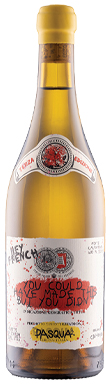

A delicious aroma of apricot, papaya and passion fruit, with zesty and peachy flavours of good intensity, finishing with lipsmacking sapidity. Generous and appealing. Five...
Pasqua

Alois Lageder, Comets O-Sen.XVI, Vigneti delle Dolomiti, Trentino-Alto Adige, Italy
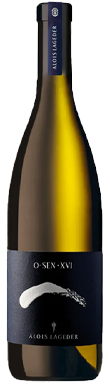
This Petit Manseng passito is from a barrique left to do its own thing for several years without any topping up. Fino Sherry-like aromas are...
Alois LagederVigneti delle Dolomiti
Pasqua, Y By 11 Minutes Rosé, Trevenezie, Veneto, Italy, 2021
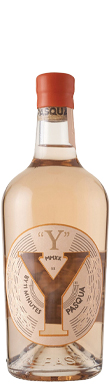
A unique, organically farmed rosé. 2021 is just the second vintage, and it’s a good find: floral and peach with orange blossom and citrus zest...
2021
PasquaTrevenezie
Fattoria Cigliano di Sopra, Vigneto Branca, Chianti Classico, Riserva, Tuscany, Italy, 2021
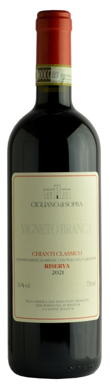
The first vintage of this 2,000-bottle single-vineyard Riserva and it stuns with its texture and precision. The use of 100% whole-bunch fruit is inspired –...
2021
Fattoria Cigliano di SopraChianti Classico
Fattoria Cigliano di Sopra, Chianti Classico, Tuscany, Italy, 2022
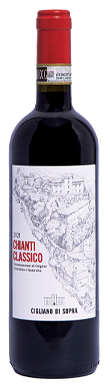
The Cigliano di Sopra house style melds precision and lift with authenticity. To taste Sangiovese of this kind is a real treat and exemplifies the...
2022
Fattoria Cigliano di SopraChianti Classico
Alois Lageder, Comets Max.XIX, Vigneti delle Dolomiti, Trentino-Alto Adige, Italy
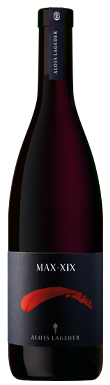
Energetic, with funky complexity underlining raspberry, wild strawberry and blackberry flavours, along with some greener elements of sage and thyme, and a touch of orange...
Alois LagederVigneti delle Dolomiti
