
First taste: Dom Pérignon 2010
Simon Field MW tastes the new release of LVMH's famed cuvée...


Launching Dom Pérignon’s new 2010 vintage, chef de cave Vincent Chaperon was bathed in a bright light, the result of Hautvillers sunshine rather than from the virtual effects of Zoom one feels.
His suit is sober and dark, possibly a little better cut than Dom Pérignon’s Benedictine habit, but he looks the part, managing, with great panache, to meet the challenges of being LVMH’s ambassador for this flagship brand, and at the same time to communicate the passion of the dedicated winemaker as the latest in a long line going all the way back to the Dom himself.
Scroll down to see Simon Field MW’s Dom Pérignon 2010 tasting note and score
Seldom has this passion and dedication been more important, however; even the press release describes the 2010 vintage as ‘harsh, contrasted and perilous’ and Chaperon pulls no punches.
This is a triumph out of adversity story for sure, ‘exploring new frontiers’ and therefore not quite a classic DP vintage in the vein of 1990, 2002 or 2008. An interesting and somewhat unusual overture…
Challenging conditions
The vintage is sketched out through a three-phase trajectory.
Phase one was the coldest, driest winter since 1996. Phase two the dry, dynamic mid-season – the engine room, as it were. And Phase three: the cooler but dry and sunny September… so far, so good.
But into this equation one must throw two days of torrential rain on 14 and 15 August. Two months’ worth of rain fell in two days, and the effects were only really fully recognised 2.5 weeks later, a resulting attack of severe botrytis, most especially in the Pinot Noir vineyards. Thereafter, plenty of anxiety, painstaking, plot-by-plot enquiry and, ultimately, a 15% reduction in the Pinot crop, the cut being made with great precision over 800 different plots.
Such was the drastic remedial action that the grapes, which were finally brought in, actually resulted in musts with the third highest sugar levels of the last decade (after 2002 and 2003) and the second highest potential acidity (after 2008).
A bold wager, says Chaperon, but one which, for him, has paid off. Indeed, he relates how his predecessor, Richard Geoffroy, has described the Chardonnay, itself untouched by rot, as the best that he has seen in over 40 years.
After deliberation, some of which promoted the Chardonnay to 60% of the blend, the final assemblage is 54% Chardonnay and 46% Pinot Noir; anything too far apart is just not DP, says Chaperon. The dosage is 5g/l and the wine was disgorged in February 2019.
So, a risk, but one that has paid off it seems.
It is interesting to note that of the releases since 2000, only two years have not been made (2001 and 2007) and although Chaperon refuses to be drawn on the destiny of 2011’s potentially tricky crop, he does reiterate that ‘our aim is to make a Dom Pérignon every year’.
The incredible skill brought to bear on this most challenging of vintages goes some way to vindicate such a bold statement.
See Simon Field MW’s Dom Pérignon 2010 tasting note below
You may also like
Blanc de noirs vs blanc de blancs: What’s the difference?Has the Champagne price bubble burst?First taste: Gosset 12 Ans de Cave a Minima BrutPerrier Jouët: Producer profileVillage profile: Cramant, Champagne
Dom Pérignon, Champagne, France, 2010
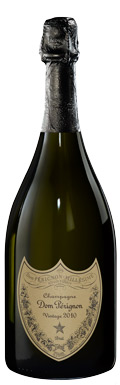

Soft gold, with a gentle green luminescence and a paler rim. A fine bead and immediately reassuring nose…. classic DP this, citric fruit, slate, sourdough,...
2010
Dom Pérignon

