
Five great Rioja vintages to drink now
Since the turn of the millennium, fans of aged Rioja have been spoiled for choice with vintages capable of delivering age-worthy wines. Simon Field MW selects his top five and recommends three superb bottles to seek out from each year.


The Consejo Regulador has rated every Rioja vintage since 1925, with 19 of the 94 marked so far earning the top accolade of Excelente (excellent). Since 1980, nine years have received this award, six of which were earned after 2000. There was a distinct golden period in the early noughties with gongs for 2001, 2004, 2005, 2010 and 2011.
Since then, only 2019 has made the top grade.
Scroll down to see tasting notes and scores for 15 great Riojas to open and enjoy today
Plenty of choice, then, when it comes to selecting the best vintages and their best wines. However, I am tempted to wonder if there may have been a little ‘grade inflation’ and whether all of the most recent selections will linger long in the memory in the same way as the outstanding years of earlier decades (1934, 1964 and 1982). Hard to say.
Climate change may have played some part, but Rioja flourishes on the creative tension imparted by both Atlantic and Mediterranean influences, and it mustn’t get too hot, or too water starved.
Three of my five selections fall into the Excelente category; the two most recent (2012 and 2015) are unlucky ‘merely’ to be accredited as Muy buena (very good). In fact, their best wines (maybe a little less grand than my older selections) have been made for earlier appreciation and are all at the top of their game now.
Rioja, we must remember, has traditionally been aged for an extended period in wood and only released to the market when ready to drink. This is good for wine drinkers and less good for the cash flow of the bodega. Allied to a perceived change in taste, this has led to a countermovement which has pursued the French model, with shorter ageing (often in European rather than American oak) and an earlier release.
The result has been more choice and variety, which is a good thing, but also more risk in terms of certainty as to whether the wine purchased has been released to an unsuspecting public before it is ready to drink. Caveat emptor.

My selections strongly favour the traditional camp; only four of the 15 wines are more modern, and all are selected mindful of their differing ageing regimes. All are perfectly à point now.
Otherwise, the wines cleave to the traditional Rioja model whereby quality is imputed first and foremost by length of ageing rather than specific provenance. This model, vertical rather than horizontal, is still dominant in the region and there is no shortage of typicity – not to mention sheer quality – on display.
Given that 91% of all Riojas are red and given that the whites do not age in the same way, I have desisted from over-complication and have not included the blancos. I have thrown in one rosado, however, a wine that is so unusual and unique that it is quite content to sit in solitary splendour within the line-up.
As I learned by rote a long time ago, reserva reds from Rioja are released after no less than two calendar years after the harvest (one spent in wood), that number increased to five years for gran reservas, with a minimum of 24 months in cask.
It should come as no surprise, therefore, that the better reserva wines from 2015 are now doing the rounds (I have selected three of the very best) and that the gran reservas from the best producers are still from the great years of 2011 and 2010.
It is worth noting that these rules are often treated as minimums by the top bodegas, many of whom seek extra bottle age before their wines get to market. Most of my selections prove this point.
Once again, this jeopardises bank balances in an adherence to a strict if unwritten qualitative protocol. Impressive indeed.
The Rioja vintages to drink now
2015
This was an early year with a relatively short harvest; precocious flowering and a particularly impressive September favoured all who were able to control alcohol levels, thereby permitting longer hang times and ensuring harmony in the wines.
The three bodegas chosen should need no introduction; the fact that all have access to fruit from differing altitudes and aspects may be perceived as a great advantage when it comes to fruit selection and the harnessing of elegance in a warm year.
All three have succeeded admirably and the wines are beautifully approachable now.
2012
Possibly the wild card selection of the five vintages, 2012 was not without its difficulties; drought was somewhat mitigated by late rains (which I remember well as I was picking fruit at López de Heredia) and, overall, the wines achieved impressive phenolic ripeness.
I have selected a textbook-value crianza to demonstrate that this category should not be overlooked in terms of mid-term ageing; also, in the spirit of counter-intuition, a modern wine from one of the great traditionalists, Marqués de Riscal.
2011
A large crop of excellent quality; early drought resulted in smaller, more concentrated fruit bunches, and, in places, lower acidity. What I describe as the ‘run to the hills’ was initiated in vintages such as this, when higher altitude sites (including the Oriental sub-region) really came into their own.
The three wines I have selected differ quite dramatically in all but their undeniable quality. The gran reserva 904 from La Rioja Alta is especially impressive.
2010
A terrific vintage in many parts of Spain and France (including Bordeaux, of course), producing wines of great classicism and harmonious shape. Despite a slightly later fruit set, the season was long and untroubled by excess of any kind. The ‘golden mean’.
Muga’s Prado Enea is a worthy representative of the year: plenty of colour, aroma and structure; eminently approachable and nothing over-worked.
2005
I recall lively debate at the time as to whether 2005 or 2004 was the better vintage; 2004 won by a short head, I seem to remember, but now I’m not so sure.
Less classic than, say, 2010, the year was marked by thunderstorms in June and drought in July and yet the conditions thereafter were little short of superb, with an extended harvest finally completed on 29 July – fortune favouring the brave, as my heroic trio demonstrates so flamboyantly.
The Castillo Ygay is especially impressive, although not without strong competition.
Simon Field MW’s pick of 15 Riojas to open and enjoy today
Wines are in score order per vintage, in descending order
Simon Field MW was wine buyer for Berry Bros & Rudd, responsible for Spanish and fortified ranges, Champagne, Languedoc-Roussillon, the Rhône and the Loire. He has been a DWWA judge since 2005 and in 2015 was admitted into the Gran Orden de Caballeros del Vino.
Related content
First taste: Alvaro Palacios 2020 new releasesR. López de Heredia: profiling the iconic Rioja bodegaComparing Roda I and Cirsion Riojas plus new releases tasted
Marques de Murrieta, Reserva, Rioja, Spain, 2015
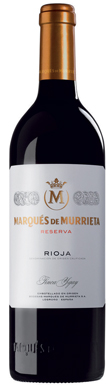

The magical Murrieta Estate is located on the southern tip of the Rioja Alta sub-region, its manicured vines located close (but not too close) to...
2015
Marques de Murrieta

CVNE, Cune Reserva, Rioja, Spain, 2015
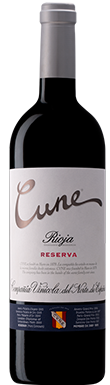
An absolute gem for all those who, like me, love a traditional Rioja; strawberries and cream writ large, a backdrop of balsam, crushed raspberry and...
2015
CVNE
Bodegas Ramón Bilbao, Reserva, Rioja, Spain, 2015
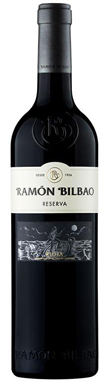
Rodolfo Bastida has aged this impressive blend (90% Tempranillo and 10% shared between Mazuelo and Graciano) for 20 months in barrels sourced in Ohio and...
2015
Bodegas Ramón Bilbao
Finca Allende, Aurus, Rioja, Spain, 2012
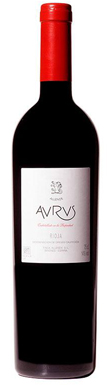
Miguel Angel maintains that his Calvario bottling is his Burgundy, Aurus his Bordeaux. Sixty-year-old Tempranillo vines from the village of Briones (with 15% Graciano added)...
2012
Finca Allende
Marqués de Riscal, Finca Torrea, Rioja, Spain, 2012
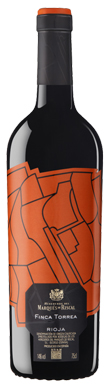
A distinctly modern twist from one of the founding fathers, a powerful blend of 90% Tempranillo and 10% Graciano, aged in part-new French oak for...
2012
Marqués de Riscal
Urbina, Crianza, Rioja, Spain, 2012
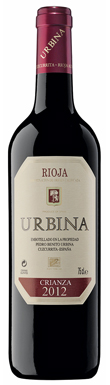
From the north-west of the Rioja Alta sub-region, and farmed at altitude, these Tempranillo grapes are resourceful in the extreme, their fruits in a strong...
2012
Urbina
Roda, Reserva, Rioja, Spain, 2011
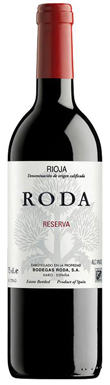
French oak is the order of the day, for both fermentation and maturation, the latter taking place over 14 months, with 30% of the oak...
2011
Roda
Bodegas Olarra, Cerro Añón Gran Reserva, Rioja, Spain, 2011
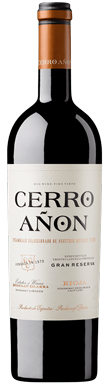
Clay from Alta and limestone from Alavesa have conspired to shine in 2011, with a heady blend (dominated by 80% Tempranillo and 12% Mazuelo) allied...
2011
Bodegas Olarra
R Lopez de Heredia, Viña Tondonia Rosado Gran Reserva, Rioja, Spain, 2010
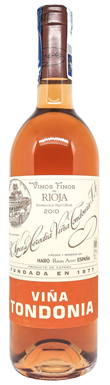
One of the great classic European vintages, 2010 was as fêted in Rioja as it was in Bordeaux; a great showcase for one of the...
2010
R Lopez de Heredia
Muga, Prado Enea Gran Reserva, Rioja, Spain, 2010
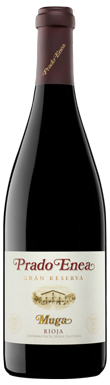
Prado Enea is a wondrous wine, an extraordinary marriage of an essentially modern outlook, but within a gran reserva framework. The best of both worlds,...
2010
Muga
Bodegas Hermanos Peciña, Finca Iscorta, Rioja, Spain, 2010
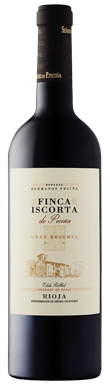
Venerable Tempranillo vineyards outline the quality of fruit from the village of Sonsierra; always silky elegant and always incredibly refined; the nose boasts strawberry and...
2010
Bodegas Hermanos Peciña
Marques de Murrieta, Castillo Ygay Gran Reserva Especial, Rioja, Spain, 2005
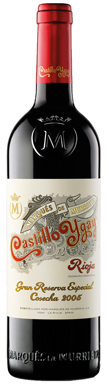
Ygay’s La Plana is located at nearly 500m and its 80-year-old vines are all dedicated to this landmark wine – and only in the best...
2005
Marques de Murrieta
Luis Cañas, Selección de la Familia Reserva, Rioja, Spain, 2005
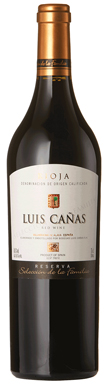
One of the great Rioja pioneers, Luis Cañas (who died recently in his early 90s) was the man who really put Rioja Alavesa on the...
2005
Luis Cañas
Contador, La Cueva del Contador, Rioja, Spain, 2005
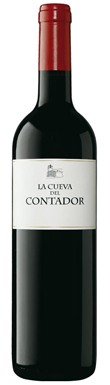
Having learnt his trade at Artadi, not a bad address, Benjamin Romeo set up on his own; the Cueva is 100% Tempranillo and is sourced...
2005
Contador
