
Grape discovery: six lesser-known varieties from Portugal
Home to a diverse range of native grapes, Portugal is a source of intriguing varietal wines that will be unfamiliar to most wine lovers. Julie Sheppard reports from a recent tasting, designed to shine a light on these lesser-known grapes, and recommends bottles to try.

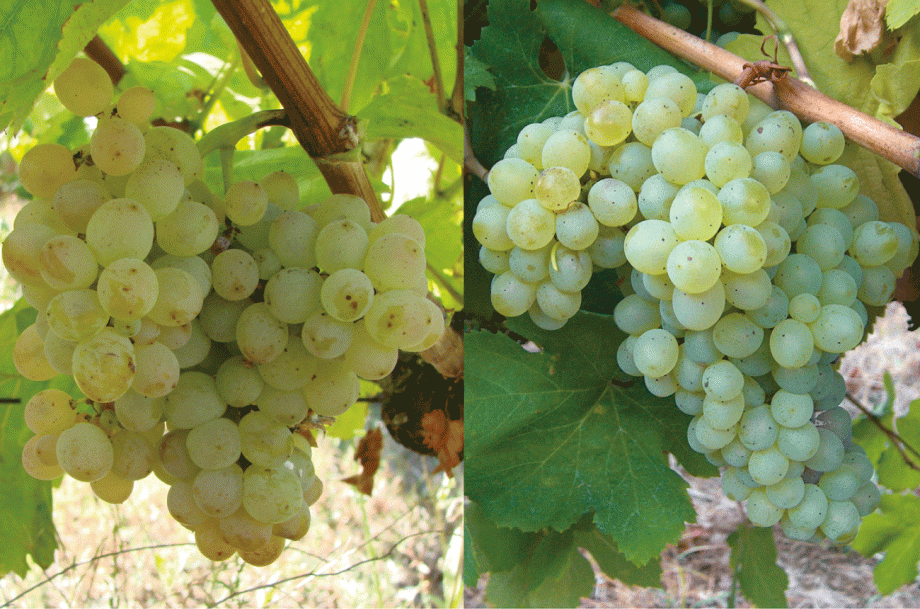
Bical, Ramisco, Fonte Cal. The names may not be as well known as international varieties Chardonnay and Cabernet Sauvignon, but they’re part of the rich tapestry of indigenous grapes that make up the Portuguese wine scene.
In fact Portugal has the highest density of native grapes per square kilometre of any wine producing country in the world, boasting over 250 different varieties.
Scroll down to see tasting notes and scores for six wines made from Portugal’s lesser-known grapes
The fortunes of these native grapes have been varied, due to factors such as commercial pressure and global wine trends. But in a world where people increasingly value the provenance and authenticity of what they drink and eat, these homegrown heroes can offer a point of difference among endless shelves of Sauvignon Blanc and Pinot Noir.
Wines of Portugal has hosted a series of ‘Hidden Gems of Portugal’ tastings, designed to highlight some of the rare, undiscovered and exotic grape varieties in the country. They turn a spotlight on grapes that may be loved locally, but are rarely seen internationally or disappear into blends rather than being crafted as single-varietal wines.
Some of these grapes were on the verge of extinction, before being rescued and championed by dedicated wine-growers wanting to preserve their heritage. ‘Touriga Nacional was almost extinct because it was so low yielding,’ explains Dirceu Vianna Junior MW, a regular judge at DWWA and Decanter panel tastings, who hosted the latest edition of ‘Hidden Gems of Portugal’.
He believes that some of the lesser known Portuguese grapes deserve a wider audience and could easily succeed on an international stage. ‘Verdelho, Gouveio, Arinto, Fonte Cal… People don’t know these grapes and they are amazing varieties. Some of these wines really are hidden gems – they’re great value for the consumer,’ he notes.
The six grapes listed below illustrate his point. From rescued heritage varieties such as Ramisco, with just 15ha currently planted; to Alicante Bouschet, a hybrid French grape that is now more widely planted in Portugal than its homeland. ‘Authenticity, quality, value for money, diversity: Portugal has all of these attributes in abundance – and there is still a lot to be discovered, says Vianna.
Avesso
White; total area planted: 532ha
Planted throughout Vinho Verde in northern Portugal, Avesso traces its origins to the Minho region. It is first recorded in historical records in 1896, making it a relatively new addition to the long list of Portugal’s native grapes.
The word ‘avesso’ means ‘contrary’ in Portuguese and it’s a variety that requires a lot of work in the vineyard, especially in terms of pruning. If it is allowed to crop excessively, the grapes will not reach full ripeness, producing neutral and unbalanced wines. An early ripening variety, Avesso is also prone to sunburn.
It performs best on granite soils, which help to contain its natural vigour. In the winery, extra care has to be taken at the initial stages of vinification, as Avesso must is prone to oxidation.
But if winemakers can master this, Avesso makes good varietal wines – both still and sparkling – as well as being a useful component in blends.
Producers to look for:
- Anselmo Mendes
- Casa das Hortas
- Quinta da Covela
Bical
White; total area planted: 718ha
Bical probably originated in Bairrada or Dão, which is where the majority of plantings can be found today. But it is also permitted for use in other regions, including Douro, Távora-Varosa and Beira Interior.
Bical is also known as Borrado das Moscas, because of small black spots that appear on the skin of ripe berries. It buds and ripens early, with its leaves turning a distinctive shade of yellow in the autumn. Moderately vigourous, Bical thrives in well exposed, calcareous soils.
With marked acidity, Bical has the ability to age well in bottle, also responding to barrel fermentation and barrel ageing. ‘Some examples will taste fantastic at 10 years or 20 years,’ notes Vianna.
Unsurprisingly Bical is often compared to Riesling, especially in cooler vintages. Suitable for still and sparkling wines, many winemakers prefer to use Bical in blends, especially with Arinto in Bairrada.
Producers to look for:
- Campolargo
- Filipa Pato & William Wouters
- Luis Pato
- Luis Patrão
Fonte Cal
White; total area planted: 50ha
The word ‘cal’ means ‘limestone’ in Portuguese and this grape is associated with the limestone-rich area of Pinhel in Beira Interior.
Although Fonte Cal has been grown in Portugal for a long time – it is mentioned in texts as far back as 1790 – it was gradually abandoned by growers during the last century, due to its low productivity. Its fortunes were revived by a small group of producers in Beira Interior, who launched a special project to protect it; now 50ha are planted.
Fonte Cal is an early budding and late ripening variety that’s well adapted to a range of climatic conditions. If it is harvested early, it retains a good level of natural acidity, although it is naturally low in acid and tends not to give expressive aromatics.
Fonte Cal rarely features as a single variety wine, instead it is frequently blended with Arinto and Siria. However producers are now experimenting with barrel fermentation and aged styles.
Producers to look for:
- Quinta dos Termos
- Rui Roboredo Madeira
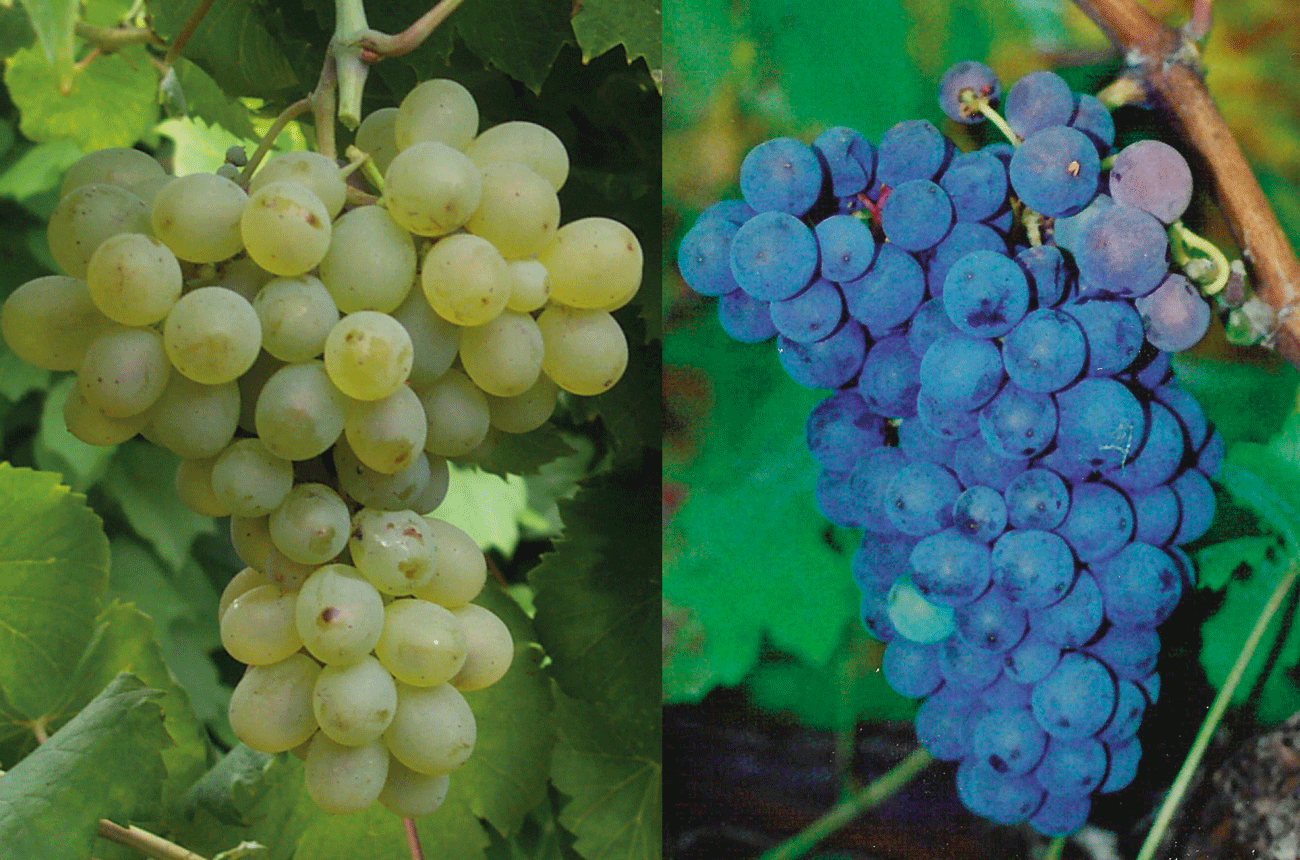
Verdelho
White; total area planted: 629ha
Particularly well suited to a maritime climate, Verdelho was widely planted on the Portuguese island of Madeira, where it accounted for two-thirds of the total vineyard area pre-phylloxera.
Today it is planted throughout Portugal, notably in the Azores, Alentejo, Tejo and Setúbal. Verdelho is not to be confused with Spain’s Verdejo; genetic analysis shows that the two are distinct varieties.
‘The name means “green”, and that’s all they have in common,’ says Vianna. Verdelho prefers to grow in deep soil with a degree of humidity, though it is susceptible to oidium, as well as late spring frosts. When fully ripe it can produce compelling single varietal wines that are well structured, with high acidity, often combining citrus and tropical fruits with mineral and saline notes.
Producers to look for:
- Casal da Coelheira
- Herdade do Esporão
- José Maria da Fonseca
- Kompassus
- Muros de Magma
- Paulo Laureano
- Quinta da Alorna
Alicante Bouschet
Red; total area planted: 6,039ha
Not native to Portugal, Alicante Bouschet was created in France by Henri Bouschet who crossed Grenache with Petit Bouschet in 1866. The variety arrived in Portugal in the early 20th century and thrived its new home, while plantings correspondingly fell in its native France.
It is now planted right across Portugal from Trás-os-Montes in the north to the southern Algarve, with Alentejo a prime growing region. ‘In DWWA 2020 there were 47 awards for Alicante Bouschet and 39 of those were from Portugal. It shows that Portugal has taken ownership of this grape,’ says Vianna.
A vigourous variety, Alicante Bouschet tends to bud early, making it susceptible to spring frosts. Well adapted to hot conditions, it also ripens relatively early. With good natural acidity and tannin structure, Alicante Bouschet can make wines capable of ageing for decades. It is also a useful component in red blends, adding depth and structure.
Producers to look for:
- Herdade do Esporão
- Herdade dos Grous
- Julio Bastos
Ramisco
Red; total area planted: 15ha
Ramisco originated in Colores, east of Lisbon. Some of the older vineyards here date back to 1908, however plantings fell over the course of the 20th century. ‘In the 1940s there were around 1,000ha planted in Colares and today there are less than 20,’ notes Vianna. Susceptible to disease and low yielding, Ramisco is also labour-intensive to grow, which explains why its popularity decreased.
However the grape has abundant natural acidity and is capable of producing distinctive wines with amazing longevity, that need to be matured for several years to be appreciated. For this reason producers have bottled their Ramisco wines in 50cl bottles since 1999. A real rarity that’s well worth seeking out.
Producers to look for
- Adega Regional de Colares
- Casal Santa Maria
- Monte Casca
- Paulo da Silva
- Quinta das Vinhas de Areia
See tasting notes and scores for six wines made from Portugal’s lesser-known grapes
You may also like
Alentejo: Regional profile plus top wines worth seeking outTop wine trends for 2021: countries, varieties and styles worth exploringEuropean wine weekends for 2021: four great short breaks planned
Casal Sta Maria, Ramisco, Colares, Portugal, 2010
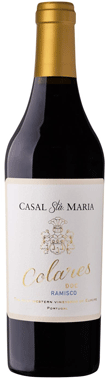

Once widely planted in Colares, there are now only 15ha of Ramisco vineyards in Portugal. This comes from pre-phylloxera bush vines in a vineyard just...
2010
Casal Sta Maria

Herdade do Rocim, Grande Rocim Reserva, Alentejo, Portugal, 2017
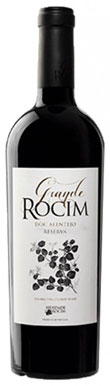
Made only in the best years, this is 100% Alicante Bouschet, planted on schist soils with a grape by grape selection and foot treading. Aged...
2017
Herdade do Rocim
Luis Pato, Vinha Formal, Bairrada, Portugal, 2017
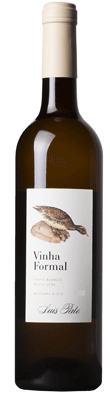
Made from native Portuguese grape Bical and aged for eight months in Allier oak, this distinctive wine combines creaminess in aroma and texture with plenty...
2017
Luis Pato
Quinta & Casa das Hortas, Portal das Hortas Limited Edition Avesso Grande Escolha, Vinho Verde, Portugal, 2018
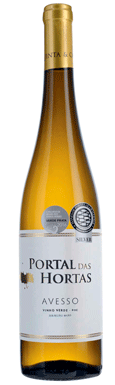
Made from 14-year-old Avesso vines, hand-picked, whole-bunch pressed and unoaked, this is a fresh, dry white with focused acidity. Aromas of ripe pear, citrus and...
2018
Quinta & Casa das Hortas
Rui Roboredo Madeira, Beyra Superior Fonte Cal, Beira Interior, Portugal, 2018
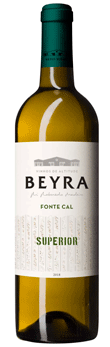
Produced from the rare Fonte Cal grape variety (just 50ha are planted in Portugal), grown at altitude on granite. Fresh grassy citrus aromas have an...
2018
Rui Roboredo Madeira
Casal da Coelheira, Private Collection White, Tejo, Portugal, 2019
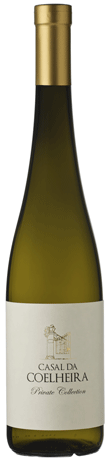
Made from 100% Verdelho, this bright, unoaked wine kicks off with vibrant grapefruit and lemon aromas. An elegant, lifted citrus palate; its creamy, silky texture...
2019
Casal da Coelheira
Casal Sta Maria, Ramisco, Colares, Portugal, 2010
Once widely planted in Colares, there are now only 15ha of Ramisco vineyards in Portugal. This comes from pre-phylloxera bush vines in a vineyard just...
2010
Casal Sta Maria
Herdade do Rocim, Grande Rocim Reserva, Alentejo, Portugal, 2017
Made only in the best years, this is 100% Alicante Bouschet, planted on schist soils with a grape by grape selection and foot treading. Aged...
2017
Herdade do Rocim
Luis Pato, Vinha Formal, Bairrada, Portugal, 2017
Made from native Portuguese grape Bical and aged for eight months in Allier oak, this distinctive wine combines creaminess in aroma and texture with plenty...
2017
Luis Pato
Quinta & Casa das Hortas, Portal das Hortas Limited Edition Avesso Grande Escolha, Vinho Verde, Portugal, 2018
Made from 14-year-old Avesso vines, hand-picked, whole-bunch pressed and unoaked, this is a fresh, dry white with focused acidity. Aromas of ripe pear, citrus and...
2018
Quinta & Casa das Hortas
Rui Roboredo Madeira, Beyra Superior Fonte Cal, Beira Interior, Portugal, 2018
Produced from the rare Fonte Cal grape variety (just 50ha are planted in Portugal), grown at altitude on granite. Fresh grassy citrus aromas have an...
2018
Rui Roboredo Madeira
Casal da Coelheira, Private Collection White, Tejo, Portugal, 2019
Made from 100% Verdelho, this bright, unoaked wine kicks off with vibrant grapefruit and lemon aromas. An elegant, lifted citrus palate; its creamy, silky texture...
2019
Casal da Coelheira
