
Lebanon’s new wave: Top estates and 10 fascinating wines to try
The strong contingent of innovative producers and determined young talent in this mountainous nation of the eastern Mediterranean are placing an increasing focus on the identity and flavours of their historic local grape varieties.


There is a well-worn media narrative on Lebanese wine – let’s call it the ‘plucky little Lebanon’ story – that goes something like this: despite the devastating civil war of 1975-1990, one of the world’s worst economic crises, state capture by a corrupt, self-serving political elite, a massive explosion in the port of Beirut in 2020 and the influx of 1.5 million Syrian refugees, the country’s wine industry has somehow survived, and we should buy Lebanese wine out of solidarity.
Scroll down to see tasting notes and scores for 10 Lebanese wines
This is a narrative that may once again find expression amid the latest outbreak of instability in the wider region. As this issue of Decanter was going to press, the eruption of a new and serious conflict to Lebanon’s south, in Israel and Gaza, was raising the potential of the country again being drawn into regional hostilities.
While there is no denying the challenges of making wine in such a difficult context, this narrative tends to obscure a reality that is much more complex and surprising. Lebanese wine is thriving and no longer overshadowed by the iconic reputation of Château Musar. Good though it is, Musar is just one of a growing range of distinctive, world-class, ageworthy wines, made by a new generation of passionate, resourceful producers.

Lebanon, a country half the size of Wales, has a proud ancient history stretching back to the Phoenicians, but came into being as a state just a century ago. Sandwiched between Israel and Syria, with a multi-confessional population of Maronite and Greek Orthodox Christians, Sunni and Shiite Muslims, Druze and a dozen other faith communities, it is a fragile victim of geopolitics and its history as an independent nation has often been turbulent.
Deep heritage
Yet for such a tiny country, Lebanon punches well above its weight, with the region’s greatest cuisine and a diaspora – spread over Europe, Africa, America and Australia – three times as numerous as the home country population (said to be some 5.3 million currently, according to UN data). Its landscape is ravishingly beautiful and varied, rising from the humid Mediterranean coast thousands of metres to Mount Lebanon, snow-clad in winter, before descending again into the hot, fertile Bekaa plateau.

Winemaking here stretches back at least 5,000 years. Phoenician ancestors of the Lebanese traded wine across the Mediterranean from ancient ports such as Byblos, north of Beirut, and may have spread viticulture to southern Europe. Traces of Roman-era viniculture, including a wine press from the 7th century BC, have been found all over the country. The huge temple complex of Baalbek in the Bekaa was dedicated to Bacchus, the Roman god of wine. And Cana in southern Lebanon is believed by some to be the village where Jesus turned water into wine.
Wine production largely ceased during Ottoman rule, apart from in Christian monasteries. The modern industry began in the mid-19th century, but until the 1970s the only commercial wineries of note were (in order of their founding) Château Ksara, Domaine des Tourelles, Château Nakad and Château Musar. The vast majority of current wineries were founded this century and there are now more than 50. As Lebanese wine writer and commentator Michael Karam puts it: ‘Ironically, at a time when the country is perhaps at its lowest ebb, Lebanese wine is at its most exciting.’
A long way up
‘We are in a process of rediscovery,’ says Diana Salameh, winemaker at Atibaia in the Batroun region north of the capital Beirut and consultant at three other wineries. ‘For centuries wine was neglected. Vineyards were torn up and replaced by mulberries for the silk trade, and then phylloxera came. We need to relearn our different terroirs.’ Batroun itself was an ancient wine-producing region, its name thought to derive from the Greek botrys, meaning grape, but until recently winemaking there was a distant memory.

The aspiration at nearby Ixsir, founded in 2008, is to make high-quality blends from Lebanon’s diverse terroirs. Refrigerated lorries transport grapes from Ixsir’s vineyards across six regions of the country, at altitudes ranging from 400m-1,800m, to the beautifully designed winery, which has won awards for its sustainability. Chief winemaker Gabi Rivero, a former Spain international rugby player, worked in Bordeaux before coming to Lebanon. He wants ‘the Lebanese to fall in love with their terroirs’ by producing clean, elegant wines, with careful temperature control. ‘Lebanese wine is still in a construction phase, so the focus has to be on consistent quality.’
Lebanon is situated relatively far south for fine wine production, but its dramatic topography, climate and limestone-clay soils are ideally suited for vineyards. Eid Azar at Vertical 33, one of the new wave of producers, named it to reflect that duality. ‘We’re at roughly the same latitude as San Diego, so in theory we shouldn’t be able to make good wine. But the country’s verticality creates microclimates suitable for a wide range of crops. You can grow oranges and bananas on the coast, olives on the slopes, and apples or cherries on the mountain tops.’
Azar is one of several new producers from the diaspora on a quest to rediscover Lebanon’s viticultural heritage. A doctor trained in the US and specialising in infectious disease, Azar co-founded Vertical 33 in 2011 with Lebanese friends and renowned Burgundian producer Yves Confuron high on the slopes of Mount Lebanon. Azar believes that single-varietal wines from individual microclimates are the key to unlocking Lebanon’s ‘sense of place’.

The Vertical 33 philosophy is one of minimal intervention, with whole-bunch fermentation, no oak, natural yeasts and as few added sulphites as possible. The first (2019) Pinot Noir vintage, from vines at up to 1,600m, was bottled this year. Full of rich, wild, spicy fruit, it belies the commonly expressed view that Lebanon is unsuited to Pinot. Azar also makes impressive monovarietal Cinsault and Carignan wines, and a remarkable bottling of the native Obeideh grape from a 100-year-old vineyard.
Eddie Chami of Mersel winery, an Australian of Lebanese origin who studied oenology at California’s UC Davis, is another relative newcomer. Chami claims to have the country’s highest vineyard, at 2,420m in the northern Bcharre region, near the emblematic ‘Cedars of God’ for which Lebanon has been famous since antiquity. ‘At that altitude,’ he says, ‘there are only three things you can grow: cherries, potatoes and vines – and yields are very low.’
Lebanese native grape varieties
As Lebanese producers explore their country’s rich and ancient viticultural heritage, more and more local grape varieties are being rediscovered. Some have been
proved to be indigenous; the precise origins of others remain, for the time being, more obscure. They include…
Dhaw al-Qamr Local white grape, which Eddie Chami of Mersel Wine says is the only variety that can grow at 2,000m
Meksessi Local white grape, traditionally distilled to make the Lebanese spirit arak
Merwah Versatile indigenous white grape with good acidity, grown in Lebanon since at least Roman times
Obeideh Thin-skinned white grape with a rich, oily texture recognised as a variety indigenous to Lebanon after DNA profiling championed by Joe Touma of Château St Thomas
Asmi Noir Rich local red grape championed by Fabrice Guiberteau at Château Kefraya
Aswad Karech Local red grape also grown as a table grape, said to be resistant to heatwaves
Mariameh Local red supertannic ‘teinturier’ grape, known as Sabbaghieh in the Bekaa
Marini Little-known local red grape; pale, delicate, somewhat reminiscent of Jura’s Trousseau
Chami is evangelical about the renaissance of Lebanese wine, symbolised by the phoenix on his Merwah line bottles, and about reviving native grapes. At his winery above the historic Qadisha (‘holy’) valley, scattered with ancient Christian monasteries, he takes an artisanal approach, trialling several local grapes, from relatively well-known indigenous varieties such as Merwah and Obeideh to lesser-known grapes like Dhaw al-Qamr (‘moonlight’), Marini and Mariameh. The last two are currently blended into his refreshing, saline Phoenix field blend, and he plans to release his first monovarietal Dhaw al-Qamr and Marini wines later this year.

Chami feels that Merwah’s acidity and ability to thrive without irrigation make it a sustainable ambassador for the country: ‘What the Greeks have done for Assyrtiko, the Lebanese should do with Merwah.’ He is experimenting with Merwah in a range of styles, including skin contact, vin de paille (the ‘straw wine’ style of Jura in eastern France), pét-nat and whole-bunch fermentation. His oxidative vin jaune-style Merwah, tasted from the amphora, with intense notes of walnuts and baked apple, looks promising.
Local flavour
The heart of Lebanon’s wine industry, the Bekaa – a long plateau running between Mount Lebanon and the Anti-Lebanon – is the northernmost part of the Great Rift Valley that runs down into east Africa. Founded in 1857, the country’s oldest and largest producer, Château Ksara at Zahle in the central Bekaa, makes three million bottles a year from its 3,000-year-old cellars, including a saline, moreish Merwah. ‘Demand for wines from local varieties is rising,’ notes Ksara’s Elie Maamari. ‘We are increasing production of Merwah and Obeideh.’

In the nearby town of Chtaura, Faouzi Issa – winemaker at Domaine des Tourelles, established just after Ksara – trained at Médoc first growth Château Margaux and at Domaine Rostaing in Côte-Rôtie. Issa feels Lebanon is starting to rediscover its wine culture and is impatient with the ‘bland international’ wine styles of some producers. He acknowledges the wine sector is on a learning curve as to how to present grapes such as Merwah and Obeideh to consumers, but welcomes the spirit of experimentation. ‘There are more and more young producers trying new things, especially with local varieties,’ he says.
Issa is convinced that Cinsault, brought to the Bekaa by French Jesuits in the mid-19th century, can be a signature grape for the country. ‘Cinsault is an adopted Lebanese variety,’ he says. ‘In France it’s an underdog that seldom ripens fully. Here, with sunshine almost the whole year round, ripening is not a problem and altitude brings freshness, creating a concentrated, complex wine. Cinsault is our champion for the future.’ Issa is justly proud of the bottlings of old-vine Cinsault he has made since 2014 and produces 40,000 bottles a year, alongside an equally delicious old-vine Carignan.
At Château Kefraya in the western Bekaa, French winemaker Fabrice Guiberteau is similarly focused on Lebanon’s wine identity: ‘For me, it’s all about Cinsault, Carignan and, increasingly, local grapes,’ he says. Guiberteau has researched and revived old Lebanese varieties, drawing on vine samples at the Montpellier wine science institute collected during the French Mandate era (1923-1946 in Syria and Lebanon). Two blends called Adéenne (French for DNA) – a mineral-saline white made from Merwah, Obeideh and Meksessi, and a perfumed herbal red made from Aswad Karech and Asmi Noir – are worth seeking out, though currently available only in France.

Kefraya’s direct neighbour Château Marsyas exemplifies the ambitious new spirit in Lebanese wine. The grape varieties here are all ‘international’, but the Marsyas reds have a distinctively local flavour profile, often redolent of Lebanon’s za’atar spices. Brothers Sandro and Karim Saadé, who also own the remarkable Bargylus in neighbouring Syria, have developed the estate since 2005 with the advice of Bordeaux consultant Stéphane Derenoncourt. ‘We fell in love with the western Bekaa – it’s such a magic region,’ says Sandro, who was injured with his father in the Beirut port explosion in August 2020. ‘The Lebanese complain that it’s hard making great wine in Lebanon, but it’s a lot less complicated than in Syria!’
Generational shift
The challenges of producing wine in Lebanon are, nonetheless, considerable. As Eddy Naim of Château Qanafar puts it: ‘Land and labour are expensive, yields are low, energy supplies are erratic and we have to import everything – equipment, bottles, corks, capsules – apart from the grapes.’ Naim, another newcomer ‘bitten by the wine bug’, was born in Greece, grew up in Belgium and studied at UC Davis before returning to run his vineyards at Khirbet Qanafar. Being named Winemaker of the Year by online retailer Naked Wines in 2021 helped Naim to get Qanafar through the pandemic.
The economy is not the only challenge. Blessed though the country is with ideal microclimates and soils for making great wine, climate change is a growing concern. ‘Water management is becoming a big issue,’ says Ksara’s Maamari. ‘We used to have long periods of modest rainfall; now rain comes in sudden outbursts, which is much harder to manage. Extreme heatwaves are more common and snow on the mountains melts earlier. We have planted vineyards at 1,900 metres, but we can’t keep going up forever.’

Despite the challenges, the newly confident mood in Lebanese wine is striking. As Karam puts it: ‘People are no longer trying to make French-style wines. Thirty years on from the civil war, a more adventurous generation of winemakers has emerged, curious about their heritage, who want to make wines that reflect their identity. A lot of conventional wisdom – that you can’t make good wine from Merwah and Obeideh, that Cinsault can’t stand alone as a varietal, or that Pinot Noir won’t work in Lebanon – is being debunked.’
So ignore the standard narrative and buy Lebanon’s new wines for the right reason: because they are exciting, vibrant and characterful – just like the country itself.
The new Lebanon: Joy’s 10 fascinating wines to try
Related articles
- German dry Riesling: Panel tasting results
- German Grosses Gewächs 2023 releases: the top wines
- Weingut Keller: Producer profile
Mersel Wines, Leb Nat Gold, Bekaa Valley, Lebanon, 2021
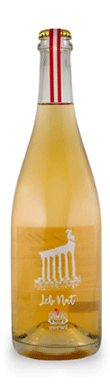

A joyous, engaging 50/50 'pet nat' blend of Merwah and Viognier from Eddie Chami’s scenic winery below the cedars of Lebanon, with a distinctive label...
2021
Mersel Wines

Vertical 33, Obeidi, Mount Lebanon, Lebanon, 2015
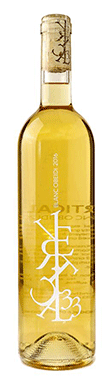
Eid Azar’s wines are uncompromising. He believes in low intervention, using natural yeasts, minimal addition of sulphites to his wines and zero oak. From a...
2015
Vertical 33
Château Ksara, Merwah, Bekaa Valley, Lebanon, 2022
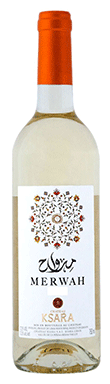
Based in the centre of the Bekaa valley, Ksara is Lebanon’s largest wine producer by far and has a correspondingly big range of wines. This...
2022
Château Ksara
St Château St Thomas, Obeidy, Bekaa Valley, Lebanon, 2021
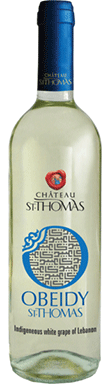
Joe Touma of Château St Thomas is credited with proving Obeideh’s origins as an indigenous Lebanese variety and this monovarietal bottling has an open expressive...
2021
St Château St Thomas
Ixsir, Grande Réserve Rosé, Batroun, Lebanon, 2022
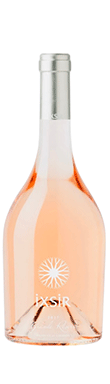
Blend of Cinsault, Syrah and Mourvèdre in an attractively designed bottle with the domaine’s distinctive symbol, representing the roots of Ixsir’s wines spread all over...
2022
Ixsir
Château Marsyas, Château Marsyas Rouge, Bekaa Valley, Lebanon, 2016
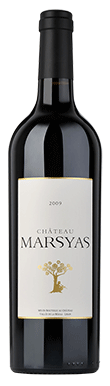
Blend of Cabernet Sauvignon, Syrah, Cabernet Franc, Merlot and Petit Verdot from the Saade family’s beautiful vineyards in the western Bekaa. Fine nose of dark...
2016
Château Marsyas
Domaine des Tourelles, Vieilles Vignes Cinsault, Bekaa Valley, Lebanon, 2019
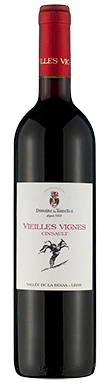
94
Faouzi Issa has been making this 100% Cinsault from the domaine’s old vines since 2014. It has an enticing, smoky nose of red fruits with hints of garrigue and aniseed. Ripe and strikingly fresh in the mouth, with a tangy, herby intensity. Great underlying structure with plenty of rich, slightly confit fruit, but also bright, elegant and balanced, with a surprisingly delicate quality. Great example of how expressive, even refined, Cinsault can be in Lebanon. Good value too. Well worth seeking out.
2019
Domaine des Tourelles
Atibaia, Rouge, Batroun, Lebanon, 2015
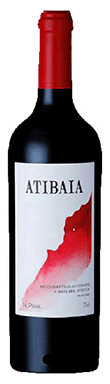
Blend of Syrah, Cabernet Sauvignon and Petit Verdot from this boutique winery in the hills of the Batroun region north of Beirut, made by consultant...
2015
Atibaia
Château Kefraya, Les Bretèches Rouge, Bekaa Valley, Lebanon, 2020
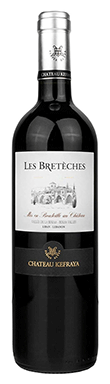
Kefraya make a large range of wines from their 300 hectares in the western Bekaa, including several interesting blends of local varieties. Relatively few are...
2020
Château Kefraya
Chateau Qanafar, Château Qanafar, Bekaa Valley, Lebanon, 2015
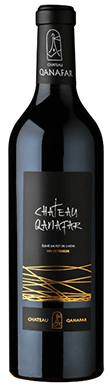
Eddy Naim, voted Naked Wines Winemaker of the Year in 2021, loves the bold, ripe flavours and bright acidity produced by the Lebanese climate and...
2015
Chateau Qanafar
