
Luczy: Williams Selyem – an icon of Russian River Valley Pinot Noir
From garage hobby to celebrated wine label, Williams Selyem put Pinot Noir on the map in California. And now there’s a new chapter, with Burgundy’s Domaine Faiveley acquiring a minority stake in the brand. Matthew Luczy meets winemaker Jeff Mangahas to discuss wine style changes and founder Burt Williams’ legacy.

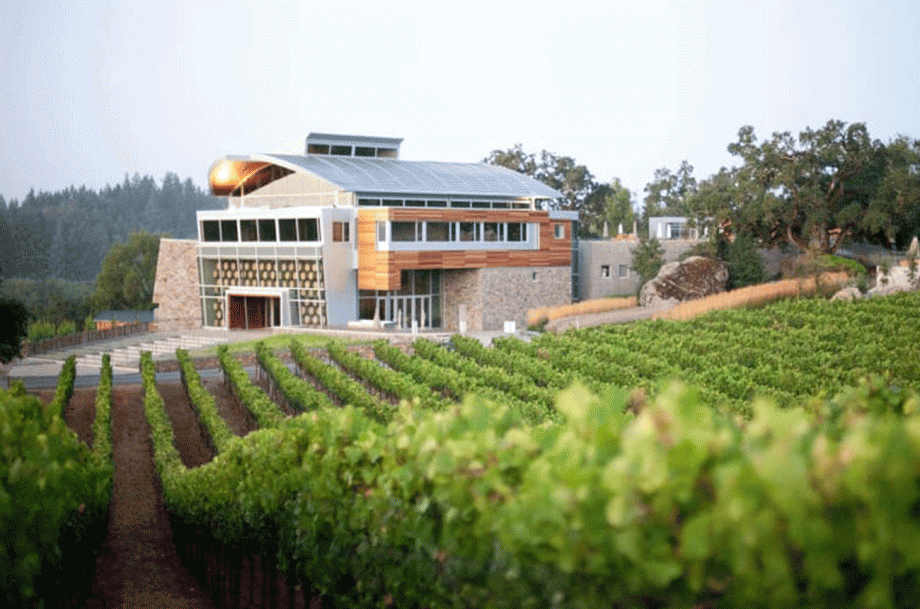
Time, trends and transitions often blur the line between a winery and a brand. There are countless examples of wine producers starting out as one thing and becoming quite another, whether the transition is gradual or overnight.
Williams Selyem was founded in 1984 by Burt Williams and Ed Selyem, two friends who taught themselves how to make wine and run a winery out of a garage in Sonoma‘s Russian River Valley. It would grow into a benchmark Pinot Noir producer, and one of the first California wineries to utilise the now-commonplace system of private mailing lists for distribution.
Scroll down for tasting notes of five new-release 2018 Williams Selyem Pinot Noirs
After their ever-growing popularity had become challenging to manage, the founders sold the Williams Selyem brand to long-time mailing list members John and Kathe Dyson in 1998 for $9.5 million. The brand itself was all there was to buy: no winery, no vineyards, just a name.
During such handoffs, ideals and mindsets established by the originators often fall through the cracks. In its 37-year history, there have been just three winemakers at Williams Selyem. While the style of the wines has shifted considerably over the years, it is now coming full-circle.
First at the helm was Burt Williams himself, part of California’s winemaking hall of fame. Many have emulated his intuition-driven style but rarely equalled it. The two most impressive California Pinot Noirs I’ve ever tasted he made: the 1990 Allen Vineyard and the 1991 Russian River Valley blend. There was complexity, depth and timelessness to these Pinots that I have yet to taste the equal of in California.
His 1988 Summa Vineyard Pinot Noir was named a Decanter Wine Legend in 2018.
Burt Williams: learning from the master
After the Dysons bought Williams Selyem in 1998, Bob Cabral took over as winemaker. Under his guidance, the wines largely followed the trends of the time: increased ripeness, more apparent new oak and a clouding of site-specificity.
Williams Selyem brought Jeff Mangahas on board in 2011 and he has made the wines since 2013. He comes equipped with a science background, having earned a degree in cellular and molecular biology from the University of Washington before stints at Dutton-Goldfield and Hartford Court.
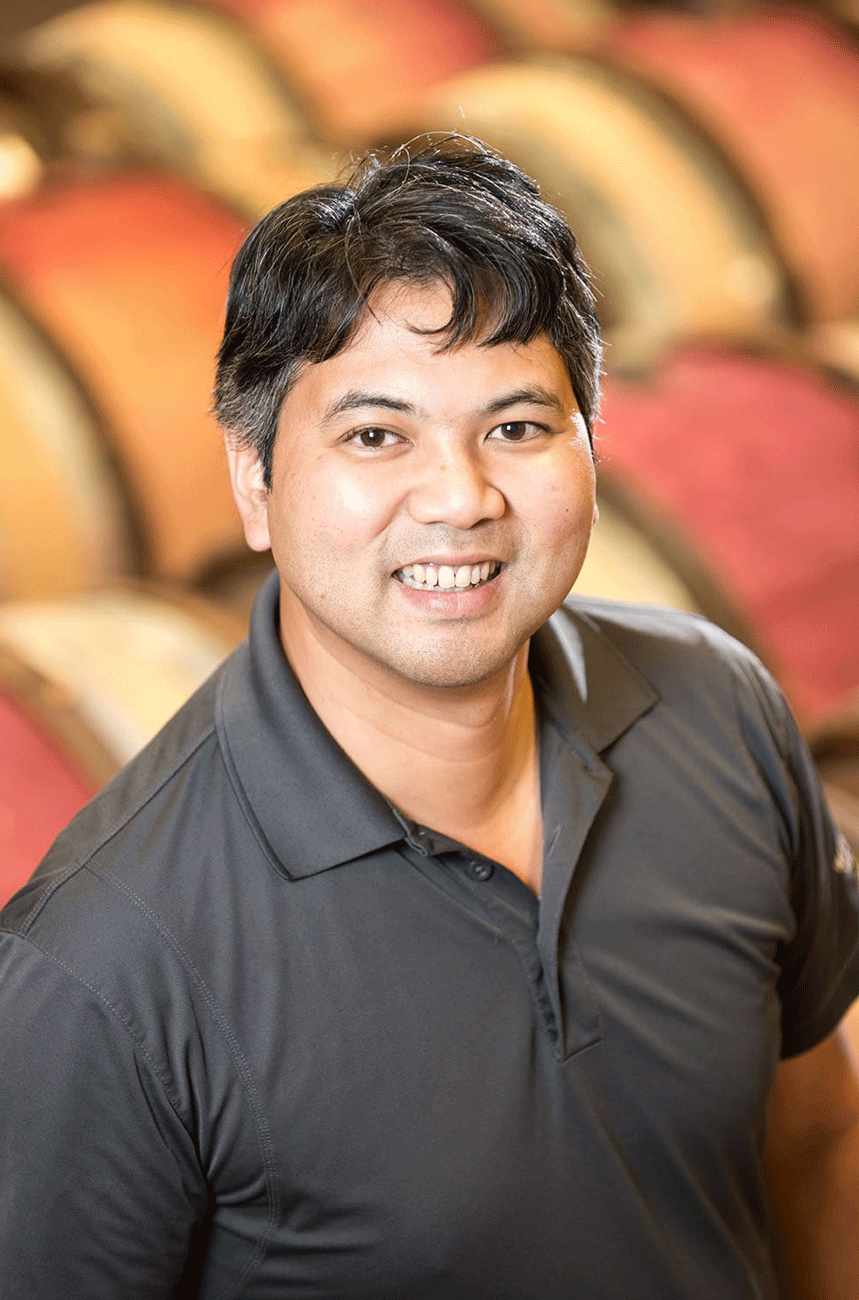
Mangahas genuinely admires Williams’ wines, committed to honouring his legacy. Williams died in December 2019, aged 79, from Parkinson’s disease.
‘I adored Burt,’ he says. ‘Like so many people in the business, some of my favourite wines, and wines that really got me excited about Russian River Valley, were Burt’s.’
‘When I took over, I started inviting Burt to the winery. It was an opportunity to learn from the master, and great to listen to his anecdotes and stories. I absorbed everything he did.’
The ripeness and treatment-driven style of Williams Selyem under Cabral has been reeled in considerably. The wines now echo the supple, firm and floral nature that first built the brand’s reputation. Throughout the lineup, there is a fruit-forward purity with clear delineation between vineyard sites.
A close relationship with grape growers is of great importance with any winery, only emphasised with a producer that boasts as many wines as Williams Selyem does. There are 44, including 19 single-vineyard Pinot Noirs, eight single-vineyard Chardonnays, four Zinfandels, a Chenin Blanc and a sparkling wine.
‘I work tirelessly with our growers in the vineyards, and I think that makes a big difference,’ says Mangahas. ‘I have a terrific personal relationship with a lot of them, as did Burt.’
Continuing traditions in vineyard and cellar
Many cellar practices from Williams’ days are still in place, reveals Mangahas. ‘Burt was self-taught, and did a lot of things because they were convenient or because he learned them from other winemakers.
‘A lot of his techniques – fermenting in horizontal dairy tanks, foot-treading grapes, using François Frères barrels, whole-cluster fermentations – were exactly right, despite him stumbling onto a lot of it. All those things are still here today.’
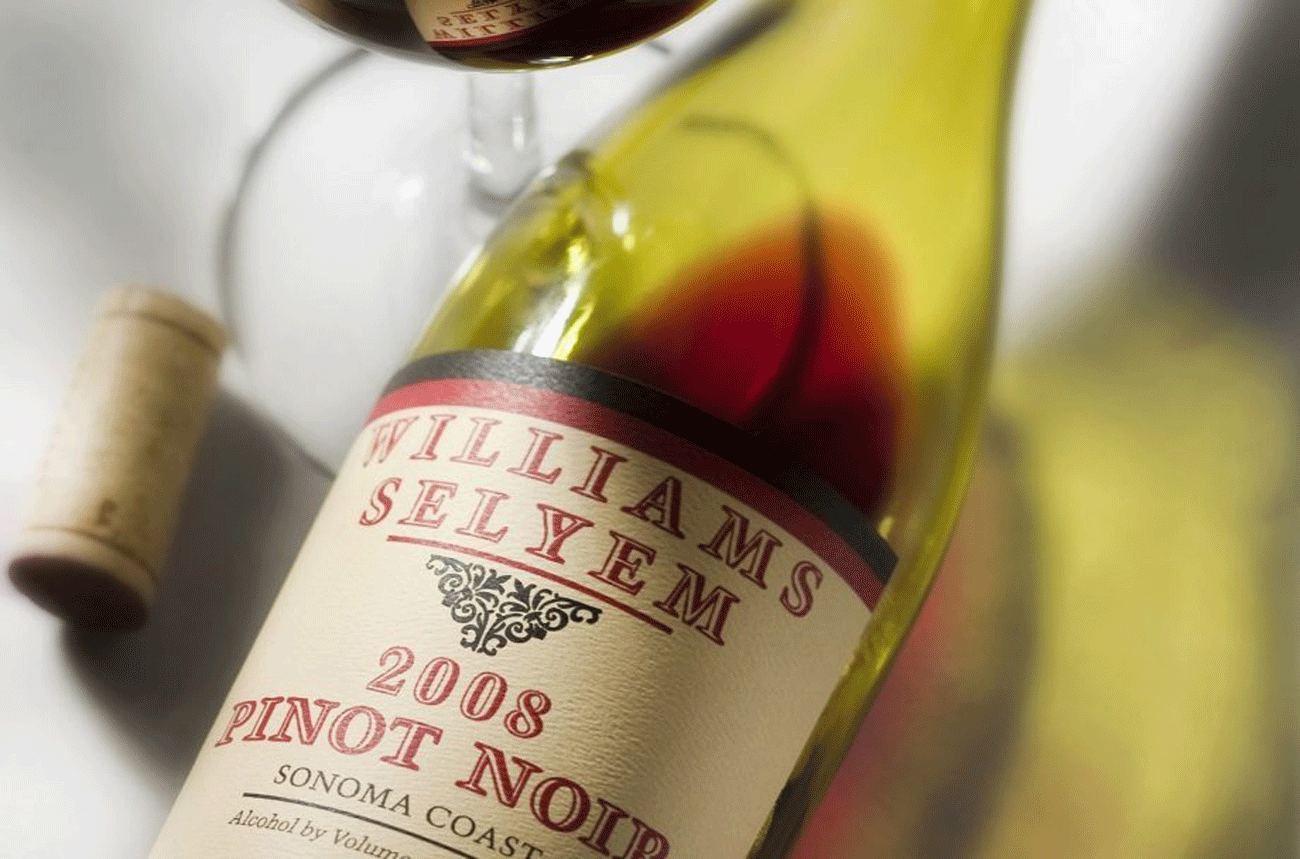
The wines are a fifth to a third whole-cluster fermented, adding a slight grittiness to the finish and increasing their ageing potential. New-oak usage hovers around 50% to 60%, down from past averages of 60% or 70% – sometimes even 100% in Williams’ era. Mangahas ages the appellation blends for 12 months in barrel, and the single-vineyard wines for 15 months.
As is increasingly common in California wineries, Williams Selyem uses a proprietary yeast strain. In the 1980s, Williams worked with a local lab to purify a particularly clean native fermentation of Martinelli Vineyard Zinfandel, producing the strain that is still in use today.
Mangahas continues Burt’s tradition of a quick but intense maceration, helping to achieve the signature silky-but-fleshy texture of the wines. ‘We foot-tread and punch down the grapes, getting the skin-to-juice ratio to such a place that the tannins come out in a short period of time.
‘It’s laborious and intense. We foot-tread or punch down four times a day – every six hours for roughly 14 days. I have 25 people that come and work with me for harvest!’ laughs Mangahas.
A new chapter for Williams Selyem
In 2021, the ownership saga of Williams Selyem turned another page. Burgundy’s Domaine Faiveley has acquired a stake in the brand, with the Dysons keeping majority ownership until 2024 at least.
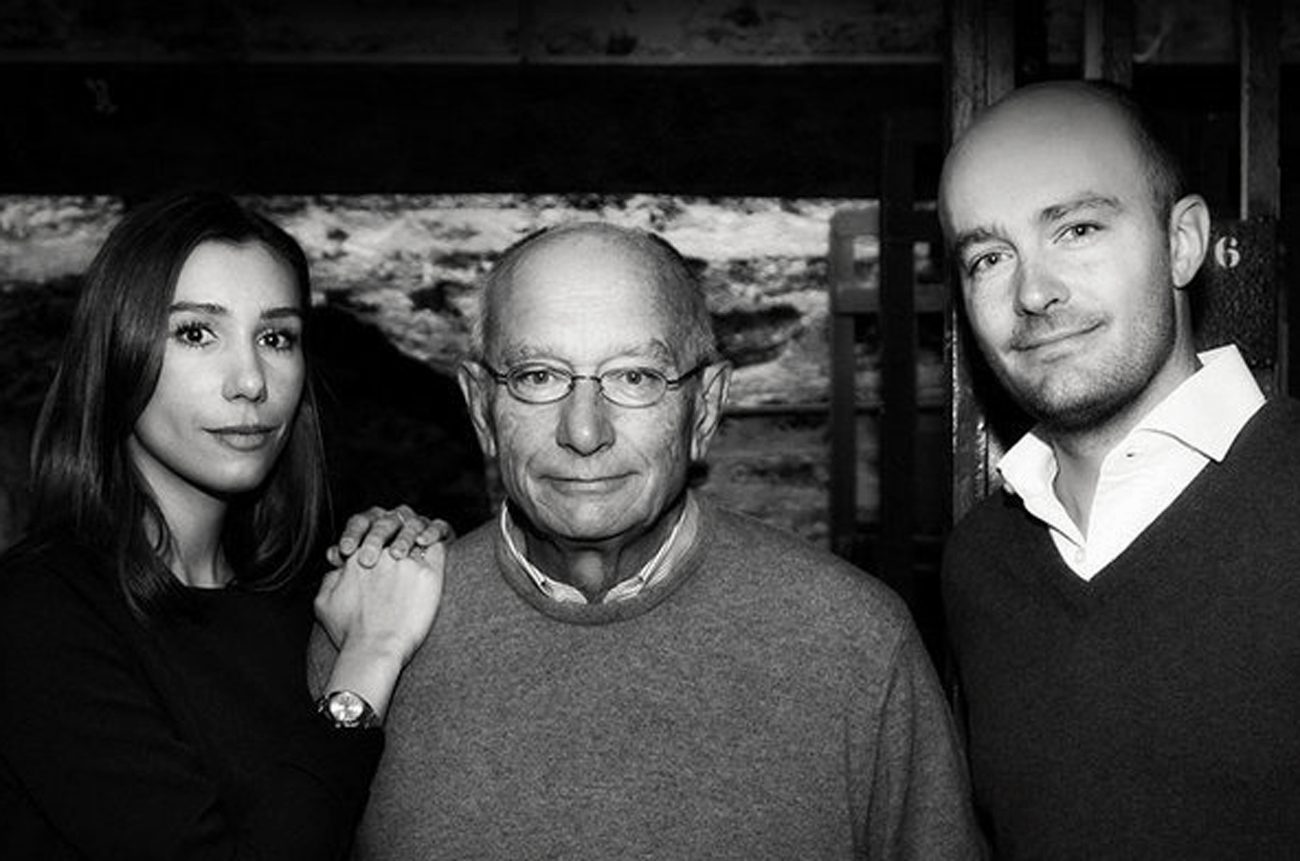
Mangahas comments: ‘Our outlooks are very similar. We are both family run, and first and foremost farmers who make incredible wines from special places. I have the utmost respect for what the Faiveleys have accomplished. I look forward to working with them as much as I know they will enjoy working with us.’
The future looks brighter than ever at Williams Selyem. The return of poise and clarity in the wines, plus the news of a respected Burgundian producer’s involvement, is reassuring.
Even before the Faiveley announcement, the Williams Selyem mindset seems to have shifted from that of a brand to one of a producer. They are aware of and seek to strengthen their legacy, which seems on firmer ground than ever before.
This is Matthew Luczy’s last column for Decanter as our California correspondent. He returns to his role as wine director at Los Angeles two-star Michelin restaurant Mélisse and chef Josiah Citrin’s other LA eateries.
Williams Selyem: five Pinot Noirs from 2018
You might also like…
Luczy: Hirsch Vineyards and the 2018 Pinot Noirs
Cobb Wines: Playing the ‘Pinot Noir long-game’
Gary Farrell: producer profile
Williams Selyem, Allen Vineyard Pinot Noir, Sonoma County, Russian River Valley, California, USA, 2018
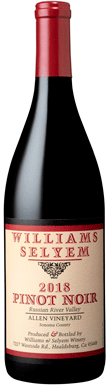

A perennial fruit source for Williams Selyem, the Allen Vineyard has produced some of California's most complex and ageworthy Pinot Noirs. It is located a...
2018
Williams SelyemSonoma County

Williams Selyem, Coastlands Vineyard Pinot Noir, Sonoma County, Sonoma Coast, California, USA, 2018
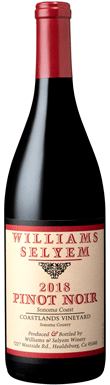
Immediately shows a classic Sonoma Coast flavour profile: loaded with bay leaf, fern and black cherry. It's pure and persistent, with a lovely airy texture...
2018
Williams SelyemSonoma County
Williams Selyem, Estate Vineyard Pinot Noir, Sonoma County, Russian River Valley, California, USA, 2018
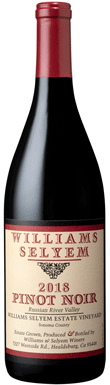
This remained closed on the nose for the first few hours after opening. In the mouth it is texturally impressive in its breadth, persistence and...
2018
Williams SelyemSonoma County
Williams Selyem, Ferrington Vineyard Pinot Noir, Mendocino County, Anderson Valley, California, USA, 2018
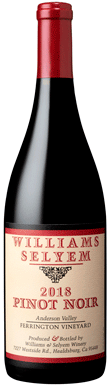
Ferrington lies in the southern section of Anderson Valley, putting it farther away from Pacific fog, leading to massive diurnal temperature shifts. More open and...
2018
Williams SelyemMendocino County
Williams Selyem, Rochioli Riverblock Vineyard Pinot Noir, Sonoma County, Russian River Valley, California, USA, 2018
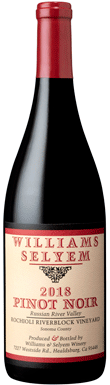
Williams Selyem has sourced fruit from this site since 1997. It was planted in 1989 as a subdivision of the original Rochioli Vineyard, using budwood...
2018
Williams SelyemSonoma County
