
Marcelo Retamal: Profiling Chile’s legendary winemaker
Top Chilean winemaker Marcelo Retamal has pioneered new regions and styles during his career at De Martino. Following his retirement last year he talks to Amanda Barnes about his latest projects and his ongoing quest to redefine Chilean wine.


Brought up in a Catholic family in Santiago, Marcelo Retamal knew he wanted to travel from a young age. He’d watched from the sidelines as his uncle, a renowned scientist, travelled worldwide and regaled him with inspiring tales from afar.
His own first taste of travel came in 1992 when the concert of his favourite band, Iron Maiden, was unceremoniously cancelled in Chile. ‘The church and state banned them from entering Chile for their demonic appearance… It was nonsense,” remembers Reta, as he’s known by friends. ‘So my parents got me a bus ticket to see them in Argentina. It was one of the best concerts in my life!’
Scroll down for tasting notes and scores of 12 iconic Marcelo Retamal wines
Retamal has had a lifelong loyalty to Iron Maiden since – and knew that he wanted a career that allowed him to travel. When he was offered his first winemaking job after University by Pietro de Martino, he took it under two conditions. First that he’d be able to make wines in different regions of Chile; and second, that he’d be allowed to travel each year to different international wine regions. That contract stayed in place until his retirement, and in that time he has made wine in over 350 different vineyards and wine regions along the breadth of Chile and visited hundreds of wine regions ranging from Greece and Georgia to Australia and Alsace.
‘At first I treated my trips like a marathon… trying to visit as many wineries and taste as many wines as possible. I did the maths one time, and in one visit of three weeks I’d tasted 800 wines!’ he says. ‘My approach changed over time though – now I pick the producer over the wine or appellation. It’s the conversation that counts,’ he adds.
These conversations have inspired some of Retamal’s more radical moves in winemaking and given him the tools and confidence to challenge the status quo in Chile. When he started his career in wine in the 1990s, the status quo was simple: ‘Winemakers spent more time in the winery than the vineyard, and we would pick according to the date – always before Easter week – and vinify in old rauli [local Chilean wood] vats,’ he reflects. ‘That was the way the red wines in Chile were until Clos Apalta changed everything.’

A break with tradition
The 1997 vintage of Lapostolle’s Clos Apalta wine from Colchagua, made with Michel Rolland as the consultant, sent ripples through Chile’s wine world. It became an overnight sensation that won over international critics and sent a firm message to Chilean wineries: make riper wines.
‘We started making wines that were not only riper, but with lots of alcohol and lots of oak,’ says Retamal. ‘Even though we were spending more time in the vineyards now and looking for new terroirs it didn’t matter – all the wines tasted the same.’
Retamal looks back on his vintages in the early 2000s as fashion victims of the time. Through his travels to other wine regions around the world — tasting the wines of Joško Gravner and Elisabetta Foradori, for example – he began to question the direction that both he and the rest of Chile was taking. ‘By 2009, I wasn’t drinking any of the wines I made! I couldn’t bring myself to finish a bottle,’ he notes.
In 2010, Retamal started experimenting with earlier harvests again, using less oak and native yeast ferments. He was searching to go back to how Chile made wines in the past, but with an increased knowledge of the country’s vineyards that he had been avidly exploring over the years.
That vintage was the lightbulb moment for Retamal. He managed to convince the De Martino family – Pietro De Martino, and now the fourth generation Marco Antonio and Sebastian de Martino – to take a bold step with him in a different direction.

A focus on place
As a result, 2011 was a landmark vintage for De Martino. ‘We prioritised tension in the wines: with naturally fresh acidity, less alcohol, less oak, less ripeness…’ says Retamal. He began to make large quantities of low-intervention wines which reflected particularities of the place. His team included long-serving second winemakers Felipe Müller (now at Viña Tabalí) and Eduardo Jordán (now technical director at Miguel Torres Chile). He also received input from friend and soil expert Pedro Parra. It was the start of a greater shift that soon took hold of the wider Chilean wine industry.
2011 was also the year that led Retamal to Itata – a region that would not only shape his career, but which he would help to reshape. ‘I wanted to make a wine that would be an icon of this change: with old vines and artisanal winemaking,’ he says. His search took him to the coastal hills of Guarilihue in Itata with old vines of Cinsault, and an idea to vinify in ancient tinajas (Chilean amphorae).
The first vintage of De Martino’s Viejas Tinajas Cinsault shook up Chile’s wine world – perhaps just as palpably as Clos Apalta had done more than a decade before. The wine would not only herald a renewed interest in the old vines of Itata, but also the use of tinajas and skin-contact orange wines (which he made the following year with Moscatel grapes). Retamal and Jordán scoured the country for old tinajas, bringing some 150 of them into the winery – and consequently bumping up the value of these old wine vessels by threefold.
Giving value to old vines and traditional wine regions was also part of Retamal’s goal when he co-founded the Vigno association in 2010. The association, founded with other winemakers and colleagues who shared a passion for old vine Carignan, championed these ancient vines in Maule. It also pushed the price per kilo up from US$0.10 to $1.50 in less than a decade. Working for the common good is a running theme behind many of Retamal’s endeavours.

Reaching new heights
It was the discovery of new vines though, that marked one of the main paths for Retamal. Ever exploring, he heard of an extreme new plantation of wine grapes in the mountains of Elqui Valley and drove there to snoop around in 2006. There he met the Flaño family, who had planted their vineyards in Alcohuaz the year before, and felt an immediate bond to the place and family.
‘It is a truly magical place – the light, the energy, the feeling – and the Flaño family were visionaries… But the grape choices that they had planted were a disaster!’ remembers Retamal with a tender chuckle. He offered to be a partner in the project and the following year they regrafted the suffering vines of Cabernet Sauvignon, Merlot and Carmenère with Mediterranean varieties including Syrah, Malbec and Garnacha that could handle the extreme altitude.
The vision of Viñedos de Alcohuaz began to come into focus. ‘It is a very organic project in that sense… evolving at its own pace,’ says Retamal. ‘We started to define the wines as we started studying the grapes. For example, it was the thickness of the skins at this altitude which led us to construct stone lagares so we could gently crush the grapes by foot.’
Not only is Viñedos de Alcohuaz the highest commercial altitude vineyard in Chile, with vineyards now reaching a staggering 2,200m above sea level, but the wines are a world apart. Low-intervention wines that are aged in cement and foudre for several years before release, they express the power of the place with the temperance of time.
Today, more than ever, Retamal pours his time into these wines — spending long hours blending in the underground granite cellar to the sounds of Pink Floyd. The result is one of the most distinctive portfolios in the New World today.

Flying solo
In addition to Viñedos de Alcohuaz, and now with his independence from De Martino, Retamal has also launched his own label with his wife and three daughters. Using his decades of experience exploring the vineyards of Chile, he’s cherry-picked his favourite varieties and vineyards for his eponymous brand, simply called ‘Reta’.
On the coastal terraces of Limarí, just four hours downhill from Alcohuaz, he is making his excellent Chardonnay and Pinot Noir. ‘I love these as grape varieties to drink, and – after years of searching – I think Limarí is the best place in Chile for both,’ he states. Retamal works on different plots for each variety: picking the limestone soils of Talinay for his Pinot Noir and the granite-calcareous-clay soils of Quebrada Seca for his Chardonnay.
It is perhaps only Retamal who would ever have access to these plots. Talinay is a treasure of Tabalí, managed by his longstanding friend Hector Rojas Barahona and former apprentice Felipe Müller. Quebrada Seca is the oldest plot of Chardonnay in Limarí, owned by a grower who Retamal has worked with for decades and who he helped to salvage part of his drought-stricken vineyard.

The third of Retamal’s inaugural trio of wines is another reflection of his long-standing relationships with growers. ‘I came across this vineyard in 2000 – an incredible Malbec planted in 1949 on its own roots. It was love at first sight,’ he sighs. Retamal has been working with the grower and vineyard since 2000, producing what was then Single Vineyard Limavida at De Martino.
When the De Martino family decided to stop making the wine, Retamal was gutted. But, in a twist of fate, the grower reached out to Jordán, who was by now working at Miguel Torres Chile. He snapped it up immediately – having shared a passion for these old vines with Retamal for many years. When Retamal started his independent project, Jordán immediately offered him 50% of the vineyard for his own wine.
Today Jordán’s Los Inquietos Malbec for Miguel Torres Chile and Retamal’s Reta Romelio Malbec show not only this incredible terroir, but offer a fascinating insight into the shared and yet unique visions of each winemaker. The name Romelio is an ode to the grower, who passed away recently. The date of the plantation of the vineyard is inscribed on the wine label, along with the date of Retamal’s wedding and the date of his first Iron Maiden concert. These wines and vineyards are very much intertwined in his personal history.
‘These three parcels are definitely among the five most important and defining that I have worked with in my life,’ he says. ‘But I’m still looking for a really old vine País to include… I think I might have found it, but we have to see how the wine turns out before I say any more!’

Future plans
Along with tracking down more old vines in Chile, Retamal has also set his sights much further afield: exploring the lesser-known hills of the Sierra de Salamanca in Spain. He has already acquired and made wines from three parcels of old vines of native varieties planted between 500m and 800m – and is on the hunt for more.
Will Retamal ever slow down? ‘Probably not!’ he laughs. ‘But I’m definitely taking my time over these wines – there’s no rush to release them. I want my children and their children to have these wines in their cellar for decades to come. My dream is that they’ll be able to do a vertical in 80 years time!’
As he continues to bring forth thrilling wines from Alcohuaz, Chile and beyond, it’s clear that Retamal’s retirement from De Martino is by no means an indication that he is slowing down. Rather it’s a sign that he’s building his legacy. As he’s already proven in less than a year, Marcelo Retamal is ready to keep on rocking.
Marcelo’s landmarks:
1968 Born in Santiago
1988-1995 Studied at Universidad de Concepción
1992 First Iron Maiden concert
1996 Started at De Martino
2006 Become partner in Viñedos de Alcohuaz
2010 Co-founded VIGNO
2011 First vintage of Viejas Tinajas
2019 First vintage of Reta wines from Chile
2021 Retired from De Martino
2023 First release of Reta wines from Spain
See tasting notes and scores of 12 iconic Marcelo Retamal wines
Related content
The great potential of South American Bordeaux blends: 22 essential wines
Uruguay harvest report 2022: ‘A changeable year’
Amanda Barnes: My top 10 South American wines of 2021
Reta, Quebrada Seca, Limarí Valley, Chile, 2019
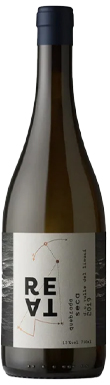

Winemaker Marcelo Retamal has been working with this, one of the oldest vineyards of Limarí, for decades, and this sophisticated Chardonnay is a strong debut...
2019
Reta

De Martino, Viejas Tinajas Muscat, Itata Valley, Chile, 2012
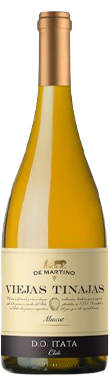
The first vintage of De Martino’s skin contact Muscat is still brimming with life: with a nervous acidity that freshens the palate and a long,...
2012
De Martino
Reta, Romelio, Maule Valley, Chile, 2019
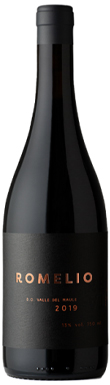
Own-rooted Malbec vines planted in 1945 make up the backbone of this mouthwatering field blend, with a touch of País, Carignan and Semillon. Seductive notes...
2019
Reta
Viñedos de Alcohuaz, Rhu, Elqui Valley, Chile, 2018
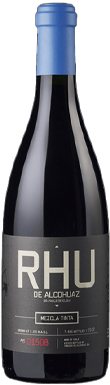
Coming from the highest-elevation vineyard in Chile, this is by all means an extreme Syrah. Deliciously ripe black-fruit notes reflect the intensity of the sun...
2018
Viñedos de Alcohuaz
Viñedos de Alcohuaz, Pingo Pingo, Elqui Valley, Chile, 2015
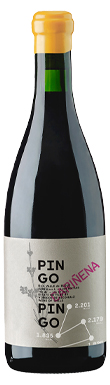
This 100% Cariñena is aged for three years in cement egg before four years in bottle, and still shows youthful vibrancy with a spine of...
2015
Viñedos de Alcohuaz
De Martino, Las Olvidadas, Itata Valley, Chile, 2019
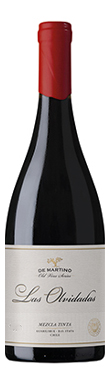
This elegant País is actually a field blend with the native San Francisco Criolla grape variety. The nose is filled with wild herbs and meadow...
2019
De Martino
De Martino, VIGNO, Maule Valley, Chile, 2018
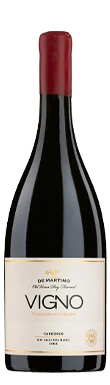
With a touch of Malbec, Cinsault and old vine Cabernet Sauvignon in this Carignan, the 2018 is a powerful wine but with balance and restraint....
2018
De Martino
Reta, Quebrada Chalinga, Limarí Valley, Chile, 2020
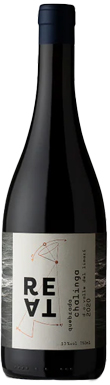
Coming from one of Marcelo Retamal’s favourite spots for Pinot Noir in the whole of Chile, this mouthwatering wine is filled with bright, crunchy red...
2020
Reta
Viñedos de Alcohuaz, Cuesta Chica, Elqui Valley, Chile, 2020
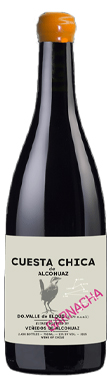
This Garnacha smells more like the mountains than like grapes: a distinctive mineral and bloody note with earthy nuance. Fine tannins interplay with a grippy...
2020
Viñedos de Alcohuaz
Viñedos de Alcohuaz, Grus, Elqui Valley, Chile, 2020
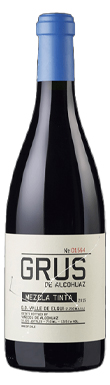
The ‘village’ wine of the Alcohuaz portfolio, Grus is a juicy blend of Syrah, Petit Verdot, Petite Sirah and Garnacha, with a touch of Touriga...
2020
Viñedos de Alcohuaz
Viñedos de Alcohuaz, Rhu, Elqui Valley, Chile, 2011
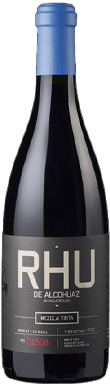
The very first vintage of Viñedos de Alcohuaz is still holding up nicely with brooding notes of black olive, blackcurrant and smoked meat. Aged for...
2011
Viñedos de Alcohuaz
De Martino, Reserva de Familia Carmenère, Isla de Maipó, Maipo Valley, Chile, 1998

The first wine exported as a Carmenère from Chile, this library vintage is a piece of history and shows the longevity and balance Chile’s old...
1998
De MartinoIsla de Maipó
