
Mastroberardino producer profile: a taste of elegance
'Piero had big shoes to fill, but he’s done so with aplomb,' says James Button as he talks with 10th-generation Piero Mastroberardino.


Piero Mastroberardino places a strong emphasis on history and tradition. His family’s centuries-old cellars are located at the northern end of the small town of Atripalda, just a few kilometres up the road from Avellino in the mountainous province of Irpinia, Campania.
‘The town grew up around the winery,’ explains Giuseppe Iannone from the Consorzio Vini d’Irpinia.
Scroll down to see tasting notes and scores for nine Mastroberardino wines
Despite the weight of history on his shoulders, Piero – the 10th-generation president of the family-run Mastroberardino winery – does not seem at all stuck in a rut. He maintains the careful balance of tradition and innovation pioneered by his father, Antonio – the man responsible for elevating the estate’s wines to the pinnacle of Italian winemaking.

The early days
The cluster of stone buildings that make up Mastroberardino’s HQ are accessed via a metal gate directly on Via Manfredi, which runs through the town, and is immediately identifiable to passers by due to the large scroll-font ‘Mastroberardino’ signage on the roof .
It’s here that Piero shows me around the self-curated on-site museum. It’s crammed full of ancient vintages of the estate’s wines and reams and reams of official documents, letters, invoices, diary entries and ledgers – as well as photographs and the odd trinket – from the family’s earliest winemaking days through to its fall and rebirth in 1945.
Piero points out the changes when Mussolini’s fascist government came to power in the 1930s, with much stricter, centralised control, and he also shows me wartime documents stamped with the swastika. Both are chilling reminders of Europe’s darkest days and serve to emphasise the struggles witnessed by Piero’s forebearers.
Long before Mastroberardino could call itself the oldest continually-operating winery in Campania and one of the country’s pre-eminent producers, the museum tells the story of the family’s hard graft. It even features some darkly comic moments – such as when a ship carrying barrels of the estate’s wine was seized. Believing it to be bound for South America, Angelo Mastroberardino (Piero’s great-grandfather) boarded a cruise liner and spent the next few months chasing his own tail. It turned out the stolen ship had simply sailed down the coast of Italy. Luckily Angelo eventually got his wine back.
Mastroberardino’s history begins in the 1750s with Pietro di Berardino, a winemaker who was granted the title ‘Mastro’ (master craftsman) and prepended it to his name. He began to acquire land, as did his successors, and the museum proudly displays documents from the period recording these transactions, marked with the coat of arms of the ruling Bourbon kings. It wasn’t until 1878, however, that the company was officially registered with the Chamber of Commerce by Angelo.
Piero tells me that the estate was ahead of its time in developing export markets: he points out a letter from Michele (Angelo’s son; Piero’s grandfather) to his father, dated 19 June 1912 and stating that he would spend six months promoting the family’s wines in North America. More visits followed in subsequent years. South America, Germany and Scandinavia all became key export markets for Mastroberardino in the first decades of the 20th century.

Antonio Mastroberardino
Piero’s father, Antonio played a major part in restoring the fortunes not only of the family winery but of the Campania region itself, following socio-economic collapse at the end of the Second World War in 1945. The wine cellars – which had served as a bomb shelter during allied air-raids – are today decorated with paintings from renowned artists, painted directly onto the domed ceilings sitting weghtlessly above each junction of corridors. There’s a touch of the Vatican about it; a peaceful place for the barrels to rest which belies the chaos that the passages witnessed at the end of the war.
Read: Champagne during WW2: From vines to victory
The year 1945 was a watershed moment for the estate: the retreating Germans destroyed the estate’s precious barrels of wine and soon after, Michele passed away, leaving his son Antonio to assume control of the estate at just 18 years of age.
‘He started university in Naples and went on studying and running the family business at the same time,’ explains Piero. Antonio faced an uphill battle. Many export markets had been lost during the war and the vineyards were in a terrible state. After the ravages of Phylloxera in the 1930s, the remaining vines had then endured shelling, bombing and semi-abandoment as workers were conscripted to the army. ‘The Oenological School and scholars stated that the economic and market conditions required a change of crop from quality native varieties [Fiano, Greco, Aglianico] to Trebbiano and Sangiovese, [more productive varieties]’ says Piero.
At this time there was also a new interest in international varieties such as Cabernet Sauvignon, Merlot and Chardonnay but Antonio was adamant that the vineyards should be restored using the region’s traditional varieties of Greek and Roman origin, and so he began to replant his vineyards with Fiano, Greco and Aglianico, propagated from the few surviving vines. ‘My father put up a strenuous resistance by convincing local winemakers to follow the example of the Mastroberardino family in replanting the native varieties of our land, driven by the aim of not losing the enormous heritage of the wines of the past,’ says Piero.
Antonio’s legacy is one that carried the fortunes of the entire region on its shoulders. His efforts in researching the terroir and the traditional grapes that thrive there was bolstered by constant contact with winemakers in other regions and other countries, keeping him up to date with the latest technological advances and methods. He even undertook a specialisation at the University of Bordeaux, where he learned alternative winemaking techniques and cellaring solutions.
The winery flourished under Antonio, along with his brother Walter, and Mastroberardino was soon bottling over half of all of the region’s DOC wines. The estate’s Taurasi wines in particular, first produced in 1928, were by the 1960s gaining an international reputation that was firmly cemented with the release of the estate’s now-legendary 1968 Taurasi Riserva. It was in large part thanks to the reputation of Mastroberardino’s Taurasi wines that the denomination became Campania’s first DOCG in 1993.
In 1996, Mastroberardino became involved in a research project attempting to understand and recreate the wines of 1st century AD Pompeii, before the calamitous eruption of Vesuvius. The winery was authorised by the Italian government to plant Roman-era grape varieties and in 2001 produced the first wine, called Villa dei Misteri after the famous frescoed villa in the ancient town.
Elegance
After a dalliance with richer, fuller, concentrated styles in the early 2000s, as was the fashion, he today has a range of wines which fully express the terroir and his preference for traditional and low-intervention winemaking, demonstrating elegance and posessing impressive longevity.
This push for ultimate elegance is demonstrated in the recent introduction of the ‘Stilèma’ range, which aims to recall the estate’s ‘golden days’ of the 1950s to 1980s by creating expressive blends rather than singling out individual ‘cru’.
The white Stilèma wines see long lees ageing and partial oak maturation, while the Taurasi undergoes short maceration then long ageing in oak and bottle. Until just a few years ago, Aglianico had a reputation for formidable tannins and austere fruit but Piero and some other producers have tapped into a new, more accessible but no less complex style.
The Stilèma Taurasi 2015 is tobacco scented, earthy and sweet with wild berry elegance and velvety tannins, while a tank sample of the estate’s Stilèma Taurasi 2016 shows an almost Burgundian character of gamey red fruits and superb balance. This is the wine I returned to several times during dinner as it was so moreish and appealing, even at this early stage in its evolution.
Piero had big shoes to fill, but he’s done so with aplomb. As well as president of Mastroberardino, he is a professor of business management at the University of Naples and president of the Istituto Grandi Marchi – a prestigious group of 18 family-owned wineries from across Italy.
It’s the company that Mastroberardino keeps in this supergroup – Antinori, Ca ‘del Bosco, Col d’Orcia, Jermann, Lungarotti, Masi, Michele Chiarlo, Pio Cesare, Tasca d’Almerita, Tenuta San Guido and Umani Ronchi among them – that really gives an idea of the high esteem the winery is held in.
Tasting the Mastroberardino wines:
Related content
Best Campania wines: 30 to try
SuperTuscans at 50
Mastroberardino, Radici, Fiano di Avellino, Campania, Italy, 2011
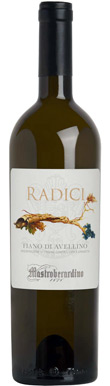
95
Showcasing the ageing potential of Fiano di Avellino, this 2011 is sublime. Fragrant with stone fruits, ash, straw and earth, it combines super-fresh acidity with a lovely volcanic, mineral character. Saline, fresh and long, this demonstrates impressive staying power and elegance. Just 993 bottles produced.
2011
MastroberardinoFiano di Avellino
Mastroberardino, Radici, Fiano di Avellino, Campania, Italy, 2020
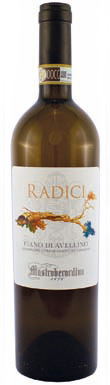

Mastroberardino's historic Santo Stefano del Sole vineyard reaches up to 600 metres above sea level. It produces the grapes for Radici, a mineral, stony expression...
2020
MastroberardinoFiano di Avellino

Mastroberardino, Stilèma, Fiano di Avellino, Campania, Italy, 2016
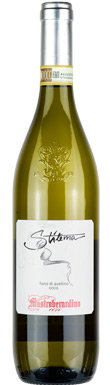
The Stilèma range blends the estate's finest plots, rather than presenting single-vineyard 'cru'. A selection from Montefalcione's clayey-calcareous soils and Manocalzati's sandy, volcanic soils, this...
2016
MastroberardinoFiano di Avellino
Mastroberardino, Stilèma, Fiano di Avellino, Campania, Italy, 2017
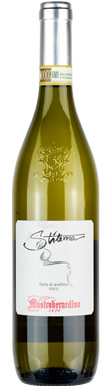
This elegant, ageworthy Fiano - the current release - spends around 24 months on its lees in stainless steel, with 10% in used oak. It...
2017
MastroberardinoFiano di Avellino
Mastroberardino, Stilèma, Greco di Tufo, Campania, Italy, 2017
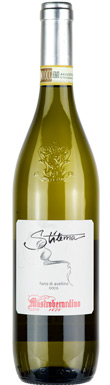
Designed to recapture what Piero Mastroberardino considers the golden era of the estate's Greco di Tufo wines - the 1970s - Stilema undergoes long ageing...
2017
MastroberardinoGreco di Tufo
Mastroberardino, NovaSerra, Greco di Tufo, Campania, Italy, 2020
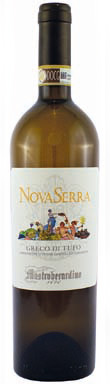
A selection from the estate's 16-hectare Montefusco vineyard, ranging from 450 to 600 metres, this is both waxy and stony, with apple and flint aromas...
2020
MastroberardinoGreco di Tufo
Mastroberardino, Neroametà, Campania, Italy, 2018
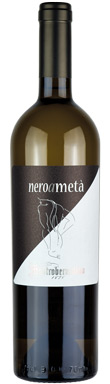
Neroametà ('half black') is a white wine made from Aglianico. It's a rare use for this red grape, which is vinified in stainless steel with...
2018
Mastroberardino
Mastroberardino, Stilèma, Taurasi, Campania, Italy, 2015
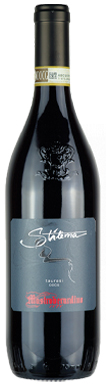
Warm and spicy in aroma, with background notes of sundried tomato and coffee, Mastroberadino’s interpretation of the style aims at maximum expression of the terroir....
2015
MastroberardinoTaurasi
Mastroberardino, Radici Riserva, Taurasi, Campania, Italy, 2015
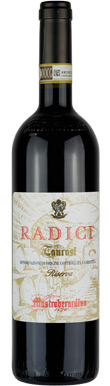
First produced in 1986, Radici Taurasi is sourced from the upper part of the Montemarano vineyard at around 550 metres. A long maceration on the...
2015
MastroberardinoTaurasi
