Charming yet serious, the new technical director at Olivier Leflaive in Puligny-Montrachet is a breath of fresh air. She’s forthright and decisive yet profoundly modest, and to judge from the wines she’s producing, the house is in skilful hands.
Solène Panigai grew up in the wine industry – her parents worked as agronomists in Champagne.
She studied in Paris and in Montpellier at the Ecole Nationale Supérieure Agronomique (now L’Institut Agro Montpellier), from 2018 to 2020, earning degrees in agricultural engineering and oenology.
After apprenticeships in Burgundy, Bordeaux and Oregon, she worked for the Burgundy wine board (BIVB) as a research oenologist studying premature oxidation.
There she met Franck Grux, longtime technical director at Olivier Leflaive – among Burgundy’s best-known names.
Grux had been running Leflaive’s winery since leaving Domaine Roulot in 1989, and with his retirement looming, he recruited Panigai as his replacement.
Prestige position
Grux wasn’t a winemaker who sought the limelight, content to let Olivier bask in the adulation of his fans. However, Grux’s wines eloquently testified to his ability and placed him at the forefront of Burgundy.
Decanter newsletter
Get our daily fine wine reviews, latest wine ratings, news and travel guides delivered straight to your inbox.
Leflaive founded his eponymous négociant house in 1984, two years after taking over his father’s role as co-director of Domaine Leflaive with his uncle Vincent and then his cousin Anne-Claude.
He continued in both roles until 1994, when he left the family domaine to focus on the négociant business with his brother Patrick, bringing over his share of the Leflaive family vines about 15 years later.
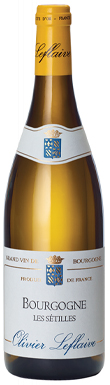
The house’s flagship is the white Bourgogne Les Sétilles, named for the part of the village where Olivier’s cellars are situated. In 2023, 70% of the wine was aged in oak barrels (10% new), which was then blended with 30% that was kept in stainless steel vats.
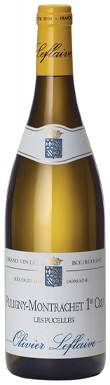
The Pucelles’ incisive lime peel and pear aromas are accented with notes of saline minerality and smoke. The texture is rich, but there’s enough lively acidity to draw this to an impressively long finish. This is an impressive wine, produced from domain-owned vines.
There’s an appealing Granny Smith apple and nectarine fruit aroma with a hint of white blossom on the initial attack. The texture is surprisingly fresh for the vintage, and the finish is elegantly lovely – astonishing quality given the volume of production.
Learning curve
Olivier and his brother now own 26ha of vines; their team picks a further 34ha where they manage the grape-growing, and this is supplemented with purchases from another 120ha.
When Grux retired at the end of 2023, Panigai had more than enough to keep her busy, particularly with the challenging conditions of the subsequent 2024 harvest.
Discussing the challenges, she says: ‘There was a steep learning curve – I had one year with Franck to learn everything. Many of the problems today are tied to climate change.
‘In 2023, we had water stress early and picked in a heatwave, whereas in 2024 it was the opposite – too much water! One must be agile, and continually adapt the way of working in the cellar. There isn’t one simple recipe.
‘The best solution is to keep an open mind and ask the questions that need to be asked: what can we do in the vineyard over the long term to conserve our soil; what can be done to limit the impact of global warming; how can we adapt the vines through massal selection or changing the rootstocks to help them flourish…?
‘These are big questions, but fascinating ones.’
Gradual shift
Panigai with Franck Grux, former technical director at Olivier Leflaive.
(Image credit: Maison Trafalgar and Romain Chambodut)
Another adaptation is an incremental change in the barrel regime, working with different coopers and levels of toast (the charring applied to the inside of a new barrel).
Panigai tends to favour the coopers Chassin, Mercurey and Meyrieux; her predecessor was fond of Seguin Moreau.
She’s also experimenting with larger barrels and large uprights (foudres), but not yet with wine globes or amphorae. Panigai seems enraptured by her new post. ‘I love tasting,’ she says.
‘Working at [Olivier] Leflaive, there is enormous diversity. I take great pleasure in the richness of the appellations, constructing the wines, and discovering each new vintage. After all, wine is a living thing, and working with a living thing is what motivates me the most.’
Olivier Leflaive, Puligny-Montrachet, 1er Cru Les Pucelles, Burgundy, France 2023
My wines
The Pucelles’ incisive lime peel and pear aromas are accented with notes of saline minerality and smoke. The texture is rich, but there’s enough lively...
Olivier Leflaive, Les Sétilles, Bourgogne, Burgundy, France 2023
My wines
There’s an appealing Granny Smith apple and nectarine fruit aroma with a hint of white blossom on the initial attack. The texture is surprisingly fresh...