
Pic St-Loup: regional profile plus the 12 wines worth seeking out
Dominated by the tilted limestone block of Pic St-Loup itself, this appellation on the cooler, wetter eastern side of the Languedoc AP region is noted for its fresh and fragrant wines, with Syrah the star. Andrew Jefford charts its progress and predicts a bright future,


A long march, a novel, a saga: there are many analogies for the slow emergence and differentiation over the past 40 years of Languedoc’s appellations.
Why slow? Geography, in a word. In contrast to regions such as Burgundy or the Rhône, Languedoc’s appellations unfold east to west, not north to south.
That means that there are no clear climatic contrasts of the sort that distinguish Chablis from the Mâconnais, or Côte-Rôtie from Châteauneuf-du-Pape. All lie in ‘the Mediterranean zone’ – so differences between them in soil, climate and performance are a matter of nuance. With every year that passes, though, those nuances acquire more light and shade, and the personality of each appellation can be perceived more clearly.
Scroll down for Andrew Jefford’s Pic St-Loup tasting notes and scores
None, I would argue, more clearly than Pic St-Loup. Lean, clean, fragrant, vital and fresh: it’s the track athlete of the Languedoc.
Its wines are less rich, fruity and opulent than those of Minervois, La Clape or the limestone zones of St-Chinian. It has more homogeneity of terroir and hence style than the equally concentrated Terrasses du Larzac; it is less stony-sweet than Faugères or the schist zones of St-Chinian; but it’s also more distinctively Mediterranean and garrigue-scented than Cabardès or Malepère.
If Hermitage or Cornas could be said to have an authentic southern echo in the Languedoc, it would be somewhere in the beautifully lit stone fields that swirl and skirt the Pic.
Pic St-Loup at a glance
Appellation established: As Languedoc, 1985; Languedoc-Pic St-Loup, 1994; Pic St-Loup, 2017
Area under vine: 1,300ha out of 4,000ha
Elevation: Vineyards 100m-300m (summit of Pic St-Loup 658m)
Soil type: Hard and soft limestones; marls; glacial limestone gravels
Microclimate: Cool and wet (up to 1,000mm per year) for Languedoc; marked diurnal temperature differences; exposed to both Mistral and Tramontane winds
Producers: 59 wineries; 72 growers; 80% organic cultivation
Grape varieties: Red Syrah (at least 50%), Grenache, Mourvèdre as main varieties; Carignan, Cinsault, Counoise and Morrastel as minor varieties; must be a blend of at least two varieties. Rosé Syrah must be 30%, minor varieties can include Grenache Gris
The rise of Syrah
It’s come a long way. ‘Things were in a dismal state here in the 1970s,’ points out appellation president Régis Valentin of Château de Lancyre. This was a region of sheep pasture as much as viticulture, and much of the wine – which was based on low-quality Aramon, and Carignan (ill-suited to eastern Languedoc) – was so bad it had to be distilled.
The zone made its long march through VDQS in the 1950s and through the overall Languedoc appellation in the 1980s to reach cru status by 1994.
Thirteen years to get to an AP of its own required stamina, ‘but, humanly speaking, it was a very enriching period’, remembers Guilhem Viau of Bergerie du Capucin, who served as appellation president during the key years of 2011-2016. ‘The cahier des charges [appellation rule book] changed a lot between 2009 and 2016, both in quality terms and in developing the emphasis on Syrah.’
The starring role of Syrah here merits attention. This much-travelled variety was planted throughout the Languedoc in the last decades of the 20th century as a cépage ameliorateur or ‘improving variety’. A good idea at the time, but accelerating climate change often leaves Syrah tasting cooked and gloopy, especially in western Languedoc. Not in the Pic: it loves the much cooler and wetter conditions here.
The northern Rhône aside, nowhere in France can offer better Syrah aromatic profiles than Pic St-Loup: floral, lifted and beguiling yet authentically southern, like a citrus grove on a warm spring evening.
Grenache at its best is very distinctive, too, with a grip and poise closer to that of Gigondas than Châteauneuf-du-Pape. Mourvèdre doesn’t always ripen easily here, but when it does it seems to be a wonderful vehicle for those enigmatic yet alluring garrigue notes, which are also pronounced here.
Dramatic scenes
I’ve been able to get to know the appellation over the past decade, as I live within cycling distance of it and often take walks here, as well as climbing the Pic itself, with family and friends.
Limestone is unquestionably the dominant soil type, but after that there are sub-zonal contrasts. For scenic drama, I don’t believe anywhere in Languedoc can match the Combe de Fambetou: a dramatic, almost fairytale valley between the Jurassic Pic itself and the Cretaceous limestone cliffs of Hortus. That’s where you’ll find two of the appellation pioneers, Domaine de l’Hortus and Mas Bruguière, with Syrah perfect for the north- facing slopes below the Pic, and Grenache and Mourvèdre snug on the much warmer limestone slopes below Hortus.
On the south side of the Pic, by contrast, you’ll find the much snugger Combe de Mortiès: wines produced here are the closest that Pic St-Loup gets to opulence.
Most of the appellation occupies a long fault line running from St-Gély-du-Fesc and Les Matelles in the southwest up to Corconne in the northeast, and this corridor provides a series of beautiful southeast exposures on conglomerate, marl and limestone rubble soils past attractive villages such as Valflaunès and Lauret; the zone is echoed in a second valley, which runs through Fontanès.
And I just have to tell you about the gravettes of Corconne, which is where – funds allowing – I would go hunting for vineyards in the Pic. This is an astonishing 150ha bench, 5m deep or more, of wonderfully free-draining limestone fragments shattered from the escarpment in glacial times, set in a delicious red-earth marl matrix: mouthwateringly perfect vineyard soils.
Much of the fruit of this zone goes to the local cooperative at present and is sold as inexpensive bag-in-box wine, but fine wine will surely be produced here one day.

Athletic qualities
Given all these differences, can we look forward to a cru system?
That’s one of the main regional projects, ‘but it’s just in our heads at the moment’, says Viau; the other project is to extend the appellation to whites, to which it is well suited and which already impress, either as IGP wines or as Languedoc. For the time being, though, the main efforts go into consolidating the aromatic finesse, drinkability and delicacy of the local reds.
I was hugely impressed, almost shocked by the quality of what I tasted in two blind tastings to prepare for this article: the wines were much better than when I last systematically surveyed them, almost a decade ago. Many growers are abandoning barriques and small wood vessels and ageing in steel tanks, concrete tanks or eggs, earthenware amphorae or large wood foudres – the majority of the cuvées I have selected see no barriques at all, not even old.
The wines consequently have delicacy and a fine bone structure, with elegantly drawn, fruit-bonded tannins; a juicy vivacity mingles with those evocative herbal fresh-bitter perfumes and flavours. Languedoc’s athlete is on form.
Pic St-Loup: 10 names to know
Bergerie du Capucin
Guilhem Viau is one of Pic St-Loup’s most talented winemakers, working with 15ha of vines in Lauret and Valflaunès, the heartland of the zone. He quickly grasped, as many of the Pic’s avant- garde have since done, that too much small-oak ageing can suffocate the magnificently scented Syrah notes that are possible here; all of his cuvées marry aromatic finesse with fine textures and sumptuous fruit.
Château de Cazeneuve
Nestled in the pretty village of Lauret underneath the grand limestone escarpment that swings north from Hortus, Château de Cazeneuve (and the neighbouring Auberge du Cèdre, a great base from which to explore the Pic) occupies another of the appellation’s sweet spots. André Leenhardt and his son Quentin produce a nuanced range, including an old-vine Carignan (uncommon in eastern Languedoc), the almost-pure Mourvèdre Le Sang du Calvaire, old-vine Syrah in Le Roc des Mates and the super-classical blend Les Calcaires.
Château de Lancyre
No one driving north through the appellation towards Corconne could miss the magnificent swell of vines unrolling like a giant green wave through the landscape just to the northeast of Valflaunès. This is the core of Château de Lancyre’s substantial 85ha holdings. Lancyre has put on an astonishing turn of speed in recent vintages to become one of the appellation landmarks today, as the two wines selected from this often outstanding nine-wine range confirm.
Château Puech-Haut
Gérard Bru’s Puech-Haut is a well-known Languedoc name, largely for its range produced in the historic neighbouring appellation of Languedoc-St Drézéry, but the Puech-Haut vineyards run on into Pic St-Loup, and there are seriously constituted if oaky Pic St-Loup wines in the range from high-sited, stony vineyards. Bru also owns the significant Pic property of Château Lavabre – although a sale of this second property is imminent at the time of writing.
Domaine de l’Hortus
Together with Mas Bruguière, l’Hortus is the other founding domain of the appellation both to occupy an unrivalled position in the spectacular Combe de Fambetou and to have become an appellation reference over the past four decades. The Orliac family of Hortus (four members of the second generation work at the domain today) has expanded the domain to include 80ha in different zones of the appellation. The elegant, fine-grained Grande Cuvée has long been an appellation standout, joined today at the top of the range by the single-vineyard Le Dit de l’Hortus, produced in the best years only.

Domaine de Mortiès
Occupying a uniquely sheltered, warm, amphitheatre-like site to the south of Pic St-Loup, with both black marl soils and limestone scree, gives the wines of Mas Mortiès a fleshiness and tenderness that makes this domain another of the appellation references, especially for the fine-value ‘Pic St-Loup’ cuvée.
Domaine Haut Lirou
With 105ha under vine, this property is the giant of the Pic – and the Rambier family also owns Domaine de Figaret in the north of the appellation (and Mas du Notaire in Costières de Nîmes). The Rambier roots are in wine-growing, but the family has significant real-estate interests, too.
Domaine Mirabel
Its 15ha and fine track record of making nuanced, balanced, finely detailed wines make Domaine Mirabel, run by brothers Samuel and Vincent Feuillade, the reference domain today for the astonishing Gravettes de Corconne sector. In addition to the Les Eclats cuvée, look out for the penetrating, ageworthy old-vine Les Bancels cuvée.
Domaine Pégaline
This fine new domain is the creation of Philippe Martin and his partner, Nathalie Héricourt, working on just 5ha of Claret’s glacial soils, similar to those of the gravettes of Corconne. Martin had previously worked with Guilhem Dardé at Mas de Chimères in Terrasses du Larzac, as well as Marc Kreydenweiss in Costières de Nîmes and Basile Saint- Germain at Domaine Les Aurelles near Pézenas. No wood is used here – and the purity and vivacity of the fruit sings out. Languedoc needs more wines like this.
Mas Bruguière
Immaculately tended vines and a stunning film-set location in the Combe de Fambetou, wedged between the Pic and the cliffs of Hortus: no one who has ever visited Mas Bruguière will forget it. Guilhem Bruguière and, in recent years, his son Xavier produce grand, aerial classics, shrinking the domain to 10ha and pulling away from small-oak ageing over the past decade to concentrate on the fastidious vineyard work that delivers wines of purity, aromatic refinement and subtlety of texture.
Other domaines of note:
- Château de Lascaux
- Château Fontanès
- Clos Marie
- Domaine de Valflaunès
- Ermitage du Pic St-Loup
- Mas Peyrolle
Up-and-coming domaines:
- Château del Ranq
- Coste-Ubesse
- Domaine Caussarelle
- Domaine de la Perrière
- Domaine Inebriati
- Domaine la Costesse
- La Chouette du Chai
- Mas Pagès
See Andrew Jefford’s pick of 12 Pic St-Loup wines worth seeking out
You may also like
Regional profile: Terrasses du Larzac plus 67 wines tastedLanguedoc gems: 24 Minervois-La Livinière wines tastedRegional profile: St-Chinian plus 59 wines tastedUnderstanding IGP Pays d’Oc
Mas Bruguière, L'Arbouse, Pic St-Loup, Languedoc-Roussillon, France, 2018
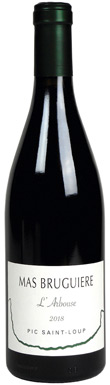

If you’re looking for elegance, delicacy and aromatic finesse in a Languedoc red, allied with a firm, gastronomic structure, ample length and the classic herbal...
2018
Mas BruguièrePic St-Loup

Bergerie du Capucin, Dame Jeanne, Pic St-Loup, Languedoc-Roussillon, France, 2018
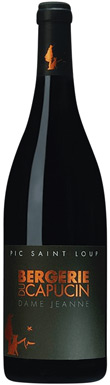
<p>The much-awarded Dame Jeanne – a zero-oak prestige cuvée - is always a great buy and a genuinely age-worthy wine from the Pic. The 2010...
2018
Bergerie du CapucinPic St-Loup
Château de Cazeneuve, Les Calcaires, Pic St-Loup, Languedoc-Roussillon, France, 2019
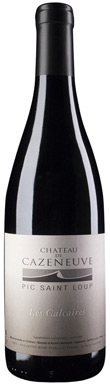
Aged in steel and large wood, this four-variety blend is light, graceful, elegant and fresh: classic Pic chic. In aroma terms, it’s ‘thyme wine’, hauntingly...
2019
Château de CazeneuvePic St-Loup
Domaine Clavel, Bonne Pioche, Pic St-Loup, Languedoc-Roussillon, France, 2018

Domaine de Clavel sits on the boundary between the Pic and Grés de Montpellier. This Syrah-dominant blend, aged in large wood and concrete egg, is...
2018
Domaine ClavelPic St-Loup
Domaine Haut-Lirou, Constance, Pic St-Loup, Languedoc-Roussillon, France, 2017
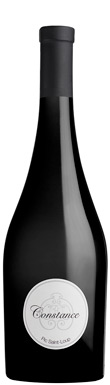
Dark, dramatic and complete, this micro-parcel blend, grown at 300m on the south side of the Pic, is dense and poised, combining succulence and freshness....
2017
Domaine Haut-LirouPic St-Loup
Château de Lancyre, Grande Cuvée, Pic St-Loup, Languedoc-Roussillon, France, 2017
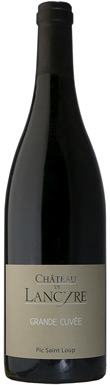
This classy mid-weight wine, based on old parcels of pure limestone soils, stands out in the Lancyre range. It has all the aromatic wealth you...
2017
Château de LancyrePic St-Loup
Château de Lancyre, Coste d'Aleyrac, Pic St-Loup, Languedoc-Roussillon, France, 2019
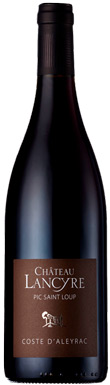
I doubt there’s a better-value wine from the Pic at present than Lancyre’s tank-aged 2019 Coste d’Aleyrac. Brilliant aromatic work, oranges, damson and mulberry, in...
2019
Château de LancyrePic St-Loup
Domaine Mirabel, Les Eclats, Pic St-Loup, Languedoc-Roussillon, France, 2018
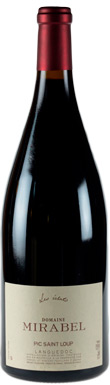
‘Eclats’ are the glacially shattered limestone fragments you find in the gravettes of Corconne, and Mirabel’s classically made, pure-fruited wine does these fine soils justice....
2018
Domaine MirabelPic St-Loup
Domaine Pégaline, L’Élémentaire, Pic St-Loup, Languedoc-Roussillon, France, 2019
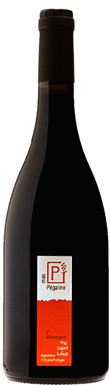
New arrival Pégaline’s Elémentaire proves how unnecessary small oak is to age pristine Pic fruits: this concentrated, fine-value wine is elegant, stealthy, seamless. Intricate floral...
2019
Domaine PégalinePic St-Loup
Domaine Christophe Peyrus, Clos des Reboussiers, Pic St-Loup, Languedoc-Roussillon, France, 2018
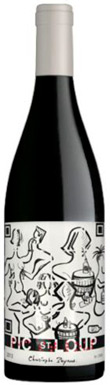
This wine, from Christophe Peyrus and his Clos des Reboussiers partners, is grown in a stony parcel high up on the south side of the...
2018
Domaine Christophe PeyrusPic St-Loup
Sainsbury's, Taste The Difference Réserve, Pic St-Loup, Languedoc-Roussillon, France, 2019
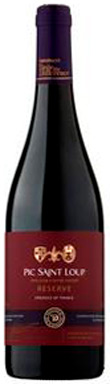
The 2019 version of this cuvée should arrive in UK stores in early January, and it’s a clear improvement on the 2018: tuck into the...
2019
Sainsbury'sPic St-Loup
Domaine de Villeneuve, Happy Culteur, Pic St-Loup, Languedoc-Roussillon, France, 2019
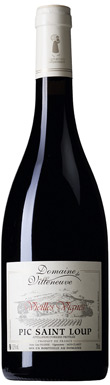
Another great-value, zero-oak cuvée from splendid glacial soils near to Claret, Anne-Lise Fraisse’s Happy Culteur sings with fruit purity and freshness, yet there are satisfyingly...
2019
Domaine de VilleneuvePic St-Loup
