
Petrus: producer profile plus top wines tasted
Icon: it’s a word that is much overused, in wine as elsewhere. But in the context of the world’s greatest wines, none could be more deserving of the descriptor than this sought-after and convention-defying estate on Bordeaux’s Right Bank. Jane Anson gets to the heart of the enigma that is Petrus.


It says something when you open a bottle of wine that everybody around the table has already declared is almost certainly a fake, and yet it still creates a ripple of excitement.
But that’s what the sight of Petrus 1945 on a label does to people – me included; this was at a supper with friends in Bordeaux about 10 years ago, the bottle provided by a US merchant who said, with admirable honesty: ‘I know this isn’t real, or I wouldn’t be opening it.’
Scroll down to see Jane Anson’s Petrus tasting notes and scores including 2016, 2010, 2009, 2008, 1999 and 1998
It further says something when, of the various people I asked for comments about this estate, a full half of them asked if they could remain anonymous. But that’s what the thought of losing an allocation of Petrus does to people.
The rest of us – who don’t get to trade in it, or to put bottles away for our children’s university fund – can start to understand why, when we see headlines about auction prices, such as one in the US in 2018, where the 1998 Petrus reached US$38,000 for a single case – and even the least expensive year is unlikely to go for less than £20,000 in the UK market.
Not to mention the cool valuation of $1 billion for the 11.5ha estate when owner Moueix sold 20% of its capital to a Colombian-American investor in 2018.
Petrus at a glance
Owner: Jean-François and Jean Moueix through Videlot; 20% stake Alejandro Santo Domingo
Size: 11.5ha
Winemaker: Olivier Berrouet, second generation after Jean-Claude Berrouet
Production: About 30,000 bottles per year. There is a rarely seen separate bottling called Saute-Loup that is distributed only to family and friends (it’s labelled Réserve de la Famille), but no traditional second wine.
Terroir: Sticky blue clay
Plantings: 100% Merlot (there are small amounts of Cabernet Franc in the vineyard that do not make it into the wine)
Highest point of vineyard: 40m
Winemaking: Petrus is fermented in concrete tanks with no more than 50% new oak
Petrus: a timeline
1785 – Belleyme map of Pomerol is published; Petrus is not mentioned
1860s – Arnaud family pieces together the plots of vines in the mid-19th century and Petrus is mentioned in local archives as a farmhouse with vines
1878 – Petrus is the first Pomerol wine to win gold at Exposition Universelle de Paris
Early 1920s – Marie-Louise Loubat becomes part-owner, increasing her holding to become sole owner by the end of the 1940s
1943 – Local merchant Jean-Pierre Moeuix is appointed to distribute the wines
1947 – Petrus served at wedding of Princess Elizabeth to the then Prince Philip of Greece and Denmark
1956 – Devastating frosts – Madame Loubat cuts the damaged vines right down to their base rather than pulling them up, regrafting onto the old rootstock
1961 – Marie-Louise Loubat dies, ownership passes to niece and nephew, Lily Lacoste- Loubat and Jean-Louis Robert Lignac, with J-P Moueix receiving a small shareholding
1964 – First vintage made by Jean-Claude Berrouet; Moueix buys Lignac’s shares
1965 – No Petrus was produced
1969 – Jean-Pierre Moueix becomes full owner, with his youngest son Christian Moueix becoming the public face of Petrus, as well as head of Ets JP Moueix négociant. His eldest son Jean- François is owner of Petrus and sets up Duclot négociant
1991 – No Petrus was produced
2003 – Jean-Pierre Moueix dies in late March, at 90 years old
2008 – Jean-Claude Berrouet retires as winemaker, handing over to son Olivier
2009 – Petrus separates from Ets JP Moueix to be run as a separate entity
2012 – First vintage in new vinification cellars, built with 12 unlined concrete vats instead of the previous eight
2012 – Petrus distribution moves exclusively to the newly set-up Clés Distribution
2018 – The Santo Domingo family, which made its fortune initially in Colombia through the national beer producer Cervecería Bavaria, takes a 20% stake
Discreetly desirable
Petrus has a history that only really began to gather speed and weight in the 1940s, but today crushes 99% of classified wines on both Left and Right Banks in terms of name recognition and pricing. It’s so confident that it no longer even uses the term ‘château’. This is Petrus: no accent, no flourishes. Those are left for the wine.
In keeping with much of Pomerol, even the entrance is discreet, with the handsome but somewhat anonymous limestone building marked out by iron railings displaying the crossed keys of St Peter. It’s an image that first appeared on the label of Petrus in the 1940s. Commissioned by Marie-Louise Labat, the woman whose tireless belief in her wine saw it land on the best tables of Europe and America, the keys are a symbol that speak to the initiated and render a sign declaring the château name entirely redundant (although there is lettering set into the stone wall).
View all of Decanter’s Petrus tasting notes
Its renown rests on several things. Its taste, for one thing, which is layered and complex, majoring on blueberry and cassis fruits, with truffles that appear early on and become more intense with age, all set against crushed stone, slate, black chocolate and an abundance of caressing tannins (once it gets over an often-stubborn early stretch).
But taste alone is not enough, because Petrus shares with all great wines an ability to reach far beyond those who have been lucky enough to uncork a bottle.
Its rarity is another factor. At just 11.5ha, Petrus produces in the region of 2,500 cases of 12 bottles per year, depending on the vintage: a fraction compared to the 110ha Château Lafite Rothschild in Pauillac – although Petrus makes a higher proportion of first wine from its vineyard, so the final comparison is probably closer to 20% of Lafite’s production. And where Lafite is sold via the Place de Bordeaux with multiple merchants, Petrus tightly controls its own distribution, ensuring an alluring rarity, which the Left Bank first growths find hard to emulate – something that Petrus doubles down on, offering no website, no Twitter, no Instagram.
Singular entity
Petrus also stands out from the rest of the first growths for its blend – or rather the absence of it. There are other 100% Merlot wines, of course – neighbouring Le Pin springs to mind. But at Petrus, the idea of one terroir, one grape variety has been elevated to a form of myth, with a ‘Burgundian purity’, as Adam Brett-Smith of Corney & Barrow has described it.
Couple that with hands-off winemaking and you have a distinct sense of place that ensures Petrus truly stands on its own. Winemaker Olivier Berrouet – second generation in the cellars here after his legendary father Jean-Claude Berrouet, similarly charming with a sideline in San Francisco 49ers predictions – has variously described this combination of soil and grape as ‘sincere’, ‘authentic’, ‘pure’ and ‘animal’.

‘There is so much natural power in the soils that in the cellar we need to keep things as simple as possible,’ says Berrouet. ‘The wine goes into cement tanks, with never more than 50% new oak during ageing.
And we use barrels that have been carefully pre-rinsed with water to ensure oak flavours are never overwhelming.’
Wine legend: Château Petrus 1945
This soil is the true difference of Petrus. The dense, sticky ‘blue’ clay that comprises almost the entirety of the vineyard is found in only tiny quantities across the entire region. And for once it is not hyperbole.
While working on a map of Pomerol prepared for my Inside Bordeaux book, Professor Kees van Leeuwen of ISVV (Bordeaux’s Institute of Wine and Vine Science) estimated that this particular type of soil covers far less than 1% of the entire 110,000ha of Bordeaux. Much of Pomerol has clay, for sure, but not this clay.
‘It’s a particularly dense form of clay that is dark on top because of all the organic matter that is contained within it,’ says Berrouet. ‘It transmits huge power to the wine, although that makes it sometimes a little closed when young, compared to other Pomerols’.
Own destiny
The simple brilliance of its proposition – one grape, one soil – has meant Petrus has taken some of the major changes of the past decade comfortably in its stride.
Until 2009, to all outward appearances Petrus was owned equally by the two sons of Jean-Pierre Moueix. There was Christian, who heads up négociant house Ets JP Moueix in Libourne, as well as numerous estates from Château Trotanoy to La Fleur-Pétrus; and his elder brother Jean- François, who heads up Duclot, the other family négociant business based in Bordeaux city.
In 2009, it emerged that Jean-François was the sole owner of Petrus, and that the two sides of the family business were being split into entirely separate entities.
As of 2013, a sole distribution company, Clés Distribution, was established for Petrus, run first by Christophe Jacquemin Sablon, and now Eric Simonet. For the UK market, this meant changing from one importer, Corney & Barrow, to three, adding Berry Bros & Rudd and Justerini & Brooks. It also meant that Petrus now stood on its own, not linked to any other wines – importantly, not even those distributed through Duclot, the négociant also owned by Jean-Francois Moueix and his son Jean. Instead, distributors now buy direct from Clés Distribution. It was a move that gave it even more focus and power.
None of this is to say that Petrus is immune to the market. The past year has seen prices fall across all vintages. In September 2020, the excellent 2009 vintage, for example, was available for £32,700, according to Liv-ex – down 1.3% from its 2019 price, with the 2010 down 2.3% to £33,200. The biggest drops are for recent vintages – led by the 2017, which has seen an 18.9% drop to £24,382.
The longer term trend is unquestionably positive though – Liv-ex’s Petrus index, which tracks price movements of the last 10 physical vintages, rose 37.4% over the five years 2013- 2018. It had outperformed the Liv-ex 100 and the Bordeaux 500, which were up 19.9% and 27% over the same period (see graph, below).

One of my anonymous merchants, mentioned earlier, commented: ‘There is a lot of demand, especially in these difficult times when customers are looking for safe places to put their money.
‘And it helps that Petrus is also one of the only estates in Bordeaux to understand that to create an icon, you have to create value [in the supply chain] for everyone.’
‘Our mission is very straightforward, and we rely on importers and distributors to implement it in their respective markets,’ says Simonet, with the understatement reserved only for the exceptionally powerful.
‘We do not organise (official) events,’ he adds, ‘since we believe the best event is for someone to open a bottle of Petrus – and to share this bottle with family and friends, around some good food.’
See Jane Anson’s Château Petrus tasting notes and scores including 2016, 2010, 2009, 2008, 1999 and 1998
The data in this article has been provided by Liv-ex, the online wine trading platform and fine wine market analyst. Along with a comprehensive database of real-time transaction prices, Liv-ex offers the wine trade smarter ways to do business. The company offers access to £70m worth of wine and the ability to trade with 475+ other wine businesses worldwide. It also organises payment and delivery through its storage, transportation and support services. www.liv-ex.com.
Read next:
Anson: Tasting Château Palmer wines across three decades
Château Angélus wines tasted from 2000 to 2019
A ‘monumental’ tasting of Petrus, Le Pin and Lafleur 1998 and 1999
Petrus, Pomerol, Bordeaux, France, 2016
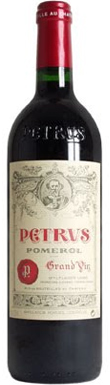

Bottled in mid-August, this is already taking on the most amazing slow creep of well-defined, crisp violet, cassis, tight black fruits and fig notes; floral...
2016
PetrusPomerol

Petrus, Pomerol, Bordeaux, France, 2010
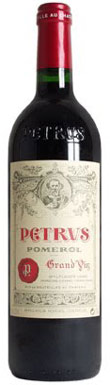
Maybe surprising to see a Pomerol that is so well-built that it is not anywhere near ready even at 10 years old, but this is...
2010
PetrusPomerol
Petrus, Pomerol, Bordeaux, France, 2009
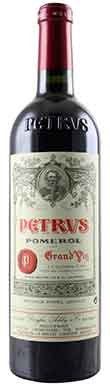
Truly flavoursome, the blackberry, raspberry puree and rich black cherry fruits here are dense, generous and fully ripe, but manage to retain a savoury rosemary,...
2009
PetrusPomerol
Petrus, Pomerol, Bordeaux, France, 2008
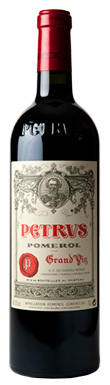
Tight and firm, yet with incredibly embracing tannins that are still in their early phase of evolution, even though it is 100% Merlot. It's a...
2008
PetrusPomerol
Petrus, Pomerol, Bordeaux, France, 1999
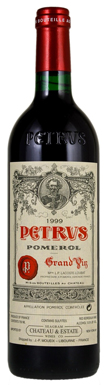
The velvety texture is clear even on the nose, with truffle and chocolate shavings giving a mouthwatering opener. This is a lighter-framed Petrus than the...
1999
PetrusPomerol
Petrus, Pomerol, Bordeaux, France, 1998
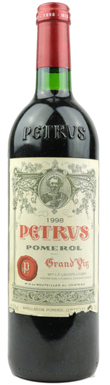
Richly scented like you wouldn't believe; earthy truffle, black olive and rosemary fill the glass and don’t let up right through the palate, providing waves...
1998
PetrusPomerol
