
Quality revolution in Jerez
Those who adore Sherry love its complexity and diversity. And now innovation is making it even more fascinating, bringing in the region’s unfortified wines and other styles that cannot (yet) be termed ‘Sherry’.


Imagine, for a second, that you’ve been told about a region where, for decades, wine production had been focused on churning out huge volumes of non-vintage bottlings. While many people loved the consistency afforded by the homogeneity of these wines, others had been seduced by wines from more innovative regions.
Scroll down to see top picks from Jerez
Over time, producers began to feel trapped by the constraints of making and marketing the same wines each year, and started to seek excitement in the creation of vintage wines and cuvées produced from grapes grown in single vineyards. Small boutique producers began to flourish alongside industry behemoths, and wines that had spent years slumbering quietly in cellars were finally bottled and sold.
If it wasn’t for the fact that you’re reading Decanter’s guide to Spain (2022 supplement), you could easily conclude that the passages above were a historical description of Champagne (other than, perhaps, the bit about people drifting off to pastures new). But it all makes sense when you realise that these changes have been taking place in Spain’s far southwest, in Jerez.
For years, Sherries largely passed under the fine-wine radar, a situation exacerbated by enduring perceptions of these wines as being predictable and unchanging. Now the winds of change are blowing through Jerez, rewarding aficionados with increasing diversity and some seriously world-class wines.
Rediscovering en ramas
Arguably, the first Sherries to generate a real buzz were the en ramas. These lightly filtered wines, with a greater degree of zestiness and flavour than the norm, were largely unknown outside Spain – although they were not new to the Jerezanos themselves, who have a long tradition of pitching up at their local bodegas to buy their finos and manzanillas straight from the butt.
‘There had been en ramas before,’ acknowledges Melissa Draycott, managing director of Gonzalez Byass UK, the company whose Tio Pepe En Rama 2010 was a groundbreaker in terms of popularising the style. ‘But no one had really made a noise about them. The excitement about Sherry seemed to kick off around that time, and since then there’s been a growing thirst for interesting and different products.’
Ever since, the Jerezanos have been rising to the challenge of meeting increasing demand for variety – and biologically aged Sherries (finos and manzanillas) are now at ground zero for many of the most fundamental changes. A key trend here is the growing respect for Jerez’s terroir, and a renewed focus on single-vineyard wines.
Vineyards & grapes
According to Francisco Lopez, export director of Bodegas Luis Pérez, one of the producers spearheading the move towards vineyard-focused wines, this interest in specific sites marks a return to the values of the past. ‘We first zonified our pagos in the 18th century according to their climate and soils, but in the mid-1970s we moved from artisanal to industrial production and took a commercial decision to blend every vineyard into one single solera,’ he explains.
‘When you get to a fork in the road and take the wrong path, you need to retrace your steps in order to get yourself back on the right one,’ he says. ‘That’s what we’re doing now – adapting our traditions to incorporate contemporary knowledge and understanding.’
The one-size-fits-all approach was also applied to grape varieties; dry Sherries in Jerez have long been synonymous with Palomino Fino. In fact, more than 95% of the region’s vineyards are planted with this one variety. But, once again, Jerez is moving back to the future, and growers are beginning to replant pre-phylloxera varieties such as Beba, Mantuo Castellano and Vigiriega, and to explore the potential of Pedro Ximénez and Moscatel to make dry as well as sweet styles.
While it will take time for these grapes to make their presence felt in the region’s wines, an alternative approach to viticulture is already making an impact. Traditionally, Sherries are made from grapes grown on high-yielding vines – thus diluting both flavour and sugar accumulation. However, some producers are now using their best sites (and lower yields) to create wines that don’t need to be fortified prior to being aged under flor for several months.
Unfortified wines

‘If you make stock by putting your ingredients in a pot with four litres of water, you’re going to get a different result than if you put the same ingredients in with 500 litres of water,’ Lopez points out. ‘It’s the same with Sherry. In the fortified Sherries, you get an empty mid-palate, then warmth from the alcohol on the finish. If the wines aren’t fortified, though, the additional concentration fills the mid-palate, and you’re going to have more layers of flavour and structure, and the balance means that you won’t experience the heat of the alcohol.’
Owen Morgan, director of the 44 Group, a small chain of tapas bars and restaurants, points to the accessibility of these unfortified wines as a reason for their growing success. ‘They’ve got all the minerality and salinity that you get from contact with the yeast, but they’re still white wines that you can sip in your garden,’ he says.
Producers in the region are currently working with the local consejo regulador with the aim of allowing these unfortified wines to be recognised legally as part of the Jerez-Xérèz-Sherry DO. But, for now, the wines must be bottled under regional or IGP designations.
Unique bottlings
Innovation is, perhaps, less obvious when it comes to Jerez’s oxidative styles, but look closely and there’s plenty to get excited about. An exploration of these wines might begin with Gonzalez Byass’ annual release of the Palmas, which charts the progression of Sherry from fino to amontillado via four separate bottlings of wines at different stages along the evolutionary pathway. After that, you could perhaps move on to añadas, vintage wines that recapitulate Jerez’s tradition of bottling wines from individual years rather than solera blending.
Alternatively, well-heeled Sherry buffs might get a kick out of exploring the growing number of single-cask bottlings. These wines are the unexpected dividends of the Jerezanos’ long slumber in the doldrums of the fine-wine market, which left many wines maturing tranquilly in the quiet cul-de-sacs of Jerez’s Sherry ‘cathedrals’. Both large-scale producers such as Barbadillo, with its Reliquia bottlings, and smaller almacenistas including Equipo Navazos, whose raison d’être is to seek out outstanding individual barrels for limited-edition bottlings, are now involved in rediscovering some of these incredibly collectible treasures.
These wines are, of course, far pricier than the Sherries you’ll find on the supermarket shelves, but as Laurence Walker, a buyer at London’s Hedonism Wines, points out: ‘They offer mad value compared with anything else in the wine world. They’ve got flavour profiles you won’t see anywhere else and some of them have incredible age for [relatively] very little money.’
The pace of change in the once-sedate world of Sherry is picking up speed, and while the range of wines now available may initially appear baffling, there are rich rewards to be had. As Morgan points out: ‘From a wine lover’s perspective, Sherry has never been more exciting.’

Dynamic Jerez: Hughes’ 10 to explore
Related articles
- Sherry goes East
- Cádiz travel guide: great restaurants, wineries and sightseeing ideas
- Fino vs Manzanilla sherry: What’s the difference?
Bodegas de la Riva, La Riva, Vino de Pasto, Macharnudo, Jerez, Spain, 2019
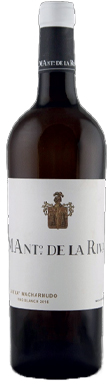

A single-vineyard wine from Macharnudo Alto, just to the northwest of Jerez de la Frontera. Made from grapes sundried for eight hours after picking by...
2019
Bodegas de la Riva

Bodegas Cota 45, Ube de uberrima, Las Vegas El Carrascal, Albariza de Lentejuelas, Jerez, Spain, 2018
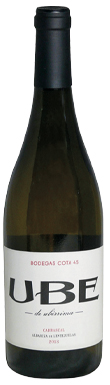
Although somewhat volatile on the nose, you can forgive it once you put this wine in your mouth. The palate is packed with vivid, salty...
2018
Bodegas Cota 45
Bodegas Barbadillo, Reliquia, Oloroso, Jerez, Spain
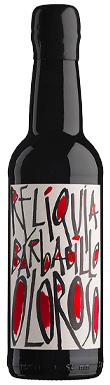
98
An astoundingly concentrated wine of almost indescribable complexity. Layers of dark spice and smoke, the smell of old church pews and incense, a dark, almost bitter earthiness. Each salty sip is incredibly intense. A wine that demands veneration.
Bodegas BarbadilloOloroso
Equipo Navazos, La Bota De Amontillado, 109 Bota Punta, Amontillado, Jerez, Spain
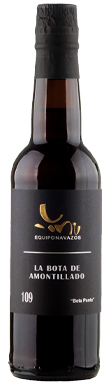
97
No one is totally sure of the exact age of the barrel that this amontillado came from, but the sheer concentration and complexity of flavours present in the wine speak of the long passage of time. Toasted hazelnuts and almonds jostle for attention with notes of lemon zest, boot polish, beef jerky and porcini mushrooms. The finish is long, with a final twist of bitter toffee. One to sip slowly, possibly while pondering life's great mysteries.
Equipo NavazosAmontillado
Bodega San Francisco Javier, Viña Corrales (bottled 2021), Fino, Jerez, Spain
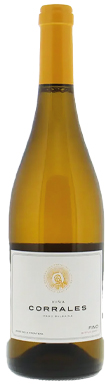
95
Incredible finesse and elegance from Peter Sisseck's single-vineyard fino. The texture is silky, the balance precise and the flavours are of green apples, lemon zest and salty green olives. Great persistence on the finish.
Bodega San Francisco JavierFino
Bodegas Luis Pérez, Caberrubia, Carrascal, Fino, Jerez, Spain
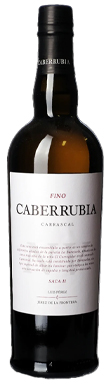
A single-vineyard wine from the Carrascal vineyard, made from lightly sundried grapes. The casks are filled almost to the top to lessen the flor influence...
Bodegas Luis PérezFino
Gonzalez Byass, Pedro Ximenez, Pago de Carrascal, Fino, Jerez, Spain, 2015
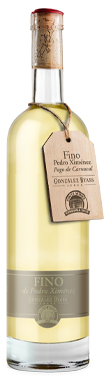
This wine smells richer than a typical fino, with a suggestion of sweetness – or maybe an auto-suggestion, given that the grape is PX –...
2015
Gonzalez ByassFino
Lustau, 3 En Rama, El Puerto, (saca 2022), Fino, Jerez, Spain
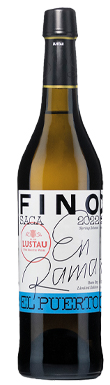
A rounded, powerful fino with a pungent nose of fresh-cut apples and a suggestion of toasted almonds on the long finish. One of three en...
LustauFino
Williams & Humbert, Coleccion Anadas, En Rama (saca de Noviembre 2020), Fino, Jerez, Spain, 2014
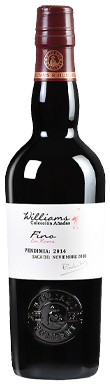
Williams, one of Jerez's largest bodegas, has increasingly been focusing on añada (single vintage bottlings). This fino is rounded and powerful, with an unusual cinnamon...
2014
Williams & HumbertFino
Gonzalez Byass, Viña Dulce Nombre, Dulce Palomino, Jerez, Spain
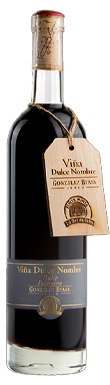
What an extraordinary wine! Made from Palomino grapes, but as sweet as a Moscatel, this limited-edition wine was aged in a static system for 33...
Gonzalez Byass
