Get our daily fine wine reviews, latest wine ratings, news and travel guides delivered straight to your inbox.
You are now subscribed
Your newsletter sign-up was successful
An account already exists for this email address, please log in.
Unfortified Jerez wines: 12 top Palominos worth seeking out
Jerez is famous for its fortified Sherries, but forward-thinking producers are achieving fascinating results in revitalising the region’s traditional still Palomino wines. Meet the winemakers leading the way, and discover 12 great wines to try.
Which region produces the finest white wines in the world? Burgundy? Sancerre? Mosel? Santorini? Whatever you think, probably the last place you’re likely to propose is Jerez. But for the past few years, a new chapter in this region’s convoluted history has been unfolding.
Scroll down to see tasting notes and scores for Smith’s top dozen unfortified Jerez wines
What’s happening now amounts to a reversal of 200 years of tradition – of fortifying Sherry wines with brandy and relying on oxidative or biological ageing (see below) to determine wine style.
Look around the Marco de Jerez area of southwestern Spain and you will see a flowering of terroir-focused projects, born of a dedication to the Sherry that existed pre-fortification. You will also see experimentation from winemakers who sense a kind of magic in the twin treasures of Palomino and albariza soil – without a solera [the traditional system of barrel ageing and fractional blending of wines across several vintages] in sight.
The history books tell us that during Sherry’s ‘golden age’ (early- to mid-19th century), many bodegas began to ship finos, amontillados and olorosos around the world in prodigious volumes.
What they don’t say is that, back in Andalucía, the Jerezanos were enjoying unfortified wines made from the many grape varieties which then grew in the region. Even later, when historic wineries such as Agustín Blázquez and De La Riva were at the height of their fame and highlighting Sherries from specific vineyard sites, locally produced unfortified wines – known as vinos de pasto – were all the rage, with the best of them commanding high prices.
Skip forward to the 20th century and as foreign demand for fortified Sherry grew, while the price domestically became more affordable, vinos de pasto were virtually forgotten. It’s a sign of how far things changed that, in 1964, when Barbadillo introduced its Castillo de San Diego unfortified Palomino into the market, the locals cried heresy.
By the 1970s – the historic peak of Sherry production – the only conversation relating to Sherry was about barrel ageing and flor: the film of yeasts that forms naturally on the surface of certain Sherry wines in the barrel, providing protection from the effects of oxidation to enable ‘biological ageing’.
Decanter newsletter
Get our daily fine wine reviews, latest wine ratings, news and travel guides delivered straight to your inbox.
Luis Pérez, Bodegas Luis Pérez
(Image credit: Credit Unknown)
Historical inspiration
It took an intervention from renowned Portuguese winemaker Dirk Niepoort to steer people’s attention back to white wines. Working with Jesús Barquín and Eduardo Ojeda of Equipo Navazos, Niepoort released the first vintage of Navazos Niepoort in 2008, a flor-aged unfortified Palomino from the historic pago (vineyard area) of Macharnudo. This is now recognised as the turning point for unfortified Palomino as a premium, site-specific wine.
‘If you could taste the Navazos Niepoort 2008… It’s fantastic – perfect Palomino,’ says Luis (aka Willy) Pérez, of Bodegas Luis Pérez, who, with his long-time friend and collaborator Ramiro Ibañez [of producer Cota 45 and a consultant for many others] is more responsible than most for the rediscovery of this extraordinary terroir story.
In 2008, Pérez was working in Australia. He was trying to understand how to produce reds in a hot climate. Then he stumbled across a book written in 1833 by James Busby, the father of Australian wine. Busby had visited Andalucía to learn about planting a vineyard in Australia and had interviewed Pedro Domecq who, along with Manuel Maria González Angel (founder of González Byass), was considered the prima causa of the ‘Big Sherry’ we know today.
‘What I was reading was crazy,’ Pérez explains. ‘These people were not talking about biological ageing, about criaderas and soleras – not a word! They were talking about grapes, about different soils, about how to develop the vineyard, ripening of grapes, pressing – everything related to my generation. And these ideas were from the founding fathers of Sherry!’
For Pérez, this was life-changing. ‘What we discovered was gold. We discovered a new kind of Sherry, a new kind of viticulture, a new kind of winemaking – and that’s what we have been making since then.’
David Léclapart and Alejandro Muchada, Muchada-Léclapart
(Image credit: Credit Unknown)
Palomino pioneers
The first generation to produce true-terroir, unfortified Sherries at the beginning of the 20th century included figures such as the Marqués de Domecq, Count Aldama and Gumersindo Fernández de la Rosa. Pérez and Ibañez could be regarded as the second generation, making not only unfortified Sherry but also straight-up fine white wines. Their work ranges from educating the third generation about the historic vineyard parcel and pago classifications (these were already established in the 18th century) to consulting with other winemakers, wineries and growers
– encouraging them to make their own white wines. They are the students-turned-teachers of this Sherry revolution.
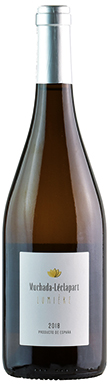
Currently, there are about 20 such projects (Pérez believes it needs 50 ‘to make the region great again’), each with its own approach. Some are at the crossover point of Sherry and white wine: some age with flor, others do not; some age in Sherry butts, others in French oak or steel, even clay. What unites them is an appreciation of Palomino’s ability to transmit the subtleties of albariza soil and Jerez terroir more generally. One of the most significant entrants into this field is Muchada-Léclapart – established in 2017 by Cádiz-born Alejandro Muchada and Champagne producer David Léclapart. Muchada works with 3ha of vines, mainly in Miraflores Alta and Miraflores Baja in Sanlúcar, where proximity to the sea means cooler temperatures and longer ripening than Jerez, with more Atlantic expression and ‘verticality’ in the wines. His dedication to working in the vineyard, learning from the old mayetos (peasant farmers) of Sanlúcar, has yielded profound Palominos.
But there are a host of other exciting projects. Callejuela in Sanlúcar is a former almacenista (wholesaler) which, in addition to an excellent range of Sherries, produces unfortified Palominos that reveal the terroir differences between pagos located in Jerez and Sanlúcar. Similarly, Primitivo Collantes in Chiclana, from a bodega of the same name formed in 1889, was one of the first to explore the nebulous zone between white wines, sobretablas (the top row of barrels of youngest wines in the solera system) and biologically aged Sherry. The ubiquitous Ibañez has consulted for both historic wineries.
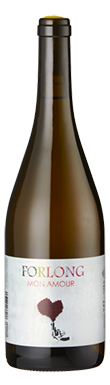
Younger entrants are more experimental, often flying the natural wine flag. Alejandro Narváez and Rocío Aspera of Bodega Forlong – the only organically certified winery in El Puerto de Santa María – highlight the traditional asoleo (sun-dried) style of unfortified Palomino with their La Fleur cuvée. In San Fernando, brothers José and Miguel Gómez of Vinifícate make distinctive, unembellished Palomino without added sulphur from biodynamic vineyards in Sanlúcar, Jerez and Chiclana. Meanwhile, an exciting new face is Raúl Moreno, whose Vinos Oceánicos natural wines – all raised in amphorae – are groundbreaking. Ibañez has also had a hand in forming the Mayetería Sanluqueña – Sanlúcar grape-growers who have come together to preserve the low-yielding old Palomino vines of some of the most famous pagos of Jerez and Sanlúcar (Añina, Atalaya, Charruado, Maína and Miraflores). They produce their own high-quality terroir wines under the Corta y Raspa label .
Alejandro Narváez and Rocío Aspera, Bodega Forlong
(Image credit: Credit Unknown)
Opening new doors
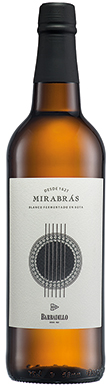
The shift to unfortified Palominos has not escaped the attention of the big bodegas either. Historic houses such as Barbadillo (Castillo de San Diego), Valdespino (Ojo de Gallo) and Williams & Humbert (Finolis) have all made inroads. At Barbadillo, Armando Guerra has been tasked with helping veteran winemaker Montse Molino develop new products. He recognises the economic necessity of changing Sherry’s status quo but believes these new wines should be an entry point for new consumers to appreciate the fortified classics that are the region’s great calling card.
‘What we produce in [Sanlúcar] is good Manzanilla,’ Guerra says. ‘We are the best in the world at flor wines and this should continue. These new white wines should exist alongside Sherry. It’s going to change very fast. In the next five to 10 years, we’ll see a lot of good white wines which are going to be a complement to Sherry.’ What will really open the doors wide is the attitude of the consejo regulador. White wines are still not recognised under the DO Jerez-Xérès-Sherry – but progress is being made. In July 2021, the regulatory council announced some changes to the DO rules to include the authorisation of unfortified wines (in a Sherry style, with minimum alcohol reduced to 15%) and the use of new native grape varieties.
The debate continues among consejo members to reduce minimum alcohol levels further, as well as to incorporate wines with less than the current minimum two years’ barrel-ageing into the DO. This could be seen as preparing the way for still wines in the near future.
This can only be good news as the region looks to adapt to a changing market – and changing economics. Yes, fino, manzanilla, palo cortado, amontillado and oloroso are some of the greatest gifts ever bestowed on wine lovers – but they are not the whole story. As well as representing the untold story of Sherry terroir, vinos de pasto provide a fantastic link between the perennially undervalued (and underpriced) fortified wines of Jerez and the fine dry white wines of the world.
Unfortified Jerez wines: Smith’s dozen top Palominos to explore
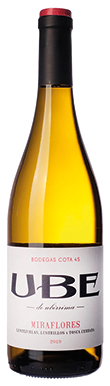
Made from 60-year-old Palomino vines growing on a 1.2ha biodynamically farmed parcel called La Platera in Miraflores Baja, within view of the Atlantic. Extraordinarily elegant....
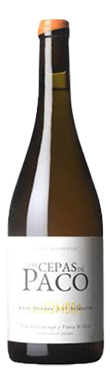
Vinos Oceanicos, Las Cepas de Paco 'El Reflejo', Jerez, 2018
My wines
A mesmerising wine – absolutely sui generis in Palomino terms. Organically farmed grapes are partially sun-dried with long post-ferment skin maceration, and ageing in tinajas...
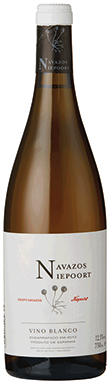
Equipo Navazos, Navazos-Niepoort, Jerez, Spain, 2018
My wines
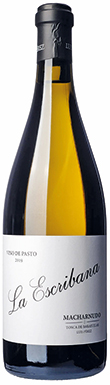
The wine that started the recent revolution in terroir-focused unfortified Palomino. From pago Macharnudo. Five months with light flor. Packs in so much nuance and...
Just a little bready flor influence (and mildly smoky) but essentially focused on the citrus-led fruit and floral aspects of Palomino, and the freshness and...
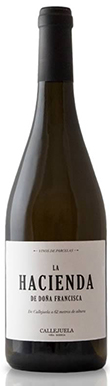
Bodegas Callejuela, La Hacienda de Doña Francisca, Jerez, Spain 2018
My wines
One of three unfortified single-parcel whites, from the Callejuela plot of pago Hornillo in Sanlúcar (the Blanco brothers also make a manzanilla from the same...
From Chiclana, a historically important sub-zone of the Marco de Jerez, but less celebrated because it's outside the ‘Sherry triangle’. Fermented and aged for two...
From a single-vineyard plot on 'tosca cerrada' soil – the most compact form of albariza, which gives the most ‘vertical’ expressions of Palomino. Barrel fermented,...
From Barbadillo’s El Cerro de las Leyes vineyard in pago Santa Lucía. The asoleo (sun-dried) method is used to concentrate the grapes. Fermentation in old...
A week’s maceration with skin and ageing for nine months in tinajas (clay jars). Old-vine Palomino from a single vineyard in pago Mahina, Sanlúcar. A...
Darren Smith is a wine writer and nomadic winemaker. He launched his wine label, The Finest Wines Available to Humanity, in 2020. For more information visit www.tfwath.com