
Regional profile: Champagne’s Côte des Bar
Located 130km south of central Champagne and with different soil types, the Côte des Bar is somewhat of an outlier. It produces vast amounts of Pinot Noir for some major Champagne houses, but it's also home to a host of small organic and biodynamic producers, as well as some renowned larger producers. Tim Hall delves deep into this individual winegrowing region of Champagne.


Meeting in the Bar
Back when my Champagne love affair first began, I blind-tasted Cedric Bouchard’s Inflorescence, a bottling he still makes but has since renamed. I wasn’t sure it was Champagne. Its ripe concentration, the kind of dense vinosity we love in fine white wine, was an impressive shock, along with a fine mousse which made me write ‘silk’.
These days, within seconds of arriving off the autoroute into the Côte des Bar, I’m hit with a multi-sensory landscape, one that’s completely different from the rolling panoramas of the Côte des Blancs or Montagne de Reims. The Aube’s sunflower yellow, russet and fern-green colours pop, punctuated by timber-framed and coffee-limestone-coloured villages.
Time-frozen vistas and sparse traffic make everything painterly. Sensual wreathes of wood smoke and forest floor cling to your clothes. And the hazy lemon light explains why impressionist painter Renoir spent his summers in the Aube village of Essoyes.
Aube is the name for the departement (the French word for county), and Côte des Bar is the Champagne wine district within it. Being 130km south and a touch east from Reims and Épernay, or the Marne departement, the Aube is a Champagne satellite, like Chablis is to Burgundy.

Scroll down for 12 of the best Côte des Bar Champagnes to try
Côte des Bar at a glance
Location: Some 130km south and slightly east of central Champagne, roughly two hours drive.
Soils: Mostly Jurassic, or Kimmeridgian, soils – a clay-chalk marl like in Chablis and Sancerre, making vinous and fruitier (mainly Pinot Noir) Champagnes than the north but with plenty of potential for elegance. Some areas have the debris of younger and harder Portlandian rocks, ideal for giving Chardonnay linear elegance.
Vineyard area: Some 7,900ha of vines, 23% of the Champagne vineyard.
Grape varieties: 83.9% Pinot Noir, 11.64% Chardonnay and 3.17% Meunier. Small proportions of minority varieties: Arbanne, Petit Meslier, Pinot Blanc (Blanc Vrai), Pinot Gris (Fromenteau).
Notable still wine made here: Rosé des Riceys.
Wine villages: 64 of Champagne’s total 319.
The lay of the land
The name Côte des Bar derives from the Gallic for summits.

As the map above shows, the main valleys are the rivers Seine (flowing north to Paris) and the Aube which is a tributary of the Seine. These river systems split the Aube into the Bar-Sequannais in the west, and the smaller Bar-sur-Aubois in the east. The A5 autoroute neatly splices the two wings of the area.
The best way to imagine the Aube is as a shallow stretched dome, a slightly deflated oval rugby ball, with its axis north-east south-west. But the gentle parabola of this convex ovoid is scalpelled with sharply indented, steep-sided valleys. Its vineyard slopes are often narrower and steeper than the gentler chalky escarpments of the Marne to the north.
There are important mini valley vineyard enclaves formed by several tributaries of the two main Seine and Aube rivers.

The kingdom of Pinot
The vineyards hug the slopes of the rivers and their tributaries. It creates different exposures to the sun or shade. But these steep valleys can also threaten new buds with late spring frost, even more so with climate change.
This is one reason the Aube is planted 85% to Pinot Noir, which is later budding than Chardonnay (13%), with Meunier at just 3%.
There is room for cooler plantings of Chardonnay and Champagne’s other ‘forgotten’ grapes, increasingly resurrected: Pinot Blanc (called Blanc Vrai here), Pinot Gris (called Fromenteau here), Arbanne and Petit Meslier, which, with their zingy acidity, can add a fraction of zip to blends with the dominant Pinot Noir.
The bulk of the Aube’s Pinot Noir grapes are bought by the big Champagne houses of Reims and Épernay who admire the consistent ripeness; it’s slightly warmer than the Marne, with over 100 more hours of annual sunshine.
The Côte des Bar provides 23% of Champagne’s grapes, but over half its Pinot Noir, and a reservoir of juice and wine is sent north to the big houses for blending.

The Aube rocks
The Aube is older than the cretaceous chalk slopes of Champagne’s north, which formed between 45 million and 145 million years ago. It forms the outer ring of concentric plateaued hills thrust up by the tectonic slump of the centre of the Paris basin.
And the Aube’s geology and soils are not only older but different to the core chalk vineyards of Champagne’s north. The Aube belongs to the Jurassic period, formed between 145 million and 200 million years ago.
A mix of tropical lakes and chalk sea beds created a chalky marl called Kimmeridgian, the same as those found in Chablis and Sancerre, which are closer to the Aube than Reims.
This softer material gave way more easily to river erosion, and the sharp valleys of the Aube contrast with the coast-like escarpments of Montagne de Reims and Côte des Blancs.
I would also separate the Côte des Bar from the spectacular chalky hill of Montgueux, west of Troyes, some 50 minutes drive from the Côte des Bar vineyards, so have included no further reference here. Montgueux is often slipped into the Côte des Bar as a residual island of vines far closer to the Côte des Bar than Reims. The truth is that its rock and soils are Turonian chalk, different from both the north and the soils of the Côte des Bar, and Montgueux is almost exclusively Chardonnay not Pinot Noir.

The Côte des Bar personality
The steeper slopes here create a steeper angle of incidence of the sun on the vines, meaning it’s 1˚C warmer than in central Champagne.
No surprise, then, that producers major on ripe, juicy, red-fruited Pinot Noir. And the clay-limestone (marl) soil blend tends to make rounder, fuller styles of Champagne than the stricter north.
Big Champagne houses love to blend Aube grapes into the popular Champagnes that begin their ranges. The Aube’s biggest gift to Champagne has been to help soften the taste profile of its big brands.
A little history
The Côte des Bar is Champagne’s Cinderella. Distant from Champagne’s main Reims-Épernay axis, early commentary deemed it unimportant.
In 1890, Champagne’s vineyards succumbed to Phylloxera. Poor harvests made the grape shortage acute. Many big Champagne houses responded by buying grapes outside the region, condemned as fraud by the Champagne growers. Champagne was on the label, but not necessarily in the bottle.
They campaigned for a boundary to define whose grapes were technically Champagne. In 1908, the growers of the Marne, Montagne and Côte des Blancs in the north were rewarded by inclusion within the boundary. But the Côte des Bar was excluded and its growers were incensed. Clandestinely many houses still bought bogus grapes, desperate for cheaper fruit, and the famous Champagne riots of 1911 ensued.
However, the movement was split. The north wanted to protect only their vineyards as Champagne. But the Côte des Bar was fighting for its existence, for the simple right to be called Champagne in the first place.
A 1911 ruling restored the Aube’s Champagne membership, but only as a condescending second class (deuxième zone) sub-region, and the Aube has still never been allocated any grand cru or premier cru villages. It took a law in 1927 to make the Côte des Bar properly Champagne, not below the salt. And to this day, while Aube producers feel proud to be Champagne, they are just as proud to express the Côte des Bar identity.
The Côte unbarred
Gradually the big houses of Reims and Épernay began to realise that this sub-region could help expand their production as the world recovered from war.
In the 1950s, over 80% of the Aube was planted to Gamay, but by the 1980s this had changed. Champagne’s big producers and the sub-region’s giant cooperative, Union Auboise (makers of Champagne Devaux), invested in Pinot Noir and Chardonnay. Taittinger in particular bought 80ha of vineyards in Loches-sur-Ource, 45ha of them contiguous. Möet-Hennessy owns swathes of Côte des Bar grapes too, and has several press houses.
A hotbed for top quality growers
Today Champagne lovers show an avid interest in this region because of the small producers who make authentic Côte des Bar Champagnes.
Partial isolation from Reims and Épernay has encouraged growers to make at least sustainable, if not organic and biodynamic, Champagnes.
Drappier remains the main beacon of inventive sustainability and organic development. Other local houses such as Cheurlin and Château de Bligny are significant.
The top 10 producers below represent both the grower pioneers of the new Côte des Bar and bigger players that still carry the torch.
I have recently wondered why more small estates have been slow to take advantage of this now-trendy region.
A recently established small group of Côte des Bar single estates called Empreintes is welcome, comprising Champagnes Brocard, Gallimard, Louise Brison, La Borderie, Jean Josselin and CH Piconnet. I look forward to more.
10 names to know in the Côte des Bar
Drappier – Urville: The biggest Côte des Bar house and Pinot Noir pioneers, farming 64ha. A tight-knit family affair, admired worldwide for succulent, full-flavoured, svelte Champagnes, including the deluxe Grande Sendrée lieu-dit. Organic, carbon-neutral and a noted innovator with a stream of new releases made with extreme selection of juice, low sulphur and dosage, and skilled use of oak. Blanc Vrai (Pinot Blanc) and Fromenteau (Pinot Gris) feature too. A wonderful welcome to booked visitors.
Roses de Jeanne (Cedric Bouchard) – Landreville: Burgundy trained, rock-star status, the touch-paper lit 22 years ago. Often breathtaking cut, clarity and finesse here; the wines defy Côte des Bar fruity-fleshy typecasting. Nearly everything is Pinot Noir. 3ha worked, with very low yields. No oak and gentle mousse textures. All zero dosage.
Marie Courtin – Polisot: Dominique Moreau produces silk-textured, certified biodynamic Champagnes from a single lieu-dit, Tremble, making elegant, vinous and complex Pinot Noir wines, with no dosage, no filtration, natural yeasts and an organic selection for the second fermentation. Some beautifully mineral Chardonnay made too, in sectors with Portlandian bedrock. A global fan base of Champagne lovers.
Val Frison – Ville-sur-Arce: A growing reputation here from 3.5ha of vines on marl and varied soils. Certified organic. Oak fermentation but such a light touch. Zero dosage but yields are so controlled that everything is in flavour balance. Increasingly exported. High class natural winemaking.
Olivier Horiot – Les Riceys: Biodynamic methods producing broad Champagnes with great depth of flavour from Champagne’s warmest village. Organic and biodynamic certification. Several single vineyard wines. An influential reference for many producers.
Devaux – Bar-sur-Seine: First-class, large cooperative farming over 800ha of vines, based in an imposing manoir visitor centre in Bar-sur-Seine. The flagship wines are those precise and penetrating ones branded as Devaux, but vast quantities are made via the Union Auboise operation contributing notably to the well-known Jacquart Champagnes.
Coessens – Ville-sur Arce: Remarkable Champagnes from a 3.36ha monopole vineyard called Largillier, made by Jérôme Coessens. All are Blanc de Noirs, 100% Pinot Noir, fermented mostly in stainless steel. Dramatic wines showing precision, a gently pulsing flow and weight on the palate, but a mineral cut too.
Nathalie Falmet – Rouvres-les-Vignes: Falmet’s 3.4ha estate is at the northeastern Bar-sur-Aube edge of the Côte des Bar, making wines of delicacy, subtlety and persistence. She is highly qualified as an oenologue but turned from her consultancy to running the family estate with success, gaining listings in good Parisian restaurants. The star wines are from single vineyard Le Val Cornet and oaked single-plot bottlings in the same parcel.
Vouette & Sorbée – Buxières-sur-Arce: Bertrand Gautherot has become, since 1986, the most influential producer in the Côte des Bar; an inspirational and outspoken advocate of organic and painstaking Champagne making, led by detailed vineyard work. Certified biodynamic on 5.5ha. The results are concentrated and intense Champagnes with great complexity, no dosage and which reward time in the glass. Champagne soul food. He’s in a joint venture with the young Benoît Doussot producing Clandestin Champagnes using bought-in organic grapes with an aim to support organic growers.
Pierre Gerbais – Celles-sur-Ource: A relatively large estate run by Aurélien Gerbais on 18ha spread over numerous parcels. Apart from substantial plantings of Pinot Noir and Chardonnay the estate grows 4ha of Pinot Blanc (Blanc Vrai), unusual and lending the results a lemony and floral vinosity which is always a delight. Impressive, continuous strides up the quality steps here.
Tim Hall’s tasting notes and scores for 12 of the best Côte des Bar Champagnes to try:
Related content
Champagne harvest 2022: top quality forecast as picking begins
A restless innovator: Champagne Jacques Lassaigne producer profile
Champagne Lanson Noble vertical: 1979 – 2012
Drappier, Grande Sendrée, Champagne, France, 2010
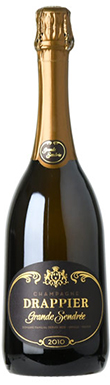

Pale gold in colour. On entry there’s a steely floral and sweet smoke note and then an explosion of citrus oil and pale yellow fruits....
2010
Drappier

Marie-Courtin, Blanc de Blancs, Champagne, France, 2018
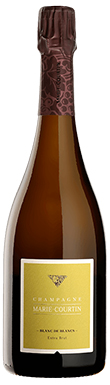
An immediate sense of fragrance and presence – a smoky, struck match note of reduction. A breezy meadow and forest aroma. It’s funny how Dominique...
2018
Marie-Courtin
Drappier, Rosé de Saignée, Champagne, France
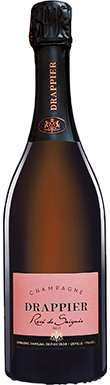
Both delicious and one of this region’s very best rosés. There’s mouthwatering crushed raspberry notes, a hint of cherry, and a fine texture which avoids...
Drappier
Olivier Horiot, Métisse Noirs et Blancs, Champagne, France
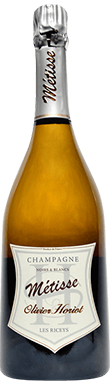
A showcase blend of red and white grapes. 100% from Les Riceys’ varied plots, reflecting the enormous soft ripeness this warm village produces, balanced beautifully...
Olivier Horiot
Pierre Gerbais, L’Originale, Champagne, France
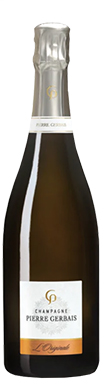
100% Pinot Blanc is very rare for Champagne and this shows a peacock tail of white fruits and a linear profile achieving real finesse. Exotic...
Pierre Gerbais
Coessens, Largillier Blanc de Noirs, Champagne, France, 2015
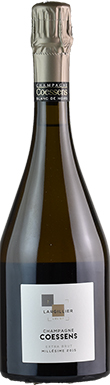
Substantial flavours of butter, honey, quince and as so often at Coessens, an undertow of chocolate and mocha. Such a mellifluous texture, it flows on...
2015
Coessens
Drappier, Quattuor, Champagne, France
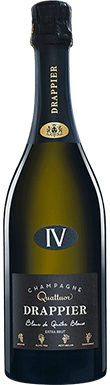
Piercingly fresh entry with citrus and lime to the fore. It seems to search out the palate, it’s awakening and seductive. A mid-weight and creamy...
Drappier
Roses de Jeanne, Côte de Val Vilaine, Champagne, France, 2018
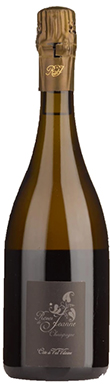
A sweet and floral entry that then sweeps across the palate with a sense of unfolding, rather than an immediate announcement. Really tense and restrained...
2018
Roses de Jeanne
Ruppert-Leroy, Fosse Grely, Champagne, France
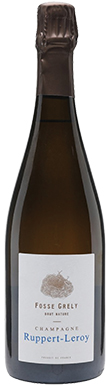
This wine looks deep-hued in the glass but tastes immediately lithe and fresh, with a flowing grace in the mouth inviting sip after sip. There’s...
Ruppert-Leroy
Vouette & Sorbée, Blanc d’Argile, Champagne, France
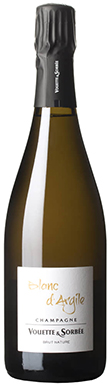
Proving superior Blanc de Blancs is quite possible in the Aube’s Pinot Noir paradise, this opens with lemon cream and persistent white chocolate and nougat...
Vouette & Sorbée
Devaux, Coeur des Bar Blanc de Noirs, Champagne, France
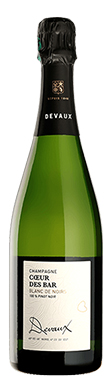
A powerful sense of fruit and structure, with round, savoury notes too, and overall an attractive creamy texture. Rather substantial and packed with elegant red...
Devaux
Piollot Père & Fils, Come des Tallants, Champagne, France
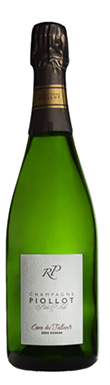
An immediate sense of elegant weight and keening mineral texture searching out the palate. It winks with faint tropical notes, pale plum, lemon and apricot....
Piollot Père & Fils
