
Renewal, renovation and innovation in Bordeaux: Five revitalised estates to follow
Across Bordeaux, new investment and improvements in viticulture and winemaking are seeing once underperforming estates return to their former glory, or beyond – a pattern exemplified by the following five impressive châteaux.


Picture Bordeaux’s top vineyards in 2024; cover crops bloom between vine rows where bare earth once reigned. Bees buzz. Horses, not tractors, plough the soil. Many more estates follow an organic or biodynamic path instead of relying on toxic sprays.
The latest soil science has led to farming carefully, plot by plot. And due to the effects of global warming, fewer châteaux opt to remove leaves from the vines with the intention of allowing more sun to reach the grapes, as was deemed beneficial in the past.
It’s all about preserving freshness in the wines. It’s a world of difference from two decades ago.
Scroll down to see notes and scores for five wines from revitalised Bordeaux estates
Almost as important are changes in new and revamped cellars that lie along the D2 road that runs from the outskirts of Bordeaux city up through the Médoc, and to the south of the city in re-energised Pessac-Léognan, and along the winding roads of the Right Bank.
The investment in small vats to mirror the number of vineyard plots reflects the shift to precision winemaking.
Era of advancement
Experiments with a reduction in the use of new oak for ageing have led to a shift towards gentler, less weighty reds that have more balance, elegance and energy.
And recent concern about the environment, and the push to combat global warming, has resulted in innovations in both viticultural practices and the growing number of eco-friendly, sustainable cellars.
This is all an evolution inspired by a new generation of winemakers and consultants aiming to better express terroir in their wines, as well as by changes in consumer preferences and attitudes.
For one, the influence of once all-powerful critic and author Robert M Parker Jr, now retired, has faded, and the turbo-charged, opulent, oaky wines he lauded, especially in St-Émilion, have increasingly fallen out of favour with many winemakers, wine lovers and the current crop of writers on Bordeaux.
And let’s not forget the swift recent rise in oenotourism. Châteaux whose doors were firmly shut to all but the trade now welcome wine lovers for overnight stays, luxurious dinners, private blending sessions, even ‘forest bathing’ tastings.
Behind it all are winemakers and estate owners with the financial resources to invest in risky, dramatic change. Here are my pick of just five of those dynamic estates, whose evolution underpins significant improvement in their wines.
Château Canon, St-Emilion, 1er Grand Cru Classé
John Kolasa & Nicolas Audebert
Imagine a storied St-Émilion premier grand cru classé B estate where the limestone caves beneath the château and cellars are in danger of collapsing.
Add to that a cellar that’s contaminated with TCA (the compound that causes the ‘off’ aromas and flavours in wines with cork taint) and thousands of missing vines in the vineyards that need to be replaced.
That was the sorry state of Château Canon when it was purchased in 1996 by the billionaire Wertheimer brothers, owners of the haute-couture Chanel group. They came with the money to match a spend-what-it-takes attitude.
The task of reinventing Canon fell first to forthright, pull-no-punches, Scottish-born John Kolasa, who brought it back from near death by replanting, shoring up the limestone caves, modernising the cellars, renovating the château and adding a second wine, Clos Canon, now known as Croix Canon, all while also overseeing the Wertheimers’ Margaux second growth estate Château Rauzan-Ségla.

Nicolas Audebert, with his casual rock-star good looks, became the man in charge when Kolasa retired in 2015. Previously the winemaker at Cheval des Andes in Argentina, Audebert brought new ideas and a belief in the importance of intuition.
One of his first decisions was to bring in young, dynamic Thomas Duclos, now one of the Right Bank’s hottest consultants, who helped shift the wines to today’s fresher, more nuanced terroir-driven style.
The leap up, evident in the string of great wines in recent vintages, started with 2015. Audebert believes in being close to the terroir, and the soil is now tilled by horse-drawn ploughs to avoid compacting and allow rainwater to penetrate the earth, essential with recent seasons of heat and drought.
The 2024 vintage will be the first certified organic. And in recognition of climate change, there’s an ongoing program of planting more late-ripening Cabernet Franc. The final blend incorporates every plot in the classified vineyard in order to express Canon’s full, unique personality.
Château Canon, St-Émilion, 1er Grand Cru Classé, Bordeaux, France 2016 97pts

Château Troplong Mondot, St-Émilion, 1er Grand Cru Classé
Aymeric de Gironde
Aymeric de Gironde’s easygoing, boyish charm belies his passionate determination to create wines with purity and freshness. When he arrived as CEO of Château Troplong Mondot in mid-September 2017, two months after the hilltop property with a magnificent view was sold to French re-insurance company SCOR Group, he called for harvest to begin immediately. ‘It would have been one month later if I hadn’t arrived,’ he told me back then.
Starting with that vintage, the wine was fresher, silkier, more classic and sophisticated, the beginning of a new era at this St-Émilion premier grand cru classé B. De Gironde built on the positive works of Christine Valette, who took over managing her family estate in 1980 but died in 2014.
To increase quality and obtain premier grand cru classé status, she restructured the vineyard, instituted hand harvesting, reduced yields and added temperature-controlled vats and a second wine, Mondot.

With the prominent Michel Rolland as consultant, her wines fitted the style of the time: ripe, extracted, opulent, concentrated, oaky. For the new style, de Gironde not only harvests much earlier, but also puts picked grapes in a cool room overnight and takes a softer winemaking approach.
He’s reduced from 90% to 65% the proportion of the wine aged in new oak barrels, and the new winery and cellar has a vat room designed for plot-by-plot winemaking.
Like Audebert, de Gironde chose as consultant Thomas Duclos, whose influence is being felt in many Right Bank cellars. The estate’s green transition encompasses everything from horse-ploughing to using pruning residues as the sole source of heating for the buildings since 2019, when the estate became the first French member of the International Wineries for Climate Action group (iwcawine.org).
Château Troplong Mondot, St-Émilion, 1er Grand Cru Classé, Bordeaux, France 2019 98pts

Château Marquis d’Alesme, Margaux, 3ème Cru Classé
Nathalie Perrodo-Samani & Marjolaine Maurice de Coninck
I’d barely heard of third growth Château Marquis d’Alesme Becker in the centre of Margaux when it was sold in 2006 to billionaire oil tycoon Hubert Perrodo for €30 million.
He’d revamped nearby Château Labégorce, where his family spent holidays, and after he died in a freak hiking accident at the end of 2006, his daughter Nathalie, only 24 years old, took over.
She enlisted the experienced Marjolaine Maurice de Coninck as general director in 2010 to help her restructure just about everything at this rundown estate, whose 2005 red I’d describe as ‘rustic’.

To reinvent the property for a new era, they dropped the ‘Becker’ from the name, reworked and replanted part of the vineyard, sought input from France’s national agricultural research institute INRA (INRAE since January 2020) to select the best vines for each plot, and built a grand winery cellar.
Michel Rolland became the consultant. Their considerable investment in tourism includes a wine bar that serves delicious snacks and a children’s garden, complete with labyrinth, for the benefit of visiting families.
Farming the 15ha vineyard now follows organic and some biodynamic principles. Other keys to improvement are a severe grape selection process, gentle extraction and fermenting at low temperatures. The new cellar boasts modern stainless steel vats and French oak tanks. And from the 2014 vintage, the wines began to be exciting.
The winery, which opened in 2016, is a blend of Perrodo’s French and Chinese heritage. The exteriors are classical French, but moon-shaped doorways and a stylised dragon with 22,000 bronze scales hanging from the ceiling give the interior Asian flair.
Château Marquis d’Alesme, Margaux, 3ème Cru Classé, Bordeaux, France 2019 94pts

Château Tour Saint Christophe, St-Émilion, Grand Cru Classé
Peter Kwok & Jean-Christophe Meyrou
The first time I visited this picturesque St-Émilion estate with stunning views was a decade ago. Francophile Hong Kong banker Peter Kwok purchased it in 2012 with his younger daughter Karen.
When he showed me the thick book of soil maps and histories of the property that he’d commissioned, Kwok said that the clay and limestone terroir was exceptional, but there was so much to do.
Since then, quality has hugely improved. The essential hire in 2014 was talented general manager Jean-Christophe Meyrou, who had managed such properties as Château La Violette and Château Le Gay in Pomerol, and now took charge of all of the family-owned Vignobles K estates (today numbering seven, all on the Right Bank).

Over the years, Kwok tripled the size of the vineyard, replanted large sections with a higher level of vine density, and revived the unique narrow dry-stone terraces with tight rows of vines on the steep hillside. All that and the transition to organic farming – the wines are certified as of the 2023 vintage – resulted in wines with more purity and balance. Meyrou also oversaw the 2015 renovation of the cellars and a serious uptick in quality followed.
For the grand vin, grapes are whole-berry fermented, mostly in thermal-regulated concrete vats of various sizes with about a quarter of the harvest in oak barrels. This slows down the release of tannin and smooths it out. The proportion of the wine aged in new oak barrels is typically 30%-40%.
The dedicated Thomas Duclos is now the consultant, and the wines in the past couple of vintages seem juicier and more vibrant, with a fresh finish. 2022 was a seminal year, as the estate was upgraded to grand cru classé (GCC) status in that year’s revised St-Émilion classification – but the wines still remain excellent value for money.
Château Tour Saint Christophe, St-Émilion, Grand Cru, Bordeaux, France 2021 92 pts

Château Siran, Margaux
Edouard Miailhe
The pretty pink château and cellar in the south of Margaux wasn’t included in the 1855 classification, supposedly because the owners at the time, the Toulouse-Lautrec family, declined to be part of it.
The property was then developed by the Barbier family, who enlisted a nephew, Frédéric Miailhe, to manage it, and the Miailhe family subsequently purchased it in 1915.
After sixth-generation Edouard Miailhe took over this under-the-radar estate from his parents in 2007, Siran has been on an upward trajectory. In the past eight years, the wines have become ever more focused, with a plumper, richer texture and more refined tannins.
Miailhe immersed himself in intense vineyard improvements, following the replanting programme undertaken by his father.

There are now 37 plots, with 46% Merlot, 44% Cabernet Sauvignon, a surprising 9% of Petit Verdot and 1% Cabernet Franc; the vineyard regime includes daily monitoring of vines, no pesticides or herbicides, team training in pruning to minimise vine damage, and leaf thinning to aerate grape bunches.
And in late 2014, Miailhe completed a cellar renovation with various sizes of vats for the now ubiquitous plot-by-plot winemaking. However, essential to the quality and the evolution of the wine style have been consultant Hubert de Boüard, who arrived in 2015, and winemaker Marjolaine Defrance, who between 2013 and 2016 had spent time at Châteaux Pape Clément and Smith Haut Lafitte in Pessac-Léognan.
The wines have never been better. The estate has also embraced sustainability and tourism. Miailhe is involved in a collaborative research program aimed at encouraging the fauna and flora of Margaux.
And Siran is one of the few Médoc châteaux open every day from May to September, with a playful variety of tours, tastings and experiences, on the panoramic terrace, in an elegant tasting room and even their authentic, nuclear radiation-proof bunker with a bank vault-style door.
Château Siran, Margaux, Bordeaux, France 2019 94pts

On the up: Five other Bordeaux standouts
Château Brane-Cantenac, Margaux, 2ème Cru Classé
With the 2009 vintage, this second growth Margaux has taken leaps in quality, thanks to the experiments and improvements under owner Henri Lurton. The estate has its own weather station, and Lurton replanted much of the vineyard and began farming organically.
Château Les Carmes Haut-Brion, Pessac-Léognan
Charismatic technical director Guillaume Pouthier creates brighter, silkier-textured reds by using whole-bunch fermentation as in Burgundy, and gently infusing wines to obtain softer tannins.
Château Meyney, St-Estèphe
Since Anne Le Naour became technical director in 2010, the wines at this unclassified estate in St-Estèphe have gone from strength to strength, with assistance from plot-by-plot winemaking and consultant Hubert de Boüard.
Château Talbot, St-Julien, 4ème Cru Classé
A new, higher-quality direction at this St-Julien fourth growth began with consultant Stéphane Derenoncourt and oenologist Eric Boissenot, the renovation of the cellars in 2016, and the arrival in late 2017 of new estate director Jean-Michel Laporte, who was previously at Château La Conseillante in Pomerol.
Château Tronquoy-Lalande, St-Estèphe
When the billionaire Bouygues brothers Martin and Olivier bought this estate in the heart of St-Estèphe in 2006 they dropped €10 million on a complete renovation, and shifted to more Merlot in the vineyard and organic farming. The team at Bouygues-owned St-Estèphe second growth Château Montrose oversees winemaking, and it shows.
See notes and scores for five wines from revitalised Bordeaux estates
Related articles
- Bordeaux 2010: Reappraising the grands crus of the Médoc
- How to blind taste Bordeaux
- Top value Bordeaux 2023 wines tasted en primeur
Château Troplong Mondot, St-Émilion, 1er Grand Cru Classé, Bordeaux, France, 2019
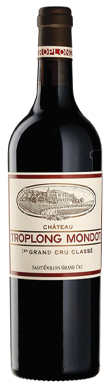

The first vintage produced without malolactic fermentation in barrel, it’s all elegant, cool fruit in a linear, super-fine tannin style, with a supple, seductive texture.
2019
Château Troplong MondotSt-Émilion

Château Canon, St-Émilion, 1er Grand Cru Classé, Bordeaux, France, 2016
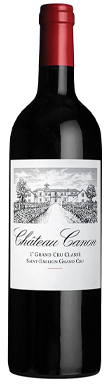
The sheer iodine freshness and gorgeous fruit succulence go hand in glove with a tannic frame that has softened since I had tried this vintage...
2016
Château CanonSt-Émilion
Château Marquis d'Alesme, Margaux, 3ème Cru Classé, Bordeaux, France, 2019
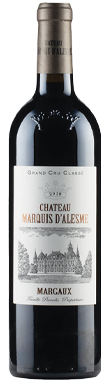
Harmonious and luscious, this bold blend of Cabernet Sauvignon, Merlot and Petit Verdot comes with clear tannic structure and aromas of violets, roses and pure...
2019
Château Marquis d'AlesmeMargaux
Château Siran, Margaux, Bordeaux, France, 2019
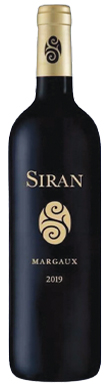
A great vintage for Siran, with expansive aromas of violets and a new freshness and finesse. A special black and gold label celebrates the 160th...
2019
Château SiranMargaux
Château Tour St Christophe, St-Émilion, Grand Cru, Bordeaux, France, 2021
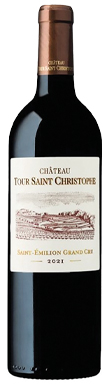
Stylish and lively, with a sense of energy, floral aromas, red berry notes and good ageing potential.
2021
Château Tour St ChristopheSt-Émilion
