
Ridge Vineyards: producer profile and six new releases tasted
Karen MacNeil reflects on the rich heritage of Ridge Vineyards, a producer which created headlines and helped put Californian wines on the map at the famous Judement of Paris Tasting over 50 years ago.


Poised on a secluded mountaintop, just 16km (10 miles) from its mega-tech neighbour Silicon Valley, Ridge has been considered one of the pre-eminent California wine estates for the past 60 years.
Its Cabernets—especially the one from the famed Monte Bello Vineyard—are coveted by collectors, never more so than after the Thirty Year Re-Enactment of the Judgment of Paris Tasting when Monte Bello came in first.
The story behind the winery’s rise to prominence is as unconventional as it is captivating.
Scroll down to see tasting notes and scores for six new Ridge Vineyards wines
How it all began
In 1959, three Stanford Research Institute engineers– Dave Bennion, Hew Crane and Charlie Rosen– bought a piece of land on Monte Bello Ridge in the Santa Cruz Mountains.
It was to be a weekend retreat from the trio’s day jobs in Silicon Valley, where silicon-based microchips had just been invented—microchips that would revolutionise electronics and make modern computers possible.
Vines had been planted on the remote property in 1885 by an Italian doctor named Osea Perrone, who also used the local limestone (a rare soil in California) to build a winery. Perrone’s winery went bankrupt, and the property was left abandoned after Prohibition. But some of the vineyards managed to hang on. A theologian named William Short bought them in the 1940s.
It’s unclear if Short made wine or just sold his grapes, but in 1959, he sold the property to Bennion, Crane and Rosen. The group bought the 32ha for £1,500 per ha. (Today, prime vineyard land in northern California sells upward of £1,095,000 per ha).
The three engineers decided to rename the vineyard Ridge for the precarious 823m volcanic ridge on which it perched. Below the vines sat something else—California’s perilous San Andreas fault, the 1,200km active volcanic fault line created by the Pacific Plate as it grates against the North American Plate. If they were afraid of an earthquake, they didn’t show it.
Ridge Vineyards at a glance
Founded 1959
Owners Japanese pharmaceutical company Otsuka
Annual Production 960,000 to 1,200,000 bottles
Number of separate wines approximately 30 (most under 60,000 bottles each and some exclusively for wine club members.)
Wine Club Members 18,000
That first year, Bennion, Crane and Rosen made a single barrel of Cabernet from old vines on the property. Three years later, they released their first commercial Cabernet—vintage 1962—labelling the bottles by hand with the help of adhesive tape. Paul Draper, who eventually became Ridge’s winemaker, would later say that the 1962 Ridge Cabernet was the closest wine to a First Growth Bordeaux he’d ever tasted.
The vintage may have been great, but everything about that 1962 was atypical. In California in the Sixties, a dry table wine made from Cabernet Sauvignon was a rarity.
The California wine industry had been slow to recover from the devastation of phylloxera, the First World War, the Great Depression, Prohibition and the Second World War.
From the 1930s to the 1970s, the wine industry was tiny, disorganised, and, for the most part, operated on a shoestring. Most California wine at the time was cheap and sweet, sometimes fortified. It wasn’t until 1968 in the US that dry table wine outsold sweet wine for the first time in nearly a century.
For its part, Cabernet Sauvignon was a minor grape, and what little existed in the 1960s was mainly planted 190km north of Santa Cruz in the Napa Valley. Zinfandel was the leading red, and some of it (from dry-farmed, head-pruned vines nearly a century old) sold for peanuts.

Paul Draper arrives
In 1969, 10 years into their hobby-turned-business, Bennion, Crane and Rosen got even more serious. They hired Paul Draper.
On the face of it, Draper, who’d been a philosophy major at Stanford, was an unconventional choice. His plan to get a viticulture and enology degree failed when he realised he was terrible at chemistry and found it ‘boring.’
Draper had hung out with Italian winemakers when he was a ‘civilian liaison’ there during the Vietnam war and had worked in Chile making and exporting Chilean wine to the US; but he had no formal winemaking training.
One of Ridge’s founders heard Draper give a talk on Chilean wine. He liked that Draper was a minimalist and purist. He had learned winemaking by reading and watching European winemakers.
The book that proved most influential (which Draper read in French) was Traitement Pratique des Vins Par Les Méthodes Bordelaise (Practical Winemaking by the Bordeaux Method), written in 1867 by Raymond-Lucien Boireau.
Boireau believed that great wines were based on techniques used by the First Growths in the 19th century, which is virtually no ‘technique ‘ at all. Doing as little as possible was Boireau’s creed.

The shocking judgement and re-judgment
Draper had made only two vintages of Monte Bello before making the 1971, the vintage that Steven Spurrier and Patricia Gallagher chose to be one of the five red wines in the 1976 Judgment of Paris tasting.
It was the only California red wine that was not from Napa Valley. The Ridge Monte Bello came in fifth in that original 1976 Paris tasting; the Stags Leap Wine Cellars 1973 Cabernet had come in first.
As has been widely written, the French judges rationalised the results by asserting that California wines, so fruit-laden and textural, would, of course, be expected to show well when the wines were young. But decades hence? The judges were sure that French wines, once mature, would mercilessly outperform the California competition.
Spurrier and Gallagher were keen to put the idea to the test. In 2006, they held a Thirty Year Re-Enactment of the Paris Tasting. Which included the same vintages of the same wines, but each was now 30 years old.
The tasting was held simultaneously in Paris, London, and Napa Valley, with judges in each location. This time, the 1971 Ridge Monte Bello came in first, 18 points ahead of the number two wine Stags Leap Wine Cellars Cabernet Sauvignon 1973, and 32 points ahead of the top-ranked Bordeaux—Château Mouton Rothschild 1970.
I was in the audience in Napa Valley, sitting beside Margrit Mondavi. We were both tasting when the results were announced, and Margrit cried.

A unique terroir and definitive style
The Santa Cruz Mountains rise from the central coast of California in a tangle of rugged mountain tops, canyons, craggy slopes, knolls and valleys. The region is about an hour and a half’s drive south of San Francisco along California’s iconic Highway 101.
Floating in off the ocean, the air has a surging freshness to it. Draper and his protégé John Olney believe that cool Pacific air is one of the keys to Monte Bello’s style and success. ‘We’ve always been a terroir-driven, rather than winemaker-driven or varietal-driven winery,’ says Olney. ‘Cold air hitting Monte Bello ridge is what makes Ridge, Ridge. That and limestone.’
Indeed, the limestone-laced soils in this part of California are highly unusual. Cold air and limestone may also explain why, in a blind tasting, Monte Bello Cabernet can often be picked out as the one Cabernet ‘not from Napa.’
But there’s another reason, too: American oak. Ridge’s wines have always been aged in American, rather than French oak. ‘I don’t like the idea of a California wine’s quality being dependent on the oak from another country,’ says Draper.
But his decision to use American oak goes beyond chauvinism. When Draper began at Ridge, he read about experiments the University of Bordeaux had held with the First Growths at the turn of the 20th century.

The 10-year studies compared the wines aged in six types of oak—three from the Baltics, one from North America, one identified as being from Yugoslavia, and one from the centre of France.
In the experiments, the First Growth wines aged in Baltic oak uniformly came in first, followed by those aged in American oak. The First Growth wines aged in French oak came in last.
‘That was all the evidence I needed,’ says Draper, adding that Baltic oak was no longer available after the two world wars. Of course, despite the French oak’s last-place showing, First Growth winemakers continued to use it. ‘They were chauvinists just like me,’ he says.
The Zin connection
While Monte Bello Cabernet was Ridge’s ticket to global fame, the winery’s Zinfandels have been equally famous in the US. Though Draper would hate hearing them described as cult wines, they all have cult followings despite being among the most expensive Zinfandels in the country.
Depending on the year, Ridge makes anywhere from 10 to 13 of them, mostly from warm pockets in Sonoma. They are all based on dry-farmed old vines, and in most cases, the vineyards are field blends of up to 23 different historic varieties, with Zinfandel dominant.
‘The nuances we get from old vines and field blends give our Zinfandels complexity, depth, and the ability to age,’ says Draper. ‘When I tasted the homemade old-vine Zinfandels that Bennion, Crane, and Rosen made in the 1960s, those wines blew me away with their beauty, balance, and intensity. ‘Zinfandel has become—along with Cabernet–one of the great loves of my life.’
Paul Draper, now 86 years old, made 46 vintages at Ridge and is currently Chairman. John Olney became Ridge’s COO and chief winemaker in 2021.
Ridge Vineyards: six new releases tasted and rated
Related content
Matt Dees: Winemaking on the edge in Santa Barbara County
Jesse Katz: Exploring Sonoma’s Bordeaux expressions
Adam Lee: California’s Pinot Noir whisperer and 10 top wines
Ridge Vineyards, Monte Bello, San Francisco Bay, Santa Cruz Mountains, California, USA, 2019
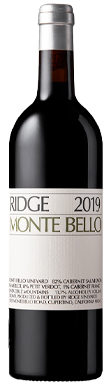

Opens with soaring red raspberry and vivid cassis flavours. Even more precise and pure-tasting than its brother, the Estate Cabernet, Monte Bello has exquisite choreography...
2019
Ridge VineyardsSan Francisco Bay

Ridge Vineyards, Estate Cabernet Sauvignon, San Francisco Bay, Santa Cruz Mountains, California, USA, 2019
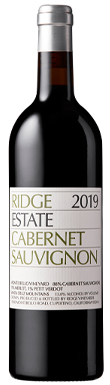
True to the vineyard’s mountain site, up to 814m (2,670ft} in altitude, exposed to the cold Pacific, the wine has vivid cassis purity and a...
2019
Ridge VineyardsSan Francisco Bay
Ridge Vineyards, Geyserville, Sonoma County, Alexander Valley, California, USA, 2020
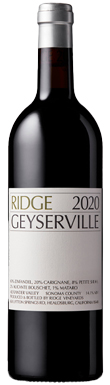
Enormously complex and full of personality. Lots of juiciness and briaryness, with notes of espresso, soy sauce and gaminess. Very rich, impressive and structured, 2020...
2020
Ridge VineyardsSonoma County
Ridge Vineyards, Lytton Springs, Sonoma County, Dry Creek Valley, California, USA, 2020
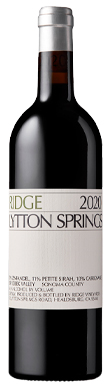
Very juicy and chewy with mulberry and mocha notes. Paul Draper’s love of old California field blends and his belief that Petite Sirah and Carignane...
2020
Ridge VineyardsSonoma County
Ridge Vineyards, East Bench Zinfandel, Sonoma County, Dry Creek Valley, California, USA, 2020
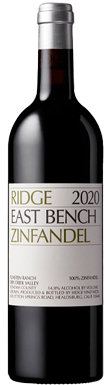
Vividly briary - as though one fell into a patch of raspberry bushes - it’s also very structured and full of cassis flavours, leading one...
2020
Ridge VineyardsSonoma County
Ridge Vineyards, Lytton Estate Petite Sirah, Sonoma County, Dry Creek Valley, California, USA, 2019
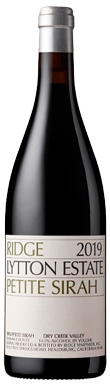
The history of Petite Sirah in California goes back to the mid-19th century, and today the wine has something of a cult following, albeit a...
2019
Ridge VineyardsSonoma County
