
South Africa’s winemakers seek out new signature varieties
Driven by the increasing pressures of climate change, producers in the Cape are turning to alternative grape varieties. Now the likes of Assyrtiko, Vermentino and Grenache are challenging Chenin and Pinotage for a place in the South African wine scene. Jason Millar finds out more and recommends 12 wines to try


‘Climate change is going to have a big impact in this country.’ Those are the words of viticulturist Rosa Kruger, who has been at the cutting edge of next generation viticulture in South Africa’s Western Cape over the last two decades.
‘What was predicted 10 years ago is now real. We have terrible floods, extreme heat and severe drought.’
Vines, deprived of the irrigation they relied on, died in their tens of thousands.
Jason’s suggestions for a 12-pack of South Africa’s next generation varieties below
A new reality
Against this backdrop, South Africa has begun one of the world’s most ambitious and forward-thinking programmes for transforming its wine lands. ‘Water is going to be gold in the future,’ Kruger says. ‘We have to find alternative varieties, and adapt our viticulture.’
The 1980s and 1990s saw the Cape propagate fashionable and commercially expedient French varieties. However Jacques Steyn, managing director of Jordan Wines in Stellenbosch, is now looking to countries such as Greece, Spain and Italy for inspiration.
‘Their varieties are far more suited to our Mediterranean climate. Planting more Merlot and Sauvignon Blanc is not the answer,’ he says.
Jordan has the distinction of being the first winery in the Cape to bottle a varietal Assyrtiko (see tasting note below). This Greek variety has been long-championed by Kruger, who has been a driving force behind many of the drought-resistant plantings.
‘I went to Santorini, I walked those vineyards, I felt the wind and it was like being in Polkadraai,’ she recalls, referring to the fashionable, windy subzone of Stellenbosch, just next door to Jordan’s Assyrtiko new plantings. First produced in 2023, Jordan’s outstanding example has encouraged interest from other producers.

Lessons learned
Eben Sadie, of Sadie Family Wines in Swartland, lost a quarter of his vines between 2016 and 2018. But, he asserts, the drought made them better farmers. He now farms without irrigation, determined to find naturally adapted varieties that can survive without additional water. ‘Merlot, Sauvignon Blanc, Pinot Noir – they’re a disaster here,’ Eben says, shaking his head.
Instead, Sadie has 18 experimental varieties co-planted next to the winery. ‘You can’t believe how well these perform,’ Sadie says. ‘Agiorgitiko, Assyrtiko, Vermentino – they’re phenomenal. They outperform existing vines.’
The drought brought the viticultural challenges of climate change to all of the Western Cape. What once seemed like the niche preoccupation of winemakers in extreme climates such as the Swartland soon gained recognition among the winemaking establishment in South Africa.
Research & development
Tucked away behind the main campus of the University of Stellenbosch is an experimental site of 4.5ha. Conceived in 2019 and planted in 2020, it’s officially known as the Welgevallen Training and Research Vineyard. It is the home of the GenZ vineyard project, an initiative led by industry body Vinpro to research the future of South African vineyard plantings following the drought.
As part of the project, Vinpro has also sponsored experimental plantings of new varieties on the farms of producers across the Western Cape, to see how they perform in the real world. One of these is a plot of Vermentino planted in sandy soils in Koekenaap in the Western Cape.
It caught the eye of Sakkie Mouton, who has been at the vanguard of putting this region on the fine wine map.
‘Vermentino has great acidity even in 40℃ heat. I’ve never seen sunburn on the berries and it’s more drought resistant than Chenin Blanc,’ says Mouton. ‘I love working with it.’
Other Italian varieties have already made themselves at home in the Cape. In 2004, Petrus Bosman brought 50 Nero d’Avola vines from Sicily to South Africa, of which just two survived. It was enough to propagate two entire vineyards in Wellington. The country’s first Nero d’Avola was produced in 2014.
‘It’s a great variety to work with,’ says Corlea Fourie, head of wine and viticulture at Bosman. ‘The vineyard just looks so healthy and happy and we have great natural acidity.’

Old boots, new roads
The next generation isn’t just about planting new varieties. Veteran producers, including established pioneer Ian Naudé of Naudé Wines, stress that there is huge potential in existing old-vine plantings. ‘I love Assyrtiko but, as well as that, why don’t we work with what we’ve already got?’ he asks.
Naudé produces two wines from old vine Colombard grown in Vredendal. Langpad is 100% Colombard, while Soutbos is a blend of Chenin Blanc with Colombard in support. He is bullish about the potential for the variety: ‘It’s the most exciting thing for many years. It is going to be the new Chenin Blanc.’
Historically planted for brandy distillation, Naudé notes that Colombard accounts for over 10% of plantings and is the second-largest category of old vines in the Cape (Source: South African Wine Industry Statistics report 2023).
White knights
Rising star Joan Heatlie arrives for a tasting after being up all night helping a friend in Paarl fight the wildfires that climate change has made all too common. She makes one wine under her Glen Heatlie label, a Grenache Blanc from Wellington.
First planted in 1904, this variety is, like Colombard, making a comeback with hectarage up 254% in four years thanks to its drought-resistance.
Heatlie’s wine isn’t from the usual decomposed granite of the Cape, but from iron and clay soils. ‘I don’t know of anyone else who’s working with this profile for Grenache Blanc,’ she says.
The result is a wine of spicy complexity, one of the finest examples of the variety anywhere in the world. Along with the wines of contemporaries such as Marelise Niemann of Momento, Heatlie is making the case for Grenache Blanc as an important white grape for the future.
It will be in good company. Several Rhône varieties have already proven their quality in the Cape. Syrah/Shiraz led the charge – although plantings have decreased since 2018 – while Mourvèdre remains a speciality for certain wineries.
But it’s now Grenache Noir that’s turning heads for its ability to survive without irrigation while producing delicate, perfumed wines at relatively low alcohols.

New horizons
The next step is to market and sell these varieties. Will they make it as varietal wines, or are they destined to be ameliorating components in blends?
While the industry continues to figure that out, it’s clear that what goes into the ground now will shape the country’s wine industry in the decades to come.
Kruger and her allies remain steadfast in their vision – adapting to climate change isn’t a commercial decision, but an existential necessity.
As Heatlie puts it, after her night fighting fires: ‘South Africa is at a crucial stage. It’s time to think about the second and the third generation and plant for the future.’
South Africa’s next generation varieties: 12 wines to try
Related articles
- Momento Wines: A passion for Grenache
- Stellenbosch Cabernet Sauvignon 2017: Panel tasting results
- South Africa’s Hemel-en-Aarde: A Chardonnay paradise
The Sadie Family, Palladius, Swartland, South Africa, 2022
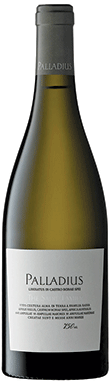

Waxy and slightly closed initially with a touch of lime pith, this slowly opens out into ripe pear, green peach, pomelo and sesame seed. There’s...
2022
The Sadie Family

Glen Heatlie, The Frontier, Wellington, South Africa, 2023
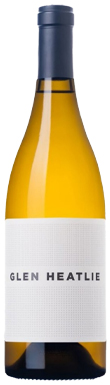
This stunning new vintage shows spicy notes of ginger and dried pineapple, with quince, Golden Delicious apple and a note of macadamia coming through on...
2023
Glen Heatlie
Jasper Raats, Olindo, Helderberg, Stellenbosch, South Africa, 2023
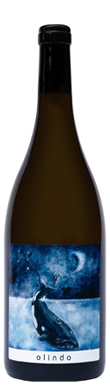
Delicately honeyed flavours of yellow apple, quince and apricot are wound around a core of acidity that drives this wine through the palate, while notes...
2023
Jasper RaatsHelderberg
Jordan, Assyrtiko, Stellenbosch, South Africa, 2024
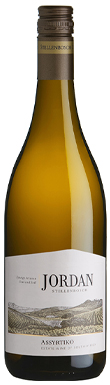
Tasting Jordan’s Assyrtiko is nothing short of a revelation. It’s all there – the mineral rasp, the thick, textural, phenolic drag across the palate, the...
2024
Jordan
Naudé, Langpad, Western Cape, South Africa, 2022
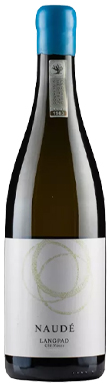
Langpad, meaning 'long road', was the first of the old-vine Colombard – often written Colombar without the 'd' – wines to be produced in South...
2022
Naudé
Newton Johnson, Albariño, Upper Hemel-en-Aarde Valley, Walker Bay, South Africa, 2023
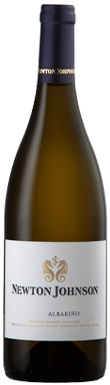
Smoky, salty and brisk with a firm acid line, this is like a cold dip in the sea followed by a plate of oysters on...
2023
Newton JohnsonUpper Hemel-en-Aarde Valley
Blank Bottle, Aasvoel, Helderberg, Stellenbosch, South Africa, 2023
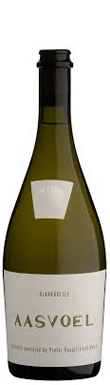
Scents of honeysuckle and daffodil overlay yellow fruits on the nose, with a suggestion of acacia honey alongside an intriguing texture that combines oily, mouthcoating...
2023
Blank BottleHelderberg
Sakkie Mouton Family, Sand Erf, Koekenaap, South Africa, 2023
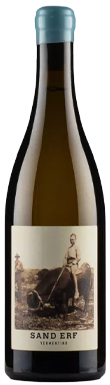
Made from a vineyard of 400 plants created as part of Vinpro’s GEN-Z project, this young-vine Vermentino is about as cutting edge as it gets....
2023
Sakkie Mouton Family
Diemersdal, Grüner Veltliner, Durbanville, Tygerberg, South Africa, 2023
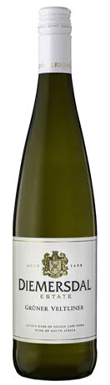
Recognisably Grüner Veltliner, this impressive white from the Durbanville area to the south of Cape Town is a pitch-perfect example of the grape, combining white...
2023
DiemersdalDurbanville
Swartberg Winegerde, Holism Garnacha, Piekenierskloof, Citrusdal Mountain, South Africa, 2023
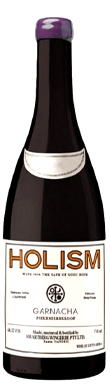
A bewitching nose of cranberry, redcurrant, satsuma and rose petals segues into a palate with a citrussy acidity and chalky tannins; it's so vital and...
2023
Swartberg WinegerdePiekenierskloof
Steenberg, Nebbiolo, Constantia, South Africa, 2019
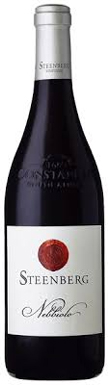
This is an extraordinary success from Steenberg with a fickle and difficult variety that often disappoints outside of Italy. Yet the distinct, antiquarian perfume of...
2019
Steenberg
Bosman Family Vineyards, Nero, Wellington, South Africa, 2023
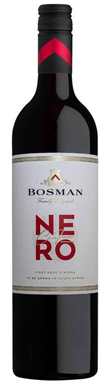
Richly flavoured without being heavy, this vibrant red shows just how well-suited to the Cape climate Nero d’Avola is. The sweetly-ripe flavours of blackberry, sun-kissed...
2023
Bosman Family Vineyards
