
Terra di Monteverro: Every vintage of this mini SuperTuscan
Decanter's regional editor for Italy, James Button chats with Monteverro's oenologist, Matthieu Taunay and discovers value in the estate's second wine - Terra di Monteverro.


Monteverro will celebrate its 20th anniversary next year but it is only relatively recently that it has hit full stride.
Founded in Capalbio, Maremma in 2003 by German Georg Weber, at its heart lies a modern, partially subterranean eco-friendly winery utilising gravity and the natural cooling effects of the soil to minimise its energy footprint.
Scroll down to see tasting notes and scores for 11 Terra di Monteverro vintages: 2008-2018
Just five kilometres from the Tyrrenhian sea, Monteverro’s 55 hectare estate occupies three hills ranging from 30 to 80 metres on stony, mineral-rich red clay soils.
Of the 55ha, 35ha is planted to vines, the first 15ha of which were planted in 2004 – Cabernet Sauvignon, Cabernet Franc, Merlot, Petit Verdot, Syrah, Grenache, plus small parcels of Chardonnay and Vermentino. The altitude, hillside slopes and sea breeze provide a unique microclimate for the vines here, with cool temperatures at night and warm, plentiful Tuscan sunshine during the day.
The estate’s large proportion of scrubland encourages biodiversity, from tiny pollinators to wild boar, wild herbs and flowers to olive trees, plus a natural lake surrounded by old cork oak trees.
In 2008, Matthieu Taunay joined as the estate’s enologist. A young winemaker with experience in Bordeaux, Châteauneuf du Pape, Napa, South Africa and New Zealand, he enlisted the experience of expert consultants Jean Hoefliger and Michel Rolland, who still advise.
Terra di Monteverro
Monteverro, a Bordeaux blend, is the estate’s flagship red wine. Although based on the same blend as Monteverro – Cabernet Sauvignon, Cabernet Franc, Merlot and Petit Verdot – second wine Terra di Monteverro’s proportions differ slightly and the source plots are not the same.
Matthieu explains that each plot is vinified separately and only after malolactic fermentation are the wines tasted and decisions made as to which wine they will become components of. This is important, as the grapes are grown with the inherent quality potential to be used in the flagship, which retails for approximately £100 more.
If Monteverro’s flagship bottling is on the verge of being accepted as a true ‘SuperTuscan’, then Terra di Monteverro is for sure a mini SuperTuscan.
For the two wines, Mathhieu makes stylistic choices, noting that he doesn’t simply pick the best barrels for the top wine. Instead, he chooses interesting and complementary lots for both Monteverro and Terra di Monteverro – ‘the art of blending doesn’t always require the best wine; it needs balance’.
Matthieu’s growing experience in Maremma has given him the confidence to work more to a vintage’s strengths and weaknesses, as well as understanding the terroir.
The viticultural and winemaking approach has followed organic and sustainable principles since the beginning – no pesticides, fungicides or herbicides, and caterpillar-tracked tractors are used whenever possible to avoid compacting the soil.
The estate is now certified organic, with effect from the 2019 vintage.
A manual approach in the eco-winery is used to treat the grapes and wine as carefully as possible. For Terra di Monteverro, fermentation is in a combination of stainless steel and oak barrels, using naturally occuring yeasts and with manual punchdowns. No fining or filtration is carried out. Ageing is in 60% new French oak for 20 months – as opposed to 24 months in 80% new French oak of the flagship wine.
Recently, during the Vinitaly trade fair in Verona, Matthieu talked me through a fascinating vertical of Terra di Monteverro. While the flagship Monteverro has received very high praise from journalists, it’s Terra di Monteverro which offers the best value for money, providing a quality wine experience in its own right.
The freshness that the Maremma imparts is clearly evident in these wines, as well as Matthieu’s increasing confidence and experience with each new vintage.
From the beginning: Terra di Monteverro
Related content
Bibi Graetz Testamatta: 2000-2019 vertical
Suvereto: Regional profile & names to know
A guide to Chianti Classico’s new sub-zones
Monteverro, Terra di Monteverro, Toscana, Tuscany, Italy, 2018
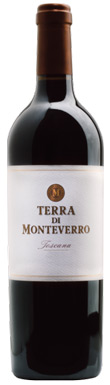

A very classical year for Tuscany,' says enologist Matthieu of the 2018 vintage. Still full of aromatic youthful red fruits, cherry, spice and cedar, it...
2018
MonteverroToscana

Monteverro, Terra di Monteverro, Toscana, Tuscany, Italy, 2017
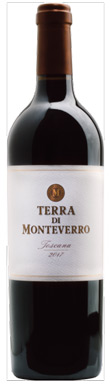
Like elsewhere in Tuscany, 2017 was a very dry year; even drier than 2012. Some big decisions had to be made but luckily the warm...
2017
MonteverroToscana
Monteverro, Terra di Monteverro, Toscana, Tuscany, Italy, 2016
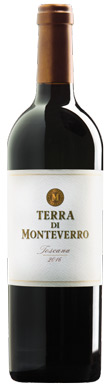
Perfect conditions for all the different varieties,' says enologist Matthieu Taunay of the 2016 season. Heavy rain on 10 June after a hot spring refreshed...
2016
MonteverroToscana
Monteverro, Terra di Monteverro, Toscana, Tuscany, Italy, 2015
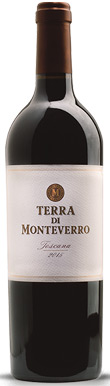
A warm season saw concentrated berries and an accelerated harvest of Merlot at the end of August as a heatwave set in. The last Cabernet...
2015
MonteverroToscana
Monteverro, Terra di Monteverro, Toscana, Tuscany, Italy, 2014
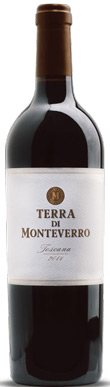
A vintage characterised by off and on rainfalls and a cool August and September. Maceration was carried out at a lower temperature to minimise the...
2014
MonteverroToscana
Monteverro, Terra di Monteverro, Toscana, Tuscany, Italy, 2013
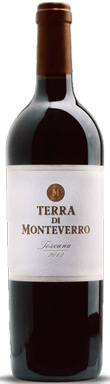
Despite plenty of winter rain refilling the water reserves - including a huge 400mm within 48 hours in November 2012 - the vines were showing...
2013
MonteverroToscana
Monteverro, Terra di Monteverro, Toscana, Tuscany, Italy, 2012
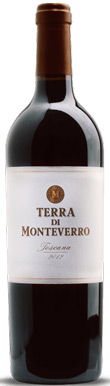
A dry yet cool growing season resulted in lower yields - the vines produced fewer berries due to the dry spring - which, along with...
2012
MonteverroToscana
Monteverro, Terra di Monteverro, Toscana, Tuscany, Italy, 2011
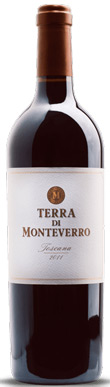
A slightly early budbreak, well-timed rainfalls in July and a hot August led to an early and quick harvest - picking of the Merlot began...
2011
MonteverroToscana
Monteverro, Terra di Monteverro, Toscana, Tuscany, Italy, 2010
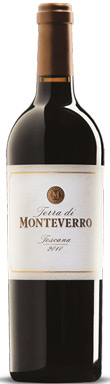
A dry summer was offset by some cool weather in September, and the lack of autumn rain allowed the team to pick at leisure -...
2010
MonteverroToscana
Monteverro, Terra di Monteverro, Toscana, Tuscany, Italy, 2009
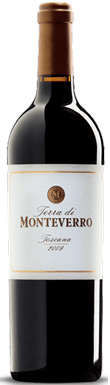
Harvest was interrupted by rainstorms but it doesn't seem to have affected quality. The last grapes of Cabernet and Petit Verdot were picked on 20...
2009
MonteverroToscana
Monteverro, Terra di Monteverro, Toscana, Tuscany, Italy, 2008
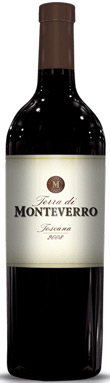
The first vintage from the estate shows enologist Matthieu still finding his feet with the terroir and the equipment. As far as first vintages go,...
2008
MonteverroToscana
