
The marvellous world of orange wines: Everything you wanted to know explained by an expert
What exactly are orange wines? How are they made? Are they the same as natural wines? Here’s all you need to know to start discovering this increasingly popular style


Hanging out at a neighbourhood wine shop in Amsterdam last weekend, I overheard this interaction…
Customer: ‘Hi, I’m buying a bottle as a birthday present for a friend.’
Assistant: ‘Okay, what style are you looking for? Red? White?’
Customer: ‘I was thinking maybe something orange. I know she likes natural wine. She’s into everything organic – that sort of thing.’
The young customer happily admitted that he knew nothing about wine.
But he was more than familiar with the term ‘orange’, and he – or his friend – automatically conflated it with all things natural and organic.
It was a great demonstration of how orange wine has permeated popular culture, in a similar fashion to kombucha, flat whites and sour beers – all specialities that have become familiar, if not necessarily well understood.
Notes and scores for 15 orange wine recommendations listed below
Orange wines are now sold by supermarkets and major wine retailers. Wine-savvy restaurants list them in their own separate category.
They have a significant niche following and, particularly for a younger generation of drinkers, orange is now simply part of the canon.
Nonetheless, orange wine’s rise from obscurity hasn’t been straightforward.
Two key issues, both aptly distilled into that customer exchange, still prove challenging.
One is incessant bickering about the name. The other is that confusion between orange and natural. Are they joined at the hip? Are they the same thing?
Troublesome terminology

Let’s tackle the nomenclature first. Why can’t the wine world agree on a single term?
Pedants insist that we should call them ‘skin contact wines’; presumably that includes reds as well.
Some assert that ‘orange wine’ makes no sense because the wines aren’t always orange in colour; I wonder if they’ve ever set eyes on a white wine that was high-gloss white.
The history buffs earnestly maintain that we must call these wines ‘amber’, out of respect for the popular Georgian name and the technique’s ancient roots in the Caucasus.
I have no particular axe to grind, but ‘orange wine’ has undoubtedly won the popularity contest. And justly so – it’s a short, memorable phrase that slots well into the paradigm of white, red and rosé.
The Oxford Companion to Wine adopts it, as do countless restaurants and winemakers worldwide. Why confuse people with unnecessary jargon?
A related issue is the winemakers who, Groucho Marx-like, don’t want to be part of any club that celebrates them.
In far northeast Italy, Paolo Vodopivec, one of Friuli’s iconic orange wine pioneers, got quite sniffy with me a few years back when we discussed terminology.
He felt that the orange tag aligned him with growers making rustic or faulty natural wines, when his own style is elegant and precise. He added: ‘For me, skin contact is not the end result. It’s just an instrument to allow me to express the grape.’
Not necessarily natural

That brings us to point two. Why is ‘orange’ so inextricably linked with ‘natural’?
Having hitched a ride along with natural wine to global hipsterdom, orange wine is the movement’s poster child.
As a category, it represents the biggest point of difference from the mainstream wine world, where such deeply hued and textured white wines barely exist. But just because it’s orange doesn’t mean it has to be natural.
The term ‘orange wine’ describes a technique, not a style or a creed. That technique – skin-fermenting white grapes (see box, below) – can be deployed to create a multitude of different profiles, from cidery swamp juice to elegant fine wine.
In this respect it’s no different to skin-fermenting red grapes, a technique that’s also used for both mass-produced supermarket lines and quirky, low-intervention styles. While orange wine is a technique, natural wine represents an overarching philosophy of minimal intervention.
Connecting dots
Again there are links. For the winemaker who wants to work without packaged yeasts, sulphites or controlled temperatures, skins are damn useful.
They contain tannins, and thus phenols, that work as antioxidants, and they harbour yeasts native to the environment of the vineyard they grew in. Spontaneous fermentation is simply quicker and more reliable with skin contact.
Tom Lubbe, winemaker-owner of Matassa in Roussillon, explains that he started skin-fermenting his Muscat in 2008 for just these reasons.
Some winemakers feel that white varieties show better origin and varietal characters if the entire grape, including skins, is used.
Among them is Gernot Heinrich of Weingut Heinrich (pictured, above), who uses skin fermentation to allow his white grapes to better express the limestone and chalk soils of the Leithaberg hills in Burgenland, Austria.
Should that surprise you, consider this: if the region’s Blaufränkisch planted on the same soils can express itself better as a red wine (skin-fermented) than as a rosé, why should it be different for the whites?
Heinrich’s first orange vintage was 2011, just over a decade after a group of iconoclastic growers on the Italy-Slovenia border reignited interest in the technique.
Joško Gravner, the late Stanko Radikon, Dario Prinčič and many of their neighbours in Friuli’s Collio region are now world famous.
What is orange wine?
Orange wine is made from white grapes that were fermented with their skins – in essence, it’s a white wine made like a red.
The length of skin contact isn’t the decisive factor, but rather the inclusion of the skins during some or all of the fermentation process, allowing a deeper colour and more intense flavours and aromas to be extracted from the skins during fermentation.
Note that macération pelliculaire, otherwise known as pre-fermentation cold soak, is a different technique that doesn’t generally result in the same flavour, aroma or colour profile.
Meditation wines

A lot has changed in the last two decades.
Gravner was originally inspired by the 8,000-year-old Georgian tradition of fermenting skins, stems, seeds and juice together in qvevris (huge clay pots that are buried underground). His wines, and those of his acolytes, pay homage to this style.
With many weeks or months of skin contact, they have a deep amber/gold colour and serious structure. Flavours tend towards the more savoury, herbal or autumnal. Italians might speak of ‘meditation wines’.
This more substantial style of orange defined the category during the first decade of the 21st century.
Many of the wines from Goriška Brda, the part of Collio on the Slovenian side of the border, occupied a similar stylistic realm. But as the fashion for skin-fermenting white grapes has spread across Europe and beyond, the stylistic range has widened.
Heinrich and his Burgenland colleagues have popularised a more fruit-focused style. Look to Claus Preisinger (pictured, above) or Gerhard Pittnauer for more examples.
Typically based around blends that include aromatic varieties such as Muscat, these wines seduce you with soft tannins and juicy acidity. Skin time is typically short, perhaps a week or two.
This precisely executed, fruity style has spread across central Europe to countries such as Slovakia and the Czech Republic. Zsolt Sütő of Strekov 1075 and Milan Nestarec are two names to know.
Even in the orange heartland of Slovenia, there has been a move away from heavier, more structured wines, as noted by Valentin Bufolin, one of the country’s top sommeliers, now working in wine distribution.
He feels that Slovenian winemakers have upped their game, too: ‘We’ve seen a shift from this archaic type of production to a more modern, cleaner style.’
Serving and enjoying orange wines
For all but the lightest orange wines, serve slightly warmer than your average white. Start between 12°C and 14°C but let your personal taste be the ultimate guide.
Warmer temperatures and a larger glass are recommended for fuller-bodied, tannic styles, such as Georgian ambers or examples from Friuli or western Slovenia. As with heavier red wines, they often benefit from aeration or decanting.
The combination of freshness from white grapes and the structure from the skins makes orange wines extremely versatile on the dinner table. Aromatic oranges are a match made in heaven for intensely flavoured, spicy dishes from Thai or Szechuan cuisines.
Rich or fatty foods such as a meaty lasagne or spare ribs also pair well with tangy, acidic orange wines, the tannins helping to cleanse the palate between each mouthful. And the herbal, earthy or spicy flavours found in many oranges combine perfectly with umami-rich ingredients, such as soy or field mushrooms.
Spectrum of styles

In countries with a more embedded tradition – think Georgia, Slovenia, Italy – the stylistic range is now vast, from rustic and wild to classical and polished.
Ancestral-method styles (bottling wine before it fully completes its fermentation) have emerged from the woodwork in many Italian regions – look to Emilia Romagna or Veneto for a plethora of lightly macerated bubbles.
Winemakers in Australia, New Zealand, South Africa and the US eagerly took to skin-fermenting their whites, harnessing the textural advantage to offset riper fruit profiles.
Archaic macerated winemaking methods in Armenia, Portugal, Chile and Bolivia have also stuck their heads above the parapet, realising they can now hold them up proudly.
Added to this are ever more major mainstream wineries that have decided to dip their toes into the category, such as Gérard Bertrand in the south of France and Cramele Recaș in Romania.
Some stick to the minimal intervention ethic, others don’t. This can be irksome for the pioneers, especially when these wines appear at budget prices on supermarket shelves.
But imitation is the sincerest form of flattery, and if a cheap, mass-market orange wine encourages even the tiniest proportion of drinkers to explore the category, then it’s surely a positive.
A new nebula
Wherever your preferences lie, the diversity on planet orange is now as broad as that in its neighbouring galaxies of white, red and rosé.
But orange has the advantage when it comes to the eternal ‘white or red’ dilemma, as Doug Wregg, marketing director and buyer at UK importer Les Caves de Pyrene, explains: ‘I’m either in a mood where I want tension and acidity, or I want texture and layers. Orange wine is a great intermediate. It gives me everything I want from a red wine, when I don’t actually want to drink a red wine.’
The wines I’ve recommended here are designed to showcase as much of that diversity as possible.
You don’t need to be a card-carrying natural wine fan to enjoy all of them. The modern-day spectrum of orange wine has something for everyone, whatever you decide to call it.
Planet orange: Woolf ’s pick of 15 wines to try, across all styles
Related articles
- Modern Marsala: How an Italian classic rediscovered its verve and attitude
- Exciting, diverse, soulful: My selection of 20 Portuguese wines for winter
- The 30 top highlights from the new Grosses Gewächs releases
Klinec, Ortodox, Goriška Brda, Primorska, Slovenia, 2013
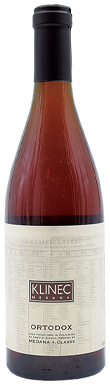

Dark and brooding with deliciously spicy, raisined notes and a smoky, honeyed richness – the signature of Verduzzo, which forms the majority of this blend....
2013
KlinecGoriška Brda

Casè, Casèbianco, Emilia-Romagna, Italy, 2022
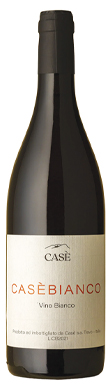
Dried flowers, citrus oils and hay greet you on the nose. The palate has a wonderful harmony and completeness, filled with little herbal details and...
2022
Casè
Gut Oggau, Timotheus Weiss, Burgenland, Austria, 2022
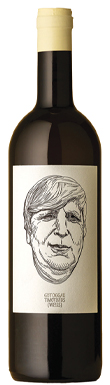
A blend of partly skin-fermented and partly direct-pressed fruit, resulting in a wine with stunning freshness and energy, and a silky-smooth, generous texture. All kinds...
2022
Gut Oggau
Mlecnik, Vipava Valley, Primorska, Slovenia, 2016
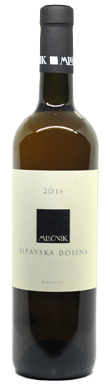
Due to a tiny harvest and a vintage when all the Rebula was lost, the family made this one-off blend in 2016, instead of their...
2016
MlecnikVipava Valley
Tchotiashvili, Kisi, Kakheti, Georgia, 2020
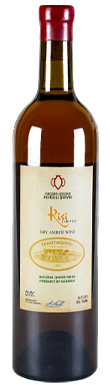
This 2020 is still a baby, but shows how complex and satisfying Georgia’s traditional qvevri amber style can be in the hands of a master....
2020
Tchotiashvili
Matassa, Cuvée Alexandria, Languedoc-Roussillon, France, 2024
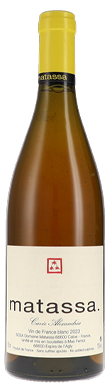
With no added sulphites, the palate has that slightly wild, herby character that works so well with an aromatic variety. The nose explodes with mint,...
2024
Matassa
Radikon, Slatnik, Collio, Friuli Venezia Giulia, Italy, 2023
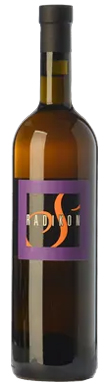
This shortish (10-day) skin contact blend always delivers on its promise as an earlier-drinking, more upfront style than Radikon’s core range. Its wild berry, camomile...
2023
RadikonCollio
DB Schmitt, Zöld, Rheinhessen, Germany, 2021
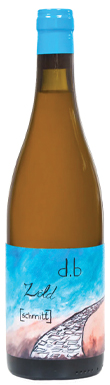
Skin fermentation has really turbocharged the fruit here. The palate brims with bright tropical flavours and pin-sharp acidity: think ripe kiwi, mango and apricot. Some...
2021
DB Schmitt
Gerações da Talha, Natalha Branco, Alentejo, Portugal, 2022
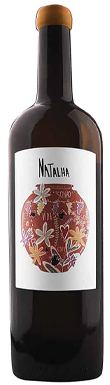
Teresa Caeiro continues the proud tradition of her grandfather, the famed ‘professor’ of Vila de Frades. Fermented in the time-honoured manner, with stems and skins...
2022
Gerações da Talha
Archil Guniava, Tsitska, Imereti, Georgia, 2021
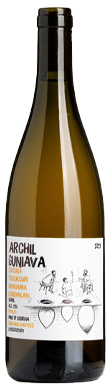
If you thought all Georgian amber wines were prickly, tannic monsters, try this fruit-driven, elegant style from the westerly Imereti region. Guniava grows the grapes...
2021
Archil Guniava
Folias de Baco, Uivo Curtido Branco, Douro Valley, Portugal, 2024
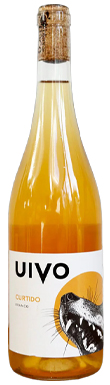
This zesty, refreshing orange is a great demonstration of how well aromatic varieties take to prolonged skin contact. Here, Moscatel Galego that stayed four months...
2024
Folias de Baco
Testalonga, Baby Bandito Stay Brave, Swartland, South Africa, 2024
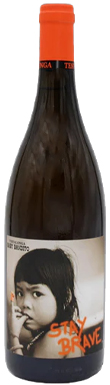
Owner and winemaker Craig Hawkins dry-farms small, organic, rented vineyards such as the 44-year-old block used to make this featherlight, mouthwatering Chenin. The granitic soils...
2024
Testalonga
Reka Koncz, Ora, Bükk, Hungary, 2022
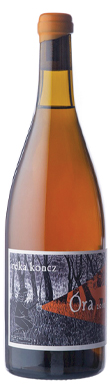
Located near the Ukrainian border, Annamária Reka Koncz’s home region of Bükk isn’t known for wine, but she’s changing that. This blend of mostly Tokaj...
2022
Reka Koncz
Luis Felipe Edwards, Macerao Orange, Itata Valley, Chile, 2022
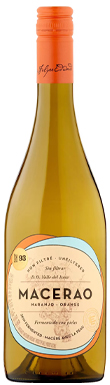
From a major producer but made in an artisanal manner with minimal intervention: wild yeasts and no filtration. The fruit was dry-farmed and hand-harvested. A...
2022
Luis Felipe Edwards
Tbilvino, Qvevris Rkatsiteli, Kakheti, Georgia, 2021
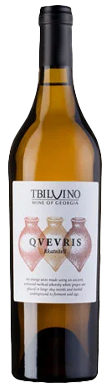
An accessible, soft-textured introduction to the Georgian amber style that has been made with less time in qvevri and no stems. Apple pie, peach and...
2021
Tbilvino
