
Championing diversity in Australia: Emerging grape varieties and 12 wines to try
Having had two decades to take root, a host of Mediterranean and other more specialist grape varieties are producing some stellar wines in Australia – and changing perceptions of how the country is seen on the global wine stage.


Montepulciano: savoury, sophisticated, nuanced and delicious. And from South Australia, not Southern Italy – an unexpected punchline that draws a double-take from many.
Isn’t Australian wine all about Chardonnay and Shiraz, and sunny, exuberant generosity? It still is in many cases, but the narrative is being changed by a diverse cast of Mediterranean grape varieties that have been planted across the country over the past 25 years. They are an exciting breed of new Australians – wines that shout proudly of their adoptive homeland while still remembering their European heritage.
Scroll down for notes and scores of 12 wines made from Australia’s emerging varieties
Damien Tscharke was among the early adapters to embrace these varieties. A fourth-generation grape-grower from South Australia’s Barossa who tends 70-year-old Grenache and Shiraz vines, he is one of the region’s more progressive winemakers who initially took on alternative varieties as a solution to climate futureproofing.
However, never satisfied with mediocrity, Tscharke wanted more than just sustainability outcomes and also focused on grapes that would produce outstanding wines. He says Montepulciano is the prize from this search: a grape perfectly suited to his Stone Well vineyard in the Barossa and a wine equal to any other in the world.
‘Our focus is creating wines that are naturally balanced in the vineyard,’ says Tscharke. ‘We have to work to our strengths. I’ve considered and grown several alternative red grape varieties but chose to focus on only one because I can see that the quality of Montepulciano from this site is phenomenal.’

Inspired by opportunity
The movement to champion new grape varieties in Australia took root in the late 1990s, with the Chalmers family of Merbein in northwestern Victoria being a pivotal influence.
Bruce and Jenni Chalmers first planted imported exotic grape varieties in 2000 and have since introduced more than 70. To date, they report sales of more than 2.5 million vine cuttings from their nursery – a burgeoning enterprise now driven by their daughters Kim and Tennille.
‘We’ve been inspired by the viticultural possibilities ahead of the actual wines,’ says Kim. ‘These grape varieties are capable of much more than traditions show, and this is why the future of alternative varieties in Australia is so exciting. It’s all site-driven, and we can see that a host of vine selections are likely to excel in any given place.’
Chalmers Wines’ 2004 Vermentino was Australia’s first and is still a benchmark. It was the lightbulb moment that bolstered the family’s confidence in making alternative wine styles. Kim’s currently excited by new plantings of Falanghina, Nerello Mascalese and Carricante, and sees great potential for Pecorino in South Australia’s Adelaide Hills and Clare Valley and the Hunter Valley in New South Wales.
‘Choosing the right variety is just one tool in the kit to get the best results out of a specific site,’ she says. ‘It’s not about making wines that we compare with Italy. It’s about establishing Australian regional varieties of the future. We are searching for – and finding – viticultural characteristics to suit our sites. The best is yet to come.’
Huge variety
According to the 2022 Australian and New Zealand Wine Industry Directory, Australia currently has 150 different grape varieties (‘alternatives’ covering about 4% of the nation’s vine plantings), with recent additions including Nosiola, Malvasia, Refosco and Inzolia.
To help inform such bold exploration, the Australian Alternative Varieties Wine Show (AAVWS), held annually in Mildura, has grown from 163 wines by 69 producers in 2001 – as recounted by Max Allen in his new book Alternative Reality: How Australian wine changed course (£38.99 WH Smith) – to 734 entries from 63 different regions in 2022, and has steered the maturity and quality of Australia’s alternative wine vision.
The influence of the AAVWS on several of its winemaker judges has been profound. Corrina Wright of Oliver’s Taranga in South Australia’s McLaren Vale – famed for its old-vine Shiraz that’s bought by Penfolds to include in its Grange – has now planted Mencía, Vermentino, Sagrantino and Fiano.
Sue Bell of Bellwether in Coonawarra expanded her grape acquisitions to obtain Tempranillo from Wrattonbully and Montepulciano, Nero d’Avola and Bianco d’Alessano from the Riverland (both in South Australia) as well as Vermentino from Heathcote in Victoria. Collectively called Ant Series, these are Bell’s ‘climate change wines’ that she says promote sustainability through using varieties ideally suited to their environments.
‘I’ve seen these wine styles evolve quickly, because it makes clear sense for us to embrace these grapes,’ says Bell. ‘A country as big as Australia needs lots of diverse varieties, and my hunt for them has enabled me to explore texture in my wines rather than just fruit expression.’

Championing diversity
Someone who has plenty of diversity at his disposal is Wayne Farquhar, long-time researcher for the South Australian Vine Improvement Association. He has 99 different varieties planted on his western Barossa vineyard – 44 for winemaking and another 55 planted for evaluation – and makes 17 different varietal wines under his Dell’uva label.
Meanwhile, at Ricca Terra vineyards in South Australia’s Riverland, Ashley Ratcliff has veered away from traditional grape varieties, which he insists are largely unsuitable to the region. Instead, the former Yalumba viticulturist planted Vermentino, Fiano, Nero d’Avola and Zibibbo, for starters.
Ricca Terra emerged as a poster child for smart viticulture, growing grapes that are heat resistant and drought tolerant. ‘Climate-appropriate grape cultivation equals truly sustainable wine regions,’ says Ratcliff.
Ricca Terra’s network of 10 vineyards has more than 30 grape varieties, producing about 1,300 tonnes annually that are purchased by 35 winemaker customers. They have much exotica to choose from, including Slankamenka Bela, a rare white Balkans grape, used by artisanal Margaret River-based producer Amato Vino; and Portuguese grapes Tinta Barroca and Arinto, used by Barossa’s Dave Lehmann for Ratcliff’s own Ricca Terra wines.

Even less-familiar wine regions across Australia are recording impressive results with alternative grape varieties.
In southern Queensland’s Granite Belt, near Stanthorpe, Savina Lane Wines grows an award-winning Fiano, along with Manseng, Tempranillo, Graciano and Montepulciano, while nearby Golden Grove Winery won an AAVWS trophy and a National Wine Show gold for its 2022 Vermentino.
Not to be outdone, in New South Wales, Mercer Wines in Orange makes a notable Barbera as well as Montepulciano, Tempranillo, Nero d’Avola and Vermentino, and Intrepidus Wines in Canberra has found success with Sangiovese.
In Tasmania, Holm Oak produces Arneis, and Rivulet Wines grows Sylvaner; while in Victoria, Pizzini in King Valley champions a host of Italian varieties including Verduzzo and Nebbiolo, Quealy in Mornington Peninsula makes a skin-contact Friulano and is growing Refosco and Malvasia, and Gapsted in the Alpine Valleys produces Primitivo, Touriga Nacional and still and sparkling Saperavi.
Flavour profiles
Escalating excitement in alternative varieties must, however, be sustained by commercial success for the wines – propelled by distinct flavour profiles and clear marketing that makes sense to consumers. This has been foremost in the thinking of importer-turned-winemaker James Scarcebrook, who started his Vino Intrepido label in 2009.
Without having his own vineyards, Scarcebrook scours Victorian regions he feels are best suited to grow specific Italian grape varieties, and purchases fruit from growers to make a diverse suite of wines. This includes Vermentino from Nagambie Lakes, Fiano from Mornington Peninsula, Nero d’Avola from Merbein, Sagrantino from Heathcote and Nebbiolo from the Pyrenees near Bendigo.
He is now advocating for growers to plant more – especially on the rich volcanic soils of western Victoria. One such site, at Mount Franklin in the Macedon Ranges, is the source of his prized Dolcetto. ‘I want these wines to have an influence – not only with consumers, but also grape-growers and winemakers,’ says Scarcebrook.
Other winemakers are developing visions for specific wines from the ground up. In Victoria’s Beechworth, Raquel Jones and her husband Hugh purchased a vineyard for its potential to grow outstanding Tempranillo, then carefully sourced and grafted three clones from Spain’s Ribera del Duero region onto existing rootstocks.
Their Weathercraft label now features a feisty and seductive joven (a more approachable style with minimal oak to drink young) and a new reserve Tempranillo (with studied oak maturation) that will launch in late 2023.

Fiano rules
Of all Australia’s alternative varieties, Fiano is arguably the most widespread, offering myriad style possibilities. Both the Chalmers family and Mark Lloyd of Coriole in South Australia’s McLaren Vale released the country’s first varietal Fianos in 2005.
Since then, it has been planted with great success throughout the country – as far away as the aforementioned Granite Belt in Queensland to Margaret River and Swan Valley in Western Australia, and across wine regions in New South Wales and Victoria.
But it is in South Australia where it really shines. And to demonstrate Fiano’s versatility here, Brendan and Laura Carter of Unico Zelo source fruit from three significantly different regions: the Adelaide Hills (planted on clay at 500m, for its austere Alluvium Fiano), from Clare Valley’s Polish Hill River (on loam soils at 300m, for Slate Farm Fiano) and on sandy soil from two Riverland vineyards (Ashley Ratcliff’s Ricca Terra vineyard for River Sand Fiano and Bassham’s organic vineyard for Jade + Jasper Fiano).
Having decided to market these regional expressions as separate wines, the Carters note that enthusiastic sales for each style vindicates their belief in Fiano showing both terroir personality and winemaker influence.
It also shows that specific Australian regions are emerging as strongholds for alternative varieties. ‘The landscape of Australian wine benefits from these varieties,’ Kim Chalmers says of these sustainable, climate-appropriate grapes. With forward-thinking producers now having had two decades of trial and error into what works where, she adds: ‘We’re out of our teenage years now. We’re serious and confident in these wines and what they express.’
Australia’s emerging varieties: 12 wines to try
While growing in volume and popularity, these wines still represent only a tiny fraction of Australia’s wine production. Many are made in small quantities, so it doesn’t make commercial sense yet to export them – especially as savvy Australian wine lovers snap them up on release so they sell out fast.
If you want to get your hands on a few bottles, one option is to go direct to the winery to see if they can ship to your address. Second could be to use a shipping agent who is used to offering cellar door-to-doorstep services. Third, be patient and wait for an importer to order the wines to your country or check Winesearcher regularly to see if new stockists and retailers are listed. Finally, you could try nagging your local merchant to see if they could order it in specially? Good luck!
Related articles
- Riverland revival: Australia’s forward-thinking region
- Tasmania: 21 wines showcasing Australia’s island state
- Australian Chardonnay: An international success story
Hahndorf Hill, Gru Grüner Veltliner, Adelaide Hills, South Australia, Australia, 2022
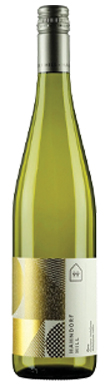

As Australia’s proud standard bearer for Grüner Veltliner, Hahndorf Hill produces four different styles: lean and confident, this is the most impressive. A gentle waft...
2022
Hahndorf HillAdelaide Hills

Artwine, The Real Thing Albariño, Adelaide Hills, South Australia, Australia, 2022

This bold interpretation of Albariño, now in its fifth vintage, keeps growing in stature as its complexity and seductive texture continues to bloom. An arresting,...
2022
ArtwineAdelaide Hills
Millbrook, Regional Fiano, Margaret River, Western Australia, Australia, 2022
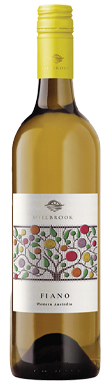
A beautiful, sultry nose suggests Nashi pear and nougat over honeysuckle, but the palate is sewn with a seam of richness from bright fruit flavours...
2022
MillbrookMargaret River
Chalmers, Falanghina, Heathcote, Victoria, Australia, 2021
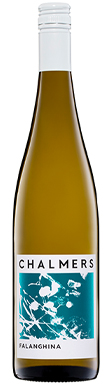
This surprising, vivacious, slim-built wine adds a curious fresh addition to the canon of dry Australian white wines. Think of Riesling that boasts a more...
2021
ChalmersHeathcote
Chalmers, Vermentino, Heathcote, Victoria, Australia, 2022
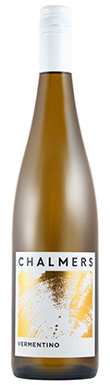
With fruit sourced from Chalmers’ Heathcote vineyard in Central Victoria, this wine is kept fresh and racy, a hint of textural grip ensuring its lively...
2022
ChalmersHeathcote
Tscharke, The Master Montepulciano, Barossa, South Australia, Australia, 2021
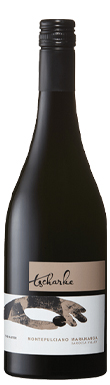
A smile of cherry and red plums framed by a rustic red earth edge, with juicy red fruits tempered by comforting savoury notes and herbaceousness...
2021
TscharkeBarossa
Fighting Gully Road, La Longa Sangiovese, Beechworth, Victoria, Australia, 2018
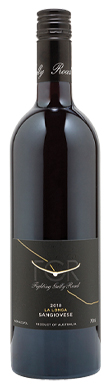
Taking its name from this handsome wine’s patient journey through 12 months in new oak, 12 months in old casks, then 12 months in bottle...
2018
Fighting Gully RoadBeechworth
Hither & Yon, Nero d'Avola, McLaren Vale, South Australia, Australia, 2022
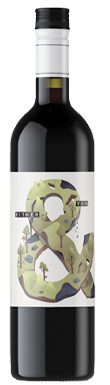
There’s big excitement in Australia for Nero d’Avola – and here’s a prime reason why. Rich and proud, this medium-bodied marvel is wrapped in a...
2022
Hither & YonMcLaren Vale
SC Pannell, Tempranillo-Touriga Nacional, McLaren Vale, South Australia, Australia, 2020
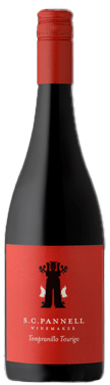
Finding an easy, natural balance between these two robust grape varieties (50% each), winemaker Steve Pannell encourages a lively dance of complex flavours and textures....
2020
SC PannellMcLaren Vale
Weathercraft, Tempranillo J, Beechworth, Victoria, Australia, 2022
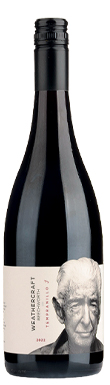
A clean, uncomplicated joven style that is deliberately lean to show off the haughty strut and attitude of fruit from two quite savoury Ribera del...
2022
WeathercraftBeechworth
Shut the Gate, For Freedom Single Site Negroamaro, Clare Valley, South Australia, Australia, 2020
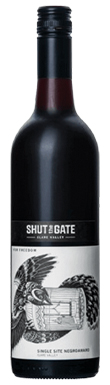
Boutique producer Shut the Gate presents one of the few examples of this Italian variety in Australia, sourced from only 1ha of vines in Clare’s...
2020
Shut the GateClare Valley
Vino Intrepido, Sacred & Profane Sagrantino, Heathcote, Victoria, Australia, 2021
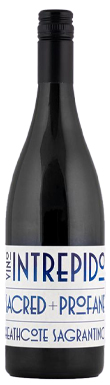
The lively wrestle of flavours captures a boisterous tumble of black plum, dark cherry, a bloody iron-like quality and a hint of wild herbs in...
2021
Vino IntrepidoHeathcote
