
The new Graves ambassadors
Not a ranking, but a new annual initiative to inject momentum back into the Graves region and highlight some of its top producers. Here we introduce the 2022 Ambassadeurs de Graves, with notes on this year’s selected three dry whites and 10 reds.

For a region as traditional and steeped in history as Bordeaux, it’s refreshing to see new initiatives, and even whole new categories, emerge with the goal of bringing wider attention to its lesser-known wines. The Médoc has, of course, its famous and unlikely-ever-to- change 1855 classification ranking estates from first to fifth growth, as well as its newly relaunched (in 2020), three-tier Cru Bourgeois du Médoc classification for estates that weren’t listed in the former (249 in all in the 2020 list). And over on the Right Bank, St-Emilion has its hotly contested classification that is revised every 10 years, the latest of which is currently being updated and will be revealed in September.
But a spotlight is now shining on the Graves appellation with the unveiling of its 10 new ambassadors, or ‘Ambassadeur de Graves’ estates.
Scroll down to see tasting notes and scores for the current Ambassadeur de Graves wines
Setting the scene
Situated on the Left Bank of the Garonne river, in the upstream part of the region, Graves lies to the southeast of Bordeaux city, with vineyards covering an area stretching over 50km. It’s reported to be one of the oldest of Bordeaux’s vine-growing areas, where estates were already trading wines as early as 1152 following the marriage of Henry Plantagenet (soon to become King Henry II of England) and France’s Eleanor of Aquitaine. The region later flourished between the 16th and 18th centuries when, for 300 years, before the development of the Médoc, all of the area north and south of Bordeaux was known as Les Graves and the wines sold as Vin de Graves.
Jumping forward to the 20th century, the Graves region saw classifications introduced in 1953 for red wines and completed in 1959 for white wines. No rankings were applied as such, but the 16 estates chosen – including Château Haut-Brion, which was already part of the 1855 classification – were then able to use the term ‘cru classé de Graves’. In 1987, those 16 estates were absorbed into the newly established Pessac-Léognan appellation situated on a thin strip to the north, stealing a little of Graves’ lustre despite the continuation of the Graves name.
Ambassadeurs de Graves: the wine estates and their communes
Graves Blanc 2020
Château La Rose Sarron (St-Pierre-de-Mons)
Château Lagrange (Arbanats)
Clos Bourgelat (Cérons)
Grave Rouge 2019
Château de Chantegrive (Podensac)
Château Crabitey (Portets)
Château de Portets (Portets)
Château Martignac (Portets)
Château Moutin (Portets)
Château La Rose Sarron (St-Pierre-de-Mons)
Château Lagrange (Arbanats)
Château Roquetaillade La Grange (Mazères)
Clos Bourgelat (Cérons)
Clos Floridène (Pujols-sur-Ciron)
A new era

The Ambassadeur de Graves project was officially unveiled in July 2021, with the intention of distinguishing the wines and properties that can be a ‘driving force for the appellation in terms of image and attractiveness’, says Mayeul l’Huillier, director of the Syndicat Viticole des Graves. The wines that carry the recognition, and crucially the label, are from the newest bottled vintages: the 2019 reds and the 2020 whites.
The aim, according to l’Huillier, was: ‘To offer wine lovers a simplified way of identifying wines and properties that demonstrate the know-how of the Graves appellation in terms of three key criteria.’ These are: respect for the vine, nature and the environment; the ability to welcome the public to the property in the best conditions; and mastery of the winemaking process.
No weighting is applied; only estates that successfully satisfy each element are considered. The first criterion must be met by either being certified, or in organic conversion, or adhering to HVE3 (Haute Valeur Environnementale) and ISO14001 standards. The second is met by having already achieved accreditation from Vignobles & Découvertes (France’s national wine tourism scheme) for welcoming guests. Created in 2009, this is awarded for a period of three years to estates that offer ‘multiple and complementary tourist attractions, some of which include accommodation, catering services, cellar visits and tastings’. Lastly, only wines made in compliance with the Graves appellation rules can apply (see vinsdegraves.com).
Consumer influence
Eligible wines are then tasted and rated, and here’s where it gets interesting. While other such labels may also take into account respect for the environment or wine tourism activities, the distinguishing element of the Ambassadeur de Graves wines is that they were ultimately chosen on the basis of consumer preference.
A panel of 100 ‘informed wine consumers’ were chosen by Techni’Sens, a specialist institute for analysis and sensory studies, which conducted the tasting. Organised akin to a professional tasting, assessments were made of a wine’s visual aspects, aromas and flavours, with an overall opinion given at the end. ‘In the age of horizontal recommendations by peers, a wine lover must be able to easily identify the wines that will please them,’ says l’Huillier. ‘That is why we wanted wine lovers themselves to be the ones to taste and select the [Ambassadeur de Graves] wines – which is unique in France, to our knowledge.
‘Today, retailers and merchants are looking for tools to revitalise the wine market. Customer recommendation is very present for many products, but remains extremely marginal for wine,’ l’Huillier adds.
The sentiment is echoed by Fabrice Reynaud, co-owner of family estate and Ambassadeur Château Lagrange: ‘What is important is the Clos Floridène unique selection method, which should give buyers confidence,’ he says. ‘Overall, consumers want an irreproachable wine in terms of taste with an increasingly eco-responsible production method. The idea is to reassure consumers by guaranteeing the quality of the Ambassadors, chosen by a panel that represents them.’
Pascal Guignard, who runs Ambassadeur estate Château Roquetaillade La Grange, agrees that ‘quality is key’, with the process involved ‘providing that certainty’. He adds: ‘This label is important to bring AP Graves to the fore, and to show that these wines can compete with the best from other appellations.’
Graves style & terroir
The Graves region owes its name to the gravels of varying sizes that overlay its poor, well- drained subsoils composed of sand, clay, limestone, shell marl and iron. The stones reflect the sun and redistribute its heat to the vines, ensuring optimal maturation of the grapes. The climate is mild and temperate, thanks to oceanic influences, with the moderating river Garonne bordering the east providing frost mitigation and the pine forest of the Landes to the west giving protection from winds.
The area produces red Graves, dry white Graves and a tiny production of sweet and semi-sweet (moelleux) whites known as Graves Supérieures.
There is a roughly 70/30 split between red and white grape plantings. For reds, Merlot and Cabernet Sauvignon dominate alongside small percentages of Cabernet Franc, Petit Verdot, Carmenère and Malbec (Cot). These wines are generally charming and easy to drink, balancing the fleshy roundness of the wines to the south and the firm grip of those to the north.
The dry whites are generally blends of Semillon and Sauvignon Blanc with small percentages allowed of Sauvignon Gris and Muscadelle, which can also be used in the Graves Supérieures. These wines are typically crisp, elegantly floral and delicious young, though continue to evolve over five or six years.
Unity & forward-thinking

The Ambassadeur de Graves assessment will be repeated annually each June, with this year’s selection covering the 2020 vintage for red Graves and 2021 for white. As Arnaud de Butler, director and owner of Ambassadeur Château Crabitey, puts it: ‘The label is won just for one vintage. Each year it is challenged if you want to participate again.’ This also allows estates to come and join ‘when they feel ready’, says Reynaud, adding: ‘The main idea is also to unite all the wine-growers to increase knowledge of Graves wines.’
While the Ambassadeur de Graves label is still in its infancy, with time needed to establish its significance more firmly on the market, estates such as Crabitey and Lagrange have been buoyed by the initiative and the drive to encourage people to discover or rediscover Graves.
‘Everyone has been thoroughly remotivated at the estate,’ says de Butler, with the label ‘offering great recognition of a job well done’, while Reynaud comments that ‘it rewards the work of a whole team and 15 years of effort’.
Importantly, this new reference should not only raise awareness of the whole Graves region, but also help wineries expand onto the international stage – a quarter of this year’s selection are not currently exporting their wines outside France. For Gareth Birchley, buying director of UK-based Burns & German Vintners, the new label carries appeal for both merchants and end-consumers. ‘It’s great to see a modern and relevant classification of sorts coming out of Bordeaux,’ he says. ‘In St-Emilion, for instance, people are opting out of such associations, yet the Ambassadeur de Graves manages to tick the boxes consumers are looking for, recognising both qualitative and environmentally friendly viticulture as well as tourism efforts.’
As consumers are faced with an increasingly diverse and sometimes intimidating number of wines on shelves, bottles showcasing this new label, indicating the ‘designated by consumers’ badge, effectively replace word-of-mouth recommendations and will surely go some way to helping purchasing decisions.
‘People use Tripadvisor to discern the top places to stay and this will work in a similar way,’ says Birchley. ‘Plus’, he adds, ‘as it’s renewed every year, Ambassadeur de Graves will be one of the most up-to-date labels worth seeking out.’
Georgina Hindle is Decanter’s regional editor for Burgundy and Bordeaux, and editor of Decanter Premium online. She lives in Bordeaux
People’s choice: the current Ambassadeur de Graves wines
Related articles
- White Graves: panel tasting results
- Bordeaux 2021 wines: Our en primeur verdict
- Expert’s Choice: Bordeaux dry whites under £25
Château Lagrange, Graves, Ambassadeur de Graves, Bordeaux, France, 2020
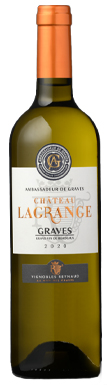

Expressive and alive on the nose with ripe fruit flavours alongside white floral touches. Creamy and zesty - a great combination of rich fruit flavours...
2020
Château LagrangeGraves

Château La Rose Sarron, Graves, Ambassadeur de Graves, Bordeaux, France, 2020
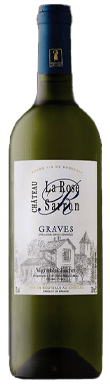
Softly perfumed nose with peach, pear and lychee. Good concentration on the palate with cream-edged yellow and white fruits. Feels a little closed at this...
2020
Château La Rose SarronGraves
Clos Bourgelat, Graves, Ambassadeur de Graves, Bordeaux, France, 2020
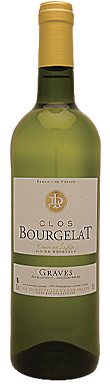
Green apple, pear and soft elderflower touches on the nose. Great texture, clear and crystalline - the fruit is a bit hidden right now, it's...
2020
Clos BourgelatGraves
Château de Chantegrive, Graves, Ambassadeur de Graves, Bordeaux, France, 2019
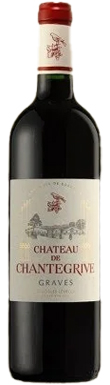
Red cherries and blackcurrant on the nose. This has such a great richness to it, not heavy but so deep you can just taste the...
2019
Château de ChantegriveGraves
Château Roquetaillade La Grange, Graves, Ambassadeur de Graves, Bordeaux, France, 2019
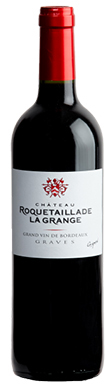
Fresh red fruits on the nose, strawberries and raspberries alongside toasted sweet spices and faint florality. Round and full on the palate with a core...
2019
Château Roquetaillade La GrangeGraves
Clos Bourgelat, Graves, Ambassadeur de Graves, Bordeaux, France, 2019
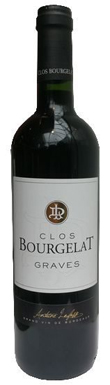
An enticing nose of blackcurrant, black cherry and sweet tobacco. The texture stands out straight away, so silky and smooth, velvety tannins embrace the ripe...
2019
Clos BourgelatGraves
Clos Floridène, Graves, Ambassadeur de Graves, Bordeaux, France, 2019
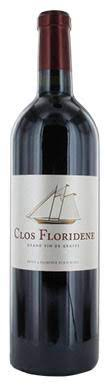
Intensely aromatic and expressive on the nose, the aromas just jump out the glass - blackcurrants and milk chocolate. The palate is so juicy, with...
2019
Clos FloridèneGraves
Château Crabitey, Graves, Ambassadeur de Graves, Bordeaux, France, 2019
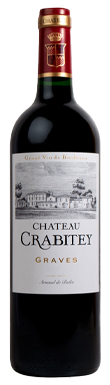
Lovely purity of black fruit aromas on the nose, faint hints of flowers and some sweet liquorice too. Great texture with fine but persistent and...
2019
Château CrabiteyGraves
Château Lagrange, Graves, Ambassadeur de Graves, Bordeaux, France, 2019
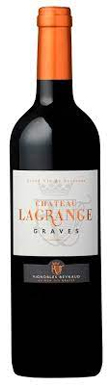
A dark and richly-scented nose filled with blackcurrants, cassis and sweet tobacco. Super succulent and softly sweet on the palate, bright fruit, great acidity and...
2019
Château LagrangeGraves
Château Martignac, Graves, Ambassadeur de Graves, Bordeaux, France, 2019
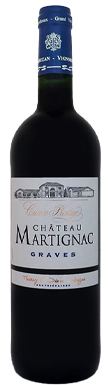
Intense nose full of rich, ripe black fruit alongside sweet tobacco, liquorice spice and dark chocolate. Excellent fruit purity on the palate, really clean and...
2019
Château MartignacGraves
Château de Portets, Graves, Ambassadeur de Graves, Bordeaux, France, 2019
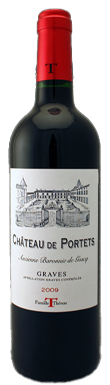
Beautifully fragranced nose of sweet strawberries and red cherries - very fruit-forward and abundant. Bright and lively on the palate with the fruit doing all...
2019
Château de PortetsGraves
Château La Rose Sarron, Graves, Ambassadeur de Graves, Bordeaux, France, 2019
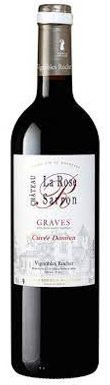
Ripe jammy fruit on the nose, smells fresh and softly sweet - both lively and welcoming. The texture is noticeable - grippy but velvet-like, with...
2019
Château La Rose SarronGraves
Château Moutin, Graves, Ambassadeur de Graves, Bordeaux, France, 2019
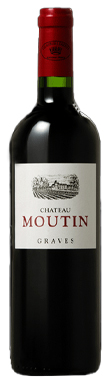
Aromatic and intense on the nose with exotic spices to the ripe red and black fruits, vanilla and sweet cedar. Succulent and juicy on initial...
2019
Château MoutinGraves