
The weird and wonderful world of Jura wines
It’s France’s smallest wine region, but Jura is also one of the nation’s most fascinating, home to unusual artisanal wines, long-standing traditions and modern innovations. Rupert Joy heads for the high pastures.


Have you ever visited somewhere so characterful and unspoilt that you’re torn between telling everyone and keeping it to yourself? Jura is that sort of place. At first sight, its unfamiliar wine styles and eclectic ranges of idiosyncratic micro-cuvées are hard to get your head around.
But the closer you look, the more compelling they become.
This is a haven of original, joyous, artisanal wines – from whites with an explosive, tangy intensity that can take your breath away to ageworthy, oxidative vins jaunes, fresh and earthy red wines, delicious crémants, sweetly saline vins de paille and Macvin, Jura’s unique liqueur.
Scroll down to see notes and scores for 15 fascinating Jura wines
France’s smallest wine region consists of a mosaic of vineyards, a quarter the size of the Côte d’Or, scattered across a landscape of gently undulating hills and farmland between Burgundy and Switzerland.
Jura’s climate is cooler and wetter than Burgundy’s, and its soil is dominated more by marl than limestone, bringing extra freshness to its wines. But it has much in common with its more prestigious neighbour, especially the focus on crafting small-scale terroir wines.
And the down-to-earth modesty of the region’s producers is reminiscent of Burgundy 20 years ago.
Key Jura grape varieties
Whites Savagnin and Chardonnay, and reds Trousseau, Poulsard and Pinot Noir are Jura’s five official grape varieties. Certain producers – Ganevat and Pignier, for example – create field blends that include other old Jura varieties, such as Enfariné and Rèze; however, these are relatively rare.
Savagnin, also known as Naturé, has high acidity and thrives on Jura’s grey marl soils. It is capable of producing wines of explosive intensity that age for decades.
Chardonnay, and its local strain Melon à Queue Rouge, are often grown on heavy marls and limestone, making rich, fresh wines, somewhere between Chablis and the Côte d’Or in style.
Trousseau, known as Bastardo in Portugal, flourishes in Jura’s flinty- clay and sedimentary soils, especially around Arbois, making structured, earthy-mineral, red-fruited wines that can age beautifully.
Poulsard, or ‘Ploussard’, is a native Jura variety that produces pale, floral wines of surprising drive and length in many styles, including reds, rosés, crémants and vins de paille.
Pinot Noir, although frequently used in Jura for blended red wines and crémant sparkling, can also make varietal wines of great finesse.
Historically a rustic backwater of the wine world, Jura is probably best known in France for Comté cheese. Its identity as a wine region has been largely linked to its oxidative white wines.
Unlike in other regions of France, the longstanding tradition here was to age white wine beneath a layer of yeast without topping up barrels in the conventional manner (which would minimise the effects of oxygen on the wine).
The distinctive character that this imparts on the wines is exemplified by vin jaune. These nutty, peaty ‘yellow wines’ are fascinating and prized by locals, but their strikingly dry, bitter-savoury umami flavour isn’t to everyone’s taste.
Much like Marmite, they tend to be either loved or loathed.

Embracing change
Jura’s image has been transformed by two (linked) developments in its winemaking: a shift to a low-intervention philosophy and to making topped-up (ouillé) versions of Savagnin, Jura’s signature grape.
In a region of France that retains a deep connection with the soil, the policy of low intervention, as pioneered by Pierre Overnoy, has made Jura a shrine for lovers of natural wine. Overnoy was also among the first here to make ouillé versions of Savagnin, unleashing lusher, fruitier flavours in the wines.
This latter shift in winemaking approach, now adopted by most domaines, has made Jura more accessible. The flavour of these topped-up whites bears some similarity to Burgundy, but they possess a fresh salinity that’s one of the region’s hallmarks.
Many topped-up whites, such as the elegant Chardonnays made by César Deriaux at Domaine de Montbourgeau in the village of L’Etoile, display subtly oxidative notes.
Jura wine styles explained
Vin jaune: Jura’s ‘yellow wine’, bottled in distinctive 62cl clavelin bottles, is made from 100% Savagnin and matured in barrel for an extended period, to be bottled only from the first day of January in the seventh year after harvest. A minimum of five years must be spent in barrels, under a layer of yeasts (voile) that forms on the surface and creates a partial barrier to air, similar to the flor in Sherry. The wine isn’t topped up as it starts to evaporate, increasing the area exposed to oxygen, which in turn leads to the creation of oxidative umami flavours. The resulting bone-dry wine has a spirit-like quality redolent of peaty malt whisky and is capable of ageing for decades. All AP Château-Chalon wines are vins jaunes.
Sous voile: Other oxidative white wine styles, made from Savagnin, Chardonnay or a blend of both, may be labelled sous voile (‘under the veil’), typé or ‘tradition’ – aged in a similar way to vin jaune, without topping up, but for shorter periods.
Ouillé: Non-oxidative styles of white wine, labelled ouillé (topped up) or ‘floral’, are made in the conventional way, with topping up of the barrels. They can be similar to white Burgundy, though often they are defined by Jura’s distinctive freshness and salinity.
Crémant: Sparkling white and rosé wine, made in the same way as Champagne, generally in a brut style from 100% Chardonnay, but also in blends from any of the five official Jura varieties.
Vin de paille: Many producers make small quantities of this intensely sweet ‘straw wine’ from grapes dried on mats in well-ventilated rooms, often a blend of Chardonnay, Savagnin and Poulsard.
Macvin: A traditional sweet liqueur wine, which is made by fortifying grape juice with marc – a grape brandy distilled from the residue of grape skins, stems and pips left over from winemaking.
Signature whites
Savagnin, for those unfamiliar with the variety, can be a revelation. A versatile grape, made in a wide range of wine styles from bone dry to ultra-sweet, in the right hands it produces wines of explosive intensity.
François Rousset-Martin who makes some of Jura’s finest expressions of Savagnin near the village of Château-Chalon, practises what he describes as ouillage à la jurassienne, topping up the maturing wine only about once a month. Irregular topping up allows a hint of oxidation, which Rousset-Martin feels adds complexity.
Jura Chardonnays, both topped up and oxidative, often have a wonderful, rich freshness, too. Among the most beguiling are those of Stéphane Tissot, who with his wife Bénédicte oversees Jura’s largest family-run estate, Domaine André & Mireille Tissot.
Tissot attributes the region’s growing success to the fact that, in an increasingly homogenous wine world, ‘people are looking for personality’ – a quality he himself has bags of.
It was the exuberant quality of Tissot’s Chardonnays that, in 2007, tempted the d’Angerville family of Volnay fame to scout for land in Jura, eventually to establish Domaine du Pélican near the town of Arbois in 2012.
Exploding interest
Although Jura is largely known for its white wines, its reds can also be delicious. Overnoy is renowned for his intense bottlings of the delicate Poulsard grape, while some of Jura’s most complex, ageworthy reds are made from the more tannic Trousseau by the Aviet family at Caveau de Bacchus near Arbois and Domaine Pignier in Montaigu (pictured below).
Pinot Noir has a long history in Jura, too, making pure, fresh wines that tend to be edgier than those from Burgundy.

The explosion of interest in Jura, on the back of the natural wine movement, has conferred cult status on several of the region’s estates, such as Domaine Jean-François Ganevat in the tiny village of Rotalier – with prices to match.
Ganevat’s sprawling range of eccentrically named wines, both domaine and négoce bottlings, are made with minimal intervention and no added sulphites. These are thrillingly taut, vibrant wines of striking energy and mouthwatering intensity, but production remains small.
‘At the moment, demand is huge but there is not much wine,’ says oenologist Jocelyn Brancard.
Domaine des Miroirs, perhaps the epitome of Jura’s cult wine phenomenon, was established by Kenjiro Kagami in Grusse, in Jura’s south, in time for a small first vintage in 2011. Kagami, a Japanese ex-pat and former engineer at Hitachi, works his vineyard of less than 4ha with his wife Mayumi.
Kagami regards monocultures as problematic and is obsessive about growing vines in harmony with the nature around them, by stimulating life in the vineyard and avoiding imported additives or working the soil.
‘I believe in making wines that are the essence of the place where they are grown,’ says Kagami. ‘As far as possible, I avoid adding anything. Great wines are never made with added SO2. You can taste the difference.’
Joël Morin, former president of the Fruitière Vinicole d’Arbois, which was established in 1906, making it one of France’s oldest cooperatives, feels that making organic wine is easier in Jura because the region avoided ‘going to the extremes’ in the days when herbicides and pesticides were introduced almost everywhere. But climate change is increasing the challenge of low-intervention winemaking.
Alice Aviet of Caveau de Bacchus says that the ‘extremes of temperature and rainfall are making it harder for organic producers to grow healthy grapes without treating their vines’.

Pierre Overnoy – a pioneer of natural wine

Living simply in a modest house in the little village of Pupillin, Pierre Overnoy’s humility belies a man who has, without seeking the limelight, become an inspiration for wine producers in Jura and beyond, and is considered one of the foremost pioneers of natural wine. He is precise and impatient with hype.
‘My wine,’ he says, ‘is not sorcery, it’s just natural, ripe grapes that have fermented.’
After oenology training in Beaune – where, he observes, he ‘learned what not to do’ – Overnoy became convinced that wines made without added SO2 tasted better. ‘From the moment you touch, you damage,’ he says. ‘The less you can intervene, the better.’
Overnoy stopped adding SO2 in the mid-1980s and remained for many years the only Jura vigneron to work like this, managing his vineyard with rigour to ensure healthy ripe grapes. ‘We are lucky here,’ he says. ‘This is a region of polyculture; the land has not been too damaged by chemicals and we still have living soils.’
At around the same time, Overnoy also started to defy Jura tradition by topping up his Savagnin barrels, a practice now adopted by most Jura producers (see ‘wine styles’ box).
Now aged 87, Overnoy leaves wine production to his protégé Emmanuel ‘Manu’ Houillon, but he still has plenty to say. He is, in particular, deeply concerned about the impact of climate change on vines, illustrated by the jars of pickled grapes he has collected in early July for more than 30 years.
‘To make good natural wine, you need low pH, a healthy yeast population and plenty of malic acid,’ he states.
‘Today, we’re heading in the opposite way. Long heatwaves mean rising pH, less yeast and little malic acid, so it’s getting harder to make wine without SO2. In 1947, the harvest began on 12 September and everyone thought it was an exception. That’s no longer unusual. Soon, it won’t be exceptional to harvest in early August. We have broken the whole chain.’
Strength of character
Jura has several assets to cope with rising temperatures. Savagnin has naturally low pH and both it and Trousseau have thick skins, making them relatively resistant to heat and disease. The region’s moisture-retaining marl soils help to delay ripening and retain freshness, but the concern about climate change among Jura’s vignerons is palpable.
Marie-Pierre Chevassu-Fassenet of the eponymous domaine in Menétrule-Vignoble describes how the ‘burning’ heat in 2022 went deep into even the marl, stressing young vines with shallow roots.
‘There has been a tipping point in pH since 2018,’ she notes. ‘The growing cycle is now hyper-concentrated, with harvests falling in late August or early September. It’s stressful, like a race.’
Despite such concerns, this relatively untouched region of France is producing some of the most exhilarating, compelling wines you’ll find. While reasonably priced at the cellar door, they can be pricey and hard to find abroad, but these are individual terroir wines with a real sense of place that are well worth tracking down.
Much to discover: 15 to try from Jura
Related articles
- Jura winemaker stunned after thieves seize his 2024 harvest
- The sommelier suggests… Jura by Mason Ng
- A perfect weekend in the Jura
Benedicte & Stephane Tissot, Indigène Brut, Crémant du Jura, Jura, France
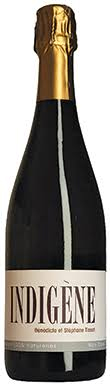

A lovely, floral, vinous nose leads to a sweet attack, despite its zero dosage, and a creamy, fresh, slightly saline palate that shows a fine...
Benedicte & Stephane TissotCrémant du Jura

Fruitière Vinicole d’Arbois, Rosé Brut, Crémant du Jura, Jura, France
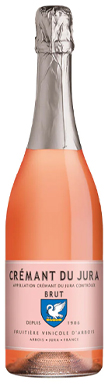
This attractive blend of co-fermented Pinot Noir, Poulsard and Chardonnay is delicious and excellent value, with a fine mousse and bright nose of red fruits...
Fruitière Vinicole d’ArboisCrémant du Jura
François Rousset-Martin, Cuvée du Professeur Savagnin, Côtes du Jura, Jura, France, 2020
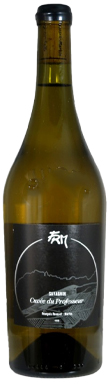
A subtle, smoky nose of dried thyme and cumin leads into a mineral, racy palate, with a wonderful sense of restrained energy. This is from...
2020
François Rousset-MartinCôtes du Jura
Benedicte & Stephane Tissot, Patchwork Chardonnay, Arbois, Jura, France, 2018
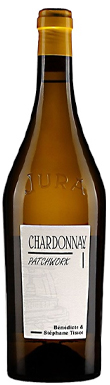
This is Stéphane Tissot’s village-level wine, made with parcels of Chardonnay from a mix of clay and limestone terroirs. Classy and concentrated, it's expressive, smoky,...
2018
Benedicte & Stephane TissotArbois
Anne et Jean-François Ganevat, Les Grands Teppes Vieilles Vignes, Côtes du Jura, Jura, France, 2018
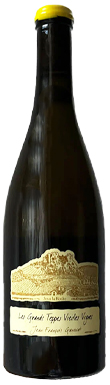
Jean-François Ganevat has built a cult following for his thrillingly intense, individual and racy wines. This rich, honeyed, spicy 100% Chardonnay, with mouthwatering citric notes...
2018
Anne et Jean-François GanevatCôtes du Jura
Domaine Macle, Vin Jaune, Château-Chalon Vin Jaune, Jura, France, 2016
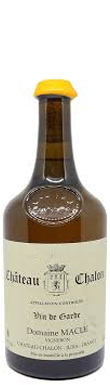
Laurent Macle’s family has been making wine for generations in the spectacular village of Château-Chalon, and his vins jaunes are among Jura’s most revered. The...
2016
Domaine MacleChâteau-Chalon Vin Jaune
Domaine des Miroirs, Mizuiro, Vin de France, Jura, France, 2019
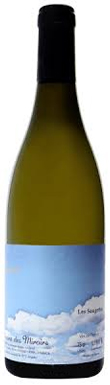
Kenjiro Kagami’s modest village winery in the south of the Jura belies his growing cult status as a natural wine producer. Kagami’s wines, like the...
2019
Domaine des MiroirsVin de France
Marie-Pierre Chevassu-Fassenet, Savagnin Ouillé, Côtes du Jura, Jura, France, 2020
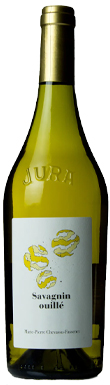
The elegance and finesse of this topped-up Savagnin is typical of Chevassu-Fassenet’s style. It has an enticing nose of hazelnuts and toast, with oxidative hints....
2020
Marie-Pierre Chevassu-FassenetCôtes du Jura
Domaine de Montbourgeau, En Banode, L’Etoile Vin Jaune, Jura, France, 2020
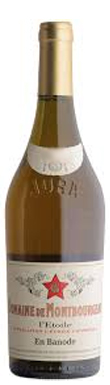
All the Deriaux family wines are beautifully made, pretty widely available and excellent value. This is a field blend from a plot of co-planted Chardonnay...
2020
Domaine de MontbourgeauL’Etoile Vin Jaune
Maison Pierre Overnoy, Poulsard, Arbois-Pupillin, Jura, France, 2011
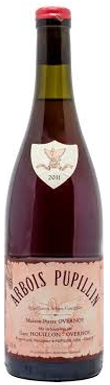
Pierre Overnoy, considered by many to be the godfather of natural wine, makes some of Jura’s greatest Poulsards. As he says, ‘Poulsard seems very pale...
2011
Maison Pierre OvernoyArbois-Pupillin
Domaine Pignier, Les Gauthières Trousseau, Côtes du Jura, Jura, France, 2022
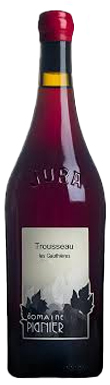
From three strains of Trousseau co-planted on the south-facing limestone and marl slopes of the Val de Sorne, which Jean-Etienne Pignier feels brings complexity to...
2022
Domaine PignierCôtes du Jura
Caveau de Bacchus, Cuvée des Géologues Trousseau, Arbois, Jura, France, 2022
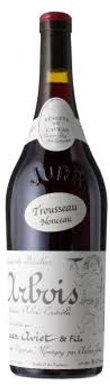
Blended from two parcels of the low-yielding Trousseau à la Dame strain at Bruyères and Rosière, this cuvée honours students from the geological faculty who...
2022
Caveau de BacchusArbois
Domaine de la Borde, Côte de Feule Ploussard, Arbois-Pupillin, Jura, France, 2022
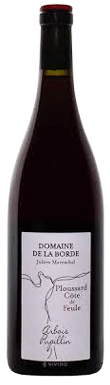
This lovely, gluggable Poulsard, from a vineyard of red marl, undergoes semi-carbonic maceration and has a delicate rose petal nose and refreshing palate of ripe...
2022
Domaine de la BordeArbois-Pupillin
Domaine du Pélican, Trois Cépages, Arbois, Jura, France, 2022
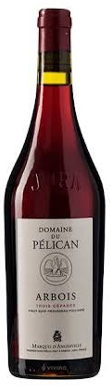
A blend of 60% Pinot Noir, 30%Trousseau and 10% Poulsard from the Marquis d’Angerville family-owned domaine. With an expressive nose of cherries, it's a rich...
2022
Domaine du PélicanArbois
Domaine de Montbourgeau, Vin de Paille, L’Etoile Vin Jaune, Jura, France, 2020
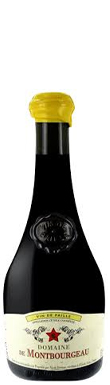
A careful selection of ripe grapes are laid out to dry in attics to concentrate the sugar before being pressed, slowly fermented and aged in...
2020
Domaine de MontbourgeauL’Etoile Vin Jaune
