
Uncovering the hidden gems of Bolgheri
Nestled among the illustrious estates producing some of Tuscany’s most high-profile wines are a growing number of smaller wineries that are bringing to the fore a different and innovative side of this coveted wine region.


Bolgheri extends 7km from the western Tuscan coast towards the hills in the east, and 13km from north to south. Influenced by the Mediterranean climate, the region enjoys intense light and continuous breezes, the former helping fruit to ripen, the latter giving exuberant freshness and elegance to the wines. The soils are extraordinarily diverse: sandy towards the sea, becoming more clay-silty in the foothills and gravelly on the slopes of the inland ‘amphitheatre’.
Scroll down to see a selection of 10 Bolgheri wines to discover
In a few decades, Bolgheri has risen to be one of the most coveted wine areas in the world.
It started with the first commercially available vintage of the world-renowned Sassicaia, 1968, labelled ‘vino da tavola’. After an initial production of white and rosé from vineyards mainly located on the plains near the sea, the path traced by Tenuta San Guido with Sassicaia was followed by other producers, exploring the production of fine red wines on the slopes instead. They engaged wine consultants and agronomists, planted low-yield vineyards with Bordeaux varieties, and began ageing wines in 225-litre barriques.
Between the end of the 1970s and the early 1990s, the likes of Sassicaia, Ornellaia, Masseto, Grattamacco, Paleo, Vigna Il Cavaliere and Guado al Tasso, all initially labelled table wines, were starting to be recognised worldwide for their finesse, and gained the collective name SuperTuscans. However, the Bolgheri DOC – founded in 1983 – only protected white and rosé wines, so the area didn’t get the recognition it deserved for these SuperTuscan wines.
It wasn’t until 1994 that the Bolgheri DOC regulations were amended to allow the production of red wines. At the same time, Bolgheri Sassicaia DOC was established as an official sub-zone of the Bolgheri DOC, and in 2013 it became a separate DOC – the only Italian denomination dedicated to just one estate. Over the past 25 years, Bolgheri has become a centre for major investments in the wine world. From the six iconic wineries of the 1980s, the DOC has grown to now encompass more than 60 estates of varying sizes.
Bolgheri at a glance
Area planted 1,365ha (Bolgheri DOC); 179ha (IGT)
Altitudes Vineyards range from 10m-380m
Total DOC production 7.25m bottles (2021)
Wineries 66
Annual rainfall Average 600mm
Key varieties (by plantings, 2021) Cabernet Sauvignon 34.1%, Merlot 22.2%, Cabernet Franc 15.9%, Vermentino 9.8%, Syrah 6.6%, Petit Verdot 4.9%, Viognier 1.6%, Sangiovese 1.3%
Source: Consorzio Bolgheri and Bolgheri Sassicaia DOC, 2021

Singular thinking
The success of this tiny appellation is down to the cohesive vision of the producers, who, for more than 25 years, have worked with the Consorzio Bolgheri and Bolgheri Sassicaia DOC regional body in the pursuit of pure excellence under the liberal DOC regulations, and to consolidate the appellation’s international renown.
The legendary reds of the area – let’s call them the ‘ex-SuperTuscans’ – are released as high-status Bolgheri Superiore DOC, which differ from the younger Bolgheri DOC reds in that regulations dictate lower yields per hectare and a longer, two-year ageing period (at least one of which must be in oak barrels).
Cabernet Sauvignon and Merlot still play a major role today, often blended with Cabernet Franc, Syrah, Petit Verdot and occasionally Sangiovese. In 2011, a revision to the Bolgheri DOC regulations permitted the production of single-variety wines. Lately, there has been an increase in single-variety wines made with Merlot, and Cabernet Franc in particular has seen plantings increase significantly from 6.9% to 15.9% of the vineyard area in just eight years, according to figures from the consorzio. This multifunctional grape has become the hallmark for the 22 estates that will release 100% Cabernet Franc flagship wines in 2023. These include Le Macchiole (Paleo), Tenuta Argentiera (Ventaglio), Guado al Tasso (Matarocchio), Poggio al Tesoro (Dedicato a Walter), Tenuta Sette Cieli (Scipio) and Chiappini (Lienà Cabernet Franc). And in the ‘purist Franc’ club, small producers can stand out, too: I Luoghi (Franco), Podere Conca (Apistós), Villanoviana and Fornacelle (Foglio 38).
Nevertheless, Bordeaux blends still dominate, while for the whites it is the local Vermentino, followed by Viognier and Sauvignon Blanc.
Individual interpretations

In this dynamic contest, a growing number of small, young estates have achieved recognition. Years of experimentation have led to their own interpretation of Bolgheri terroir, producing wines full of character. This is the case at I Luoghi, where Stefano Granata and Paola De Fusco farm 5.7ha with a total annual production of 18,000 bottles. Cabernet Sauvignon is the dominant variety at this organic-certified estate, used in both Podere Ritorti (80% Cabernet Sauvignon, 20% Cabernet Franc, Merlot and Syrah) and Campo al Fico (80% Cabernet Sauvignon, 20% Cabernet Franc). Both wines show pure red fruits with soft tannins, lively acidity, a delicate finish and great ageing potential. Since 2016 the winery has produced 1,000 bottles per vintage of Franco, a lovely 100% Cabernet Franc.
Mulini di Segalari farms 3.3ha under organic and biodynamic certification. In 2002, Marina Tinacci and Emilio Monechi restored the 18th-century mills on the estate and gave back life to this magical place. The low-yielding vineyards of spurred cordon and guyot produce just 16,000 bottles. The wines are vinified and aged in a mix of cement, terracotta and 10hl and 23hl oak barrels. Ai Confini del Bosco Rosato (Merlot-Syrah-Petit Verdot) is a perfect expression of their vision and work.
Another organic-certified family estate with great personality is Il Castellaccio, where 9ha of vineyard terraces are located in the hills. Owner Alessandro Scappini has revived native Tuscan varieties such as Ciliegiolo, Foglia Tonda and Pugnitello, as well as Sangiovese. Vinification mostly takes place in cement and 20hl casks, using indigenous yeasts. Dinostro is a 100% Sangiovese that shows vibrant freshness and character, while Valénte is a unique blend of some of the varieties mentioned above. In 2018, the estate released its first Bolgheri Superiore, Il Castellaccio, a blend of Cabernet Franc and Pugnitello.
Concrete and clay

Recent years in Bolgheri have seen a major revival in the use of concrete for vinification, while amphorae of different clay compositions are used for vinification, fining and even ageing certain wines.
Fabio Motta is an artisan ‘vignaiolo’ who uses these different vessels for fermenting and fining his wines. Following five years working at Michele Satta’s winery near Castagneto Carducci, he purchased 4ha of land in 2009 (and now owns 7ha). Le Gonnare is a little vineyard that produces the fruit for the eponymous Bolgheri Superiore (85% Merlot, 15% Syrah) and Le Gonnare Vermentino, which macerates on the skins in ceramic amphorae for six months for depth and complexity. Motta also produces a 100% Sangiovese, Lo Scudiere, aged in 30hl oak vats. The winery’s total annual production is 40,000 bottles.
Amphorae have also been used since 2017 by Giacomo Satta, second generation at Michele Satta. His debut wine, Marianova (first vintage 2015) was the first Bolgheri Superiore not to include Bordeaux varieties. A fresh, juicy blend of Syrah and Sangiovese, it’s vinified in wooden barrels then refined for 18 months, 50% in 750-litre amphorae and 50% in new barriques for the 2021 vintage.
Below the Bolgherese Road, going towards the sea, Le Vigne di Silvia, a 5ha estate founded in 2017, peeps out. This minuscule, organic-certified cellar is managed by ex-professional footballer Silvia Fuselli and her sister Stefania. Their crisp but elegant, 100% Vermentino Giochessa ferments in stainless steel tanks and wooden barrels before ageing for five months in French oak barrels. Artemio, a blend of the two Cabernets, also expresses good potential.
Another hidden gem, the tiniest in Bolgheri, is Aldrovandi, founded by Federico Aldrovandi in 2014. Nestled above the Bolgherese Road, this ‘garage’ winery of 1.5ha (1ha vines and 0.5ha olives), with 5,300 bush-trained vines, produces just 3,000 bottles of an astonishing Bolgheri Superiore, a classic blend of Cabernet Franc, Cabernet Sauvignon and Petit Verdot released four years after the harvest.
Creative environment

Evidence of Bolgheri’s lessened reliance on new oak barriques these days can be found in Dario Di Vaira’s well-defined approach to wood ageing, using a mix of new and old wood. Di Vaira grew up in Bolgheri and in 2008, after graduating in viticulture, he decided to start his own winery, initially naming it Eucaliptus (changing it to Dario Di Vaira in 2020). Experimentation and commitment led him to seek elegance rather than opulence. He makes soft, well-balanced Clarice, a classic blend based on Cabernet Sauvignon and Merlot, and a flagship Bolgheri Superiore from 50% Cabernet Sauvignon, 30% Cabernet Franc and 20% Merlot. It spends 18 months in new and used oak barrels, mixing long maceration with a thrifty extraction. In 2023, he will release 1,000 bottles of a pure Cabernet Franc, named CF11. His total annual production is 45,000 bottles.
Also emerging from this exciting environment is Fornacelle. One of the oldest wine estates in Bolgheri, it’s finally starting to receive the respect it deserves. In 1996, Stefano and Silvia Billi planted 9ha of Bordeaux red and white varieties alongside Italian natives such as Vermentino and Fiano. The Classic Bolgheri Collection includes Zizzolo Rosso, Zizzolo Vermentino and the elegant Bolgheri Superiore, Guarda Boschi.
Fornacelle’s Artistic Collection represents single-variety wines: Foglio 38 Cabernet Franc, produced since 2004; Erminia Merlot; Vincenzino Fiano; and just 3,000 bottles of barrique-fermented Fornacelle Bianco Semillon. Total annual production is 70,000 bottles.
Other noteworthy family-run wineries include Serni Fulvio Luigi, a 5ha estate making a lovely Bolgheri Rosso, Acciderba, which combines structure with great drinkability, and Podere dei Musi, another 5ha estate that makes Il Pezzino, a blend of Sauvignon Blanc and Viognier.
Bolgheri is the cradle of some of the most highly awarded wines in Italy. It’s a territory where iconic estates work with a cohesive vision in the same landscape as an extraordinary variety of small, innovative wineries – real gems, just waiting to be discovered.
Magnani’s Bolgheri selection: 10 wines to discover
Related articles
- Bolgheri Superiore 2020 preview
- Bolgheri 2019: Vintage report plus 50 top wines
- Bolgheri 2018 vintage report: Graceful wines suitable for the long haul
Fabio Motta, Le Gonnare Vermentino, Toscana, Tuscany, Italy, 2021
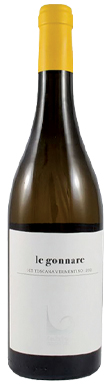

This unconventional Vermentino is the result of the meticulous work of Fabio Motta. Destemmed grapes are pressed and fermented, leaving the skins to macerate with...
2021
Fabio MottaToscana

Le Vigne di Silvia, Giochessa Vermentino, Bolgheri, Tuscany, Italy, 2021
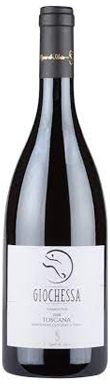
The name Giochessa in Tuscan dialect refers to an unpredictable and daring football performance made by talented players. Winery owner Silvia Fuselli, an exprofessional football...
2021
Le Vigne di SilviaBolgheri
Mulini di Segalari, Ai Confini del Bosco Rosato, Bolgheri, Tuscany, Italy, 2021
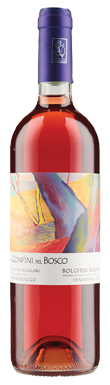
Made in a little south-facing vineyard at 100m on a clay-silty soil. The destemmed Merlot, Syrah and Petit Verdot grapes ferment naturally with indigenous yeasts...
2021
Mulini di SegalariBolgheri
Fornacelle, Foglio 38, Bolgheri, Superiore, Tuscany, Italy, 2019
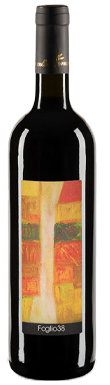
Foglio 38 is the name of the land registry where vineyards are identified, and this wine is the perfect synthesis of microparcels of Cabernet Franc...
2019
FornacelleBolgheri
Michele Satta, Marianova, Bolgheri, Superiore, Tuscany, Italy, 2019
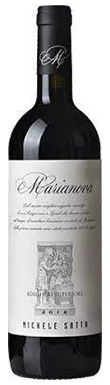
The single-vineyard Marianova was not only the first wine of Giacomo Satta, but also the first Bolgheri Superiore not to include Bordeaux varieties. It’s a...
2019
Michele SattaBolgheri
Aldrovandi, Bolgheri, Superiore, Tuscany, Italy, 2018
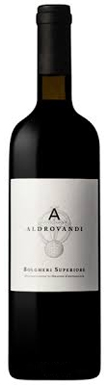
The only wine made by Federico Aldrovandi, who bought one hectare in 2014. A classic blend of 60% Cabernet Franc, 30% Cabernet Sauvignon and 10%...
2018
AldrovandiBolgheri
Dario Di Vaira, Clarice, Bolgheri, Tuscany, Italy, 2021
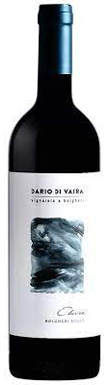
Expresses the passion and inspiration of Dario Di Vaira, the third generation of the Di Vaira family producing wine in Bolgheri. This Cabernet Sauvignon-Merlot-Cabernet Franc-Petit...
2021
Dario Di VairaBolgheri
I Luoghi, Podere Ritorti, Bolgheri, Superiore, Tuscany, Italy, 2020
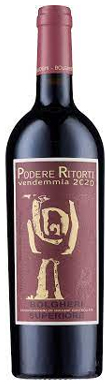
This wine shows the detailed work of Stefano Granata and Paola De Fusco in the Podere Ritorti vineyard, after which this wine (80% Cabernet Sauvignon...
2020
I LuoghiBolgheri
Serni Fulvio Luigi, Acciderba, Bolgheri, Tuscany, Italy, 2019
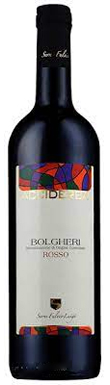
A structured red (Cabernet Sauvignon, Merlot, Syrah, Sangiovese) that can potentially be sold as Bolgheri Superiore since it ages for 12 months in oak and...
2019
Serni Fulvio LuigiBolgheri
Il Castellaccio, Valente, Toscana, Tuscany, Italy, 2020
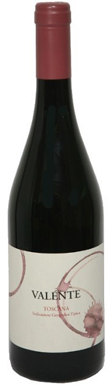
The first vintage of Valénte, in 2011, marked the winery’s philosophy of reviving ancient Tuscan varieties. The wine is a blend of 70% Sangiovese with...
2020
Il CastellaccioToscana
