
Vega Sicilia’s 2025 releases: Singularity beyond Unico
Along with the much-anticipated release of the 2015 vintage of its flagship wine, Tempos Vega Sicilia presented the new vintages across its Spanish and Hungarian portfolio.
2024 was a big year for Vega Sicilia. The Ribera del Duero powerhouse celebrated its 160th anniversary – not least with a lavish event at London’s National Gallery, under the watchful eye of dramatic masterpieces from the Spanish Masters – and rose to the top of Liv-Ex’s Power 100 ranking.
Perhaps a landmark moment that marked the beginning of a new chapter in the world of fine wines, one in which ‘outperforming underdogs’ have become established frontrunners.
The momentous year built up anticipation for Tempos Vega Sicilia’s 2025 releases – in particular the 2015 iteration of the iconic Unico.
Scroll down for tasting notes and scores of Tempos Vega Sicilia’s 2025 releases, including Unico 2015
A new, personal chapter
It was not just among critics and collectors that Unico 2015 created a pre-release buzz. The vintage had a particular meaning for technical director Gonzalo Iturriaga, who presented the first Unico produced under his full leadership with a mix of nervousness and joy.
It was in 2015 that Iturriaga took over from Xavier Ausàs after his lauded 25-year tenure at the helm of Tempos Vega Sicilia (TVS) following the retirement of the great Mariano García.
Big shoes to fill no doubt, especially considering the ambitious portfolio growth led by Ausàs.
Iturriaga is humble – and pragmatic – and admits that the responsibility he inherited relies more on the preservation of a style and lineage than leaving a personal imprint.
Get our daily fine wine reviews, latest wine ratings, news and travel guides delivered straight to your inbox.
And yet it is impossible for a winemaker not to lead his wines along a preferred path.
Iturriaga’s steps seem to follow a gentle classicism, built upon technical ability and expressive restraint. This allows the style of Vega Sicilia and the character of the vintages to come through with vividness.
It is therefore perhaps a combination of personality and vintage that shapes Unico 2015. Its completeness and roundness provide an interesting counterpoint to 2014’s sharper edges.
If one of Unico’s hallmarks is approachability upon release (and its equal potential for cellaring – not an easy technical feat), 2015 does not disappoint.
Plural takes on uniqueness
Unico’s younger Ribera del Duero siblings also perform well in two vintages – 2020 for Valbuena 5º and 2021 for Alión.
Each wine is also meaningful for Iturriaga: the former requiring him to spend long stretches alone in the cellar due to the pandemic; the latter for its expressiveness and energy.
2021 ‘is a super vintage,’ said Iturriaga. ‘I love its detail and potential. We’ll see great wines from this year. And 2024 promises something similar.’
Being responsible for the flagship Ribera del Duero range is perhaps the most visible but arguably not the hardest of Iturriaga’s tasks as TVS’s technical director.
Overseeing the projects in Rioja (Macán, in partnership with Benjamin de Rothschild) and Toro (Pintia), pose a different set of challenges and, in a way, higher scrutiny, as they stand against more-established names in both regions.
In Rioja, the shared responsibility of building a brand alongside Benjamin de Rothschild might seem easier than it is. Perceived as ‘outsiders’, the Macán wines are yet carving their space.
In the bottle one finds really elegant – and, again, technically pristine (which is not to say they are ‘technical wines’) – examples of modern Rioja.
Both Macán 2020 and Macán Clásico 2021 show purity of fruit and increasingly deft wood integration (one of Iturriaga’s ongoing concerns).
He’s also working on incorporating greater percentages of grapes (namely Garnacha and Graciano) that he believes will benefit the balance of the Macán wines.
To this end, the partnership is currently planting its own field blends.
Ripeness with bite
Having had the opportunity to tour the Pintia winery with Iturriaga, I was impressed by the pragmatic, highly-efficient design, one which he contributed himself and indeed reflects his reflective, precise, no-nonsense demeanour.
The latter is reflected in the wines produced there. They capture, with technical acumen, the powerful essence of Toro’s old, ungrafted vines. Fruit intensity and vibrant acid are leveraged to integrate alcohol and tame the tannins.
This technical ability is again showcased in the newly-released 2020 vintage. Iturriaga mentions that picking at the precise right time (‘we like to harvest “al dente”, when the grapes are mature but still retain a good crunch,’ he explains) and managing maceration are key.
But there are also clear signs of the new approach to ageing, with some batches matured in clay amphorae. This seems to help carve the tannins and give polish to the flavours, while retaining the alluring, savoury rusticity that is so characteristic of Toro’s best wines.
It’ll be interesting to see where Iturriaga and his team take Pintia having recently started to work with field blends peppered with Garnacha.
Eastern promises
An increasingly important part of the TVS portfolio, the Oremus wines have so far been classic examples of ‘old-school’ Tokaj: technically correct, pure but perhaps allowing winemaking and style to take the lead.
I was therefore pleasantly surprised by the latest vintage of the Mandolás Dry Furmint. It marks a departure from a ‘style first’ approach, allowing for the true character of the Hungarian grape to come through.
Furmint’s filigree aromatics lift the textural richness and moreish nuttiness, showing how a lighter hand in the cellar can underscore complexity and character. Iturriuaga confirmed that this is the desired vision for all of Oremus’ wines.
I’ll therefore be curious to taste, in 2026, the 2021 vintage of the longer-aged Petrács, whose current, 2020 release doesn’t yet show the expressiveness of the Mandolás 2021.
Overall, TVS’ 2025 releases show consistency but also an ever so gentle change in trajectory, no doubt a function of Iturriaga’s soft confidence and attentive listening skills.
Tempos Vega Sicilia 2025 releases scored and tasted:
Wines grouped by style and ordered by score
Related content
Ribera del Duero adopts the new old ways
Spanish Icons: Vega Sicilia, Unico
Ribera del Duero – five vintages you can enjoy now
Oremus, Mandolás Dry Furmint, Tokaj, Hungary 2022
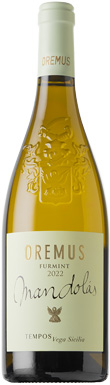
Exciting evolution for a wine showing greater expressive, character and moreish textural appeal. Furmint's trademark linden and chamomile notes hover over fleshy blanched almonds, quince...
2022
TokajHungary
OremusTokaji
Oremus, Petrács Dry Furmint, Tokaj, Hungary 2021
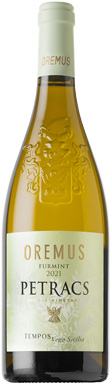
Classical and poised, weaving smoky notes of toasted almonds, sandalwood and brioche with red apple peel, crunchy quince and pear. A touch of flint and...
2021
TokajHungary
OremusTokaji
Vega Sicilia, Unico, Ribera del Duero, Spain 2015
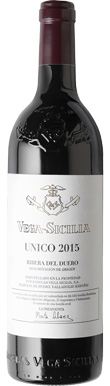
Very whole and round with a generous width on the mid-palate offset by an assertive energy, supported by vivid acid and a well-presented tannic framework....
2015
Northern SpainSpain
Vega SiciliaRibera del Duero
Vega Sicilia, Valbuena 5º, Ribera del Duero, Spain 2020
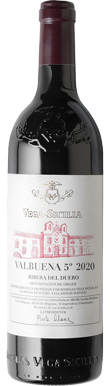
Produced with a selection form the more ethereal parcels that don't deliver the power sought for Unico, Valbuena 5º is however much more than a...
2020
Northern SpainSpain
Vega SiciliaRibera del Duero
Vega Sicilia, Alión, Ribera del Duero, Spain 2021
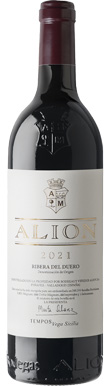
There's a very particular, alluring savoury appeal to this wine, with its distinct salty liquorice note hovering over dried oregano, thyme, black pepper, cardamom and...
2021
Northern SpainSpain
Vega SiciliaRibera del Duero
Benjamin de Rothschild & Vega Sicilia, Macán, Rioja, Spain 2020
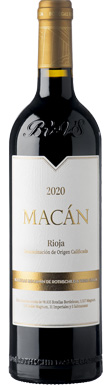
A lot of potential in this yet coiled classical Rioja with luscious black fruit (cherries, blackcurrants, plum) drenched in dark chocolate and sprinkled with black...
2020
Northern SpainSpain
Benjamin de Rothschild & Vega SiciliaRioja
Vega Sicilia, Pintia, Toro, Spain 2020
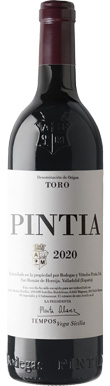
Another accomplished vintage of Vega Sicilia's Toro project. Technical director Gonzalo Iturriaga says it was a challenging vintage, with illusive freshness. But ideal harvest timing...
2020
Northern SpainSpain
Vega SiciliaToro
Benjamin de Rothschild & Vega Sicilia, Macán Clásico, Rioja, Spain 2021
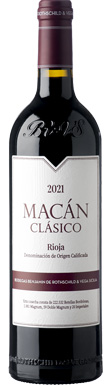
Beautiful take on modern Rioja with great purity of fruit (led by red plum, cranberry and red cherry) and a lively acid line supporting the...
2021
Northern SpainSpain
Benjamin de Rothschild & Vega SiciliaRioja
Oremus, Aszú 5 Puttonyos, Tokaji, Hungary 2018
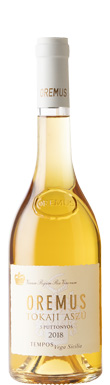
Pure and intense with luscious nectarine, red apple, quince and frangipane under a thick, zesty layer of candied orange peel and marmalade. Assertive acid carves...
2018
TokajHungary
OremusTokaji
Oremus, Aszú 3 Puttonyos, Tokaji, Hungary 2019
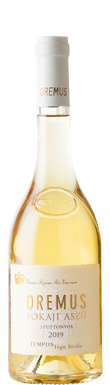
Intense yet fresh flavours of nectarine, papaya, passionfruit, marmalade and cooked red apple underpin the elegant florality of rose petals and chrysanthemums. A vegetal seam...
2019
TokajHungary
OremusTokaji
Oremus, Late Harvest, Tokaji, Hungary 2023
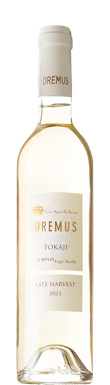
Lovely vibrancy and purity, with clear etched flavours of pear, peach and lemon curd, cloaked in fig leaf, linden and celery tops. Orange peel and...
2023
TokajHungary
OremusTokaji

Ines is Decanter’s regional editor for Spain, Portugal and South America. Born and raised in Lisbon, Portugal, she grew up chasing her grandfather among his vines in Ribatejo and thus her love for all things wine began. After completing her Masters Degree in Architecture, Ines worked as a project manager while writing about wine and doing cellar consulting on the side. After moving to London in 2015, she decided to dedicate herself fully to the wine industry and joined the sommelier team at Michelin-starred Spring, Somerset House. Stints at Noble Rot and The Laughing Heart followed, while completing her WSET Diploma in Wines and Spirits. Her work as a judge and writer eventually became her full time commitment and she joined Decanter in 2019 as wine database editor.