It's not easy to forge a new, distinct identity in regions steeped in tradition, yet there are some vignerons with the drive and vision to make it happen. Matt Walls discovers an estate doing just that.
Did you know there is a website where you can compare the average prices of vineyard land across France?
Here are some examples, per hectare of vines in 2023:
Touraine, Loire: €7,000 (£5,880)
Côtes du Rhône: €23,000 (£19,315)
Gigondas, Rhône: €215,000 (£180,530)
Côte d’Or, Burgundy: €983,800 (£826,080)
Pomerol, Bordeaux: €2,000,000 (£1,679,420)
Decanter newsletter
Get our daily fine wine reviews, latest wine ratings, news and travel guides delivered straight to your inbox.
The website is published by a French government agency called SAFER, whose job it is to regulate land prices in rural areas. Naturally some appellations are more desirable, and therefore expensive, than others.
Scroll down for Domaine Mayard wines tasted and rated
How about a hectare in Châteauneuf-du-Pape? That’ll be €510,000 (£428,255) please.
So if you’re a young winemaker wanting to start out in Châteauneuf, a 10ha vineyard is going to set you back on average €5.1m (£4.3m). That’s before you’ve paid for the winery and equipment. And found somewhere to live.
These land prices impact the wines we drink. It’s no coincidence that one of the most experimental and dynamic appellations in the Rhône Valley is Ventoux – where the price of land is among the lowest (€23,000 / £19,315).
After all, what must it feel like, as a young vigneron in Châteauneuf, to have the weight of millions of euros of debt around your shoulders? Ensuring you find a market for your wines, and quickly, is critical. The temptation is to stick to the beaten path.
So brand new estates in appellations with high land prices are rare. And new ones producing an original style are rarer still. That’s why Domaine Mayard is so exciting.
Arthur Mayard in the vines in Châteauneuf-du-Pape.
(Image credit: Matt Walls)
One becomes two
If the name sounds familiar, that’s because an estate called Vignobles Mayard was established in Châteauneuf in 1889 by Gratien Mayard.
More recently, fourth-generation winegrower Maurice Mayard passed the family estate to his three children, Didier Mayard, Béatrice Mayard and Françoise Roumieux.
Following a disagreement in 2021, the estate was split in two.
Françoise’s children Nicolas and Coline took control of one of the new structures, christened Clos du Calvaire. Didier’s children Hugo and Arthur now look after the other, named Domaine Mayard.
Clos du Calvaire kept the winery, stock and equipment, but the vineyards were divided equally. Domaine Mayard now owns 10ha of Châteauneuf, 5ha of Côtes du Rhône and 3ha of Lirac.
‘It was an opportunity to change a lot of things,’ says Arthur Mayard.
Clean slate
A conversation with Arthur, 32, is a useful way of getting up to speed with current thinking in Rhône viticulture.
For a region that’s often concerned about climate change, his response is unusually relaxed. ‘It’s not a big thing for me,’ he says, ‘weather is always changing. Our job is to adapt.’
Increasing the amount of organic matter in the soil, and therefore its capacity to store water, is his starting point. One way to achieve this is planting cover crops in between rows.
Another is by adding manure and fresh wood chips. He’s moving away from ploughing to avoid drying out his soils too; the eventual aim is to farm regeneratively.
He’s started planting trees in his vineyards, aiming for 60 per hectare. This has multiple benefits for his vines. It provides shade in summer, produces wood for chipping, and the trees he’s selected (cherry, peach, almond and apricot) attract insects and birds.
The trees are good for humans too, producing fruit to eat. These plots feel more like allotments than vineyards.
‘Vines are born to be in good health. It’s the way we manage them that brings disease,’ says Arthur. ‘My goal is to create perfect conditions for the vines to thrive.’
Old cellar, new style
When I visited Arthur and Hugo they were putting the finishing touches to a new cellar that they’ve installed in a 17th century building in the middle of Châteaneuf-du-Pape village. It’s a bit cramped, but working between these ancient walls inspires them.
Arthur says his way of working has changed since establishing his own estate. He harvests earlier, and extraction is much more gentle.
This is partly because their market has changed; Vignobles Mayard used to export 65% of its wines, mostly to anglophone countries, whereas Domaine Mayard sells 85% of its wine within France.
Arthur believes that French wine lovers prefer a more savoury expression with less alcohol, so this is the domaine’s direction of travel.
‘The most important thing is to see the wine drunk to the bottom of the bottle,’ he says, and that the wines are accessible even when young.
The result is a style all of its own. Relatively pale in the glass, with an array of floral and herbal scents. The wines have body without reliance on intense extraction; they place drinkability over power, and feel more nourishing than intoxicating.
Appellations such as Châteauneuf can become victims of their own success, with high land prices preventing new talent and original styles from emerging.
If classic wine styles don’t evolve, however, they can ossify. Thankfully, Arthur and Hugo Mayard aren’t afraid to tread their own path.
And they’re creating exactly the kind of wines that more and more of us want to drink.
Domaine Mayard facts
First vintage: 2021
Farming: Certified organic
Lieux-dits: Le Grand Coulet, Les Serres, La Crau Est, Le Pointu
Soils: Principally galets roulés and sand
Destemming: Partial, vintage dependent
Maturation: 12 months in old foudres then six months in concrete
Range
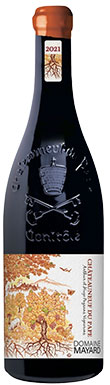
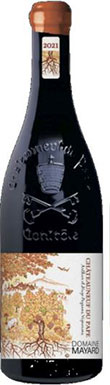
Red Châteauneuf-du-Pape: 70% Grenache, 20% Cinsault, 10% Mourvèdre
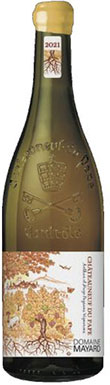
White Châteauneuf-du-Pape: 34% Clairette, 33% Grenache Blanc, 33% Bourboulenc
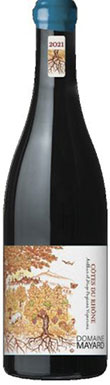
Red Côtes du Rhône: 50% Grenache, 25% Syrah, 25% Mourvèdre
Domaine Mayard, Châteauneuf-du-Pape, Rhône, France 2023
My wines
This is a full-bodied, creamy and generous style of white Châteauneuf, oaked but not overoaked. Enjoyably tense, with good length and balance, and it's fresh...
Domaine Mayard, Châteauneuf-du-Pape, Rhône, France 2023
My wines
Fairly pale in colour and highly atypical in its aromas, with an extraordinary array of herbs and spices, including rose petals, orange peel and garrigue...
Domaine Mayard, Châteauneuf-du-Pape, Rhône, France 2022
My wines
Aromas of red fruits and potpourri, with violet and rose elements. Although only medium-bodied, this is fresh and expressive. The oak work is still present...
Domaine Mayard, Côtes du Rhône, Rhône, France 2023
My wines
Transparent, with a purple tinge. An open and fruity Côtes du Rhône, with defined, perfumed berry aromas. It's medium-bodied, with a juicy fruit centre and...
Decanter's Rhône correspondent, and DWWA Regional Chair for the Rhône.
Matt Walls is an award-winning freelance wine writer and consultant, contributing regular articles to various print and online titles including Decanter, where he is a contributing editor. He has particular interest in the Rhône Valley; he is chair of the Rhône panel at the Decanter World Wine Awards and is the owner of travel and events company www.rhoneroots.com.