Ageing Italian wines is slowly becoming a trend. Many wineries across the country are showing greater ambitions than ever before, organising vertical tastings, building up library stocks, and re-releasing small quantities of back vintages.
Yet few take the idea as far as Roberto Di Meo, the only producer to regularly release Fiano and Greco wines aged 10 years or more.
The only comparable example might be ‘Rarity’’ from Cantina Terlano in Alto Adige.
Campania’s inland Irpinia is emerging on the global stage, but is still penalised by wineries’ needs for quick cash flow, which leads them to sell their white wines when they are still young.
This makes Di Meo’s work all the more remarkable, reaffirming a potential that is still mostly unexpressed.
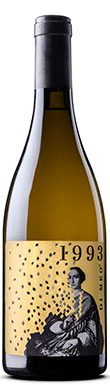
At a glance: Di Meo’s ‘Tempo’ 1993
Grape: 100% Fiano
Ageing: 33 years on fine lees in stainless steel vats
Production: 2,800 bottles and 500 magnums
Release date: December 2025
Key stats: 12% abv; €250 / £216 per bottle
The secret vat
Almost nobody knew that Roberto Di Meo had been hiding a single vat of his 1993 Fiano.
‘It’s the only lot from the 1990s that deserved being kept aside for decades. Luckily, there has been more consistency between vintages from 2000 onwards,’ he states.
Decanter newsletter
Get our daily fine wine reviews, latest wine ratings, news and travel guides delivered straight to your inbox.
After 33 years, the wine was finally released in December 2025, celebrating Roberto’s 60th birthday, and marking the 40th anniversary of the estate in 2026.
‘Its slender style is impossible to replicate in the face of global warming.’
A tiny production of 2,800 bottles and 500 magnums, it is simply labelled as vino bianco and available via allocation through Di Meo’s importers worldwide.
‘It’s a wine from another era,’ affirms Di Meo. ‘That doesn’t mean current releases won't age as well – current techniques might yield even better results. But with a modest 12% alcohol, its slender style is impossible to replicate in the face of global warming.’
A quiet revolution
While Di Meo might not carry the international recognition of Mastroberardino or Feudi di San Gregorio, Roberto and his parents, Vittorio and Alessandra, were pioneers of quality Campanian wine, turning a 17th century hunting estate into one of Irpinia's first commercial wineries in 1986.
A winemaker by training, Roberto almost immediately began channelling his interest in longevity into the estate’s production.
‘I’ve always been obsessed with ageworthy whites,' he explains. 'I was already collecting bottles from France and other parts of Italy back then. But in those early years, I didn't have the technical expertise to make one.
‘The climate was also a hurdle – many seasons in the late 1980s and ‘90s were so cold in Irpinia that we struggled to hit even 11.5% alcohol. 1993 was the first vintage that provided the right concentration – still relatively rainy but with milder temperatures. From that point on, I began setting batches aside.’
His Tempo (‘time’) collection, however, only saw the light of day 21 years later.
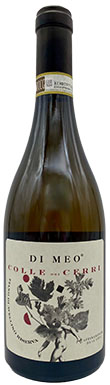
‘I had already conceived two top-shelf expressions of Fiano – Alessandra, and the oak-aged Colle dei Cerri – in the early 2000s, and started holding them back.
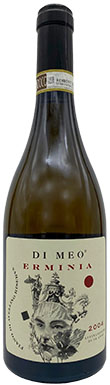
'But, in 2014, I made a step further by launching the 2000 Erminia, which had spent nearly 14 years on the fine lees in stainless steel.’
What makes Fiano so ageable?
Fiano has always been the cornerstone of Di Meo's Tempo collection, accounting for four out of the six late-release wines made at the estate.
A high-acid, late-ripening variety, Fiano is usually shier in its youth than Greco Di Tufo, Irpinia’s other key native white variety.
It rarely reveals its full potential until at least three or four years after harvest, after which it evolves very slowly.
‘You can spot the difference even in the juice,’ Di Meo explains. ‘While Greco turns golden with minimal oxygen during fermentation, Fiano’s pale straw hues remain.’
The project begins in the vineyard, with the four Fiano wines originating from specific plots surrounding Di Meo’s cellar in the township of Salza Irpina, at between 500 and 550 metres above sea level.
‘Within a mere 200–300 metres, not only the soil but also the slope and exposure vary significantly, leading to different outcomes,' he says.
'This is proven by the fact not all parcels perform well in every vintage, forcing us to skip some releases. Furthermore, not everything that is aged hits the market.’
All in the lees
Lees aging in stainless steel is the primary means through which these wines are kept intact.
As Roberto explains: ‘Fine lees protect and enrich the wine. When you age it in an inert vessel for such an extended period, the risk is hyper-reduction, avoided precisely by stirring them.'
One question might be whether these wines can stand further ageing after release.
‘Of course they can!’ replies Di Meo. ‘In fact, I usually offer multiple vintages for sale.’
He acknowledges that his business model isn't for the faint of heart.
‘Some lots simply don't run the distance, forcing you to discard them. But the ones that do – like this 1993 – justify the entire endeavour.’
While the 1993 vintage commands over €250 (roughly £216) per bottle, the other Tempo wines in the range remain more affordable considering their pedigree.
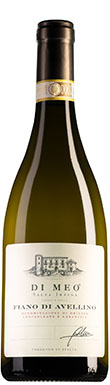
For those seeking a more immediate introduction to the house style, the 2024 Fiano di Avellino displays remarkable precision and elegance, even in its youth, and reaffirms that quality isn't just a result of time, but also of a clear vision and exceptional grapes.
A shared 1993 legacy
Alto Adige’s Cantina Terlano also boasts a long lees-aged 1993 release, 'Rarity.'
While Rarity is Chardonnay, like Di Meo's Fiano it waited patiently for decades on its lees in stainless steel, and the result is a stunning demonstration of what long ageing before bottling can achieve.
Tasted blind, it would be impossible to identify this 1993 as almost 33 years old. Rather than showing classic tertiary evolution, it offers lusciously sweet...
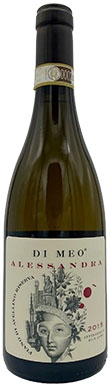
Di Meo, Alessandra Riserva, Fiano di Avellino, Campania, Italy 2015
My wines
Spending 10 years on the fine lees in stainless steel, the 2015 Alessandra expresses the same overt fruitiness of the 2024 Fiano d’Avellino but with...
Di Meo’s largest production wine, the 2024 Fiano Di Avellino is remarkably expressive, showing sweet orchard fruits, elegant florals and a herbal lift, all backed...
Raffaele Mosca is an independent wine writer based in Rome and Abruzzo. He holds a master’s degree in Wine Culture and Communication from the University of Gastronomic Sciences in Pollenzo and an advanced sommelier certification from Fondazione Italiana Sommelier. In Italy, he collaborates with leading food and wine publications, Lucianopignataro.it and Gambero Rosso, and manages a personal website, Sommelierlife.it.