Walls’ hidden gems: Vignobles Chirat, Condrieu
Matt Walls visits a young, fourth generation winemaker whose Condrieu, Côte-Rôtie and St-Joseph wines have gone from strength to strength in recent years.


When I taste the new vintage in the Rhône every autumn, I taste the wines blind, meaning the bottles are covered up. At the end, when the wines are revealed, many of the top performers are no great surprise. Something I find particularly exciting, however, is to see an estate that I’m unfamiliar with do better and better, year after year; a dark horse breaking away from the pack. In recent years, this is something I’ve witnessed with Vignobles Chirat.
Aurélien Chirat was tinkering with some machinery when I arrived at his winery to find out more. It’s located in the little village of Saint-Michel-sur-Rhône in the heart of Condrieu, high on a hillside overlooking the Rhône river. Aged 35, he is younger than I was expecting, a calm presence but bright and chatty.
Aurélien, a fourth generation winemaker, joined his father Gilbert at the estate in 2008. ‘When I arrived,’ said Aurélien, ‘he threw the keys at me and said “now it’s your job!”’ They worked together until February 2023, when his father fully retired.
Scroll down to see tasting notes and scores for 11 Vignobles Chirat wines to try

New tricks
After his studies, Aurélien did some internships in other wine regions. In 2012 he worked at Te Kairanga in Martinborough, New Zealand. Compared to his father’s more rustic approach, he was struck by the precision of the winemaking.
I asked Aurélien what he brought back from his visit. A lot, it turns out: an improved approach to cellar hygiene and oxygen transfer, a better understanding of chemical analysis, and new techniques such as cold maceration.
He has continued to experiment since his return. Since 2019, he’s stirred the lees (bâtonnage) of his reds – a process more commonly associated with white wines. He finds it adds body and power, which was useful in the rather reedy 2021 vintage.
He has also taken to blocking (or part-blocking) malolactic fermentation in his whites in hot vintages. He prefers this to acidifying, a practice more common in the southern Rhône, but one that’s been creeping north as the climate gets hotter.
Old ways
Learning new approaches from other regions has been valuable, but Aurélien says that benefiting from his father’s knowledge has been priceless. ‘He was the best winemaker, but hated the commerce and the administration,’ said Aurélien. ‘He knows the terroir, he knows how his father worked, how his grandfather worked. Which is great, because we need to look to the past to see how to work today.’
As a response to climate change, his father suggested two key modifications to their red winemaking, both of which were common in the region 50 years ago: chapeau immergé (submerged cap) and whole-bunch fermentation. ‘We destemmed everything before 2016,’ said Aurélien, ‘before, stems were an aberration to me. Now I hardly destem at all.’
As for chapeau immergé, he says ‘it’s like a cafetière’. Instead of letting the mass of skins and stems float to the surface of the fermenting juice, it’s held under the surface by a perforated wooden board. So no more pumping over or punching down: ‘it’s diffusion, not extraction,’ he says. Since employing these old techniques, he’s found his wines have gained finesse.
Back to the future
Often when a young winemaker takes over an estate, they have ambitions to expand. But not Aurélien – quite the opposite. He’s already reduced their holdings from 10ha down to 8ha.
This is partly a response to his father’s retirement – the loss of a pair of hands. But it’s also driven by his desire to work more sustainably. ‘I might have to give up more parcels to concentrate on just those I can work organically. Some might call me an idiot, but it’s a personal choice. Our ancestors had small domaines, and they all worked organically before chemicals arrived. You can live on five to six hectares here. I’d prefer to do this than lose part of my soul.’
Since arriving at the estate 15 years ago, Aurélien’s made a raft of changes. And the wines have gone from strength to strength. He’s clearly much more than a one-trick pony.
Matt Walls’ tasting notes and scores for 11 Vignobles Chirat wines:
Related articles
- Walls: 30 premium Côtes du Rhône wines to try
- Walls: tasting Domaine Burgaud’s Côte-Rôtie 1988-2008
- Walls’ hidden gems: Domaine d’Abrigeon, Buisson
Vignobles Chirat, Les Chays, Condrieu, Rhône, France, 2021
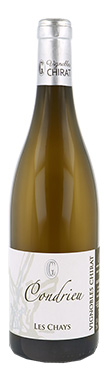

Appealing apricot nose, a touch of banana and violet. Full-bodied, a little oily, but well balanced with a fresh, mountain-stream, saline finish. Expressive and well made, showing considerable detail and complexity. Soils of 60% biotite granite, the rest muscovite granite, from lieux-dits Roche-Coulant, Le Mouline and La Bourdonnerie. Half matured in foudres, half in demi-muids. Half went through malo, the other half was blocked; 10% new oak.
2021
Vignobles ChiratCondrieu

Vignobles Chirat, Clos Poncins, Condrieu, Rhône, France, 2021
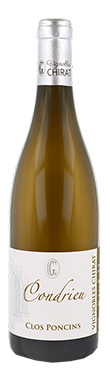
A fresh expression, with appealing spicing on the nose. It’s full-bodied, and the oak does stick out a bit at this stage but it's well done for an oaked style of Condrieu. Lovely acidity and salinity, under the apricot and pear, but not overly peachy, with vanilla on the finish. This has seen a long élevage for a Condrieu. A very small parcel of 15-year-old vines at the base of the hill, that gets sun in morning but not in afternoon. Plenty of deep biotite granite soils, so this plot doesn't suffer during heatwaves. Matured for 18 months, of which 12 months were in barriques (20% new) and six months in stainless steel, and malolactic fermentation was completed. Barrel sample.
2021
Vignobles ChiratCondrieu
Vignobles Chirat, Clos Poncins, Condrieu, Rhône, France, 2020
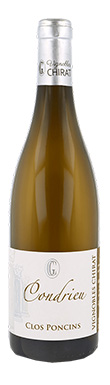
Rounded and more obviously oaked than Les Chays. It’s full-bodied, taking a touch of spice and vanilla from the oak. Rich, concentrated and long. The alcohol is just slightly raised, and there’s a gently saline finish. Just a touch heavy on the oak. A very small parcel of 15-year-old vines at the base of the hill, that gets sun in morning but not in afternoon. Plenty of deep biotite granite soils, so this plot doesn't suffer during heatwaves. Matured for 18 months, of which 12 months were in barriques (20% new) and six months in stainless steel, and malolactic fermentation was completed.
2020
Vignobles ChiratCondrieu
Vignobles Chirat, Sous l'Eglise, Condrieu, Rhône, France, 2020
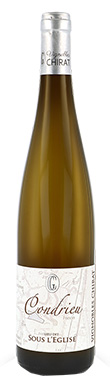
The nose is subtle and quite introspective, with jasmine and iodine notes. It’s medium-bodied, not heavy at all, and fresh on the palate, with good tension. Well balanced despite the low acidity, with a saline finish. An interesting expression, with more flowers and salt than peach. Has the classic strict, less fruity style of Condrieu typically associated with the Saint-Michel-sur-Rhône commune. There’s no huge length, but there’s good balance. Made with their oldest Viognier vines (planted in 1978) and all worked organically, this is only produced in the best years. The vineyard is east facing, at fairly high altitude, on decomposed granite soils. All matured in foudres, and malolactic fermentation was completed. Just 600 bottles produced.
2020
Vignobles ChiratCondrieu
Vignobles Chirat, Chays d'Oeuvre, St-Joseph, Rhône, France, 2021
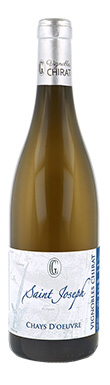
Very pale in colour. Aromas of nut butter and a touch of macadamia lead onto a full-bodied, rich palate that has a good sense of freshness despite the low acidity. Gentle pear and honeysuckle notes come through, with a touch of aniseed. The fruit is from Chavanay, on granite soils: La Côte and La Voturerie. All matured in demi-muids, no new oak. Malolactic fermentation was completed.
2021
Vignobles ChiratSt-Joseph
Vignobles Chirat, Or Piste Viognier, Collines Rhodaniennes, Rhône, France, 2022
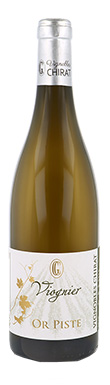
A medium- to full-bodied Viognier in a fruity style with a touch of puppy fat. There’s a nice little saline nip on the finish, underneath the classic peach and apricot fruit. The fruit comes from a plot that touches the border of the Condrieu appellation. Half matured in demi-muids, half in stainless steel, for six months. It did not undergo malolactic fermentation in 2022.
2022
Vignobles ChiratCollines Rhodaniennes
Vignobles Chirat, La Rose Brune, Côte-Rôtie, Rhône, France, 2020
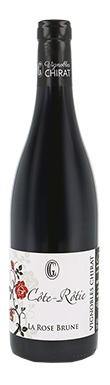
Still quite backward for now, but there's good concentration and freshness, with distinctly grippy tannins. Black olive, smoked bacon and bay leaf all jostling to get out. Needs time however. Typically lieu-dit Rozier in its austere tannic structure. Will be very good, and should swallow its oak in time. Vines planted in 1960, 100% Syrah, old vines from Domaine de Rosiers. 100% whole bunch, submerged cap, followed by 12 months in barriques, 20% new, then six months in 600-litre demi-muids.
2020
Vignobles ChiratCôte-Rôtie
Vignobles Chirat, La Rose Brune, Côte-Rôtie, Rhône, France, 2021
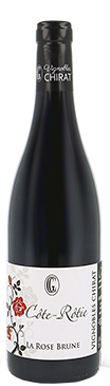
A more discreet, herbal style, but with good acidity and a sense of finesse from both fruit and tannin. Good acidity. 'Une année de paysan,' according to Aurélien Chirat, meaning that he had to be very present and very active in the vineyard. Quite a chiselled style, lean and old fashioned. Vines planted in 1960, 100% Syrah, old vines from Domaine de Rosiers. 50% whole bunch in 2021, submerged cap, 12 months in barriques, 20% new, then six months in 600-litre demi-muids.
2021
Vignobles ChiratCôte-Rôtie
Vignobles Chirat, Soliste, St-Joseph, Rhône, France, 2020
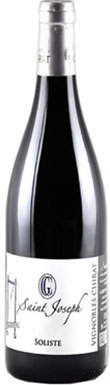
A fairly rich, ripe style of St-Joseph, and one with good freshness. Black olive, a touch of rosemary but no strong whole-bunch aroma. Medium- to full-bodied with good weight of fruit. Lovely succulent tannins with a touch of sweetness from the oak. Grown on granite soils, some vines are in Serrières and some in Chavanay, both south facing. 100% whole bunch, submerged cap for 20 days. Matured for 18 months, of which 12 months was in 500-litre barrels, 20% new, then it was transferred into old barrels.
2020
Vignobles ChiratSt-Joseph
Vignobles Chirat, La Côte, St-Joseph, Rhône, France, 2020
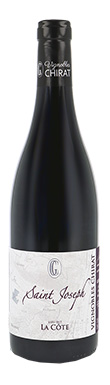
I love the nose, very Côte-Rôtie in its smoky bacon and floral style. It has a certain fullness and fatness from the battonage. A plump and fragrant style, with blackberry and raspberry. Grown at the extreme north of the appellation in Chavanay, the only St-Joseph with muscovite granite soils, according to Aurélien Chirat. It gives a fresh, less powerful, less concentrated expression with less polyphenols. 25% whole bunch, submerged cap, no pigeage, and 21 days maceration. Then matured for 12 months, half in foudres, half in demi-muids, 20% new oak.
2020
Vignobles ChiratSt-Joseph
Vignobles Chirat, Soliste, St-Joseph, Rhône, France, 2021
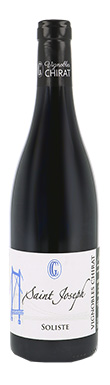
A more herbal style here, and the oak is a touch more obvious than on the 2020. Rounded, with some richness of fruit, but the oak feels slightly obtrusive, so give it time. Just 50% whole bunch in 2021. Grown on granite soils, some vines are in Serrières and some in Chavanay, both south facing. Submerged cap for 20 days. Matured for 18 months, of which 12 months was in 500-litre barrels, 20% new, then it was transferred into old barrels.
2021
Vignobles ChiratSt-Joseph
