
Walls: Reflections on what makes cuvée Boisrenard so spéciale
Matt Walls visits an estate he knows well, Domaine Beaurenard in Châteauneuf-du-Pape, to taste through its cuvée spéciale – Boisrenard.


Let me begin with a quick story about a different winery – the anti-Beaurenard, if you like. I won’t mention its name, but it’s Italian.
I drank one of its wines that was so delicious I shared a photo of the bottle with friends in a WhatsApp group. Fresh, structured, with an array of herbs and dried flowers – they should look out for it, I said.
‘Oh THAT guy,’ came the replies. It turned out the winemaker had made some vile comments on Facebook. I searched them up and read them for myself. Then I put the cork back in the bottle.
The next day, I poured myself another glass but I couldn’t enjoy it. It’s hard to separate the art from the artist when you have to swallow their work.
Winemakers tend to be a friendly and collegiate bunch, so this kind of experience is rare. It’s more common that a drinking experience is elevated by knowing the people behind the label – as it is with Domaine de Beaurenard.
Scroll down for notes and scores of Domaine de Beaurenard’s Cuvée Spéciale Boisrenard
Family values
When you’ve been visiting wine regions for a number of years, sometimes you get to witness the changing of the guard, as one generation gradually hands over the reins to the next.
When I started writing about the Rhône, Beaurenard owners Daniel and Frédéric Coulon were always helpful in my research and tactful in answering my occasionally stupid questions.
Today I’m more likely to meet with Daniel’s sons Victor and Antonin, the 8th generation of Coulons, who joined the estate in 2016 and 2017.
Thankfully, they also put up with my occasionally stupid questions just as graciously.
This is a family of genuine wine lovers – they share and talk about wine of all kinds with unfailing enthusiasm, and they often make a few clandestine cuvées just for fun.
Last time I visited, they opened a new Châteauneuf for me to try called Beaurenard Le Lieu Dit, a blend of 75% Cinsault, the rest Grenache and white varieties, all co-planted – catnip for Cinsault-lovers like me.
They do great work to support the appellation more broadly. They have 70ha spread over Châteauneuf, Rasteau and Côtes-du-Rhône, all of which is farmed biodynamically.
This approach tends to make for better wines, but it’s good for local biodiversity too, from which everyone benefits.
Being staunch believers in Châteauneuf’s heritage grapes, the family have also established a conservatory for all 18 varieties.
Some, such as Piquepoul Gris and Clairette Rose, are hard to find at local vine nurseries, so the Coulon family help neighbouring estates by providing cuttings.
They are deeply invested in their village and its future.

Boisrenard
Despite the occasional one-off cuvée, the heart of Beaurenard’s Châteauneuf range consists of four wines: their red and white tradition bottling, and their red and white cuvée spéciale, called Boisrenard.
I recently paid Antonin a visit to taste eight vintages of their red Boisrenard, from 2023 back to 1995.
Today, most Châteauneuf cuvées spéciales are parcel selections, but Boisrenard is different. It’s an old vine cuvée, but the vineyards change from year to year. Some are always included, such as a plot of 102-year-old vines in lieu-dit Cabrières.
But other sites are selected when they’ve performed particularly well in any given vintage.
As such, the grape blend differs from year to year – and given that many of their plots are co-planted, it’s hard to know the precise breakdown anyway.
That said, a typical vintage contains between 70-80% Grenache, and all the other permitted Châteauneuf grapes will find their way in to some extent.
‘The grapes are in service of something bigger,’ says Antonin, ‘the plot and what it brings is more important.’
Until 2022 it was all destemmed, and even now their use of whole bunches is restricted to around 10%. ‘I want people to drink a place, not a technique,’ says Antonin.
In the same spirit, the wine is matured in large neutral barrels of different sizes, with no (or very little) new wood.
As such, it’s impossible to define Boisrenard – ‘we’ve changed many things over time and we’ll keep on changing it,’ says Antonin, varying fermentation and maturation vessels, sulphite additions, and other elements over the years.
‘Essentially it’s just a concept of old vines from our estate,’ he says.

A characterful style
So how does Boisrenard differ from their red tradition? ‘My brother Victor says it’s the same wine, just with much more intensity,’ says Antonin. F
rom an outsider’s perspective, I would add that it always has impressive depth, it often has a saline edge to the fruit, and it usually displays tensile tannins which help the wine to age.
In fact, some vintages require long ageing to soften. Boisrenard often takes on umami notes as it evolves, making for a savoury, food-friendly style of Châteauneuf.
That this cuvée doesn’t come from a single plot means that each vintage has a character all of its own. But when put together there is a marked family resemblance – athletic and chiselled.
Rather like the Coulons themselves.
Knowing that the wine is made by such great people doesn’t change its intrinsic quality of course. But when you open a bottle, it’s an added bonus to know you’re supporting the good guys.
Domaine de Beaurenard’s Cuvée Spéciale Boisrenard
Related articles
- Côtes du Rhône Villages: Land of vines and olives
- St-Joseph: Revisiting 2022 in bottle
- Decanter cellar: 16 must-try Syrah
Domaine de Beaurenard, Boisrenard, Châteauneuf-du-Pape, Rhône, France, 2023
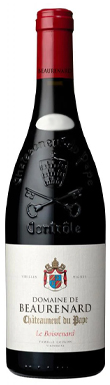

A tasting of the pre-blended constituent parts. The first sample, taken from an old foudre, is a medium-bodied, fresh, tense and lively style, with grippy...
2023
Domaine de BeaurenardChâteauneuf-du-Pape

Domaine de Beaurenard, Boisrenard, Châteauneuf-du-Pape, Rhône, France, 2022
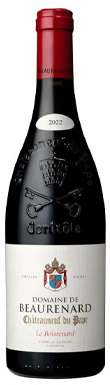
Dark in colour. A powerful, tense style, with damson and sloe flavours, tight tannins and good acidity; a touch hard, so needs time, but will...
2022
Domaine de BeaurenardChâteauneuf-du-Pape
Domaine de Beaurenard, Boisrenard, Châteauneuf-du-Pape, Rhône, France, 2021
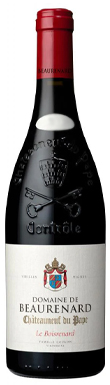
Starts with an earthy touch on the nose – in a slightly grumpy phase at the time of tasting. It does have weight, but no...
2021
Domaine de BeaurenardChâteauneuf-du-Pape
Domaine de Beaurenard, Boisrenard, Châteauneuf-du-Pape, Rhône, France, 2020
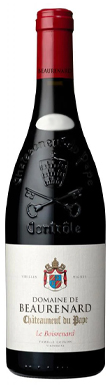
A touch reticent on the nose, but pure velvet on the palate and displaying great energy. Iodine notes, liquorice and blackcurrant, very tense tannins and...
2020
Domaine de BeaurenardChâteauneuf-du-Pape
Domaine de Beaurenard, Boisrenard, Châteauneuf-du-Pape, Rhône, France, 2017
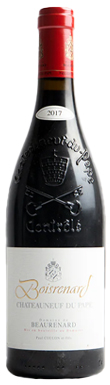
Dark in colour and starting to take on some developed aromatics, with leather, liquorice and spice all coming forward, although it's still a touch closed....
2017
Domaine de BeaurenardChâteauneuf-du-Pape
Domaine de Beaurenard, Boisrenard, Châteauneuf-du-Pape, Rhône, France, 2014
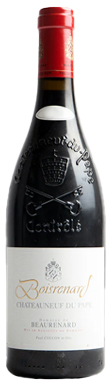
Pale in colour and nicely evolved, this is the youngest vintage of Boisrenard you would want to open in 2025, it displaying that classic 2014...
2014
Domaine de BeaurenardChâteauneuf-du-Pape
Domaine de Beaurenard, Boisrenard, Châteauneuf-du-Pape, Rhône, France, 2006
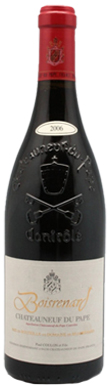
Very elegant, a wine that doesn't show off or shout, but is harmonious and classically proportioned. Perhaps lacks a bit of tannic elegance and generosity...
2006
Domaine de BeaurenardChâteauneuf-du-Pape
Domaine de Beaurenard, Boisrenard, Châteauneuf-du-Pape, Rhône, France, 1995
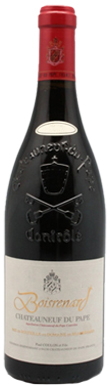
In the glass this still looks like a young wine! A bit grumpy on the savoury, meaty nose. Lots of forest floor, black olive, sloe...
1995
Domaine de BeaurenardChâteauneuf-du-Pape
