
Walls: tasting Domaine Burgaud’s Côte-Rôtie 1988-2008
What is the key to Côte-Rôtie's longevity? Matt Walls ponders this question while tasting 11 vintages spanning 30 years from Domaine Burgaud.


In Bordeaux it’s not unusual to walk through echoey corridors stacked floor to ceiling with bottles of older wines. But the culture in the northern Rhône is different. Most producers will squirrel away a few cases for special occasions, but winemakers usually sell through an entire vintage rather than hold a proportion back.
It’s understandable. A Bordeaux estate is typically five times the size of a domaine in Côte-Rôtie. Older vignerons from around Ampuis still remember when selling their wine wasn’t as easy as it is today, or as rewarding. Holding stock back wasn’t financially viable for many.
Scroll down to see tasting notes and scores for the Domaine Burgaud Côte-Rôtie vintage vertical
This difference in culture isn’t down to the longevity of the wines. Tempting though it is to drink it young, Côte-Rôtie can age beautifully. Domaine Burgaud has small reserves going back to the 1980s, and Pierre Burgaud generously opened a selection of mature bottles recently for me to taste.
Côte-Rôtie & Condrieu 2021: report and top-scoring wines

The key to longevity
The wines we tasted dated from 2008 back to 1988, and most of them were still going strong. What’s the secret of their longevity?
Could it be the use of stems? Some estates ferment using whole bunches in the belief that it contributes a certain framework to the wines that helps them to age. But at Domaine Burgaud they de-stem the crop. Pierre, who took over from his father Bernard in 2020, says it’s ‘not necessarily true’ that fermenting with stems helps wine to age, and that it can contribute green tannins, which he wants to avoid.
Could it be high acidity? Pierre doesn’t pick particularly early, nor do the wines taste particularly acidic compared to other Côte-Rôties. So it’s not that.
Could it be gentle extraction or long infusion? The traditional submerged cap method that favours a long, gentle extraction of fine tannins is seeing a comeback in Côte-Rôtie. But not at this domaine. Quite the opposite – they opt for a brief 10-day maceration, during which they punch down the cap four times a day. Pierre believes this robust extraction in fact improves the wine’s potential to age.
Could it be long élevage? Many estates in Côte-Rôtie mature their wines for 18-24 months or even longer. The Burgauds believe that long élevage tires their wines, so they opt for a relatively short period of 14 months in barrel.
Could it be use of new oak? Though its use is waning in Côte-Rôtie, many estates still use a significant proportion of new barrels. Domaine Burgaud uses relatively little, just 20%.
When it comes to winemaking, there is no single element that makes a Côte-Rôtie ageworthy. Whatever the approach and methods used, producing a balanced wine is really the key.
A more important consideration, says Pierre, is the terroir. A glance at the map below shows the favourable position of their parcels: Côte Blonde, Fongeant, La Brosse, Le Champin, Les Moutonnes and Leyat.

There is one factor, however, clearly highlighted in this tasting, that does make a big difference to a wine’s longevity – but it’s outside a winemaker’s control. It’s the weather. It’s no guarantee, but great vintages – such as 1991 in Côte-Rôtie – hold the trump card when it comes to how long a wine will last.
See also: Top-quality and great-value Côte-Rôtie alternatives
Vintage character
Pierre made the following comments on the vintages we opened:
2008: A rainy year with late ripening, which required severe sorting in the vineyard in order to produce a quality harvest.
2007: A decent, normal year with a reasonable yield, producing satisfactory but not exceptional quality, with no serious problems.
2006: A very generous year in volume, with high levels of sugar in the grapes, the first year when even the parcels that are last to be picked quickly achieved full ripeness. A perfectly healthy crop.
2005: Small volumes due to relatively few grapes on the vines and low precipitation during the season – but very good quality. Not much juice, producing concentrated wines.
2004: A difficult year, with a serious outbreak of mildew in the vineyard.
2003: Frost in spring led to few grapes, then a heatwave in August singed the remaining grapes.
1999: A year with hail before flowering, with greater or lesser losses according to each sector; vegetative stress for three weeks before the vines started up again; ripeness arrived however, and in the end the parcels that were hit by hail produced the best quality fruit.
1996: Frost in springtime, but the crop ripened well afterwards; a late harvest, but almost normal volumes. Wines with a decent level of natural sugar but slightly higher acidity.
1991: A beautiful vintage in Côte-Rôtie. No frost like in Bordeaux that year, the growing season was perfect, the state of the harvest was ideal.
1990: The first year when the plateau (late-ripening) was more successful than the hillside (early ripening). Very abundant flowering on the slopes, less so on the plateau, there were drought conditions that blocked the ripening process in the vineyards on the slopes. The difference in crop load and the blockage in ripening meant that the slopes weren’t ripe, whereas the plateau vineyards were high in quality.
1988: A very small harvest, yielding little juice and concentrated, austere wines, because the ripening at the end of the season occurred in cold conditions, with a north wind. Good concentration but very high acidity for a wine of this ripeness.
Domaine Burgaud Côte-Rôtie 1988-2008:
Related articles
- Brune and blonde soils in Côte-Rôtie – do they really make all the difference?
- Matt Walls’ hidden gems: Domaine Burgaud, Côte-Rôtie
- Walls’ hidden gems: Domaine Garon, Côte-Rôtie
- Rhône trends to look out for in 2023
Domaine Bernard Burgaud, Côte-Rôtie, Rhône, France, 2008
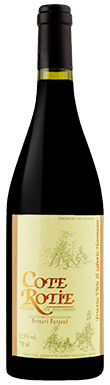

This 2008 vintage is the first vinification that Pierre played a part in. It has a discreet nose with raspberry notes; quite a sober aromatic...
2008
Domaine Bernard BurgaudCôte-Rôtie

Domaine Bernard Burgaud, Côte-Rôtie, Rhône, France, 2007
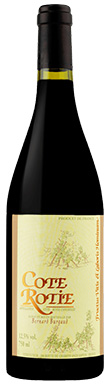
Agreeably fresh and spicy, with an aerial touch to the aromatics and a hint of cumin. Young at heart still, there are raspberry notes, a...
2007
Domaine Bernard BurgaudCôte-Rôtie
Domaine Bernard Burgaud, Côte-Rôtie, Rhône, France, 2006
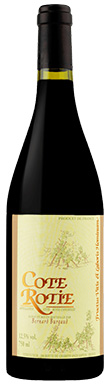
There's a smoky earthiness on the nose that draws you in, with a touch of clove. Silky on the palate, where more smoke rises up....
2006
Domaine Bernard BurgaudCôte-Rôtie
Domaine Bernard Burgaud, Côte-Rôtie, Rhône, France, 2005
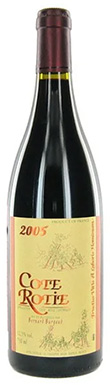
There's depth and complexity on the nose, along with some notes of decay, like leaf litter, and it’s a touch farmyardy. Medium-bodied, but really quite...
2005
Domaine Bernard BurgaudCôte-Rôtie
Domaine Bernard Burgaud, Côte-Rôtie, Rhône, France, 2004
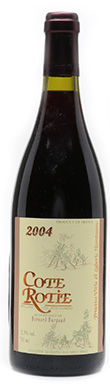
Very smoky aromas, like the ashes of burnt woody herbs, with raspberry and redcurrant underneath. This leads onto a silky, discreet palate that is quite...
2004
Domaine Bernard BurgaudCôte-Rôtie
Domaine Bernard Burgaud, Côte-Rôtie, Rhône, France, 2003
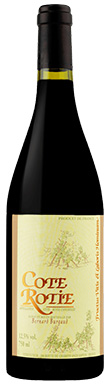
Lightly peppered strawberry on the nose, although not the most precise, with a hint of cigar tobacco. There’s plenty of glycerol and fat on the...
2003
Domaine Bernard BurgaudCôte-Rôtie
Domaine Bernard Burgaud, Côte-Rôtie, Rhône, France, 1999
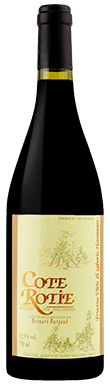
Quite discreet on the nose, but it still has some fragrant red berry fruit. On the palate too, there's a touch of red fruit and...
1999
Domaine Bernard BurgaudCôte-Rôtie
Domaine Bernard Burgaud, Côte-Rôtie, Rhône, France, 1996
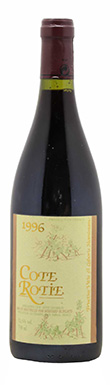
Despite being full-bodied on the palate, this is showing its age now. Nonetheless, it’s powerful, with quite dry, stemmy, grainy tannins, as expected for a...
1996
Domaine Bernard BurgaudCôte-Rôtie
Domaine Bernard Burgaud, Côte-Rôtie, Rhône, France, 1991
Remarkably full and juicy, this has roundness and depth and a lingering smoky energy. The tannins are still powerful, and it has great texture and...
1991
Domaine Bernard BurgaudCôte-Rôtie
Domaine Bernard Burgaud, Côte-Rôtie, Rhône, France, 1990
Distinctly herbal, with bay leaf and rosemary notes. Though the colour is good, the fruit is beginning to fade. There's a touch of pine needles...
1990
Domaine Bernard BurgaudCôte-Rôtie
Domaine Bernard Burgaud, Côte-Rôtie, Rhône, France, 1988
Beautifully smoky and vibrant still, this is in supernova stage. There’s some weight on the palate, though the fruit is starting to die down now....
1988
Domaine Bernard BurgaudCôte-Rôtie
