
Wines and the man: Alvaro Palacios
His unswerving focus on achieving the very best from his vines, wherever they grow, through his commitment, effort and marketing guile was sufficient to win Alvaro Palacios our Decanter Hall of Fame award in 2015. As he has passed a significant anniversary of his own this year, it’s time for an updated look at the wines and ways of one of Spain’s modern-day benchmark-setters.


In 1998, I won a scholarship for my results in the WSET diploma exam. The prize was an excellent – and looking back, formative – self-drive tour to wineries right across northern Spain, finishing in Barcelona.
I can still recall the discussion with the organiser. He said: ‘There is a place you could visit on this trip, it’s called Priorat. But it’s all a bit new and difficult to get to. I don’t recommend it.’
Instead, I finished the journey with a terrific evening at FC Barcelona’s Camp Nou stadium.
Scroll down to see notes and scores for seven wines from the great Alvaro Palacios
From Priorat to the world
The football seemed sufficient reward; I didn’t realise until much later what I had missed. When I finally made it to Priorat, I was lucky enough to have as my first stop a visit to Alvaro Palacios, the man who opened my eyes to this unique region.
He had been part of the ‘Gang of Five’ (along with René Barbier, Carles Pastrana, Josep Lluís Pérez and Daphne Glorian) who, from 1989, made the first wines in the revival of this isolated, impoverished region, and who all went on to make names both for themselves and for Priorat.
I remember Alvaro (he’s one of those people the world talks about in firstname terms – a bit like ‘Nigella’ Lawson to home cooks) talked about the mystic, magical spirit of the place. It was unusual.
As DWWA judge Amaya Cervera, who runs the award-winning bilingual website Spanish Wine Lover, told me: ‘When he talks about wines, he hardly uses any technical terms. He prefers to express himself in a more spiritual, almost poetic way.’
Alvaro Palacios, what and where: the facts
Alvaro Palacios Gratallops, DOQ/DOCa Priorat
Total vineyard area: 35ha
Wines produced: L’Ermita GVC, Finca Dofí VC, Les Aubaguetes GVC, La Baixada VC, Gratallops VV, Les Terrasses, Camins del Priorat
Descendientes de J Palacios Corullón, DO Bierzo
Total vineyard area: 47ha
Wines produced: La Faraona VP, Las Lamas VP, Al Chelo VP, Moncerbal VP, Valdafoz VP, Villa de Corullón VV, Pétalos Palacios Remondo Alfaro, DOCa Rioja Total vineyard area 100ha Wines produced Propiedad, Finca La Montesa, Plácet de Valtomelloso, Valdelareina
Alvaro Palacios Alfaro, DOCa Rioja
Total vineyard area: 10ha
Wines produced: Quiñón de Valmira VS
Key
GVC: Gran Vinya Classificada
VC: Vinya Classificada
VP: Vino de Paraje
VV: Vino de Vila/Villa
VM: Vino de Municipio
VS: Viñedo Singular
(Bierzo DO has also introduced Viña Clasificada and Gran Viña Clasificada classifications, with the first VC wines due to be released soon)
Alvaro trained in France and worked under Jean-Pierre Moueix at Petrus in Pomerol. He returned with a clear vision. ‘My time in France with fine wine made me believe that Spain had the same qualities,’ he says.
‘Wine is an element of every ritual: social, cultural, religious. A great wine is not fabricated – it reflects centuries of history, tradition. That’s what I look for in a classic fine wine.’
Alvaro is one of nine children born (in Alfaro in March 1964) to the owners of Rioja’s Palacios Remondo. Rather than returning from France to the safety of his family’s estate, however, he forged a path of his own.
His single-mindedness has led him to raise to international renown the reputations of three denominations: first Priorat, then Bierzo and finally Rioja Oriental. What was the hardest part?
‘I suppose the beginning in Priorat. That was economically difficult. But I saw clearly that it would be a success. The stars were aligned: Spain was opening up, my generation could travel, a global market was available to us.’

Mannie Berk, founder of California-based The Rare Wine Co, was one of the guests at Alvaro’s 60th birthday party at Descendientes de J Palacios, the Bierzo winery, earlier this year, an event also celebrating 25 years of the Bierzo project and the arrival of Alvaro’s daughter Lola to the business.
Berk remembers: ‘In 1998, a very prominent collector called me and asked if I had heard of Alvaro Palacios. I hadn’t, because he was completely off the radar in the US then. I was on my way to Spain so I faxed Alvaro to see if we could meet – and it was one of those meetings you never forget.
‘He was so charismatic. By the time lunch finished, I’d asked if I could be his US importer.’
An icon is born
Initially, Alvaro had been guided to Priorat by René Barbier. ‘I was looking for a mystic, monastic place, and Priorat made such a strong impression on me.’ Alvaro was the youngest of the Gang of Five.
His first wine was Clos Dofí, after his own nickname (dofí means ‘dolphin’ in Catalan). That wine is known today as Finca Dofí (see recommendations, below). The first vintage of his top wine L’Ermita was 1993 – it made his name and shone an international spotlight on Priorat. Alvaro had purchased a tiny vineyard, planted mainly to Garnacha, of schist and quartz, steep and rocky at 350m-430m, and topped by a shrine or ermita: the essence of the mysticism and history he seeks.
What has added to the L’Ermita legend is that he priced it unusually high for the then-unknown region, and the wine was received with electric excitement. Alvaro had a point to make, and the market was ready for icon wines and icon prices.
Terroir-driven expansion

Alvaro’s next project was Bierzo. As with Priorat, he says: ‘I had a vision for Bierzo – I saw that it would take us 10 years, and it did.’ His nephew Ricardo Pérez (pictured, above), with whom Alvaro partnered to get Descendientes de J Palacios off the ground, had found an exceptional terroir there.
They make a great pair: where Alvaro is all about passionate intensity, Pérez appears more laid-back. Pérez is the one who has driven the introduction of biodynamics, and who, together with Alvaro, has done detailed work to create the ‘grand cru’ pyramid-type classification structures – from village to single-vineyard wines – that now exist in Priorat and Bierzo.
The third, and largest, of the three wineries is the original family business in Alfaro, Rioja, in what was historically the less-regarded Rioja Baja sub-region. It’s called Rioja Oriental (‘eastern’) now, and Alvaro’s return in 1999 to manage and develop Palacios Remondo has raised the sub-region’s reputation, while at the same time restoring the prestige of the Garnacha variety.
‘His return to Rioja,’ confirms Cervera, ‘and his commitment to Garnacha are a milestone, and he never hesitates to set a high price, such is the confidence he has in the product and in his ability to communicate and sell it.’
Where Alvaro leads, others have followed. What’s interesting, though, is that when Rioja decided to introduce a – much-debated – single-vineyard category (as of the 2017 vintage), a number of producers didn’t join up, but Alvaro did, putting his top-of-the-range Quiñón de Valmira, an exceptional Garnacha, in the Viñedo Singular category.
Personal commitment

For a global brand owner, Alvaro runs a tight ship. There are few of the layers typical of a luxury business separating him and the outside world. Nor is there a website laden with technical details.
‘We have no salespeople: Isabel [Palacios, no relation] is in touch with all our markets,’ explains Alvaro. ‘We [Ricardo and I, and now Lola] like to make great wine and communicate it ourselves. We do the travelling. It’s a 24/7 job.’
‘He’s the quintessential example of someone who runs their company as a personal business,’ says Berk. ‘With these wines you believe in the people as much as the wines themselves – it’s their magnetism.’ Catriona Felstead MW, senior buyer at Berry Bros & Rudd, agrees: ‘You cannot be in a room with him without being inspired.’
Felstead also highlights his exuberance and love of music, especially flamenco. ‘Lola has inherited that. She shares his passion and the joy of celebrating Spanish culture,’ she says.
Cervera agrees: ‘Alvaro has overwhelming energy and personality.’ He may come across as passionate, sensitive, romantic (his own adjectives), but he scrutinises everything from tasting books to glasses.
Securing the future
Alvaro has made a remarkable contribution to Spain and its reputation in wine. 2024 marks the start of a new stage. What will happen now that Lola has joined? ‘She is understanding the complexity of making wine in three bodegas and discovering the humility that comes with it,’ explains Alvaro. ‘She is learning that from her father and her cousin.’
Is Lola going to have her own opportunities moving forward? ‘We are planting in Rioja, and that will be a project for her, but she is always thinking about other wine regions, too.’
Still, is it possible for Lola to take on what Alvaro began? Berk is full of optimism: ‘It’s a tough act to follow, but she’s dynamic. I think she is going to be sensational. And she has the privilege of being able to work with Alvaro Palacios for several decades.’
Northern Spain, Alvaro style: Seven exemplary wines
Wines were tasted en primeur in spring 2024, except for the 2021 Finca La Montesa, which was a new release
Related articles
- Decanter’s Dream Destination: Hostal de La Gavina, Costa Brava, Spain
- Priorat red wines: panel tasting results
- Investing in Spain: Top-scoring fine wines to enjoy and cellar
Álvaro Palacios, L’Ermita Gran Vinya Classificada, Gratallops, Priorat, Catalonia, Spain, 2023
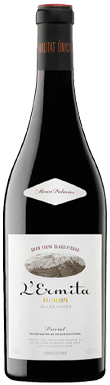

The aromas are delightfully floral, laden with redcurrants and tangerine peel, plus wild herbs and white flowers. Nothing is overdone here – it's so elegant....
2023
Álvaro PalaciosPriorat

Álvaro Palacios, Finca Dofí, Gratallops, Priorat, Catalonia, Spain, 2023
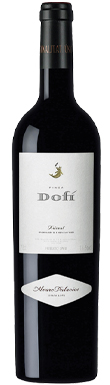
The nose delivers lively aromas of violets, redcurrants and wild herbs with a touch of mint. The palate is midweight, with the expected freshness of...
2023
Álvaro PalaciosPriorat
Álvaro Palacios, Quiñón de Valmira, Rioja, Oriental, Northern Spain, Spain, 2023
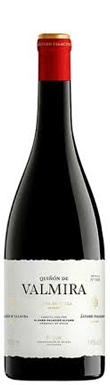
The wine that put Alfaro – and Rioja Oriental – on the map. A Garnacha with 15% of other traditional red varieties adding a unique...
2023
Álvaro PalaciosRioja
Descendientes de J Palacios, La Faraona, Corullón, Bierzo, Castilla y Léon, Spain, 2023
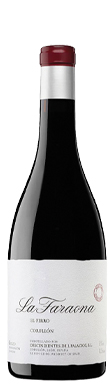
La Faraona is the highest vineyard on the estate, a distinctive sight on the slope viewed from the tasting room of the new winery. The...
2023
Descendientes de J PalaciosBierzo
Descendientes de J Palacios, Moncerbal, Corullón, Bierzo, Castilla y Léon, Spain, 2023
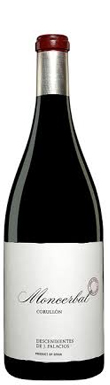
Delicately pale in colour, deliciously charming in aroma. The palate was remarkable: alight with vivid acidity, bright cherry and pomelo fruits, wrapped with notes of...
2023
Descendientes de J PalaciosBierzo
Palacios Remondo, Finca La Montesa, Rioja, Oriental, Northern Spain, Spain, 2021
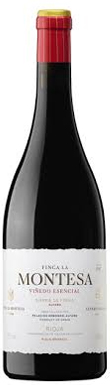
Sumptuous aromas of plump cherries, leading into equally succulent fruits on the palate. Fresh acidity arrives lightly, and then grows, leading to a long taut...
2021
Palacios RemondoRioja
Álvaro Palacios, Vi de Vila, Gratallops, Priorat, Catalonia, Spain, 2023
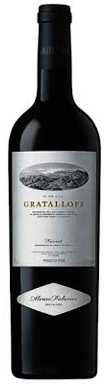
This wine may be pale, but don’t be deceived. It’s full of energy, packed with aromas of wild brambles and flowers and a gentle suggestion...
2023
Álvaro PalaciosPriorat
