Jefford on Monday: Languedoc-Roussillon’s eventful year


Andrew Jefford wades through the autumn deluges.
It was a sobering sight: flooded vineyards. Only fence posts and vine tops punctuated the water. My eyes sought a line of trees, marking the thread of an overflowing watercourse, but often there was none: the brown water stretched away aimlessly, apparently uncertain of where it had come from. There were other vineyards which looked like paddy fields; a third group was merely mud-filled, the wrecked rows and tangled vines seemingly pawed about by some playful giant.
Some 15 people lost their lives in the mid-October storms, which were caused (unusually: it was said to be the first incident of this sort in Languedoc since 1842) by the remnants of Hurricane Leslie becoming re-activated in the Western Mediterranean after its passage through Iberia.
Most Languedoc growers had harvested by then, but the restoration of the vineyards will in many cases be laborious and costly. Nor does this come at any easy time, in particular for IGP growers, since they had been the hardest hit by the equally unusual frosts of 2017.
Everywhere in Languedoc, meanwhile, growers have been struggling with the depradations caused by mildew in June 2018, in common with growers in Bordeaux and in the southern Rhône. ‘Nobody had ever seen that before here,’ said Brigitte Chevalier at Domaine de Cébène in Faugères.
‘Every two days we were having to do treatments which we’d normally do every two weeks.’ Mildew losses at La Pèira were 30%, according to technical director Audrey Bonnet-Koenig, while the 35% lost to mildew at Mas de Daumas Gassac, claimed Roman Guibert, had given 2018 a smaller crop still than the frost-affected 2017.
The consolation was that quality, after a warm summer, was excellent: ‘the best we’ve ever made,’ according to Nicolas Raffy at Mas Amiel.
That’s important: don’t let these recent events give you the wrong impression. Although prone to wild weather, particularly at the end of September and in October, Languedoc actually has one of the most regular and naturally propitious vineyard climates of any region I know – which is why, of course, it is such a significant vineyard region (around 235,000 ha in Languedoc, and a further 24,000 ha in Roussillon – more wine-producing vineyards than Australia and New Zealand combined).
It’s warm enough for productive regularity, but rarely too hot (40˚C heat spikes are rare), and the ample winter rain mean that most vineyards do not need irrigation. You can produce subtle, drinkable wine in huge quantities here, which is why Pays d’Oc accounts for 14% of all French wine on its own and 18% of French exports.
See also: How good is Languedoc rising star Terrasses du Larzac? Panel tasting results…
This has not passed unnoticed by the astute. We called in at the Lafite-owned Domaine d’Aussières in Corbières on our tour. I was astonished to hear that it will be making 2.5 million bottles of wine this year, both from its own vineyards and from bought fruit, all of which will go off round the world with the famous five arrows on the label. Harvest activities in the Aussières cellars were frenetic.
The biggest challenges for the Languedoc and for Roussillon, in my opinion, remain administrative and communicative.
The appellation system here has developed in an ad hoc manner, and continues to change and mutate on an annual basis. It is deeply confusing for consumers and doesn’t help the emblematic stars so badly needed by the region to emerge. Key appellations are not yet adequately distinguished from one another; indeed the whole region is still struggling to understand exactly what the nature of its potential might be, and this process, I suspect, will continue for decades yet.
Regulations regarding varieties have been prematurely written, and misguided exclusions made under pressure from other French wine regions. Languedoc’s white wine offer, for example, is going from strength to strength, yet many appellations don’t yet have a white-wine alternative to what the appellation rule-writers insisted must be a red-wine vocation. Those that do often specify a variety set which may not cover either historical varieties or recent arrivals.
A final challenge, one which principally affects tourism but which may have an impact on wine-production, too, is gastronomic: this region is France’s weakest. I don’t mean there’s a shortage of Michelin-starred restaurants (though they are thin on the ground, too), but basic standards of cooking, service and presentation in ordinary Languedoc restaurants are woefully adrift of most French regions, and notably feeble by comparison with those same standards in both Burgundy and Bordeaux (things are a little better in Roussillon, perhaps due to Catalan influences). There is a cross-fertilisation between fine cooking and fine wine: the two suckle each other. Languedoc’s wine offer would greatly benefit from a Languedoc gastronomic renaissance.
Tasting some Languedoc and Roussillon stars:
Here are notes on 10 of the best Languedoc-Roussillon wines tasted on this recent trip, while the autumn rain thrummed down outside.
You may also like:
Travel: Ten Languedoc wineries to visit
Mas de Daumas Gassac: Top reds from recent vintages
Mas Amiel, Origine, Côtes du Roussillon, Languedoc-Roussillon, France, 2015
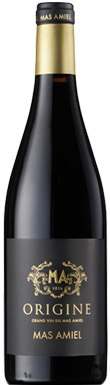

For Origine, Nicolas Raffy blends 100-year-old concrete-aged Grenache with 70-year-old Carignan and young Syrah. It’s a wine which certainly needs longer to evolve and unfold;...
2015
Mas AmielCôtes du Roussillon

Prieuré St Jean de Bébian, Blanc, Languedoc-Roussillon, France, 2017
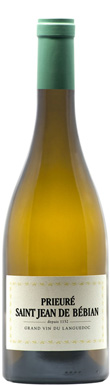
This barrel-fermented blend of 70% Roussanne, with Clairette and Grenache Blanc grown on limestone soils near Pézenas, does fit Languedoc AOC white regulations. There’s ample...
2017
Prieuré St Jean de Bébian
Domaine de Cébène, Felgaria (Magnum), Faugères, Languedoc-Roussillon, France, 2009
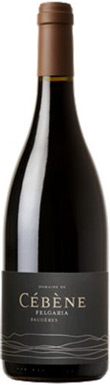
Brigitte Chevalier was kind enough to show us this older example of her Mourvèdre-rich cuvée Felgaria – served from magnum. Languedoc reds don’t always age...
2009
Domaine de CébèneFaugères
Domaine de l'Hortus, Grande Cuvée Blanc, Val de Montferrand, Languedoc-Roussillon, France, 2017
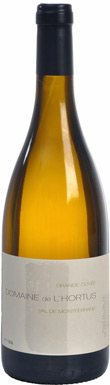
The Pic St-Loup AOP is, for the time being, only available for red wines – though the whites in this comparatively cool, moist zone of...
2017
Domaine de l'HortusVal de Montferrand
Mas Amiel, Altaïr, Côtes du Roussillon, Languedoc-Roussillon, France, 2014
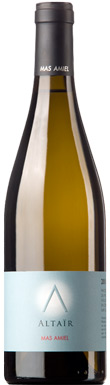
This delivers an almost shocking smack of terroir, though the Roussillon tradition means that its co-planted 70-year-old Grenache Gris, Grenache Blanc and Macabeu can be...
2014
Mas AmielCôtes du Roussillon
Mas Amiel, Légende, Maury Sec, Languedoc-Roussillon, France, 2016
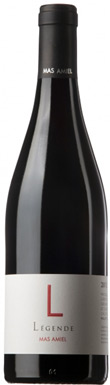
This wine is made from hundred-year-old Grenache with 20% Carignan, grown in decomposed calco-schist soils and aged in concrete alone. It has a fine aromatic...
2016
Mas AmielMaury Sec
La Pèira, Deusyls de La Pèira, Pays d'Hérault, Languedoc-Roussillon, France, 2017
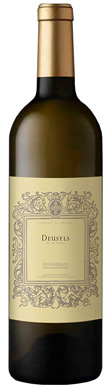
Lemon-gold colour in the glass. Gorgeous honeyed nuts and mature apple aromas. Continuing onto the palate, there’s a sour zing of apple acidity, as well...
2017
La PèiraPays d'Hérault
Mas Champart, Blanc, Pays d'Oc, Languedoc-Roussillon, France, 2017
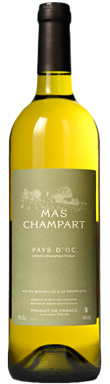
Yet another fine and fascinating white which the varietal constraints of its appellation (St Chinian in this case) forces into IGP status. This is a...
2017
Mas ChampartPays d'Oc
Château d’Anglès, Grand Vin Rouge, La Clape, Languedoc-Roussillon, France, 2015
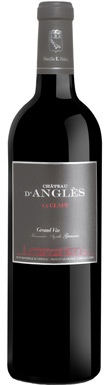
This Mourvèdre-rich blend is grown within sight of the glittering Mediterranean, which is exactly what this variety likes. The rest of the blend is made...
2015
Château d’AnglèsLa Clape
Domaine de Cébène, Les Bancels, Faugères, Languedoc-Roussillon, France, 2015
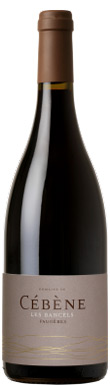
The blend in Brigitte Chevalier’s schist-grown Les Bancels (which means ‘the terraces’ in Occitan) is mainly Syrah with smaller quantities of Grenache and Mourvèdre, and...
2015
Domaine de CébèneFaugères
