Get our daily fine wine reviews, latest wine ratings, news and travel guides delivered straight to your inbox.
You are now subscribed
Your newsletter sign-up was successful
An account already exists for this email address, please log in.
How Château Cantemerle spread its wings once more
Over the past decade, a tidal wave of glow-up renovation has surged through Bordeaux, and now it’s washed over Château Cantemerle, one of the oldest estates on the Left Bank.
On a sunny April day, just before en primeur week, I stopped by to see the result.
What I found was the beginning of a new era for this fifth growth in the Haut-Médoc appellation south of Margaux. It’s a property reborn.
What a contrast to the Cantemerle I saw on my first visit to Bordeaux more than 40 years ago. Back then, the old cellar sported a dirt floor.
A few chickens pecked among the barrels. The grey-with-age limestone château and its ivy-covered tower seemed to echo a distant romantic past.
The cellarmaster dribbled wine from an ancient barrel in a smudged glass for me to taste, and later he proudly pulled out the château’s weather records, thick ledgers with tiny handwriting on yellowing paper.
The 20th century proprietors kept a meticulous log of temperatures, precipitation, and weather events, and today they’re a brilliant source for tracking climate change.
Back then, Cantemerle seemed ripe for rescuing. There was the size of the property, nearly 500 acres, a long, fascinating history, complete with medieval lords, 19th century awards in Paris, a visionary widow, and, of course, the gravelly terroir ideal for making great red wine.
Decanter newsletter
Get our daily fine wine reviews, latest wine ratings, news and travel guides delivered straight to your inbox.
Fast forward to its revival, which began with new ownership in 1981. The final part of the revamp was finished in time for the 2025 vintage, signalling a bright future for the wines, always at the top of the list of best value-for-money Bordeaux.
But on my visit, I learned there was much more.
A surprising history
Modern architecture at Château Cantemerle
(Image credit: Brice Braastad / Château Cantemerle)
Longevity testifies to tenacity and resilience, and Cantemerle’s origins go back to the 12th century, way before Bordeaux’s most famous châteaux in the Médoc were founded.
It started as a fort that acted as a toll point, and the first record of vines was in 1354, when lord Ponset de Cantemerle paid a debt with a barrel of wine.
One theory suggests the name comes from le merle y chante, the song of the blackbird.
Then came various owners, but its golden age was during the 300-year tenure of the Villeneuve-Durfort family, which took charge in 1579 and oversaw it until 1892. The château as we know it today was built after the French Revolution.
Most important to its legacy was feisty visionary widow Caroline Villeneuve de Durfort, whose husband died in 1834.
Though her son inherited, he was only 19, and responsibility for the estate initially fell to Caroline. Then her son died tragically young, and she was left completely in charge.
She modernised everything, from the château to the winemaking, and pioneered an innovative method for fighting mildew.
She successfully sued a neighbour for using the name Cantemerle to sell his wine, but her unique contribution was making sure the estate was included in the 1855 classification.
One of my favourite Bordeaux tales is how she accomplished it. The famous list was based on the sales prices that local courtiers recorded, and she had long sold all the wine in the Netherlands, finally switching to Bordeaux négociants in 1853 or 1854.
When she discovered Cantemerle hadn’t been included, she was furious, demanded a meeting with the deciding brokers and brought 40 years of sales receipts to prove Cantemerle’s wine prices were higher than a few other châteaux on the list. It was added as a fifth growth at the last minute.
Then came the devastation of phylloxera, with Cantemerle among the worst hit estates in the Médoc. The influential Dubos family stepped in, owned it for nearly a century, and restored its reputation.
But, weakened by World War II, it was eventually on the road to ruin.
A real fixer-upper
(Image credit: Brice Braastad / Château Cantemerle)
I’m a huge fan of comeback stories, and so, apparently, was Albert Parment, the head of mutual insurance company SMABTP.
A passionate Bordeaux aficionado, he saw run-down Cantemerle as a unique long-term investment opportunity and, in 1981, paid 25 million francs (the equivalent of nearly US$6m) for it.
SMABTP was the first major insurance company to acquire a Bordeaux vineyard, and Parment poured in millions more to restore it.
First up was replanting and expanding the vineyard, which had shrunk to just 20 hectares. The idea was to bring it back to the 100ha it was at the time of the 1855 classification, using Mexican workers imported from California.
But the replant also included a shift in varieties, doubling the amount of Cabernet Sauvignon to nearly 70% by grafting over much of the Cabernet Franc, a change that’s reflected in current vintages of the wine.
Another ambitious woman, Laure Canu, arrived from Château Angelus to oversee the final phase (which started in 2022) and chart Cantemerle’s future course.
The renovated château, its stone façade cleaned, impresses, but the innovations in the huge vat room and underground cellar stunned me, especially a ceiling crafted from the recycled staves of 600 old barrels.
The delicious 2025 wine owes its quality partly to the parcel-by-parcel viticulture and winemaking that’s now de rigueur in Bordeaux châteaux with new cellars.
The vast vat room holds 114 shiny, conical stainless-steel vats, so each plot can be vinified separately, while the latest satellite technology tracks individual vines.
On a wall monitor with an interactive vineyard map winemaker Gregory Thibault showed me how he can zero in on the state of each vine, giving him the ability to pick old and young vines in each micro-plot at exactly the right moment.
The design of it all is, of course, eco-conscious, like the geothermal loop system that powers water from a pond to the entire facility.
Nature and the oenotourism future
Laure Canu,
(Image credit: Brice Braastad / Château Cantemerle)
Even as drinking wine is declining, wine tourism is rapidly expanding, and SMABPT – and Laure Canu – saw the trend.
The atmosphere in the new wine bar and boutique, featuring wine pairings, the chateau’s honey, children’s colouring books, and more, reminded me of the latest tasting rooms in the Napa Valley.
Cantemerle goes further, opening its park and woodland to visitors for the first time, as have other huge Bordeaux properties such as Châteaux Giscours in Margaux and Olivier in Pessac-Léognan.
While wandering the shady winding paths of Cantemerle’s leafy park, designed in the 18th century, you get a sense of what biodiversity means: century-old trees, giant ferns, and about 160 species of plants and animals, including wild boar.
A wooden vat in the center of a labyrinth has been converted for observing wildlife. Hazelnut trees shelter ladybugs needed in the vineyard. There’s guided Japanese forest bathing, a floral cooking workshop, and, of course, you can picnic.
But what most fascinated me is their unique botanical project of collecting seeds from the estate’s plants, cultivating them, and then making space in the vineyard to replant them and create hedges and ‘ecological corridors’ connecting it to all those natural areas.
Spending a day at the revived Cantemerle is like immersing yourself in Bordeaux’s green future, discovering how important the ecosystem is to wine and people, while sipping great affordable wines that will only get better.
And there’s more to come. This year, Canu told me, they plan to graft over a hectare of vines to Sauvignon Blanc and Semillon.
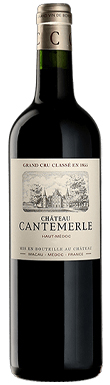
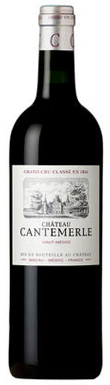
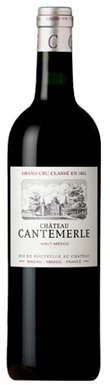
Château Cantemerle, Haut-Médoc, 5ème Cru Classé, Bordeaux, 2020
My wines
The pandemic vintage shows off Cantemerle’s typical savoury style. Floral, violet aromas and the taste of lush, ripe fruit combine with intense earth and sage...
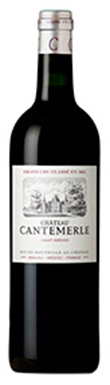
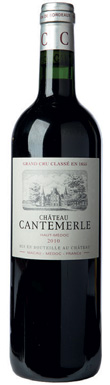
Château Cantemerle, Haut-Médoc, 5ème Cru Classé, 2019
My wines
The vintage sold at bargain prices en primeur because of the pandemic. Has a brilliant colour, balance and tension, and juicy charm combined with finesse....
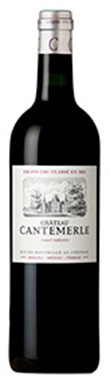
Château Cantemerle, Haut-Médoc, 5ème Cru Classé, 2017
My wines
A catastrophic late April frost, the worst since 1991, hit many parts of Bordeaux, including Cantemerle. Both Cabernet Franc and Merlot were affected; the blend...
Elin McCoy is an award-winning journalist and author, focusing on wine and spirits, based in New York. She is a regular Decanter contributor, as well as the wine and drinks columnist at Bloomberg News and the wine editor of ZesterDaily.com. A published author, she penned The Emperor of Wine: The Rise of Robert M. Parker, Jr. and the Reign of American Taste, and co-authored Thinking About Wine.