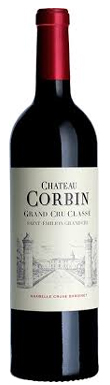
On a quiet road in St-Emilion, two tall stone pillars mark the entrance to small, idyllic, grand cru classé Château Corbin.
Turn in and follow the gravel drive lined with old horse-chestnut trees. You’ll come to an iron gate that opens to a courtyard and a white-shuttered 18th century château of cream-coloured stone, complete with romantic tower.
Outbuildings on either side hold the vat cellar and the office; the surround is well-tended Merlot and Cabernet Franc vines, the main grapes of St-Emilion.
This elegant property is one of my favourites in Bordeaux. Unlike the left bank’s grand, imposing châteaux with shiny new chais designed by famous architects, Corbin feels intimate, charming, jewel-like.
You fantasise about living there. And it has a tradition of being run by talented women.
The latest is Anabelle Cruse-Bardinet, who took over in 1999, and did that year’s harvest with a baby in her arms, she tells me as we tour the vines and cellar.
Now she’s wearing fashionable black sunglasses and boots, black slacks, and a man’s Rolex.
Decanter newsletter
Get our daily fine wine reviews, latest wine ratings, news and travel guides delivered straight to your inbox.
Since just before the 21st century began, she’s been revamping this beautiful estate and perfecting its wines.
As she began, a Right Bank group of rebels called garagistes dominated the conversation in St-Emilion with their controversial, flamboyant, oaky reds that achieved cult status thanks to the enthusiasm of critic Robert Parker.
But Cruse-Bardinet’s goal from the beginning was different: to hone a wine style that’s all about elegance, purity, and Corbin’s terroir. And her recent vintages are the best yet.
A long history, and trailblazing women
(Image credit: Château Corbin)
In the 13th century, Corbin’s land was the central part of a large fiefdom belonging to local lord Arnaud de Corbin.
One later owner, it’s believed, was the son of King Edward III of England, known as the Black Prince who was, for a short while, direct ruler of Gascony and lived in Bordeaux.
Time saw the eventual breakup of the huge property. A map dating to 1811 shows five châteaux that include ‘Corbin’ as part of their names, but Château Corbin is the original one.
By the 19thth century Corbin belonged to négociant Jean Chaperon-Grangère, mayor of Libourne, and his death started a tradition of women managing the estate, his widow Marguerite taking charge from 1832 to 1845.
Jean-Paul Chaperon, the distant cousin who inherited next, combined Corbin with neighbouring Château Jean Faure for some 50 years.
Cruse-Bardinet’s great grandparents, négociant Joseph Guiraud and his wife Yvonne, who bought Corbin in 1924 ushered in a new era.
During the Second World War, their daughter, Marie Joseph, took over when her husband was made a prisoner of war. She was the second woman to run the estate.
Later, her parents purchased Chateau Certan-Guiraud in Pomerol, which also came under her purview and she ran both for decades.
And when the St-Emilion classification system was established in 1955, Corbin was ranked grand cru classé. Her eventual consultant? Michel Rolland.
Anabelle, born in 1967, is the third woman to shape the estate’s fortunes. You could say that winemaking and Corbin were her destiny.
She’s a member of the Cruse family – her cousin is Emmanuel Cruse of Château d’Issan – major players in the Bordeaux wine trade for seven generations.
She grew up at Château Laujac, a 400-hectare estate in the north Médoc where her winemaking father farmed a 70 hectare vineyard and managed a herd of 500 cows.
But during her childhood she also spent a month each year during harvest at Corbin, owned by her mother’s family.
‘It was more important than school,’ she says. ‘A retired teacher came to the château to teach us every day after we picked grapes.’
Corbin's call
Anabelle Cruse-Bardinet
(Image credit: Château Corbin)
Cruse-Bardinet’s first job after studying oenology at University of Bordeaux was at Château Branaire-Ducru, and she worked in California at Sterling Vineyards, and for several years at Laujac.
But her grandmother, who wanted her to take over Corbin, frequently requested her help, and eventually the estate’s charm seduced her.
As in so many Bordeaux wine families, a tangle of family ownership conflicts reigned for many years.
The fighting was resolved in 1999, when one part of the family took control of Certan-Guiraud and sold to Christian Moueix, who renamed it Hosanna.
Cruse-Bardinet, her sisters, and grandmother retained Corbin until 2007, when Cruse Bardinet and her husband Sebastien were able take complete ownership.
The rise of women was just beginning in Bordeaux when she took on the winemaking role at Corbin.
The challenges required immediate judgment and investment. Luckily, she jokes, her parents educated her on the value of work.
The vineyard, which surrounds the château, wasn’t in bad shape, but needed a new drainage system.
Revamping the estate
(Image credit: Château Corbin)
Lying on the border of Pomerol, the terroir is completely different from the famous limestone plateau surrounding St-Emilion village.
The six hectares on the Pomerol side of the vineyard are clay; the other seven hectares are ancient sandy gravel over an iron-rich clay subsoil.
A study of the terroir pointed to new rootstocks, clones, and replacing the vines in many plots.
There was no crush pad for the picked grapes. They lacked a sorting table and decent crusher and had to upgrade the cellar with new temperature-controlled vats.
The château itself hadn’t been lived in for years and required renovation. Michel Rolland’s consulting team helped advise on vinification.
The wines improved quickly, and the 2009 hit the jackpot, with international praise for its deep, ripe, generous fruit, sumptuous texture and oh-so-reasonable price.
A few years later came an office rebuild and space for visitors, and eventually a new vat room, finished just in time for the great 2016 vintage. Finally, everything was complete.
Or so she thought.
2017: The turning point
(Image credit: Château Corbin)
At the end of April in 2017, a severe frost wiped out Corbin’s crop. Cruse-Bardinet says she felt like she was as dead as the vineyard. But gradually she saw the year with no wine as an opportunity to rethink everything she had been doing.
‘We will never fight against mother nature,’ she says. ‘Adapting to what she gives means changing the way we make wine.’
In other words, a style revolution.
The first thing was to recognise you couldn’t just follow traditional production rules. In 2018, she brought in a new cellar master, and started picking earlier, plot by plot.
‘Even a day can make all the difference,’ she says. Using plot by plot vinification, she favoured infusion rather than pump overs for less extraction.
Having sold the barrels intended for the 2017 vintage, she bought fewer, using only 50% new and discovered the richness of her wine in those not aged in new oak.
In 2019, she tried glass wine globes, a round-shaped glass vessel, for ageing the Cabernet Franc to showcase the Corbin terroir and bring out more pure fruit flavours.
In 2020, she started fermenting without sulfur and expanded wine globe experiments. In 2021, she added densimetric sorting, a way to move grapes through water and select only those with greater density. In the vineyard she switched to only organic products.
And she enlisted a new consultant, rising star Thomas Duclos of Oenoteam, noted for helping châteaux find a fresher, more balanced, nuanced wine style.
‘I’m on the way of Corbin and its terroir now,’ she says. ‘Finally, the wine and estate are what I want. And now my aim is to transmit all this to the future.’
Château Corbin at a glance
Managing director and winemaker: Anabelle Cruse Bardinet
Location: Northwest St-Emilion, on the Corbin plateau bordering Pomerol
Classification: Grand Cru Classé (since 1955)
Vineyard area: 13 ha (32 acres)
Soils: Deep clay in one block and ancient sands over iron-rich clay subsoil in another.
Grapes planted: 83% Merlot, 17% Cabernet Franc
Wines: Château Corbin; second wine Divin de Corbin in some years
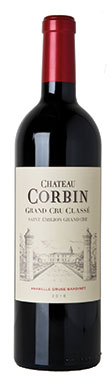
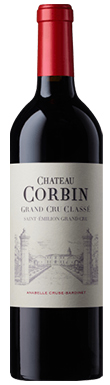
Château Corbin, St-Émilion, Grand Cru Classé, Bordeaux, 2021
My wines
The first vintage with Thomas Duclos as consultant wasn't an easy vintage, but densimetric sorting helped. This is medium-bodied, supple and charming, with lovely juicy...
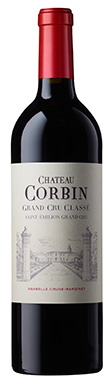
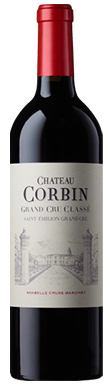
Château Corbin, St-Emilion, Grand Cru Classé, Bordeaux, France 2022
My wines
This hot, dry vintage resulted in a sophisticated, elegant, yet powerful Corbin. It's loaded with captivating floral aromas of violets, licorice, bay leaf and a...
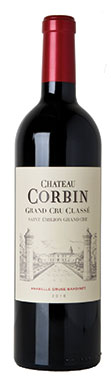
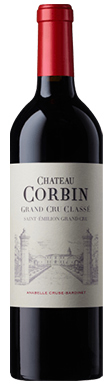
Château Corbin, St-Émilion, Grand Cru Classé, Bordeaux, France 2023
My wines
One of the top wines among St-Emilion Grands Crus. Harvest was 7-26 September. The wine brims with raspberry fruit and textbook cassis flavour and aromas,...
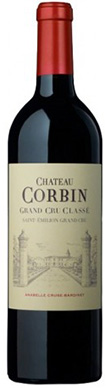
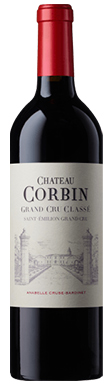
Château Corbin, St-Emilion, Grand Cru Classé, Bordeaux, France 2024
My wines
Another success in a hugely difficult vintage, it has high energy, good structure, enticing fruit, a lovely finish and surprising richness for the year. Yields...
Elin McCoy is an award-winning journalist and author, focusing on wine and spirits, based in New York. She is a regular Decanter contributor, as well as the wine and drinks columnist at Bloomberg News and the wine editor of ZesterDaily.com. A published author, she penned The Emperor of Wine: The Rise of Robert M. Parker, Jr. and the Reign of American Taste, and co-authored Thinking About Wine.