Get our daily fine wine reviews, latest wine ratings, news and travel guides delivered straight to your inbox.
You are now subscribed
Your newsletter sign-up was successful
An account already exists for this email address, please log in.
The Third Growths: Reviewed, reappraised, reclassified
The great value offered by several of the Médoc third growth estates has inspired our expert to propose a complete revision of this middle tier of Bordeaux’s 1855 Classification – he explains why, and where to find the current best buys.
Overshadowed by the first and second growths, the Médoc’s third growth estates are quietly undergoing one of Bordeaux’s most compelling qualitative evolutions – often delivering second growth-level quality but at more approachable prices.
Ironically, the catalyst may be the very classification that’s considered by many as obsolete.
With two notable exceptions, the third growths occupy an uneasy position within the Médoc hierarchy, neither rivalling the established aristocracy of the firsts or ‘super seconds’ (those second growths widely considered now to be performing at potentially first growth standard), nor having their status challenged by any glaringly insurgent success stories emerging from the fifth growths, whose own stars regularly defy official ranking.
Fifths such as Châteaux Pontet-Canet and Lynch-Bages now regularly command secondgrowth pricing, for example.
The 1855 Classification, in other words, has long ceased to function as an immutable ladder of quality.
Instead, the third growths exist in a zone defined less by hierarchy and more by expectation: dependable, historically respected, yet less often thrilling.
But a recent comparative tasting shows how that perception is changing.
Decanter newsletter
Get our daily fine wine reviews, latest wine ratings, news and travel guides delivered straight to your inbox.
Natural progression
Line-up of the thirds growth wines at the tasting held at Maison Héritage restaurant in Sessenheim, Alsace
(Image credit: Anete Germane)
For this article, the Maison Héritage restaurant in Sessenheim, Alsace (formerly known as Auberge au Boeuf, holder of a Michelin star from 2015 until early 2026) hosted a horizontal tasting of all 14 Médoc third growths from the 2020 vintage.
Unsurprisingly, Châteaux Palmer and Calon Ségur emerged as clearly the leading wines. More revealing was how the remaining 12 compared.
Pricing data from Liv-ex, a global marketplace for the trade, show that, aside from Palmer and the rapidly ascending Calon Ségur, these estates have traded within a significantly lower band of pricing for roughly a quarter of a century.
Qualitatively, however, divergence has become increasingly apparent. As you can read in the tasting notes, each wine was paired with an older reference vintage, to gauge not only stylistic identity but tangible progress.
Improvements in viticulture, investment in wineries and increasingly precise winemaking have begun to reshape the third growth category from within.
Hive of activity
Tanks at Château Cantenac Brown’s new cellars in Margaux
(Image credit: Luc Boegly)
The framework defining these estates remains frozen in time. Conceived for Napoleon III’s Exposition Universelle de 1855 in Paris, the Classification still governs perception despite more than 170 years of transformation.
Of the 14 third growths, 13 continue to display their classified status prominently on labels, serving as both historical credential and commercial shorthand.
Only Château Palmer declines to display the distinction.
The irony is in the history. Charles Palmer was still assembling vineyards in Cantenac shortly before the 1855 Classification was finalised, meaning the estate that today rivals Bordeaux’s elite had not yet fully taken shape when the rankings were fixed.
Palmer’s third growth status reflects timing rather than intrinsic quality – a discrepancy long since corrected by the market.
Leaps and bounds
Matthieu Bordes of Château Lagrange
(Image credit: Château Lagrange)
If the Classification no longer accurately describes a hierarchy, it continues nonetheless to shape behaviour.
Over the past two decades, that influence has produced something unexpected: competition within the Classification itself.
Across the Médoc region, vineyard restructuring, sustainability initiatives and increasingly refined cellar practices have collectively raised standards.
In St-Julien, Château Lagrange illustrates how long-term investment can quietly bolster stature.
A complete cellar modernisation completed in 2010 nearly doubled fermentation capacity, enabling precise parcel-by-parcel vinification.
Château Langoa Barton, long overshadowed by second growth Léoville Barton, has refined its approach steadily over the past 15 years through careful replanting and increasingly precise gravity-fed vinification, improving tannin quality while preserving its own style of St-Julien restraint.
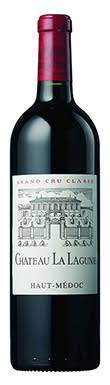
Château La Lagune, the only Haut-Médoc appellation wine among the third growths, reflects the long-term influence of Caroline Frey, whose tenure from 2004 to 2025 (now managed by sister Delphine Frey) saw conversion to certified biodynamic winemaking alongside the introduction of massal selection (by taking cuttings from existing estate vine stocks) starting in 2008, strengthening vineyard identity and resilience.
Rising tide of quality
Château d'Issan
(Image credit: Agence Odds)
Including Palmer, 10 of the 14 third growths come from the Margaux appellation, some better known than others.
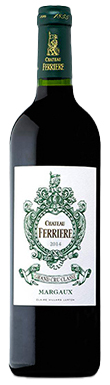
Château Ferrière, which impressed many tasting participants (some of whom had never heard of it) continues to pursue certified biodynamic viticulture following cellar renovations in 2013 that have enhanced precision and transparency in winemaking.
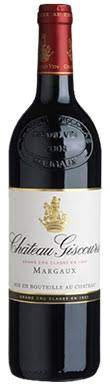
Better-known Château Giscours has sustained technical stewardship and, especially since the beginning of this century, it has transformed former inconsistency into one of Margaux’s most compelling contemporary expressions, combining aromatic finesse with structural confidence.
Château Cantenac Brown has entered a new phase of refinement, with 9.5ha of newly acquired vineyard parcels in 2020, additions that contribute greater depth and compositional precision, as well as the installation of completely new cellars, inaugurated in April 2024 (first vintage 2023).
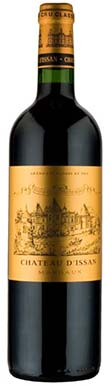
Château d’Issan, known for its parcel-by-parcel winemaking and one of the most appreciated wines in the tasting, also acquired vineyard parcels in 2020, bordering Château Margaux, adding Malbec and Petit Verdot as blending options since that vintage.
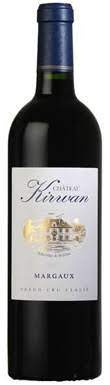
At Château Kirwan, a decisive stylistic shift endures, following the arrival of general manager Philippe Delfaut in 2007.
Moving away from later harvesting and heavy oak influence, the estate adopted softer extractions and a more classical expression, consolidated by new cellars opened in 2017 enabling parcel-by-parcel vinification.
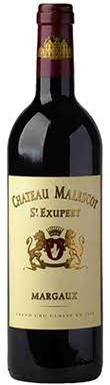
Château Malescot St-Exupéry retains a richer, more modern Margaux expression shaped with late consultant Michel Rolland, although the wood regime here seems to evolve toward greater balance, with new oak usage reduced in recent vintages.
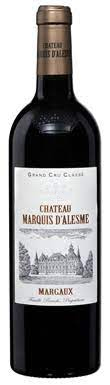
Château Marquis d’Alesme shows renewal through both technical and experiential investment.
Cellar renovations completed in 2015 improved vinification precision, while increased Cabernet Sauvignon plantings and the creation of Le Hameau, a tucked-away space for food accompanied by the estate’s wines, have positioned Marquis d’Alesme as an innovator in wine tourism within Margaux.
Unequal progress
Château Calon Ségur general manager and winemaker Vincent Millet
(Image credit: Luke Carver for Decanter)
Not all estates have advanced equally.
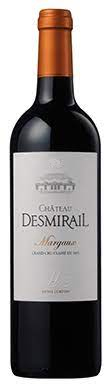
Aside from increasing percentages of Petit Verdot in recent blends, Château Boyd-Cantenac remains austere, while Château Desmirail, another less well-known estate, appears only recently to be translating technical evolution into qualitative momentum.
The inclusion of Petit Verdot from mature vines, advances in pragmatic ecological vineyard management and the addition of truncated wooden vats have allowed more refined maceration and improved structural polish.
Such disparities underline a central paradox: the Classification groups estates together, while modern viticulture increasingly separates them.
Above this transforming field stands Château Palmer, not a static exception but rather a moving benchmark.
Under director Thomas Duroux, biodynamic viticulture, rigorous parcel selection and tasting-led extraction have progressively refined texture and transparency, allowing the estate to redefine excellence within this Classification rank.
Château Calon Ségur represents a different, still unfolding ascent.
Extensive replanting since the mid-2000s has left the vineyard unusually young, yet increases in both vine density and the proportion of Cabernet Sauvignon in the vineyard promise further gains in structure and precision.
Recent vintages, including the 2020, already perform convincingly up against second growth-level wines.
Inspiring to improve
(Image credit: Eloise Vene)
Which brings us inevitably to the enduring question: is the 1855 Classification obsolete?
Undeniably so, if judged as a hierarchy intended to reflect today’s realities. Yet its continued existence has produced a fascinating irony.
Unable to change their historical rank, estates have instead worked to be deserving of it.
Many of the third growths, positioned at the centre of Bordeaux’s most famous classification, consequently now count among the Médoc’s most dynamic properties.
The 1855 Classification may no longer precisely determine quality, but the desire not to fall short of its rankings continues to drive producers’ ambition.
In Bordeaux, history rarely disappears. Sometimes, inconveniently yet effectively, it contrives to keep everyone on their toes.
Médoc third growths: The Panos Kakaviatos (PK) revised ranking
If the 1855 Médoc Classification of grand cru classé estates were revised today, the following are my hypothetical rankings, based on current quality, market perception and qualitative evolution of each estate – listed in their proposed ‘new’ order, and alphabetically within that.
Tasting notes and pricing shown here (average price before tax as shown on wine-searcher.com on 12 April 2026) use the 2020 vintage as a benchmark; pricing among the Médoc third growths reveals how the existing 1855 hierarchy can still dictate market positioning, albeit not always in step with relative quality.
Châteaux Palmer and Calon Ségur are both priced in clear recognition of top performance in 2020.
Then there is the cluster of 12 other current third growths, though not all are equal in quality – in reinterpreting the rankings today, I would create a category similar to the ‘super seconds’, or in this case the ‘thrilling thirds’.
This is to reflect the reality that estates such as Cantenac Brown, d’Issan, Giscours, Lagrange and Langoa Barton are delivering relatively higher quality than the others, at prices that have not yet fully caught up.
By contrast, wines such as Château Desmirail and Boyd-Cantenac appear less compelling in value terms, relative to their peers.
The 1855 Classification appears on all their labels, other than Palmer, but the degree to which the Classification still anchors price, regardless of progress in viticulture and winemaking, creates striking disparities in value within the category.
Revised third growth key
First growth = elite performer
Second growth = rivals current higher ranks
Thrilling third = exceeds typical third growth standard
No change = correct at current level
Fourth/Fifth growth = needs more momentum (not official; illustrates value potential)
Château Palmer
(Image credit: Olivier Metzger)
Margaux
PK revised ranking: First growth
Directed by Thomas Duroux, Palmer cultivates 66ha under certified biodynamic management, combining meticulous parcel stewardship with advanced research into climate resilience and vineyard adaptation.
Technical expertise underpins precise extraction and ageing, with wines maturing 20-22 months in 50%-70% new oak.
The inauguration of the estate’s Village complex in 2025, including staff facilities and a restaurant, reflects Palmer’s commitment to collective identity, sustainability and long-term cultural as well as technical leadership.
Average bottle price: £243*
Château Calon Ségur
St-Estèphe
PK revised ranking: Second growth
Directed by Vincent Millet, Calon Ségur cultivates a largely unchanged 55ha vineyard representing one of the Médoc’s rare historical continuities.
Cabernet Sauvignon accounts for roughly 57% of plantings here, with restructuring underway to increase its proportion. Ageing extends 18-20 months in new oak.
Average bottle price: £88*
Château Cantenac Brown
Margaux
PK revised ranking: Thrilling third
Under director José Sanfins, this 75ha estate is planted largely to Cabernet Sauvignon.
Since new ownership in 2019, vineyard acquisitions together with major investment – notably an eco-designed gravity winery first used for the 2023 vintage – have strengthened precision and estate coherence.
Wines mature for 16-18 months in about 60% new oak.
Average bottle price: £42*
Château d’Issan
Vineyards at Château d'Issan
(Image credit: Agence Odds)
Margaux
PK revised ranking: Thrilling third
Jointly owned by Jacky Lorenzetti and Emmanuel Cruse, d’Issan cultivates 55ha under technical director Eric Pellon.
Careful parcel-by-parcel selection and vinification, reinforced by recent vineyard acquisitions, enhance precision and integration across the estate.
Wines age for about 18 months in 50% new oak.
Average bottle price: £45*
Château Giscours
Margaux
PK revised ranking: Thrilling third
Led by general manager Alexander van Beek, Giscours cultivates 100ha planted predominantly to Cabernet Sauvignon.
Continued refinement in both vineyard and cellar has reinforced consistency and precision across vintages.
Ageing lasts up to 21 months in around 50% new oak.
Average bottle price: £47*
Château Lagrange
St-Julien
PK revised ranking: Thrilling third
Directed by Matthieu Bordes, Lagrange cultivates an unusually continuous 118ha estate dating back to 1855.
A major cellar expansion completed in 2010, which effectively doubled vat capacity, allows extensive parcel-by-parcel vinification and enhanced precision.
Wines age up to 21 months in roughly 50% new oak.
Average bottle price: £38*
Château Langoa Barton
(Image credit: Château Langoa Barton)
St-Julien
PK revised ranking: Thrilling third
Managed by Damien Barton Sartorius, Langoa Barton cultivates 20ha reflecting a classical St-Julien balance rooted in long family stewardship.
Recent investment has improved parcel precision while preserving traditional proportions.
Wines are aged about 18 months in 60% new oak.
Average bottle price: £36*
Château Ferrière
Margaux
PK revised ranking: No change
Owned and directed by Claire Villars-Lurton, Ferrière cultivates 24ha under certified organic and biodynamic management.
Old massal-selection vines contribute finesse and aromatic precision, reflecting a philosophy centred on terroir expression.
Wines age 16-18 months in roughly 40% new oak.
Average bottle price: £33*
Château Kirwan
Margaux
PK revised ranking: No change
Directed by Philippe Delfaut, Kirwan cultivates 37ha with an emphasis on gentler extraction and greater terroir clarity following stylistic evolution initiated in the late 2000s.
Modern cellars enable detailed parcel by parcel vinification, with ageing lasting 18-21 months in about 50% new oak.
Average bottle price: £40*
(Image credit: Château Kirwan)
Château La Lagune
Haut-Médoc
PK revised ranking: No change
Long guided by Caroline Frey and now managed by her sister Delphine Frey, La Lagune cultivates approximately 80ha planted to Cabernet Sauvignon, Merlot and Petit Verdot.
Biodynamic certification achieved in 2021 reflects sustained attention to vineyard vitality.
Wines age 16-18 months in around 50% new oak.
Average bottle price: £34*
Château Malescot St-Exupéry
Margaux
PK revised ranking: No change
Owned by Jean-Luc Zuger and guided for almost three decades by the recently late consultant Michel Rolland, this 28ha estate cultivates Cabernet Sauvignon and Merlot alongside smaller proportions of Cabernet Franc and Petit Verdot.
A gradual reduction in new oak seeks greater freshness within the estate’s historically opulent style.
Ageing lasts 16-18 months.
Average bottle price: £39*
Château Marquis d’Alesme
(Image credit: Rachel Smuin)
Margaux
PK revised ranking: No change
Acquired by Hubert Perrodo in 2006 and subsequently developed under the leadership of his daughter Nathalie Perrodo, this 14ha estate has undergone extensive renovation since 2015, improving vineyard precision and balance.
Wines age 16-18 months in about 50% new oak.
Average bottle price: £36*
Château Desmirail
Margaux
PK revised ranking: Fourth growth
Now directed by Thierry Lurton, Desmirail cultivates 35ha combining Cabernet Sauvignon and Merlot with increasing Petit Verdot influence.
Expanded vineyard holdings and updated cellar facilities allow more detailed parcel vinification.
Wines age 16-18 months in about 50% new oak.
Average bottle price: £31*
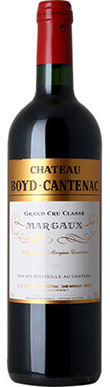
Château Boyd-Cantenac
Margaux
PK revised ranking: Fifth growth
Owned by Lucien Guillemet, this 17ha Margaux estate cultivates predominantly Cabernet Sauvignon alongside Merlot, Cabernet Franc and increasing Petit Verdot proportions intended to reinforce structure and freshness.
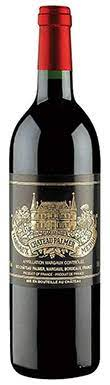
Château Palmer, Margaux, 3ème Cru Classé, Bordeaux, France 2020
My wines
A wine that impressed all tasters for its transcendental depth and precision. Of course, with its ripe fruit and many lovely aromas, including floral and...
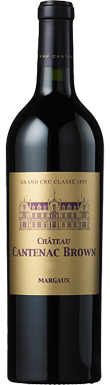
Château Cantenac Brown, Margaux, 3ème Cru Classé, Bordeaux, France 2020
My wines
Precise floral, cool blue fruit and pencil lead aromas presage tannic intensity but also elegance. While other third growths showed more breadth, this wine evinces...
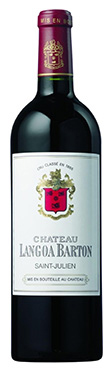
Château Langoa Barton, St-Julien, 3ème Cru Classé, Bordeaux, France 2020
My wines
Subtle oyster shell and cassis aromas lead into an excellent medium-bodied wine with refinement and finesse of tannin. It has juicy mid-palate fruit elegance and...
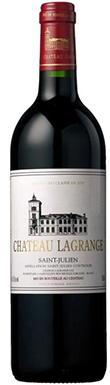
Château Lagrange, St-Julien, 3ème Cru Classé, Bordeaux, France 2020
My wines
Wonderfully ripe, and intense, expressions of black and red berry fruit presage a wine with tannic finesse (and edge) for longer-term cellaring. All tasting participants,...
Château Giscours, Margaux, 3ème Cru Classé, Bordeaux, France 2020
My wines
With a combination of finesse, depth and body, this wine impresses with smooth delivery and finesse – and shows how more precise viticulture and winemaking...
Château d'Issan, Margaux, 3ème Cru Classé, Bordeaux, France 2020
My wines
Vividly floral aromas express Margaux charm. Although somewhat closed – it showed tightened tannins when tasted on day two – the wine exudes refinement, ripe...
Château Marquis d'Alesme, Margaux, 3ème Cru Classé, Bordeaux, France 2020
My wines
A fresh, expressive nose marked by delicate floral aromas and subtle vanilla invites the wine to unfold gradually in the glass. A refined and supple...
Château Ferrière, Margaux, 3ème Cru Classé, Bordeaux, France 2020
My wines
Minty-fresh, fruit and floral aromas prelude a solid wine with bright fruit and refined tannin, although notable tightness – even after double decanting – revealed...
Château Malescot St Exupéry, Margaux, 3ème Cru Classé, Bordeaux, 2020
My wines
Broad on the palate, not linear, this 2020 divided opinions as some tasters felt it was excessively extracted, while others appreciated the evident richness. A...
Château Kirwan, Margaux, 3ème Cru Classé, Bordeaux, France 2020
My wines
A wine that shows more finesse of tannin and focus than the 2006 tasted alongside, since the older vintage denotes a more Merlot-driven, oak extraction...
Château Desmirail, Margaux, 3ème Cru Classé, Bordeaux, France 2020
My wines
Engaging blackberry and plum fruit aromatics presage mid-palate juiciness, but the finish dries out a bit. The 2020 marks a step forward from the 2006...
Château Boyd-Cantenac, Margaux, 3ème Cru Classé, Bordeaux, France 2020
My wines
Meadow-like aromatic freshness, cassis and touches of vanilla charm the palate. Tasted over a two-day period, I couldn't shake a sense of rigid, slightly raw...
Decanter Magazine, Wine Writer and DWWA Judge 2019
Panos Kakaviatos has been a published wine writer since 2001, writing in internationally recognized media including Decanter, but also Harpers Wine & Spirit, Meiningers Wine Business International and The World of Fine Wine.