Parallel vines: Cabernet Franc stars across Ontario and New York State
A border may separate Canada and the United States, but Cabernet Franc doesn’t seem to mind. Here are 12 top examples that illustrate each region’s character.
At approximately 43°N, Ontario’s Niagara Peninsula sits on a parallel remarkably close to New York’s Finger Lakes, at roughly 42°N.
These two regions are neighbours in an eastern corridor of cool-climate viticultural areas, linked by water from the Great Lakes to the Finger Lakes, Hudson River and Atlantic Ocean.
Follow that arc from Ontario’s Lake Erie North Shore, Niagara Peninsula and Prince Edward County to New York’s Finger Lakes, Hudson River Region and Long Island, and a compelling story emerges.
Across this interconnected landscape, producers are giving Cabernet Franc an increasingly important role, moving it from a traditional blending partner to a wine that, on its own, can offer a captivating expression of place.
‘For years, Cabernet Franc was the grape we blended away. Now it’s the one we’re most excited to bottle on its own,’ said Gabriella Macari MW, a co-founder of Cab Franc Forward, a producer-led movement to champion the grape.
‘Sommeliers and red wine lovers are discovering its charm and its range, from bright and perfumed to serious and ageworthy.’
Cabernet Franc by way of water
Seneca Lake, the largest and deepest of New York’s glacial Finger Lakes, moderates the temperatures of the region, which can get quite cold in winter.
Long associated with Cabernet Sauvignon and Merlot in Bordeaux-inspired blends, Cabernet Franc has often played a supporting role to its more famous offspring. Yet it is also one of Cabernet Sauvignon’s parents.
Get our daily fine wine reviews, latest wine ratings, news and travel guides delivered straight to your inbox.
Across this cool-climate corridor, it is increasingly stepping out of that shadow, asserting its own identity.
That personality is expressed through incredible range. Cabernet Franc gives winemakers room for interpretation, producing wines that can be light and fragrant or deeper and more structured.
In its finest expressions, the variety shows a common thread of vibrant flavours, freshness and finesse, while remaining unmistakably Cabernet Franc across very different sites.
Water is one of the defining threads connecting this eastern wine corridor. The Great Lakes, Finger Lakes, Hudson River and Atlantic Ocean moderate temperature extremes and extend growing seasons even while the varied soils, topography, exposure and vineyard decisions create distinct expressions from one region to the next.
Canada
Niagara Peninsula: Freshness and Structure
Winegrowers in the Niagara Peninsula and other regions along the Canadian sides of Lake Erie and Lake Ontario count Cabernet Franc among their leading red varieties.
The Niagara Peninsula is at the centre of Ontario’s Cabernet Franc story. The variety is Ontario’s most planted red grape, with approximately 1,400 acres (567ha) under vine across the province’s three primary appellations.
While smaller plantings exist in Lake Erie North Shore and Prince Edward County, Niagara accounts for the vast majority.
Niagara’s diversity of soils and mesoclimates allows the variety to move across a broad stylistic spectrum.
Cooler sites produce wines marked by bright red fruit, herbs and vibrant acidity, while warmer sites and favourable vintages can deliver darker fruit, greater concentration and more substantial structure.
At its best, Niagara Cabernet Franc occupies an intriguing space between Loire freshness and Bordeaux structure: aromatic and savoury, yet capable of depth, texture and ageability.
Its versatility here extends well beyond still red wines. Cabernet Franc remains an important component of blends, while producers also use it for icewine and in a few examples of traditional-method Blanc de Noirs sparkling wine.
For Thirty Bench Wine Makers in Beamsville Bench, that combination is central to the variety’s appeal.
‘Cabernet Franc has so much personality. When managed well in the vineyard, it can truly demonstrate both the vintage and the region in which it is grown,’ says head winemaker, Emma Garner. ‘In Ontario, it can achieve optimal ripeness while retaining vibrant acidity, with rich, velvety tannins and the structure to age.’
Increasingly, producers see Cabernet Franc as one of the grapes best suited to express Niagara terroir.
Beyond Niagara
Ontario’s other two wine regions demonstrate just how dramatically Cabernet Franc can change with climate and site.
East of Niagara, on the north side of Lake Ontario, Prince Edward County offers a cooler, more tension-driven expression.
Its limestone-rich soils and marginal growing conditions favour wines defined by freshness, mineral character, floral aromatics and savoury complexity.
At the opposite end of Ontario’s spectrum, Lake Erie North Shore benefits from greater heat accumulation and a longer growing season.
Its warmer conditions can produce richer, more fruit-driven Cabernet Franc, with darker fruit, fuller texture and greater concentration.
United States
Finger Lakes: Precision and Purity
Hermann J. Wiemer, one of the Finger Lakes’ leading producers, makes single-site Cabernet Franc from its Magdalena Vineyard.
South of Lake Ontario, in New York, the Finger Lakes provide another major anchor for Cabernet Franc. It is the state’s most planted red vinifera variety, with an estimated 638 acres (258ha) across the state’s wine regions.
Its growing importance helped inspire the Cab Franc Forward collective, which is positioning Cabernet Franc as New York’s flagship red grape.
The Finger Lakes region has the state’s largest concentration of plantings. Its deep glacial lakes moderate temperatures and help create a long, slow growing season while preserving acidity.
This produces a compelling style of Cabernet Franc that combines red and dark berries with herbs, spice, floral character and fine tannins. The style has a Loire-like sensibility, but the wines remain distinctly rooted in the Finger Lakes.
The team at Forge Cellars has increasingly explored Cabernet Franc through individual vineyard bottlings.
‘Cabernet Franc gives us a particularly clear expression of our region,’ says managing partner, Rick Rainey.
‘We’re still learning what the Finger Lakes can do, and that exploration is what makes it so exciting. As we work with different vineyards, we’re increasingly interested in how Cabernet Franc can express the character of each site without imposing a regional identity.’
The appeal of Finger Lakes Cabernet Franc is its precision. These are wines that can be elegant without being slight, revealing layers gradually while maintaining verve and freshness.
Long Island and the Hudson River Region
Beyond the Finger Lakes, New York offers two other distinctive interpretations of Cabernet Franc.
Long Island, shaped by the Atlantic Ocean and Long Island Sound, produces a more maritime style, with darker fruit, supple tannins and greater texture balanced by freshness.
The Hudson River Region has very few plantings but is increasingly interesting, with the river moderating the climate.
Cabernet Franc’s winter hardiness and relatively early ripening, which let it ripen fully before autumn cold sets in, make it a natural fit.
One Variety, Many Voices
The most exciting development across Ontario and New York State is not simply that Cabernet Franc grows successfully here, but that producers are confident in allowing it to stand alone.
‘Over 25 years, we’ve learned that Cabernet Franc shines when you don’t force it,’ says Jessica Otting, winemaker at Tawse and sister winery Redstone.
‘Careful canopy management gives us ripe fruit with real complexity, and gentle extraction preserves its natural elegance. It’s about embracing what Cabernet Franc is, not trying to make it something it isn’t.’
These neighbouring wine regions are not trying to recreate the Loire or Bordeaux. Instead, each reveals its own nuances of the same grape, shaped by its lakes, soils and sites.
The parallels, then, are geographic, viticultural and philosophical.
Separated by a border but connected by water, climate and latitude, Ontario and New York are writing a fascinating chapter for Cabernet Franc.
12 cool-climate North American Cabernet Francs
Wines from Ontario are listed first then those from New York
Related articles
Pinot Noir shows what it can do in Ontario’s cool-climate regions
Decades in the making: The long rise of New York sparkling wine
Learn more about Cabernet Franc across the Americas
Black Bank Hill, Cabernet Franc, Lincoln Lakeshore, Niagara Peninsula, Ontario, Canada, 2023
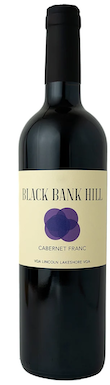
Deep ruby with a vibrant purple rim, this Cabernet Franc from Lincoln Lakeshore opens with alluring aromas that immediately draw you in. Notes of violet,...
2023
OntarioCanada
Black Bank HillNiagara Peninsula
Thirty Bench, Small Lot Cabernet Franc, Beamsville Bench, Niagara Peninsula, Ontario, Canada, 2022
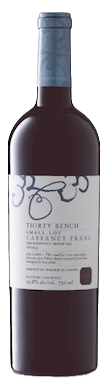
Deep ruby, this wine opens with intriguing aromas of petrichor and black olive. Layers of dark and red plum are framed by violets and a...
2022
OntarioCanada
Thirty BenchNiagara Peninsula
Stratus Vineyards, Cabernet Franc, Niagara-On-The-Lake, Niagara Peninsula, Ontario, Canada 2022
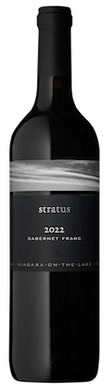
Deep ruby with seductive aromas of a meadow of purple flowers, blackberry, wild blueberry and hints of clove and white pepper. A bright, lively core...
2022
OntarioCanada
Stratus VineyardsNiagara Peninsula
Tawse Winery, David's Block Vineyard Cabernet Franc, Twenty Mile Bench, Niagara Peninsula, Ontario, Canada, 2022
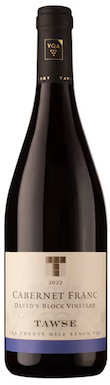
Medium ruby, with an immediate herbal character of thyme and tarragon, followed by gentle aromas of dark raspberry, cherry and blueberry. An earthy undertone adds...
2022
OntarioCanada
Tawse WineryNiagara Peninsula
Leaning Post Wines, Grimsby Hillside Vineyard Cabernet Franc, Lincoln Lakeshore, Niagara Peninsula, Ontario, Canada, 2020
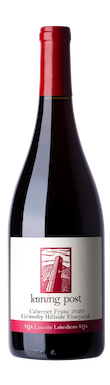
A fine Niagara expression from the Grimsby Hillside Vineyard in Lincoln Lakeshore. Medium ruby, with a pretty, expressive nose of wild herbs, cherry, redcurrant and...
2020
OntarioCanada
Leaning Post WinesNiagara Peninsula
Cave Spring Vineyards, Dolomite Cabernet Franc, Beamsville Bench, Niagara Peninsula, Ontario, Canada, 2024
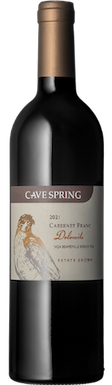
Deep ruby, with pretty aromas of violet, dark raspberry and plum, layered with hints of chervil and fennel. Bright acidity provides lift alongside fine, firm...
2024
OntarioCanada
Cave Spring VineyardsNiagara Peninsula
Hermann J Wiemer, Magdalena Vineyard Cabernet Franc, Finger Lakes, Seneca Lake, New York State, USA, 2023
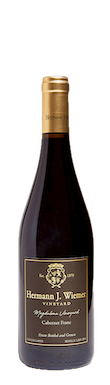
From one of the Finger Lakes’ most iconic vineyards, located in the Seneca Lake AVA. Medium ruby in colour, with restrained aromas of dark cherry,...
2023
New York StateUSA
Hermann J WiemerFinger Lakes
Forge Cellars, Bellows Cabernet Franc, Seneca Lake, Finger Lakes, New York State, USA, 2024
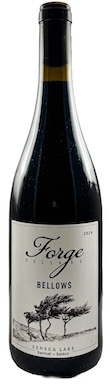
This is Forge’s first Cabernet Franc bottling from Bellows, its home estate and one of four single vineyards in the Seneca Lake AVA that the...
2024
New York StateUSA
Forge CellarsFinger Lakes
Ravines, Cabernet Franc, Finger Lakes, New York State, USA, 2023
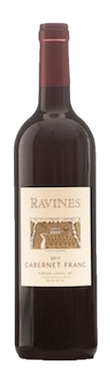
A charming Cabernet Franc that opens with elegant notes of garden herbs, wild blueberries and earthy undertones. Firm acidity is framed by fine, structured tannins,...
2023
New York StateUSA
RavinesFinger Lakes
Boundary Breaks, Reserve Cabernet Franc, Finger Lakes, New York State, USA, 2024
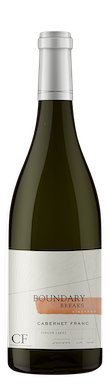
The Reserve edition from this producer opens with lifted aromas of blueberry and raspberry tart, wild roses and violets. The palate shows lovely purity of...
2024
New York StateUSA
Boundary BreaksFinger Lakes
Marcari Vineyards, Cabernet Franc, North Fork, Long Island, New York State, USA, 2024
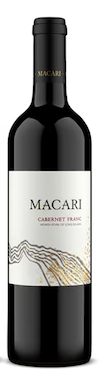
Ruby in colour, with aromas of dark plum, wild strawberry and rosemary. Firm acidity and fine, grippy tannins provide structure to this medium-bodied wine, with...
2024
New York StateUSA
Marcari VineyardsLong Island
Paumanok Vineyards, Cabernet Franc, North Fork, Long Island, New York State, USA, 2024
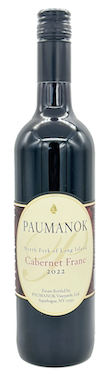
Medium ruby hue with aromas of raspberries, violets, wet stone and pink peppercorns. Bright acidity frames a medium-bodied palate with good concentration and fine, velvety...
2024
New York StateUSA
Paumanok VineyardsLong Island