Get our daily fine wine reviews, latest wine ratings, news and travel guides delivered straight to your inbox.
You are now subscribed
Your newsletter sign-up was successful
An account already exists for this email address, please log in.
A tale of two Sicilies: How Etna and Marsala tore free of their mass market past
Separated by the width of the island, Sicily’s best-known wine regions have trodden separate paths on their journeys to renewal – Etna’s never far from the wine headlines these days, while Marsala is just now breaking free of its past and coming up fast.
Etna and Marsala couldn’t be more different in terms of Sicily’s viticultural landscape: the fiery, high-elevation terraces of the volcano in the island’s northeast, compared to the sun-baked, wind-whipped lagoon and coastal plain in the far west.
Yet both regions have successfully shed their wine histories as volume-driven industrial engines to emerge as some of Italy’s most exciting beacons of terroir-driven winemaking.
From a distance, it’s difficult to imagine that the dark, seemingly sparse flanks of Etna were once a bustling viticultural powerhouse.
More than 90,000 hectares of mostly terraced vineyard once carpeted Etna’s rich slopes, a far cry from today’s 1,347ha (from 2024 data).
These vineyards would have been interspersed with scores, if not hundreds, of volcanic stone-hewn palmenti, buildings where the grapes were brought to be crushed, fermented and stored before the wines were shipped from the local ports to all corners of Europe during Etna’s late-19th century heyday – before the rapacious vine pest phylloxera robbed it of its commercial advantage.
On the other side of Sicily, in Trapani, the striking limestone outcrop of Erice and the offshore Aegadian archipelago – where many locals spend their holidays – stand sentinel over the plain that gently slopes down to the salt pans in the Stagnone lagoon, just north of Marsala city.
Marsala’s glorious past is only evident in the stiff offshore winds which first brought international trade to its door, and in the striking yet time-worn architecture of the city itself, once one of the most prosperous in all Italy.
Decanter newsletter
Get our daily fine wine reviews, latest wine ratings, news and travel guides delivered straight to your inbox.
Roots of revival
Marco de Bartoli
(Image credit: Giuseppe Gerbasi)
Founded in 1727 in the commune of Milo on the volcano’s east flank, Barone di Villagrande is recognised as Etna’s oldest continuously operating winery.
When the Italian government announced its new DOC classification system in 1963, ninth generation owner Carlo Nicolosi Asmundo got to work drafting the region’s production regulations, leveraging his dual roles as estate proprietor and professor of oenology at the University of Catania.
His work paid off, and in 1968 Etna was officially granted Sicily’s very first DOC. Perhaps inspired by his ancestor Paolo Nicolosi (the first on Etna to vinify white grapes separately, in 1869), Carlo allowed for a separate sub-zone, Etna Bianco Superiore, specific only to Milo.
Here, the aspect, elevation and high rainfall – about twice that of anywhere else in Sicily – combine to ensure long, slow ripening resulting in singular, mineral-driven expressions of Carricante with electric acidity and fine structure.
This early example of a sub-zone delimited by Italian law would engender the philosophy of zonation and terroir that would be built on by later protagonists in Etna’s revival epic.
Marsala had made a name for itself in the 18th and 19th centuries with its fortified wines, exported around the world.
But by the time it was granted a DOC in 1969, sales had hit rock-bottom and its reputation was in tatters, and it wasn’t until the 1980s that the first signs of recovery emerged.
When oenologist Marco De Bartoli took over his family’s Baglio Samperi estate, he seemed to be on a mission to restore the region to greatness.
Return to the source
Harvesting Grillo in Marsala overlooking the Stagnone lagoon reserve
(Image credit: Luca Appiotti)
While the industrially produced Marsala of the time relied on high-yielding Catarratto, he instead sourced unwanted barrels of Grillo – one reportedly filled in 1903 – which he added to the family’s existing stocks to form a vino perpetuo system, much like a solera in Spain (fractional blending in a succession of barrels over a period of time), from which he crafted a meticulous blend.
Released in 1980, the first Vecchio Samperi was a watershed moment; an unfortified Grillo, dry and deeply complex thanks to the age of some of the liquids, it immediately garnered critical – if not commercial – success.
This traditional style pre-dated the use of fortification in Marsala’s wines, which first occurred when British trader John Woodhouse was forced into the port by a storm in 1773, liked what he tasted, and added brandy to the barrels to protect it on its journey back to England.
In 1984, the Marsala DOC regulations were given a much-needed spring clean. In order to salvage what was left of its reputation, strict ageing tiers now offered a clear hierarchy of quality and style, while low-quality flavoured versions were stripped of the Marsala name.
The following year, De Bartoli saw the right moment to release his first Marsala labelled wine, Vigna La Miccia Marsala Superiore Oro.
Fermented in stainless steel rather than wood, the wine’s freshness, florality and delicate sweetness impressed drinkers accustomed to sweeter, low-quality versions, further spurring on a new-look Marsala.
But it would take another 40 years before things really started to move along.
Marsala’s rejuvenation
Salt West project’s founding trio (from left) Gabriele Gorelli MW, Pietro Russo MW and Andrea Lonardi MW
(Image credit: Walter Parrinello)
Today, growers in Marsala are increasingly focusing on clonal specificity for Catarratto. The high-yielding ‘Marsala’ biotype Catarratto Bianco Comune is increasingly making way for the lower-yielding, textural Catarratto Bianco Lucido, whose bright acidity and mineral tension is amplified to great effect, particularly when planted in cooler spots.
While Lucido is arguably capable of producing the more intellectual and ageable wines, Grillo, a crossing of Catarratto and Zibibbo (Muscat of Alexandria), has inherited everything that’s great about the former along with the soft white peach and floral elements from the latter.
Grown here, it offers an indelible territorial fingerprint, breezy-fresh and brimming with sea spray, while retaining a broad appeal for modern drinkers. A recent initiative focusing on Grillo specifically grown in the territory of the Stagnone lagoon area (pictured) is the Salt West project.
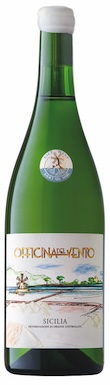
Announced last year by three Italian Masters of Wine – Andrea Lonardi, Gabriele Gorelli and Pietro Russo – it incorporates not only their own small Officina del Vento winery, but also several other wineries who agree to adhere to specific rules such as the conservation of historic vineyards and no pesticides.
Marsala has reached a dynamic, transformative point in its long history, marked by a decisive pivot towards dry, terroir-led whites.
Winemakers are redefining what the area can achieve, treating their coastal vineyards with the same site-specific reverence as seen on Etna.
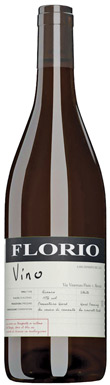
Even Marsala’s fortified greats such as Florio and Pellegrino are turning their hands to still whites.
And supported by initiatives such as the Salt West project, Marsala has shed its status as a fortified relic to emerge as one of the most exciting white wine frontiers in all Italy.
Etna’s transformation
Antonio and Salvino Benanti who manage the eponymous Etna winery established by their father Giuseppe in 1988
(Image credit: Benanti / Leif Carlsson)
There were just a handful of commercial wineries on Etna in the 1980s when Giuseppe Benanti – who had a background in pharmaceuticals – founded Tenuta di Castiglione (later to change to ‘Benanti’) in 1988.
Taking a science-led approach, he worked with several expert consultants and the young oenologist Salvo Foti – who would later prove to be a pivotal figure – to better understand the territory by studying the soils, the effects of elevation, and carrying out dozens of micro-vinifications.
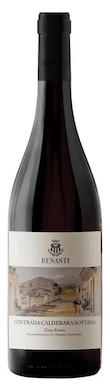
Ten years after its foundation, Benanti became the first – and to this day the only – winery to own vineyards on all four slopes within the Etna DOC, enabling the estate to bottle many different terroir expressions based on their research.
Benanti’s iconic red Rovittello Riserva, named after Contrada Rovittello at 750m in Castiglione di Sicilia, where pre-phylloxera vines were discovered growing, was particularly influential in paving the way for the concept of the contrada (loosely similar to a cru in France, but based on historic village boundaries delimited by Etna’s lava flows) and highlighting the huge potential of Etna’s forgotten old vines.
Millennial melting pot
Vineyard terraces at Passopisciaro on the north slope of Etna
(Image credit: Passopisciaro)
When Tuscan Andrea Franchetti arrived on Etna’s north slope in 2000, he discovered a goldmine of abandoned terraces around the township of Passopisciaro, after which he named his winery.
He began bottling distinct, single-vineyard wines from five different contrade. Marc De Grazia arrived the following year from Piedmont, founding Tenute delle Terre Nere, where he vinified nine wines from pre-phylloxera vines.
From their pioneering efforts, switched-on sommeliers and wine lovers gradually began to realise that Etna was capable of producing high-quality, extremely terroir-driven wines.
The same year that De Grazia arrived on Etna, Catanian local Salvo Foti revived an ancient worker’s guild, I Vigneri, originally established in his home town in 1435. Foti – whose grandparents had once grown grapes on Etna’s slopes – was planting his flag in the ground as the guardian of Etna’s history and soul.
Favouring alberello (bush vines) and gentle, precise winemaking, his wines quickly gained a cult following. It was also in 2001 that Belgian wine broker Frank Cornelissen arrived on the volcano, bringing with him an obsession with purity.
His masterpiece, Magma, was first released as the 2001 vintage, wowing low-intervention fans and critics alike. Together, these pioneers’ radical approaches added huge dynamism to Etna’s turn-of-the-millennium melting pot.
In 2008, Franchetti launched the annual Contrade dell’Etna festival (scheduled for 18-19 April in 2027), an en primeur tasting event open to both journalists and the public, providing a stage for winemakers to drive home the idea that Etna, with its various differing contrade, had terroir equal in diversity and complexity to Burgundy or Barolo.
In 2011, this was codified in law: the Italian government approved 133 contrade split across 11 different municipalities as UGAs (unità geografiche aggiuntive, or additional geographic units), expanded in 2022 to 142.
Most recently, the Etna DOC consorzio (representative body for winery members) has filed an application to raise Etna’s status to DOCG.
It will be the final step in Etna’s long transformation from bulk wine powerhouse to a world-class fine wine region.
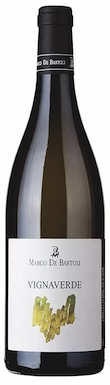
De Bartoli, Vignaverde, Sicilia, Sicily, Italy, 2025
My wines
This unoaked Grillo defines the exceptional quality the variety is able to achieve. Creamy hints mingle with pineapple and stone fruits, a touch of yellow...
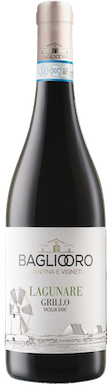
Baglio Oro, Lagunare Grillo, Sicilia, Sicily, Italy, 2025
My wines
From vines in Marsala's Stagnone lagoon, this refined Grillo sums up the quality and character the variety is capable of when grown here. Floral touches...
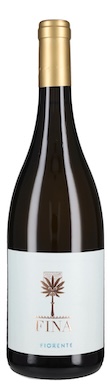
This project from the sibling-owned winery in Marsala is from Catarratto vines right down by the sea, where they enjoy a constant, vigorous breeze. The...
This unfiltered, concrete-vinified Grillo from the Marsala winery founded in 1833 features bold apple, lime, peach and jasmine. Balanced and with texture and structure derived...
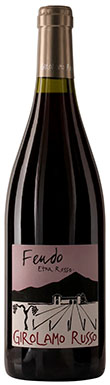
I'm falling in love with Etna's 2024s, and Russo's Feudo exemplifies the energy and freshness the vintage gives. Ferrous, mineral-soaked red berries take centre stage....
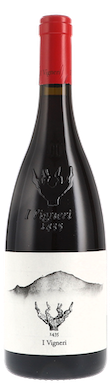
I Vigneri is a custodian of Etna's past, and this flagship wine is arguably its most significant label, vinified in the estate's restored palmento and...
From vines in the north-slope township of Randazzo, this pretty wine is full of nervous energy. Succulent cherry and forest berries are accompanied by balsamic...
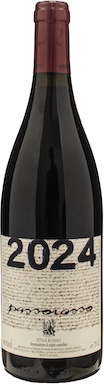
This 2024 vintage of Passorosso, the estate's ‘everyday’ Nerello Mascalese sourced from multiple vineyards, really impressed me when I tasted it, with a bright and...
James Button is Decanter’s regional editor for Italy, responsible for all of Decanter's Italian content in print and online.
Like many others, he started his wine career at Majestic Wine, giving him a strong grounding in the subject before successfully completing the WSET Level 4 Diploma in 2010. From 2014 to 2016 he managed the fine wine department of a startup wine company in London, before joining Decanter as digital sub-editor.
Outside of wine, James enjoys cooking, skiing, playing guitar and cycling.