
Potable Gold: 250 years of Madeira in America
The golden-hued wines of Madeira are woven into the history of America. With 250th anniversary celebrations underway, Lauren Mowery discovers the founding fathers’ love affair with the ‘potable gold’.

The cool breath of February blows gently, swaying the Spanish moss draped across the arms of a live oak.
A small group has gathered at the Green-Meldrim House, a historic home in Savannah, Georgia.
Gas lanterns cast a warm glow across the threshold as we step inside the 1853 gothic revival style manor for an after-hours tour called Potable Gold.
The docent, an affable yet studious man in his mid-60s, hands us each a glass of cut crystal filled with liquid the hue of the afternoon sun. We take a sip of ambrosia, then follow him into the parlour to hear about Madeira parties in the southern states.
Madeira held a special position in the social lives of early Americans, the docent says as we take seats around a mahogany table. He offers a second pour of wine.
Candlelight flickers as we imagine men in similar rooms across the East Coast drinking the afternoon away.
The drink of a future President
Engraving from 1882 of the American Founding Fathers signing the Declaration Of Independence
For nearly 200 years, Madeira reigned as the favoured drink of the political elite. Perhaps no one embodied that national devotion more than George Washington.
Get our daily fine wine reviews, latest wine ratings, news and travel guides delivered straight to your inbox.
Though 18th-century invoices rarely listed grape names, Washington was clear about what wine he liked.
In a 1763 letter to his island suppliers, Washington requested ‘a rich oily wine,’ which could only come from the inclusion of Malmsey (Malvasia).
Correspondence and ledgers, shared publicly on the National Archives’ Founders Online, detail Washington’s regular purchases.
An account of expenses as the Commander-in-Chief of the Continental Army logs his purchase of 108 bottles of Madeira on a single day in October 1775. Washington prosecuted a revolution without letting his supply run dry.
If Madeira could win a war, it would be the toast of victory. Every Founder filled a cup to celebrate the adoption of the Declaration of Independence on 4 July, 1776.
How Madeira became America’s wine
Madeira’s grip on America began with the island’s geography and a quirk of British law. Sitting at the nexus of the Atlantic trade winds, Madeira offered a logical provisioning stop for merchant ships headed west for the Indies and New World.
The island’s producers loaded pipes of Madeira into ship holds as ballast. Long voyages through the tropics left an unusual imprint. Heat, oxygen, and the constant rocking of the ship ‘cooked’ the wine into a new oxidised style that Americans soon loved.
A second economic advantage came from the British Parliament. Dating to the 1660s, the Navigation Acts required European goods bound for American colonies to pass through British ports on British ships.
Madeira, whether an oversight or not, eluded the provision by virtue of location. The exemption allowed Madeira to flow freely to the colonies. Bartholomew Broadbent, of the import company Broadbent Selections, believes it may have been ‘America’s first tax loophole'.
Exuberance for Madeira stretched up and down the eastern seaboard. However, the ‘south had a unique love affair with the wine,’ writes Emanuel Berk of the Rare Wine Co. Berk ranks among the foremost authorities on Madeira, having spent decades documenting its American history.
North-South divide
‘The Southern elite’s leisurely way of life allowed for liberal indulgence,’ he writes in his booklet Antebellum Nectar.
Charleston, the wealthiest city in the colonies, was thought to possess the only ‘true leisure-class society,’ admired by 18th- and 19th-century Northerners who welcomed invitations to festive repasts.
Such affairs started mid-afternoon and lasted through the evening, as hosts showed off their collections as both social currency and lubrication.
Curiously, tastes in Madeira differed between the south and the north. Casks rarely bore the name of the producer, and final style decisions fell to the buyer.
Collectors in the Northeast transferred their wine from cask to glass demijohn for extended ageing, while Southerners bottled directly from cask within a year or two of receipt, explains Berk.
The low country Carolina taste for lighter, drier wines, against the sweeter palate of the North, bred a snobbish conviction that ‘the Yankees never understood the wine,’ says Berk.
Madeira on the decline
19th century street scene in Funchal, Madeira
The Madeira of the early republic bears little resemblance to the wine today. Before the 1850s, producers shipped Madeira within two or three years of the vintage.
The wine had a paler hue and tasted ‘dry and incredibly vibrant,’ says Berk.
Two crises would change that. In 1851 the powdery mildew oidium struck island vineyards, cutting production by 80%. Phylloxera followed in 1872, crippling growers for two decades.
As harvests shrank, producers held the wine in barrels. The longer time in wood gave Madeira a dark colour and nutty, caramel depth.
‘Post-Oidium, Madeira just fundamentally changed,’ says Berk. ‘It became this much more powerful, concentrated wine.’
Concurrently, the American market faded. Champagne, especially popular in Charleston, became the wine of celebration.
Then the Civil War erased the Southern market overnight. Cocktail culture poached some remaining enthusiasts before Prohibition shut the door.
By the 1920s, a wine that had defined American taste had all but vanished.
A modern revival
In 1989, Broadbent set out to reintroduce Madeira to America. Before his San Francisco tasting, few restaurants in the country served it, among them Bern’s in Tampa, known for its legendary cellar.
He poured 19 wines going back to 1845. ‘Despite a very jaded wine trade, we had a massive turn out of about 300 people,’ he says. Within a week, city restaurants sought Madeira for their wine lists.
He dealt in old vintages, including an 1845 Cossart Gordon he sold for around $60 a bottle. ‘I actually got criticised for doing my job too well,’ he says, after selling 100 cases to one buyer. That wine now fetches about $3,000/bottle.
Given the wine’s prominent position in early America, how did the country forget that connection?
Broadbent put the question to a guest in one of his seminars, a schoolteacher who offered an answer. American textbooks, she said, stripped every reference to alcohol. The Founders’ wine had been edited out of national memory.
Around the same time, Berk started Rare Wine Co. after he chanced upon hundreds of cases of 19th-century Madeira from a London merchant unloading them at a deep discount.
As he sold through that stock, he conceived of a new project. He partnered with Ricardo Freitas of Barbeito to develop the Historic Series, paying homage to the regional palates of the past, from the driest Charleston Sercial to the sweetest New York Malmsey.
Despite interest, Madeira remains far from enjoying a market comeback. While Broadbent sees the 250th story circulating, he credits tourism as a significant driver of interest.
‘Portugal has become a major tourist destination. Madeira is already swamped with tourists but within maybe four years it will be as packed as the Amalfi Coast.
'Fifteen years ago, I received maybe two people a year telling me they wanted to go to Madeira. Today I am contacted at least once a week,’ says Broadbent.
A visit to the source
While both importers sell older vintages, drinkers chasing a taste of history will find the island itself the richest ground.
Pereira D’Oliveira in Funchal, imported by Rare Wine Co., has aged wines in cask since 1850. The tasting room display of 19th-century selections provides eye candy for giddy oenophiles.
At Blandy’s, where the family’s wine lodge dates to 1824, guests can visit the museum before tasting vintages dating back to 1920.
‘It’s amazing to think how over 200 years ago, they were making wines with much more limited resources, but are also so legendary,’ says Chris Blandy, Chairman of Blandy’s Madeira.
Freitas, however, may be the island’s most forward-looking producer precisely because he looks to the past. He makes drier, more delicate wines, closer to what crossed the Atlantic in pipes than to wines made in the 20th century.
This year, Rare Wine Co. released its Declaration of Independence Madeira to mark the 250th anniversary of that seminal American moment.
Blended to reflect historical tastes, it's a wine that might have fuelled a long afternoon in a Lowcountry parlour – or an American revolution.
Madeira and America: a shared history in 10 wines
Related articles
Czar: The humble Azores curio turned stealthy unicorn
Carcavelos: Salt-lined sweetness from the ‘Portuguese Riviera’
How to drink fortified wines in the summer
Blandy’s, Sercial, Madeira, Portugal 1965
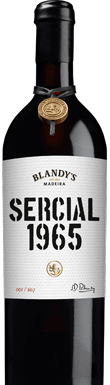
Decades in oak cask rendered this concentrated yet full of finesse. Lively acidity delineates a luscious heart of spiced chutney, caramel, and nuts. Undulating and...
1965
MadeiraPortugal
Blandy’sMadeira
D'Oliveiras, Bual, Madeira, Portugal 1904

Generous and hedonistic, a bright line of acid giving spine to a round, voluminous palate of dried fig, toffee, and spice rum cake. Rich but...
1904
MadeiraPortugal
D'OliveirasMadeira
D'Oliveiras, Malmsey, Madeira, Portugal 1907

An intense, seductive nose yields sweetcakes and molasses, a savory depth underpinning its power on the palate. Tart marmalade and the tingle of balsamic cut...
1907
MadeiraPortugal
D'OliveirasMadeira
D'Oliveiras, Terrantez, Madeira, Portugal 1890

At 136 years old, this wine has no business being so lively, but that's the seduction of Madeira, the fountain of youth in a bottle....
1890
MadeiraPortugal
D'OliveirasMadeira
D'Oliveiras, Verdelho, Madeira, Portugal 1890

Gripping and full of verve at 136 years, with a tangy snap on the attack, followed by dark honeyed sweetness. The palate flowers into caramelized...
1890
MadeiraPortugal
D'OliveirasMadeira
D'Oliveiras, Tinta Negra, Madeira, Portugal 1929

Perfumed and intense with incense and myrrh giving way to cacao and eucalypt on an unusual nose. The palate turns savory and mineral, long and...
1929
MadeiraPortugal
D'OliveirasMadeira
Blandy's, Malmsey, Madeira, Portugal 1996

Bronze with flecks of gold, the colour of jewels and currency. Before a drop touches your lips, you know you're in for rich delights. Spice...
1996
MadeiraPortugal
Blandy'sMadeira
Blandy’s, Bual, Madeira, Portugal 1994

Amber-gold with a coppery warmth that hints at the richness within. Focused, mouthwatering acidity drops away to reveal dried fruit cake, toasted nuts, and hints...
1994
MadeiraPortugal
Blandy’sMadeira
The Rare Wine Co., Historic Series Declaration of Independence, Madeira, Portugal NV

Pale copper, delicate by design, a nod to the lighter styles that filled colonial glasses 250 years ago. Dried chamomile and preserved tangerine on the...
MadeiraPortugal
The Rare Wine Co.Madeira
Blandy’s, Sercial, Madeira, Portugal 1965

Decades in oak cask rendered this concentrated yet full of finesse. Lively acidity delineates a luscious heart of spiced chutney, caramel, and nuts. Undulating and...
1965
MadeiraPortugal
Blandy’sMadeira
D'Oliveiras, Bual, Madeira, Portugal 1904
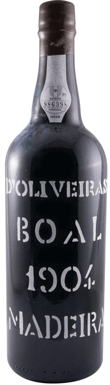
Generous and hedonistic, a bright line of acid giving spine to a round, voluminous palate of dried fig, toffee, and spice rum cake. Rich but...
1904
MadeiraPortugal
D'OliveirasMadeira
D'Oliveiras, Malmsey, Madeira, Portugal 1907
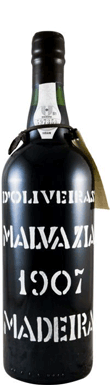
An intense, seductive nose yields sweetcakes and molasses, a savory depth underpinning its power on the palate. Tart marmalade and the tingle of balsamic cut...
1907
MadeiraPortugal
D'OliveirasMadeira
D'Oliveiras, Terrantez, Madeira, Portugal 1890
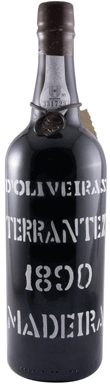
At 136 years old, this wine has no business being so lively, but that's the seduction of Madeira, the fountain of youth in a bottle....
1890
MadeiraPortugal
D'OliveirasMadeira
D'Oliveiras, Verdelho, Madeira, Portugal 1890
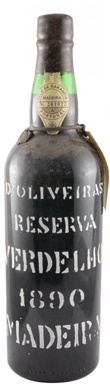
Gripping and full of verve at 136 years, with a tangy snap on the attack, followed by dark honeyed sweetness. The palate flowers into caramelized...
1890
MadeiraPortugal
D'OliveirasMadeira
D'Oliveiras, Tinta Negra, Madeira, Portugal 1929
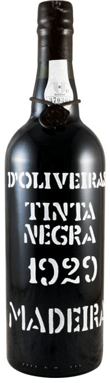
Perfumed and intense with incense and myrrh giving way to cacao and eucalypt on an unusual nose. The palate turns savory and mineral, long and...
1929
MadeiraPortugal
D'OliveirasMadeira
Blandy's, Malmsey, Madeira, Portugal 1996
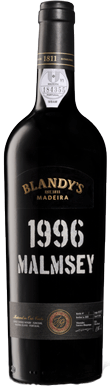
Bronze with flecks of gold, the colour of jewels and currency. Before a drop touches your lips, you know you're in for rich delights. Spice...
1996
MadeiraPortugal
Blandy'sMadeira
Blandy’s, Bual, Madeira, Portugal 1994
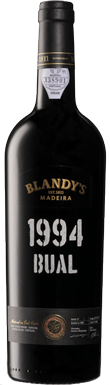
Amber-gold with a coppery warmth that hints at the richness within. Focused, mouthwatering acidity drops away to reveal dried fruit cake, toasted nuts, and hints...
1994
MadeiraPortugal
Blandy’sMadeira
The Rare Wine Co., Historic Series Declaration of Independence, Madeira, Portugal NV
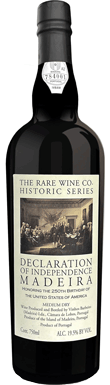
Pale copper, delicate by design, a nod to the lighter styles that filled colonial glasses 250 years ago. Dried chamomile and preserved tangerine on the...
MadeiraPortugal
The Rare Wine Co.Madeira
As a graduate of the University of Virginia, Lauren Mowery first developed a taste for wine as a student in winery-rich Charlottesville. Graduating Fordham Law, she took a career detour as a New York litigator before leaving to pursue wine and travel writing full time, for which she has won several awards. Mowery was travel editor for Wine Enthusiast for four years and a Forbes wine and travel columnist for six years, in addition to contributing to dozens of other drinks publications including Tasting Panel, Somm Journal, Punch and SevenFifty Daily. She hopes to finish her Master of Wine by 2024. When not on the road, she splits her time between upstate New York and Charleston, South Carolina.
