Get our daily fine wine reviews, latest wine ratings, news and travel guides delivered straight to your inbox.
You are now subscribed
Your newsletter sign-up was successful
An account already exists for this email address, please log in.
Carcavelos: Salt-lined sweetness from the ‘Portuguese Riviera’
The Lisbon wine region of Carcavelos used to produce some of Portugal's most sought-after wines. But as its vineyards were lost to urban sprawl it almost went extinct. Sarah Ahmed details how it survived and the winemakers taking steps to preserve this viticultural inheritance.
The undulating 20-mile stretch between Lisbon and Cascais – known as Estoril Coast (after the coastal town of the same name) and dubbed ‘the Portuguese Riviera’ – is fêted for having 18 sandy beaches and one of Europe’s highest concentration of world-class surf.
However, during the 18th and 19th centuries, Cascais, Carvavelos and Oeiras, three of the coastline’s then rural villages, were mostly celebrated for the latter’s eponymous fortified wine.
When production peaked in the late 18th century, Carcavelos was shipped to England – with pride of place at Christie’s auctions – Brazil and the USA and, more controversially, sold to Douro producers for blending with Port.
Sarah Ahmed’s notes and scores for an exclusive selection of Carcavelos wines below
‘A wine to die for’
With a mere 22 hectares authorised for DOC Carcavelos production today, six estates bear stubborn witness to this tradition which, said the 19th century agronomist Antonio Augusto de Aguiar, produced ‘a wine to die for… that kings and vassals worship’.
The best known of all, Quinta do Marqués, belonged to Oeiras’ most famous and industrious exponent, the Marquês de Pombal (1699-1782), who dominated Portuguese politics during the reign of King José I (1750-1777). The estate is now owned by the local municipality.
In the 1980s, Pombal’s estate became the seat of the Portuguese Agronomical Institute’s research about Carcavelos wine. It planted a new 5.5ha vineyard in 1983 and subsequently partnered up with the municipality of Oeiras, which created the Villa Oeiras (formerly Conde de Oeiras) brand in 2009 to re-commence the production of Carcavelos on a commercial scale.
Palácio Marquês de Pombal, Oeiras.
(Image credit: Sérgio Azenha | Alamy Stock Photo)
By far and away the biggest, most sophisticated producer, this remarkable public project sparked a revival.
Decanter newsletter
Get our daily fine wine reviews, latest wine ratings, news and travel guides delivered straight to your inbox.
Established in 1994, DOC Carcavelos is book-ended by the municipality of Sintra in the north and the Atlantic Ocean to the south; it encompasses Cascais and Oeiras (the village of Carcavelos itself is now part of the municipality of Cascais), excluding urban areas.
In 2021, the region was extended to northern Oeiras to include Quinta da Corrieira, paving the way for the 2024 launch of Quinta da Corrieira Colheita 2012, the first Carcavelos wine in more than 20 years to have been produced by a private estate, such is its rarity.
According to Rodolfo Tristão, the distinguished sommelier who presided over the launch and tasting of older wines from other producers, most of which were sourced from collectors, ‘20 years ago, not even Portuguese people had tasted Carcavelos, even if some could see vineyards from their houses.’
A wine that nearly died
The reversal of fortune that plunged Carcavelos into obscurity began with an outbreak of powdery mildew in 1852. Remarking ‘oidium drank it all,’ de Aguiar’s stark comparison of pre- and post-outbreak production (3,000 barrels versus 12 in 1867) reveals the impact of this hammer blow.
By the 1880s, phylloxera was rife and the return of oidium and mildew in 1881 brought Carcavelos to its knees.
As lesser regions took up the slack, selling poor imitation Carcavelos, surviving producers struggled to protect the Carcavelos’ brand, despite demarcating the region in 1908 and introducing industry bodies to regulate and promote it.
By the 1950s, when Pedro Martins de Lima – Portugal’s ‘father of surfing’ – discovered the Estoril coast, the writing was on the wall.
Having become, throughout the two world wars, a stylish refuge for European aristocrats, in the 1950s it turned firmly into a playground for the rich. Villas, hotels and Lisbon’s suburban sprawl progressively ‘drank it all’, with few vineyards left by the end of the 1980s.
(Image credit: Credit Unknown)
Sweet, with a dry sensation
Ironically, drinkability has long been a Carcavelos trait. It combines harmonious acidity with the ‘velvety and smooth taste’ which, wrote agronomist and academic Bernardo Cincinato da Costa in 1900, enjoyed ‘great notoriety in England and Brazil.’
Alexandre Eurico Lisboa, Villa Oeiras’ technical co-ordinator contends, ‘with high but well-balanced alcohol, sugar, acidity and saltiness, Carcavelos should always be elegant – a sweet wine with a dry sensation in the mouth.’
For Tristão, ‘acidity and saltiness are what makes Carcavelos special. The aromas and flavours of dried fruits and salty caramel, along with salinity and smooth sugar work well for desserts, cheeses or even main dishes, such as game or steak.”
Emphasising the singularity of the terroir behind this profile, Lisboa points out the vineyards’ privileged position on a rare stretch of south-facing, sheltered coastline by the Tagus estuary and Estoril Bay.
Well-exposed to the sun and protected by Sintra mountain range, vines are gently cooled by mild offshore north/north-western breezes and hydrated by night-time ocean mists.
In contrast, on Portugal’s predominantly west-facing coastline and over the other side of Sintra mountain range, neighbouring DOC Colares is directly exposed to humid, salty, Atlantic winds.
While, like Port and Madeira, Carcavelos is made by arresting fermentations with wine spirit at the desired level of sweetness (typically medium-sweet), Carcavelos’ grape varieties (see box below) set it apart. White Carcavelos made with white grapes currently predominates, but red examples – which were made in the past – are reappearing.
Older wines shown at the tasting hosted by Tristão included white and red blends, however Lisboa believes that this mix only came about because production was tiny during the 20th century. He calls it ‘the worst century to taste Carcavelos because it was in ruins and producers lost interest.’
A reality, not a ghost
As for the 21st century, Lisboa is thrilled by the arrival of other producers because it means ‘nowadays Carcavelos is a reality, not a ghost from the past.’
Some are winemaker-led projects, which have acquired then blended mature stock (Howards Folly) or sourced grapes to make wines from scratch, like Adega Belém and Vitor Claro & Rita Ferreira, whose grapes come from Quinta da Ribeira de Caparide, a historic farm owned by the Catholic church.
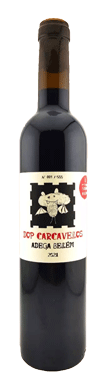
Bringing fresh perspectives to the genre, Adega Belém’s early release batch of 2021 Castelão firmly departs from tradition in style and substance with its caricature label and youthfully vinous, edgy profile.
It underwent post-fermentation skin contact and spent the minimum period in barrel (24 months, versus several years for typical examples).
Claro and Ferreira’s relatively delicate 2021 Trincadeira (which did not undergo post-fermentation skin contact) spent the same period in barrel but is now ageing in glass demi-johns, where it will remain for at least another two years.
Members of Confraria do Vinho de Carcavelos. Courtesy of Quinta da Corrieira
(Image credit: Credit Unknown)
In the pipeline
The 2021 vintage will see the first releases from Cascais Ambiente, a new public project by Cascais Municipality which acquired the Santa Maria do Mar Monastery in 2017 and replanted its vineyards in 2019.
Both red and white varieties are undergoing skin contact in pursuit of a ‘more sober wine profile, close to 60/80 grams of sugar’ said its CEO Luís Almeida Capão.
He expects the first wines to launch in 2026 and to plant at least another 4ha of vineyards in the short/medium term.
Taking into account Villa Oeiras’ intention to plant additional vines, new private projects planted from scratch (Quinta Vale Verde and Quinta da Boiça) and efforts to revive existing estates (Quinta da Samarra), Lisboa reckons the actual (not necessarily authorised) area for Carcavelos production will increase to 38ha by 2025.
‘Considering that when we started in the 1980s, there were less than 13ha, it’s a fantastic growth,’ he said. Carcavelos may remain niche but, with active and nascent projects, it’s becoming a magnet for true winelovers rather than the preserve of collectors.
Carcavelos: Key facts
Vineyard area: 22ha
Production (2023): 57,000 litres
Climate: Temperate maritime
Soils: Clay/limestone
White grape varieties (minimum 75%): Galego-Dourado, Ratinho, Arinto, Boal Branco
White varieties (maximum 25%): Rabo-de-Ovelha, Seara-Nova
Red grape varieties: Castelão, Amostrinha a.k.a. Preto Martinho, Trincadeira (reds)
The wines
Style:licoroso (fortified with wine spirit)
Minimum Ageing: 24 months (in wood) + 6 months (in bottle)
Minimum total alcoholic strength by volume: 17.5%
Residual sugar:
Seco (dry): < 65g/l
Meio-doce (medium-dry): 65 -130g/l
Doce (sweet): > 130g/l (maximum of 280g/l)
Carcavelos producers:
Villa Oeiras
With an impeccable pedigree, Villa Oeiras wines are sourced from and vinified at estates that belonged to the Marquês de Pombal and complete their ageing in the splendour of his palatial Baroque cellar, which is open to the public by appointment. Now with 19ha of vineyard, Villa Oeiras is easily Carcavelos’ biggest player.
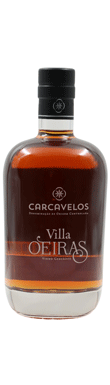
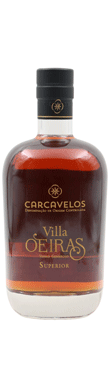
With Port-veteran Pedro Sá and Alexandre Lisboa at the helm, the sophisticated range is ultra-smooth and beautifully balanced, from the core offer of 7-Year-Old and 15-Year-Old blends to white and red colheitas (single harvest Carcavelos).
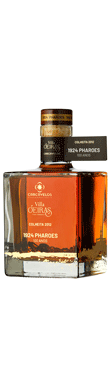
Outstanding limited edition wines such as the Mahogany Guitar Barrel Project and Bugio Lighthouse 1924 Pharoes 100 Years reflect an ongoing commitment to the research and trials upon which this innovative public sector partnership between the Portuguese Agronomical Institute and Municipality of Oeiras was founded in 1997.
Ageing cellars at Palácio Marquês de Pombal, Oeiras. Courtesy of Villa Oeiras
(Image credit: Credit Unknown)
Quinta da Corrieira
Lured by the surf-culture, Jörg Lewerenz and his wife Katrin gave up careers in finance and bought the property in 2018. Located in northern Oeiras atop a windy (150m) hill, it came with a 0.4ha vineyard and ‘garage’ winery.
Since the 1980s, the vendor, a full-time doctor, had been making Carcavelos and, having promised to keep making it, Lewerenz hired Tiago Correia (formerly of Villa Oeiras) to advise on bottling the elegant maiden 2012 Colheita. The German national has planted another 0.8ha of vines and is building a new winery/tasting room.
Howards Folly
Co-founded in 2002 by British businessman Howard Bilton and Australian winemaker David Baverstock, a long-term resident of Portugal, the pair started out making Alentejo wines. A Vinho Verde followed and, in 2015, Baverstock stumbled across a stash of Carcavelos in the ramshackle barn of Quinta dos Pesos, a former producer.
After three years, Bilton persuaded the owners to sell him barrels from several vintages (the last being 2004). Thus far Howards Folly have released a 1991 and 1995 Colheita, in each case back-blending a splash of wine from the following year.
Stored on ullage, these releases are complex and intensely concentrated in flavour and acidity, with noticeable (but attractive) volatile acidity.
Adega Belém
Having studied winemaking together in Lisbon in 2013, second careerists Catarina Moreira (an evolutionary biologist) and David Picard (an anthropologist) decided to make wine together.
Following stints working at other wineries in Portugal and abroad, they founded a funky urban winery in Lisbon, making their first Lisboa wines there in 2020. In 2021 the couple entered into a vineyard management contract with Quinta da Ribeira de Caparide, near their home, which is planted to red Carcavelos grapes.
Keen to explore different styles of Carcavelos, Adega Belém’s early 500-bottle release aged for the minimum period. The balance from 2021 continues to age in a three-tiered four-barrel solera together with wines from 2022 and 2023.
The team at Adega Belém during the 2023 harvest. Courtesy of Adega Belém
(Image credit: Credit Unknown)
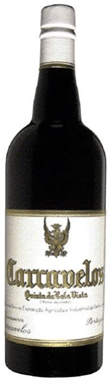
Quinta da Bela Vista
Progressively swallowed up by real estate, by 1969 – its last vintage – Quinta da Bela Vista’s remaining hectare yielded just 400l of wine. In 1989 its owners asked Sanguinhal, a producer from another Lisboa region to bottle and sell the wine.
Sanguinhal blended the 2,500-litre Portuguese oak tonéis (foudres) at its cellar, bottling 16,200 bottles in 1991. The company annually releases 600 numbered bottles onto the market and retains reasonable stock.
See Sarah Ahmed’s notes and scores for Carcavelos wines
Villa Oeiras, The Guitar Barrel Project Colheita, Carcavelos, Lisboa, Portugal 2010
My wines
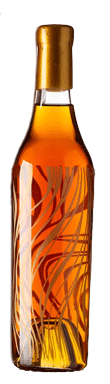
Ethereal, the distinctive antique mahogany patina reflects four years ageing in a 1,000-litre barrel - reconstructed from the Marquis de Pombal’s 18th century mahogany barrels...
Quinta da Alagoa, Colheita, Carcavelos, Lisboa, Portugal 1906
My wines
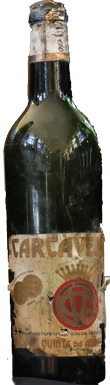
Acidity drives the bone dry arrow-straight palate of saffron, pot pourri, antique wood and crushed green cardamom seeds – but Carcavelos’ signature saltiness is the...
Quinta da Corrieira, Colheita, Carcavelos, Lisboa, Portugal 2012
My wines
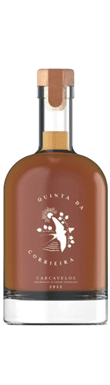
Bright amber. Nutty, slightly smoky, nose. Elegant and smooth-as-satin, the persistent backbone of grapefruity acidity is spun with notes of lightly toasted almonds, butterscotch, madeleine...
Howard's Folly, Quinta dos Pesos Colheita, Carcavelos, 1995
My wines
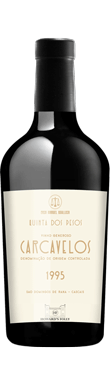
Dark amber, with arresting guava and lifted spicy chutney and tobacco/café crème cigar on the nose. Salt-edged palate, effortlessly balancing the residual sugar (116.5g/l). Cleansing...
Villa Oeiras, 1924 Pharoes 100 Anos Colheita, Carcavelos, Lisboa, Portugal 2012
My wines
Distinctly different, with sweet-salted Scottish tablet and hints of vanilla, passionfruit, caramelised orange and dried herbs in the smooth, rich palate. Underpinned by the fresh...
Villa Oeiras, 7 Years Blend, Carcavelos, Lisboa, Portugal NV
My wines
A pretty wine with lifted sweet tobacco, café crème, toasted almonds, jasmine and mirin to the silky candied apricot fruit. Well-integrated acidity and wood make...
Villa Oeiras, Colheita, Carcavelos, Lisboa, Portugal, 2014
My wines
Fresh and lissom yet well structured, with inviting notes of light buttered popcorn and toasted almonds on the nose. These follow through on the honeyed...
Villa Oeiras, Superior 15 Years Blend, Carcavelos, Lisboa, Portugal NV
My wines
Relatively rich and round with 100g/l residual sugar and concentrated notes of dried apricots, sweet honey, caramelised oranges, salted toffee and toasted hazelnut/praline. Wine spirit...
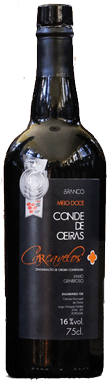
Conde de Oeiras, Meio Doce, Carcavelos, Lisboa, Portugal NV
My wines
Bright topaz with atypically bold fruit and oak, it reveals torched yellow peach, peach tea, toffee, malt and vanilla flavours. This – Villa Oeiras’ first...
Viscous and rich, like an Australian Rutherglen Topaque, with a fuller-bodied palate of candied orange, peach tea and barley sugar, which suggests that the grapes...
Decanter Magazine, Portugal Expert & DWWA Regional Chair for Portugal
Sarah Ahmed, aka ,, is an independent, London-based wine writer, educator and judge. She was awarded the Vintners Cup in 2003, the Wine of Portugal Personality of the Year (Europe) 2019 and Honorary Australian Woman of Wine Award 2017.