Get our daily fine wine reviews, latest wine ratings, news and travel guides delivered straight to your inbox.
You are now subscribed
Your newsletter sign-up was successful
An account already exists for this email address, please log in.
Czar: The humble Azores curio turned stealthy unicorn
The revival of a 500-year-old viticultural tradition on the Azores’ Pico Island has elevated a unique wine from humble curio to ‘unicorn’ status, at a cool €7,500 per bottle. Sarah Ahmed shares the extraordinary story of Czar and is granted exclusive access to the latest releases.
Fortunato Garcia has come a long way from trawling Pico island’s restaurants for empty bottles to refill with Czar, the passado wine originally made by his father who, like him, made wine on the side while holding on to a full-time teaching job.
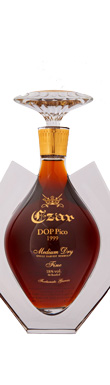
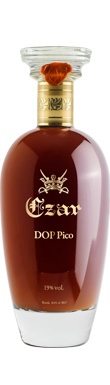
Garcia commissioned luxury Portuguese glassmakers Vista Alegre to create bespoke 20.6-carat gold-engraved crystal decanters for Czar’s latest release, a rare 86-bottle back-vintage priced at €7,500.
It launches hot on the heels of Czar Single Harvest Reserve Seco 2014 which, trouncing industry giants David-and-Goliath-style, was proclaimed Wine of the Year 2023 by the leading Portuguese wine magazine Revista de Vinhos.
Notes and scores for five Czar wines below
Last man standing
Although firmly rooted in history, Adega Czar’s rise to prominence owes much to the recent revolution on this 48-km-long volcanic Atlantic island, 1,600km to the west of Lisbon and 1,200km north-west of Madeira.
Until recently, Pico’s 500-year-old heritage and culture of wine growing had virtually disappeared from view, much like its dry-stone-walled vineyards, most lying ruined under a thick carpet of forest and scrub.
However, the 2004 inscription of the ‘Landscape of Pico Island Vineyards Culture’ in UNESCO’S World Heritage sites list sparked a remarkable vineyard renaissance and winemaking revolution on the island.
Newcomers, notably Azores Wine Company, re-deployed Pico’s traditional varieties Verdelho, Arinto dos Açores and Terrantez do Pico for the production of light dry whites, shifting away from the licoroso and passado wines which dominated production for centuries, competing with their Madeira counterparts (see box below).
Decanter newsletter
Get our daily fine wine reviews, latest wine ratings, news and travel guides delivered straight to your inbox.
Surfing a wave of interest in volcanic wines and native grape varieties, today’s thrillingly fresh, salty cutting edge whites have catapulted Pico back into the limelight. With fresh eyes on Pico, Czar saw its fortune reversed, winning newfound respect for Garcia, the last man standing making passado wines.
Czar harvest at one of the producer’s currais, Pico, Azores – Courtesy of Czar Winery
(Image credit: Credit Unknown)
A rich heritage
Vines were first planted on Pico in the 15th century, when the Azores was claimed by Portuguese navigators en route to the Americas; the archipelago soon became an important staging post for trans-Atlantic trade.
Shipping wines around the world without spoilage required high alcohol and high acidity, hence the tradition for the dry to sweet licoroso and passado styles that developed in the archipelago.
Contemporaneous documents evidence a roaring trade in Pico’s wines in the Americas (even US President Thomas Jefferson was a fan), Europe and Russia during the 18th and 19th centuries. Between 1800 and 1820, Pico exported 24 million litres of wine, including 33,000 litres of passado.
Of the latter 23,250 litres were shipped to St Petersburg, explaining why it was reputedly discovered in the Imperial Cellar after the Russian Revolution.
In 1962, when Fortunato’s father José Duarte Garcia paid 1,000 Escudos (about five Euros today) for a two-hectare old field-blend vineyard in Criação Velha, the ship had long sailed on Pico’s wine industry. Oidium (1852) then phylloxera (1873) had decimated vineyards across the Azores.
Unlike Madeira, Pico’s wine industry did not recover and, save for some in Criação Velha, most vineyards were abandoned. Insofar as vineyards were replanted, American grapes prevailed, yielding the raw material for ‘vinho de consumo’ (rustic table wines) for home consumption.
Pico – Historical wine styles to know
Two important styles of wine evolved in Pico: licoroso and passado.
Licoroso (fortified)
Like Madeira wines, Pico’s licorosos are fortified, oxidative wines, produced from a blend of indigenous white grape varieties – in Pico’s case, Verdelho, Arinto dos Açores and Terrantez do Pico.
Passado (unfortified)
Passado is produced from the same indigenous varieties as licoroso, in the same high-alcohol, oxidative (wood-aged) style – but it is not fortified. The grapes, either late-harvested or sun-dried on the island’s ‘lagidos’ (black, heat-retentive lava-beds) – achieve a natural alcohol of 18%.
The Czar’s choice
Although José had promised the vineyard’s previous owner he would continue the passado tradition, there was little demand for this unfashionable curio and his production was consumed exclusively by family and friends.
But José’s ambition was piqued upon reading about Czar Nicolas II’s stash of Pico wines; he decided to launch to market in 1970, aptly naming his wine Czar.
‘Dad used to say “one day my wines will go back to Russia”,’ says Fortunato who, joining the project in 1989, was determined to raise Czar’s profile. After winning a gold medal at the first Azores wine competition in 1999, the wines consistently sold out within months.
This encouraged Fortunato to fulfil his father’s dream. In 2011, Czar 2006 won a gold medal at the brand’s first international outing at Moscow International Wine Fair and made national headlines and broadcast news; it sold out within a week.
Nowadays, the critics beating a path to this charmingly humble islander’s door have reinforced to Garcia the quality and uniqueness of Czar.
Czar’s cellar in São Roque do Pico, Azores –
(Image credit: Pedro Silva, courtesy of Czar Winery)
Czar remains the only producer of passado, which relies on harvesting late (after 15th September) to attain the high sugars that produce 18% or more alcohol, without fortification.
Equally critical are the preternaturally robust ambient yeast strains in Garcia’s vineyards and pocket-sized winery which can convert high grape sugars into high alcohol.
Unlike the previous vineyard owner, he is careful not to reduce this yeast population by sun-drying harvested grapes which Garcia noticed had produced sweeter, less balanced wines than those from grapes picked and pressed the same day.
Playing roulette
Describing Garcia as ‘brave’ to harvest so late, Insula’s Paul Machado observes ‘the passado process is expensive and unpredictable because rain is such a big risk… You need the perfect vineyard.’
Garcia has indeed sought and courted perfection. He has a high proportion of Verdelho because it produces higher sugars than Pico’s predominant variety, Arinto dos Açores, or Terrantez do Pico.
His vineyards are located by the ocean, in sunny Criação Velha – away from the shadow of the 2,531-metres-high volcano that dominates the island – on extremely low-fertility, heat-retentive lagido ‘soil’ that scythes yields and drives up sugars.
This location’s downside is the exposure to salt-burning ocean winds, rot-inducing humidity and, worst case scenario, total wipeout. In 2001, 2005, 2010, 2012, 2016, 2017 and 2018, the grapes were insufficiently ripe to make Czar.
In 2019, Storm Lorenzo destroyed 0.2ha of Czar’s original vineyard. Even in a good year yields are ultra-low, averaging 300-400kg/ha.
The attrition rate is even higher when you take into account the ‘angel’s share’ (wine lost by evaporation) which, says Garcia, has been ‘an insane 45%’ since 2013, when the wines have aged longer (for eight years, up from six) in barrel.
It is, he believes, ‘the perfect moment’ to bottle Czar which has become more concentrated, without detracting from the exceptional harmony which impressed on a vertical tasting in 2017, right back to the maiden 1970 release.
The lissom, highly digestible quality of these high alcohol unfortified wines was beautifully captured by Antonio Cordeyro in a History of Portuguese Islands in the Western Ocean, published in 1717.
The priest contrasted ‘a small amount of Madeira that can take a man off senses’ with Pico’s passado wine ‘that releases you of bad humours, comforts your stomach, lights up and lifts your heart and does not let you lose your senses or your reason.’
Czar – At a glance:
Founded: 1970, by José Duarte Garcia
Current owner and winemaker: Fortunato Garcia (José’s son)
Area under vine: Four parcels in Criação Velha totalling 3.8ha
Varieties: Verdelho, Arinto dos Açores and Terrantez do Pico
Vine age: 14–100-years old
Soils:lajido (volcanic lava bed)
Average annual production (2007-2023): 648.75L
Wines produced:
Czar The last Czar of the 20th century 1999 – 86-bottle edition offered in 20.6-carat gold-engraved Vista Alegre crystal decanters
Czar Single Harvest Reserve is an unfortified (passado) wine, only made in the right vintages. (Eagle-eyed oenophiles will spot that some earlier vintages were labelled licoroso – Garcia explains that bureaucratic difficulties made the accurate categorisation and labelling of the wines impossible…)
Czarina NV a fortified (licoroso) blend, due to be launched December 2025.
High stakes, high price
Conversely, the stratospheric leap in Czar’s price might cause hearts to plummet. Being so small, Fortunato reflects that he and his father ‘didn’t know how to think big’.
If José baulked at his son increasing Czar 2003’s price to 30€, the boot was on the other foot in 2017 when the leading Portuguese wine critic João Paulo Martins urged Garcia to charge at least €500 instead of €120 for Czar 2013, which had just been released.
Fortunato Garcia holding a bottle of Czar 1999. Image courtesy of Czar Winery
(Image credit: Credit Unknown)
This sliding doors moment prompted Garcia not only to rethink the pricing, but also to further refine his wines. Decanting his remaining bottles of 2013 stock into barrel to age for an extra two years, Czar’s dearer, more sophisticated second 2013 release also benefits from another first, namely a drop of the outstanding 1999 vintage which José (who died in 2007) had retained and decanted from barrel into five litre glass jugs in 2005.
As Garcia observes, ‘it changed the wine completely’, sowing another seed. Knowing that there would be no Czar from 2016, 2017 or 2018, Garcia decided to produce a historic back-vintage – ‘The Last Czar of the 20th Century’ – from the remaining 65 litres of the 1999.
This 86-bottle edition may be priced at €7,500 but, for Garcia, making Czar is not money-driven. Czar turned a profit for the first time in 2022 and he still teaches.
‘I won’t make enough to retire, but I do want to leave a legacy,’ says Garcia. And he has. As Machado points out, ‘Czar has preserved something you cannot find elsewhere in the Azores’.
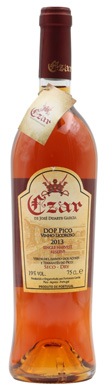
Czar, Single Harvest Reserve Dry (First Edition), Pico, Azores, Portugal 2013
My wines
Aged for six years in seasoned barriques, this first 2013 bottling is a ruddy amber hue with beguiling spicy gingerbread, caramelised orange and lifted Amaretto...
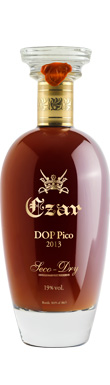
Czar, Single Harvest Reserve Dry (Second Edition), Pico, Azores, Portugal 2013
My wines
Scaling fresh heights of intensity in aromatics, flavour and mouthfeel, this second bottling of the 2013 vintage includes 600L of the 1999 vintage and spent...
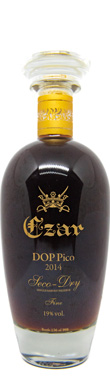
Czar, Single Harvest Reserve Dry, Pico, Azores, Portugal 2014
My wines
An unusually dark and rich vintage, courtesy of August rains thinning the grape skins and facilitating raisining. A velvet-smooth wine revealing amplified molasses, coffee, chicory,...
Decanter Magazine, Portugal Expert & DWWA Regional Chair for Portugal
Sarah Ahmed, aka ,, is an independent, London-based wine writer, educator and judge. She was awarded the Vintners Cup in 2003, the Wine of Portugal Personality of the Year (Europe) 2019 and Honorary Australian Woman of Wine Award 2017.