

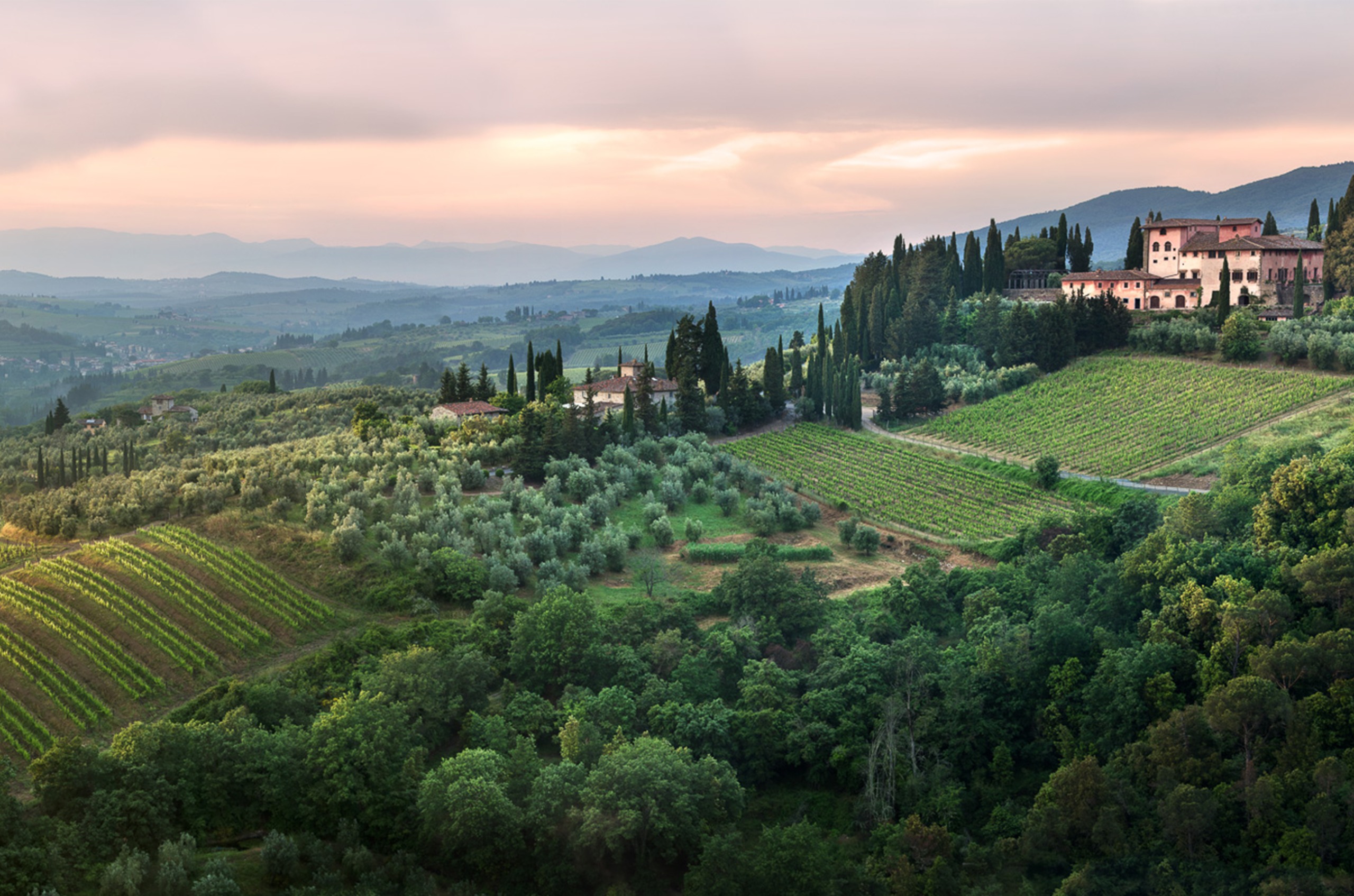
Situated in the heart of Chianti Classico, the Castello di Verrazzano estate boasts an ancient castle set amid sprawling vineyards, olive groves, and pristine woodland.
This beautifully preserved corner of Tuscany has been in the Verrazzano family for centuries, and it was here, in 1485, that the renowned explorer Giovanni da Verrazzano – namesake of the famous Verrazzano-Narrows suspension bridge in New York – was born.
An official opening
This year has marked the official opening of the Casa-Museo Giovanni da Verrazzano, a museum set within the castle walls, where the authentic atmosphere of Tuscan aristocratic villas still lingers and offers a fresh way to experience the region.
The inauguration of the museum, with the collaboration of the Giovanni da Verrazzano Foundation, also marks the estate’s entrance into the Associazione Nazionale Case della Memoria, the Italian network of historic residences that were once home to prominent figures of Italian culture.
‘The House Museum highlights the navigator’s remarkably modern spirit and brings his legacy to life.’
Luigi Giovanni Cappellini, estate owner
‘This opening gives us the opportunity to authentically present and share the extraordinary story of Giovanni da Verrazzano, a figure that is still too little known today,’ owner Luigi Giovanni Cappellini explains.
‘The House Museum highlights the navigator’s remarkably modern spirit and brings his legacy to life. It connects his personality, a shining example of the Florentine Renaissance, with the enchanting setting of the family estate.
What emerges is a graceful relationship with the Chianti landscape and its human traditions, providing the ideal backdrop to introduce the historic figure and complementing our publishing work.'

The House Museum.
Biodiversity is key
The property spans roughly 220ha in total, of which 52ha are vineyards situated between 260m and 450m. The estate has preserved the classic, all-encompassing structure of a traditional Chianti Classico farm, with a strong emphasis on agricultural biodiversity. Alongside vineyards, Verrazzano is home to organically-farmed vegetable gardens, olive groves, and a network of beehives.
Having acquired the estate in 1958, a meticulous restoration commenced, led by Luigi Cappellini, the father of the current owner. This has been continued by today’s generation, and has allowed the property to return to its former splendour.
Today Castello di Verrazzano is committed to preserving its priceless legacy for future generations, while offering a wonderful opportunity for visitors to discover its history and wines. The cellars are open for guided visits, and the estate operates an agriturismo for overnight stays.

The striking Castello di Verrazzano estate.
‘We’re looking for high drinkability backed by genuine substance.’
Luigi Giovanni Cappellini
Two distinct takes on a single terroir
Wine production at Verrazzano centres on Sangiovese, grown organically and vinified in the castle’s historical cellars.
As Cappellini explains, ‘Our approach stems from the awareness that Verrazzano boasts unique vineyard conditions – including exceptional exposure, altitude, and a geomorphology tailored to Sangiovese. The goal is to fully showcase the terroir by establishing distinct stylistic models for Chianti Classico and Chianti Classico Riserva’.
Castello di Verrazzano’s Chianti Classico stands out for its brightness and subtle spiciness. ‘We’re looking for high drinkability backed by genuine substance’, Cappellini affirms. ‘The result is a wine with a unique personality: deep without being heavy, vibrant but not pungent. One that also resonates with younger consumers’.
With aromas of red cherry and blackberry interwoven with floral notes, the palate is vivid and taut, with finely etched tannins and intense salinity – a hallmark of the estate – carrying through on a long finish.

Giovanni da Verrazzano: the famed explorer features on the estate's Chianti Classico and Classico Riserva.
The estate’s Chianti Classico Riserva comes from stricter selections in the estate’s highest vineyards. Naturally dry and windswept, these are well-suited to producing longer-lived and more complex wines without losing the finesse and elegance of the Sangiovese variety.
Encapsulating the typical features of the Montefioralle area, it offers notes of ripe red fruit, pipe tobacco, dark spices, and perfectly integrated oak. Boasting mighty yet velvety tannins, the evolution is evident but balanced by bright acidity. The finish is long, complex, and slightly iron-tinged, hinting at great ageing potential.
Learn more about Castello di Verrazzano
Connect on Facebook | Instagram


-
 Barbera d'Asti DOCG: Tradition and modernity in Piedmont
Sponsored Many expressions of one variety...
-
 Sergio Mottura: Excellence in Tuscia
Sponsored A renowned figure in Lazio...
-
 Florio: Winning new fans while respecting Marsala’s history
Sponsored An important milestone in Marsala...
-
 Sensi Vini: The gateway to your Italian wine exploration
Sponsored Chianti and beyond...
-
 Celebrating European diversity
Sponsored Introducing the ‘Celebrate the Diversity’ project...
-
 Reinterpreting Tuscan tradition with Vignamaggio
Sponsored An idyllic traditional farm...
-
 Vinitaly.USA: Where Italian wine meets the US market
Sponsored Bringing opportunities and encounters to New York...
-
 PoderNuovo a Palazzone: Where Cabernet Franc finds its Tuscan voice
Sponsored Distinguished Tuscany...


