This is why Syrah will become Washington’s defining red wine
While Cabernet Sauvignon and Merlot have led the state for decades in plantings and reputation, Washington Syrah has been gaining ground, with distinctive options from Walla Walla Valley, Yakima Valley, Red Mountain and beyond.
Washington is a winemakers’ playground. Unburdened by strict rules, they can freely experiment with grape varieties, wine styles, vine-growing practices and blends to produce some of the most impressive wines in the US.
Here, Rhône varieties such as Syrah are transformed into wines that don’t mimic their predecessors, but rather express their own regional character or follow winemakers’ unbridled imaginations.
‘You’re free to make your own wine the way you choose,’ says Brian Rudin, winemaker and general manager of Echolands Winery, a two-time Decanter World Wine Awards Platinum winner that also makes multiple Syrah bottlings.
‘You don’t need to make it the way your grandparents did.’
Syrah has been a leader among these experiments since it was planted in Washington 40 years ago, with a rapidly developing range of styles true to the terroirs of the Walla Walla Valley, Red Mountain AVA and beyond.
The grape variety appeals to winemakers and wine lovers for creating approachable, food-friendly wines with ripe fruit flavours, complexity and general lushness.
The rise of Washington Syrah
Red Willow Vineyard is credited as the first to plant Syrah in Washington; the Chapel Block is one of its best-known sections.
‘Syrah can be a good introductory wine to newcomers – and we certainly need newcomers – but, at the same time, satisfy the needs of the most advanced wine aficionado,’ says Dick Boushey, a pioneering Washington grapegrower.
Get our daily fine wine reviews, latest wine ratings, news and travel guides delivered straight to your inbox.
‘Syrah’s diversity and adaptability are its strengths. Syrah can take the increased heat that we have seen up and down the West Coast. So, it is a variety that is sustainable for the future.’
The first Washington Syrah plantings are credited to Mike Sauer and his family in 1986, in their Red Willow Vineyard in Yakima Valley.
By contrast, Cabernet Sauvignon was introduced to the state in 1941, with Merlot following in 1965, according to the Washington State Wine Commission, bringing the state renown with bottlings from the likes of Leonetti Cellars and Quilceda Creek.
However, Syrah is now a close competitor with Merlot for the second most-planted red variety, with more than 6,300 hectares to Cabernet’s 19,400+ hectares.
Besides being bottled as a single-varietal wine, Syrah is also used in many blends with other Rhône varieties or Cabernet, a decisive factor in its growth.
Producers such as Columbia Winery and now-closed McCrea Cellars encouraged the early plantings of Syrah, while the bold, modern wines from the likes of K Vintners and Cayuse Vineyards helped put Washington Syrah on the radar of a wider range of wine drinkers.
How Washington Syrah styles differ by region
Walla Walla Valley was wheat country long before winegrowers realised it was ideal for Rhône varieties such as Syrah.
Washington’s major wine regions yield several distinctive styles of Syrah, according to Boushey.
In the warmer parts of the broad Columbia Valley AVA, the wines tend to be inky, ripe and dark – similar to bold California wines.
In cooler areas, like the foothills of Yakima Valley, the wines show more acidity, savoury notes and lower alcohol levels.
In southeastern Walla Walla Valley, where the AVA spreads across the border between Washington and Oregon, Syrah has become the signature variety of The Rocks District of Milton-Freewater.
Here, the cobblestone-filled soils become the main story, leading to wines with signature notes of earth, meat, iodine and herbs.
‘The radiant heat from the exposed basalt stones contributes greatly to the profile that Rocks wines carry,’ says Trey Busch, winemaker of Sleight of Hands Cellars, a Washington winery that owns Stoney Vines Vineyard in The Rocks. (Because the district falls entirely within Oregon, many Washington wineries end up making wines from both states.)
Busch continues: ‘The vines spend more time "shut down" during the hottest days, preserving energy and simply surviving in such a harsh climate. The vine roots also go extremely deep since there is not much soil or moisture-holding capacity.’
How Washington Syrah styles are shaped in the vineyard
To better suit the terroir at WeatherEye Vineyard, Ryan Johnson is training Syrah on the echalas system, in which each vine climbs a tall stake, rather than stretching along wires on a trellis.
Straddling the windswept ridgeline of Red Mountain, WeatherEye Vineyards makes its own Syrah and provides fruit to wineries such as Liminal and MTN/ART.
There, vineyard manager Ryan Johnson has been fine-tuning the viticulture to coax out Syrah’s best qualities. Working with a little less than three hectares of the 16-hectare vineyard planted with Syrah, he became one of the few Washington growers to use the échalas system, with each vine is trained on its own tall stake.
Since Red Mountain is hot, windy and dry, Ryan increased the vine density, creating more natural shade to protect the fruit. As a result, he gets complex, singular wines from this site.
‘Syrah is very site-driven and also very strongly influenced viticulturally,’ Johnson explains. ‘You can farm it conventionally, you can grow it like Cabernet, you can treat it in the cellar like generic reds, and you'll get a generic red wine. But if you match the right training system, the right terroir and the right clone, and then manage your irrigation and nutrition at the highest level, you’ll get that ultimate expression.’
Responding to current market demands, more young Washington winemakers are turning towards lighter wines, Syrah included.
Since 2019, Kelsey Albro Itämeri of Itä Wines has been picking the fruit she sources from Les Collines Vineyard in southeastern Walla Walla very early to avoid overripeness.
That way she doesn’t need to make water or acid additions to adjust the alcohol level and balance of the wines. As a result, Itä Syrah comes in at only 12% abv, with low levels of tannins.
‘If you want to taste the place, Syrah does an excellent job of doing that,’ says Itämeri.
‘It is also delicious. It’s a little bit wild and a little feral and has some magnetism to it. It’s not just fruity. It is also savoury. It has the edge. It makes you think. As people grow in their love of wine, they don’t just want a fruit bomb, they want a wine that is interesting.’
11 Washington-made Syrahs to try
Wine selection and tasting notes by Gwendolyn Elliott
Related articles
What next for Washington State's wines?

Pursued by Bear: Kyle MacLachlan’s pursuit of fine wine and a taste of home
Washington’s Puget Sound AVA: Wines worth seeking out
Hedges Family Estate, Les Gosses Vineyard Descendents Liegeois Dupont Syrah, Red Mountain, Columbia Valley, Washington, USA, 2020
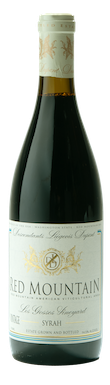
From Joseph Phelps and Tablas Creek Syrah clones grown at the family’s Les Gosses estate vineyard, this wine is a lustrous ruby colour with a...
2020
WashingtonUSA
Hedges Family EstateColumbia Valley
Moonbase, Max Q Syrah, The Rocks District of Milton-Freewater, Walla Walla Valley, Oregon, USA 2023
Sourced from the Funk and Stones Speak vineyards belonging to Saviah owners Richard and Anita Funk, this 100% Syrah is unmistakably from the Rocks District,...
2023
WashingtonUSA
MoonbaseColumbia Valley
Syncline, Estate Syrah, Columbia Gorge, Washington, USA, 2021
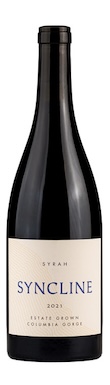
The Columbia Gorge is a special place, with ancient volcanic soils, windswept rows of grapevines and the gleaming Columbia River reflecting light back into the...
2021
WashingtonUSA
SynclineColumbia Gorge
Cairdeas, Stone Ridge Syrah, Royal Slope, Columbia Valley, Washington, USA, 2022
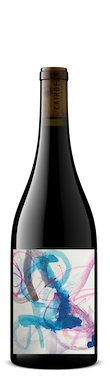
Earthy and mineral-driven, this wine leads with aromas of cracked black pepper, eucalyptus, wet river rock and wild blueberry and raspberry. Deep flavors of game,...
2022
WashingtonUSA
CairdeasColumbia Valley
Capital Call, Wheatfield Vines Vineyard La Bruère Syrah, Walla Walla Valley, Washington, USA, 2022
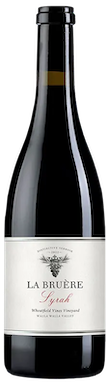
Full bodied, but with an elegant mouthfeel and fruit notes of bright black plums and boysenberry offset by earthy notes of mint, bramble and cocoa....
2022
WashingtonUSA
Capital CallColumbia Valley
Dama Wines, Stoney Vine Vineyard Hercules Syrah, The Rocks District of Milton-Freewater, Walla Walla Valley, Oregon, USA, 2023
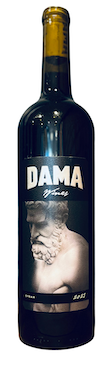
Veteran winemaker Mary Derby earned her stripes establishing Spring Valley and now has nearly 20 years guiding the winemaking at woman-owned and -managed Dama. This...
2023
OregonUSA
Dama WinesColumbia Valley
MTN/ART, Edge of the Wild Syrah, Columbia Valley, Washington, USA, 2022
This appropriately named wine comes from the northeast-facing block of WeatherEye vineyard on Red Mountain, the threshold where that sub-AVA transitions into the greater Columbia...
2022
WashingtonUSA
MTN/ARTColumbia Valley
Frichette, Sashay Reserve Syrah, Red Mountain, Columbia Valley, Washington, USA, 2024
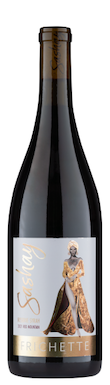
An intensely fruity wine, with luscious aromas of blackcurrant, violet, black pepper, bramble vine and fennel. The mouthfeel is polished, with concentrated flavours of blackberry...
2024
WashingtonUSA
FrichetteColumbia Valley
Savage Grace, Red Willow Vineyard Chapel Block Syrah, Yakima Valley, Washington, USA, 2021
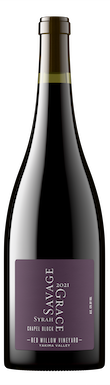
Elegant yet a little unbridled, like the wild horses that still occasionally roam through White Swan, and the storied Red Willow Vineyard. (Speaking of place,...
2021
WashingtonUSA
Savage GraceYakima Valley
Syncline, Boushey Vineyard Syrah, Yakima Valley, Washington, USA, 2024
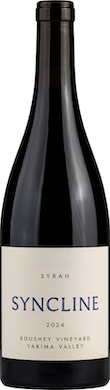
From the esteemed Yakima Valley grower Dick Boushey’s vines, this varietal wine was aged in very old upright oak tanks and shows pretty, tart redcurrant...
2024
WashingtonUSA
SynclineYakima Valley
Two Mountain, Syrah, Rattlesnake Hills, Yakima Valley, Washington, USA, 2023
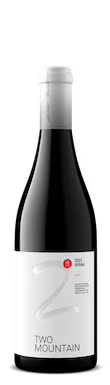
Ripe red raspberry, brambleberry, clove, baking spice, tobacco and herbal notes, with flavours of soft red fruit, cocoa and cedar, are anchored by a subtle...
2023
WashingtonUSA
Two MountainYakima Valley
Ani Duzdabanyan is an Armenian-American journalist based in Los Angeles. Her early career was in investigative journalism, investigating violations of children rights in orphanages and specialised schools in Armenia. She continued her career in news, covering information technology, the economy and agriculture. When Ani moved to the US in 2007, she became a correspondent for newspapers in Armenia. She has also collaborated with Hayrenadarz.org, a project documenting the personal experiences of Armenian expatriates. Ani contributes to local and national publications such as the Los Angeles Times, covering the life of diverse communities in LA through food and wine. In 2016, Ani received the Armenian-American Chamber of Commerce’s Woman in Journalism Award.
- Gwendolyn ElliottWine writer