Get our daily fine wine reviews, latest wine ratings, news and travel guides delivered straight to your inbox.
You are now subscribed
Your newsletter sign-up was successful
An account already exists for this email address, please log in.
Southern stars: The other side of Oregon’s Willamette Valley
While the northern portion of Oregon’s largest AVA gets most of the attention, the Pinot Noirs, Chardonnays and other whites from south of Salem are just as compelling. Here are wineries and wines you should know.
Covering 3.4 million acres – well more than California’s Napa, Sonoma, Lake and Mendocino county wine regions combined – the Willamette Valley is vast.
Too vast, objected the US Bureau of Alcohol, Tobacco and Firearms back in 1982, when vintner David Adelsheim petitioned to make the region its own American Viticultural Area.
But Adelsheim pushed back. Which part of the Willamette Valley, he asked, didn’t they want to include in the Willamette Valley?
In the end, that cool logic prevailed. Today, the Willamette Valley AVA stretches nearly 150 miles, from north of Portland to south of Eugene.
The southern Willamette: The same, but different
A staggering majority of the Willamette Valley’s wineries sit in its northern half, with most clustered between Salem and Portland.
But the Pacific Ocean–influenced weather throughout the valley is remarkably uniform, and distinctive soils abound.
So does the north possess some kind of magic that works wonders on Pinot Noir, Chardonnay, Pinot Gris and other grapes?
Decanter newsletter
Get our daily fine wine reviews, latest wine ratings, news and travel guides delivered straight to your inbox.
‘There’s nothing you can do there that you can’t do here,’ says Andrew Smith, a well-known consulting winemaker based in Eugene.
The differences, he and others contend, are historical, cultural and commercial.
After Eyrie Vineyards garnered international attention for its Dundee Hills Pinot Noirs, wine talent and investment flowed into the north. A wine mecca was born – one with easy access to the significant Portland market.
In the south, the sparse vineyards are still spaced out by miles of Christmas tree farms and hazelnut orchards. That nascence thrills winemaker Drew Voit, who sought out fruit from the Cheshire area when he founded his Harper Voit label.
‘The south will have the same evolution as the north, but the wheels turn slow,’ he says. ‘People didn’t know Ribbon Ridge either … until they did.’
The southern Willamette gets its own sub-AVA
High Pass Winery makes Pinot Noir and white wines from grape varieties common in Germany.
(Image credit: Courtesy of High Pass Winery)
Dieter Boehm moved to Oregon in 1976, after escaping Communist East Germany by way of Czechoslovakia, then cutting through two fences at the Austrian border. In 1984, he founded High Pass Winery in the foothills of the Coast Range.
Rich in prized Bellpine marine sedimentary soils and shielded from Pacific winds by 3,425-foot-high (1,044-meter) Prairie Mountain, the area merited its own sub-AVA, Boehm and his neighbours knew.
But naming it proved difficult. The US Alcohol and Tobacco Tax and Trade Bureau rejected ‘Prairie Mountain’ for their own arcane reasons, and the petitioners couldn’t agree on an alternative.
Boehm, weary of the process, ploughed ahead with a new name, taken from the waterway that winds through the area before joining the Willamette River. On 10 November 2021, the Lower Long Tom AVA was approved.
The name had few fans, but the approval was a win, and Boehm is confident the controversy will fade.
‘Ultimately’, he says, ‘we have to prove with our product that we’re distinct.’
Pinot Noir grows well in the Bellpine soils on Prairie Mountain in the Lower Long Tom AVA.
(Image credit: Courtesy of High Pass Winery)
An obsessive pursuit of place
Antiquum Farm’s Stephen Hagen dresses like the farmer he is, but his choppy hair and tattooed arms hint at a punk core.
‘Stephen farms like he doesn’t know what a concession is,’ says Voit. ‘He doesn’t just not cut corners – he disavows their existence.’
It’s easy to get Hagen talking about the ‘massive disconnect’ between the lofty language of terroir and widely followed vineyard practices – especially fertilisation.
‘I don't understand how we say we make wines of place, but we’re using potassium sulfate that comes from the southeastern United States,’ he remarks.
Vines subsist on nutrients absorbed from the soil, with fungal colonies helping the root system along, Hagen explains; fertilising them ‘breaks the communication chain’ between soil and plant.
So in 2007, he quit. Now he uses a rotational, intensive grazing system, letting pigs, sheep and poultry do the work of adding nutrients naturally.
Hagen’s zeal for terroir purity might border on obsession, but that’s not to say he’s 100% uncompromising.
He does age his wines in French oak barrels – a dalliance with an Oregon cooper didn’t work out – but don’t think it doesn’t bother him.
The three Bs: South Willamette’s A-list
Benton-Lane winemaker Amael Orrego has been making changes to the winery’s lineup.
(Image credit: Courtesy of Benton-Lane)
Three well-established wineries, two of them in Lower Long Tom, are doing the south Valley proud.
Brigadoon, led by second-generation winemaker Matt Shown, is producing excellent acid-driven dry whites, including Pinot Blanc, Riesling and the Suzanne Elizabeth blend of four varieties, a tribute to Shown’s blind, four-foot-eleven, tough-cookie of a grandmother.
In 2018, Benton-Lane winery was acquired by Huneeus Vintners (owners of Napa icon Quintessa and Sonoma Coast Pinot pioneer Flowers), and their young winemaker, Amael Orrego, is making his mark.
‘If you make a change and nobody notices’, he says, ‘I don't think you did a good job changing things.’
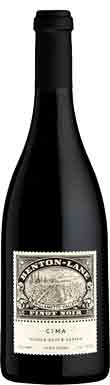
Orrego cut Pinot Gris and rosé from the Benton-Lane lineup – to the chagrin of many longtime customers – and has focused the range on one Chardonnay and three Pinot Noirs, all estate-grown. The uptick in quality is impossible not to notice.
Nearby Broadley Vineyards, just outside Lower Long Tom, has long been one of the area’s most coveted labels: From 1994 to 2019, riding critical praise, they sold much of their production through futures.
The commercial climate is very different now, but under the leadership of second-generation vintner Morgan Broadley, the winery remains outstanding.
Jessica and Morgan Broadley are now steering the family winery.
(Image credit: Courtesy of Broadley Vineyards)
King Estate: Bigger and biodynamic
In 2022, stalwart winery King Estate established a foothold in Lower Long Tom by acquiring the 70-acre (28ha) Pfeiffer Vineyard, one of its longtime grape sources.
King Estate, symbolically at least, stands at the southern limit of the Willamette Valley: In 2016, the winery succeeded in having the AVA’s border redrawn to include its 1,033-acre (418ha) site, which is the largest Demeter-certified biodynamic vineyard in North America.
Though some still grumble about the well-resourced winery’s inclusion, few question King Estate’s value to the Willamette Valley or its commitment to responsible farming.
‘I have a lot of respect for their ethos,’ says Antiquum’s Hagen, who appreciates the care that King Estate puts into farming nearby Pfeiffer. ‘They’ve been really good neighbours.’
King Estate is known for its commitment to biodynamic farming, a rarity in Oregon for such extensive vineyard holdings.
(Image credit: Courtesy of King Estate)
The Headwaters: A wine region by any other name
In the Willamette Valley, the distance between the north and south is real. The division, however, need not be.
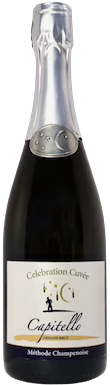
Capitello Wines’ Ray Walsh, a widely respected winemaker who came from New Zealand in the 1990s to work at King Estate, doesn’t much care for the ‘south’ framing.
The word has too many negative connotations. So he’s coined an alternative.
‘As I’ve always told people, we’re the headwaters of the Willamette,” he says. ‘This is where it starts.’
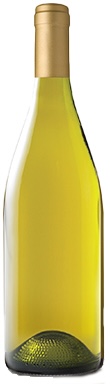
Nice toasty note on the nose, accenting lively aromas of lemon and green apple, plus a little marshmallow. The palate delivers flavours of lemon and...
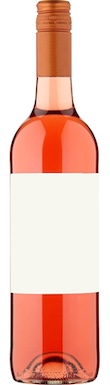
Five Fourteen, Pinot Noir Rosé, Willamette Valley, Oregon, USA, 2025
My wines
Tom and Marie Kokkeler’s Five Fourteen winery sits on a 40-acre (16.2ha) property about a 1.6-kilometers north of Eugene’s Fern Ridge Reservoir. Their 2025 rosé,...
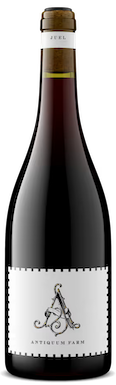
Antiquum Farm, Little Bud Pinot Noir, Willamette Valley, Oregon, USA, 2024
My wines
Little Bud, sourced from across Antiquum’s 14.5 acres (5.9ha) of Pinot Noir, showcases the remarkable tension possible at this site. It’s got a lush nose...
Pete Holland is a certified sommelier (Court of Master Sommeliers) and a writer with more than a decade of experience on the commercial and editorial sides of the wine industry. He previously wrote the column ‘Wine in Common’ for the Nashville Scene, and his work appears in Somm Journal, Tasting Panel and Oregon Wine Press.He has an MFA in creative writing from Oregon State University and lives with his family in Eugene, Oregon.