
Trentino emerges: A whole new world to discover in the Dolomites
Richard Baudains unearths the intriguing local grapes planted on the steep slopes of Trentino that make the region's underrated still wines.
The Trentino-Alto Adige region is composed of two distinct geographical and administrative entities: the bilingual Alto Adige/Süd Tirol of the province of Bolzano/Bozen to the north and the Trentino, which takes its name from the provincial capital of Trento, to the south.
Of the two, Alto Adige has undoubtedly gained the most visibility in recent years.
Trentino on the other hand, is known for its classy Trento DOC sparkling metodo classico, but to a large extent the still wines of the province have remained under the radar.
Camera obscura
One reason for this might be that Trentino presents itself to the outside world as a wine region with a certain lack of chiaroscuro.
Pinot Grigio and Chardonnay together account for more than half of the province’s 10,232 ha of vineyards.
Cooperatives make 85% of the wine, 75% of the production is covered by the catch-all Trentino DOC and a significant percentage of the rest is bottled under the even more generic Vigneti delle Dolomiti IGT. (Trento Chamber of Commerce, 2022)
The statistics, however, do not tell the whole story.
Get our daily fine wine reviews, latest wine ratings, news and travel guides delivered straight to your inbox.
Within the global DOC there is a mosaic of terroirs and site-specific wines, beside the commercial varieties there are native grapes of great interest and outside the cooperative movement, there is a dynamic artisan winemaking scene.
When you step off the beaten track, there is a whole world to be discovered.
The province of Trento stretches along the central valley of the Adige for roughly 75km, from the border with Alto Adige near Salurno/Salurn, to Veneto in the south, at the village of Borghetto.
To the west it takes in the valley of the Sarca which leads to the northern shore of Lake Garda, and to the east rises to the high peaks of the Dolomites.
Nuts for Nosiola
The first important growing area, moving south from the border with Alto Adige, lies on the left of the Adige, between Salurno and Trento and includes the villages of Faedo, Pressano, Lavis and Sorni.
This is the habitat of one of the Trentino’s most intriguing native varieties, the white Nosiola.
Not much is known about its origins, but it has a historic presence and these days grows almost exclusively in Trentino.
Production is tiny – Nosiola accounts for less than one percent of the vineyard area of the province – but producers on these sunny, gently rolling, glacial-alluvial hills grow it with conviction, making light, dry, tangy wines with subtle hazelnut aromas.
It is the most traditional of Trentino whites, but the style is very contemporary.
Nosiola producers to look for:
- Eredi di Cobelli Aldo
- Vignaioli Fanti
- Klinger Pilati
- Pojer & Sandri
- Villa Persani
Mountainous Müller-Thurgau
Val di Cembra
Striking east from the Adige, takes you into the much more extreme growing environment of the Val di Cembra.
Dizzyingly terraced slopes supported by over 700 km of dry stone walls creep up to 900 metres in the narrow closed valley where the grainy porphyric soils and the dramatic diurnal temperature excursions give the whites an authentic mountain wine feel.
Chardonnay and Riesling grow here, but the variety of the Val di Cembra is Müller-Thurgau.
On these terraces, the Riesling x Madeleine Royale crossing makes wines with a steely-dry intensity and subtle herbs and white blossom aromas that set them apart from the more familiar soft and scented profile of the variety.
It is a very different wine to the Nosiola of the Adige valley, but as in the case of the former, it is the variety which best shows off the terroir.
Valle di Cembra Superiore is an official sub-zone of the DOC, and the label is worth looking for.
Top Muller Thurgau producers:
- Bellaveder
- Cembra Cantina di Montagna
- Corvée
- Alfio Nicolodi
- Pojer&Sandri
- Zanotelli
Mysterious Marzemino
If points north and east of Trento are white wine country, south of the town the warmer, lower slopes of the Vallagarina are dominated by red varieties.
Italy’s very first Bordeaux blend was bottled here in the early 1960s, laying the foundations for a production which is a benchmark for the style.
Cabernet and Merlot, however are relative newcomers compared to Marzemino, which has been documented in the northeast since the 15th century.
Various theories of its provenance have been advanced, including migration from the Middle East across the Mediterranean to Dalmatia and thence to Venice.
But research that demonstrates genetic links with the Trentino’s own native Teroldego (quoted in D’Agata, Native Wine Grapes of Italy) suggests origins much closer to its current home.
Marzemino is a medium-bodied, ruby-violet coloured wine with wild berry-and-violets aromas and a dry finish with firm acidity.
Two specific sites are associated with the variety. The first is on the right of the valley at Isera, where soils of volcanic origin give the wines a light minerally quality
And the other on the left, on the calcareous and basalt soils of the Ziresi sub-zone, where the wines tend to have slightly firmer structure.
Both sites have Superiore status in the DOC.
Marzemino producers to look for:
- Cantina d’Isera
- De Tarczal
- Letrari
- Maso Salengo
- Tonini
- Vivallis
From holy valley
The Valle del Sarca with its picture postcard lakes, runs roughly parallel to Adige, separated from it by a long mountain range with peaks up to 2,000 metres.
The valley is the elected second home of Nosiola, but here, around the communes of Calavino, Lasino, Padergnone and Cavedine, it makes not a dry white, but Trentino Vino Santo, one of Italy’s rarest and most extraordinary sweet wines.
Nosiola for Vino Santo is picked mid-to-late September, the bunches laid to dry on straw mats in open lofts for a period of not less than six months and pressed around Easter time, a tradition recalled in the name of the wine.
The natural environment of the valley is the determining factor in the unique character of the wine.
It is a story of contrasting forces. On one hand the humidity of the lakes encourages the development of botrytis.
On the other, the daily blast of wind from Lake Garda that rattles the shutters from midday to sunset throughout the spring creates the conditions for a period of drying far longer than for any other Italian passito.
So concentrated are the grapes at the end of this period, that it can take two to three days to squeeze the juice from them in hand-operated basket presses.
Yields are miserly. From 100kg of grapes a producer will typically obtain 15 litres of must, which ferments and matures in small barrels for 8-10 years.
Vino Santo is a wine of exceptional complexity on the nose and intense flavours on the palate, sweet but never cloying (fermentation blocks spontaneously at around 150-170 g/l of residual sugar) with a finesse which is rare among wines of the style.
Average production is around 25,000 half-bottles a year.
Vino Santo producers:
- Gino Pedrotti
- Fratelli Pisoni
- Giovanni Poli
- Francesco Poli
- Pravis
Terrific Teroldego
The one important wine which does not come under the Trentino DOC umbrella, but has a denomination all of its own is Teroldego Rotaliano.
The Campo Rotaliano is a wide alluvial plain with shallow gravelly soils on the floor of the valley of the Adige, Teroldego is the grape.
It is presumed to be indigenous to Trentino, however research (D’Agata, Native Wine Grapes of Italy ) shows that it is a sibling of the French variety Dureza, which in turn is a parent of Syrah, and this raises an intriguing question about the geographical origins of the Trentino variety.
Wherever the variety came from, Teroldego is cited in local chronicles since at least the 17th century and has always been held in high esteem.
It is a vigorous variety, traditionally grown on high-trained pergolas to give vent to its productive energy.
The wines are medium-bodied, deeply coloured but only moderately tannic with good acidity and aromas of red fruit and violets and often a hint of bitter almonds.
It needs careful handling in oak, but when it is good, it is very good indeed.
Teroldego ranks among the most interesting native grape red wines of the northeast, however one has to wonder about the quality ambitions of a denomination which allows yields of 119hl/ha, the highest of any DOC red wine in Italy.
Entry level wines can be very simple. The twin villages of Mezzocorona and Mezzolombardo are the most important sites.
Leading Teroldego producers:
- Cantina Breccia
- Donati
- Dorigati
- Endrizzi Elio
- Fedrizzi Cipriano
- Foradori
- Martinetti
- Redondèl
Savvy young producers
The producers I have listed at the foot of the sections above are (with the exception of two small cooperatives) small-to-medium scale independent estates, which grow and bottle their own wine.
The agricultural census of 2010 found that there were 168 such grower-producers in Trentino.
Official figures for 2022 show that the number has shrunk to 119, but interestingly, the percentage of the total production made by growers has remained stable at 6%.
It is a niche, but it is very much alive, driven by the independent spirit, energy and innovation of a generation of very savvy young producers.
Many of these are represented in the following notes on some of my favourite artisan wines from recent trips to Trentino.
This included a visit in March this year to the excellent Vinifera show dedicated to artisan winemakers from northern Italy’s mountain regions.
The wines of Trentino
Related articles
Valle d’Aosta – the soulful Italian region aficionados shouldn’t overlook
Alto Adige: 24 expert-rated wines to try
Expert’s choice: Friuli-Venezia Giulia’s native whites
Pojer e Sandri, Monogramma, Vigneti delle Dolomiti, Trentino, Italy 2022
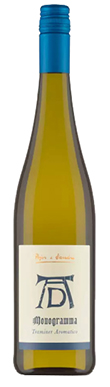
The nose opens with late-picked tropical fruit and citrus and then the floral aromas of the variety and at the back, a delicate note of...
2022
Trentino-Alto AdigeItaly
Pojer e SandriVigneti delle Dolomiti
Corvée, Viach, Trentino Superiore, Müller Thurgau Valle di Cembra, Trentino, Italy 2024
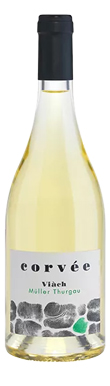
The nose has intense, crunchy green apple and wild herb aromas that follow through on a palate with vibrant, mouth-watering acidity. Vertical, tense, crisp, tactile...
2024
Trentino-Alto AdigeItaly
CorvéeTrentino Superiore
Villa Persani, Raetica, Vigneti delle Dolomiti, 2022
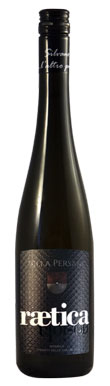
Bright golden straw shade. Intriguingly complex, evolved nose with a mix of medlar, hazelnut, undergrowth and gunflint. The palate is light but sapid and intensely...
2022
Trentino-Alto AdigeItaly
Villa PersaniVigneti delle Dolomiti
Klinger, Vecchie Viti Nosiola, Vigneti delle Dolomiti, Trentino, Italy 2023
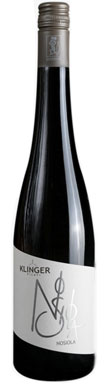
Delicate but very precise nose of fresh apricot and toasted hazelnut, with a hint of white blossom. The palate is mid-weight, round and soft in...
2023
Trentino-Alto AdigeItaly
KlingerVigneti delle Dolomiti
Bellaveder, San Lorenz, Trentino, Trentino, Italy 2023
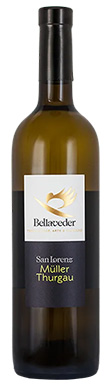
Ample, aromatic nose with white fruit, honeysuckle, and touches of citrus peel. On the palate it starts soft and round then follows through with a...
2023
Trentino-Alto AdigeItaly
BellavederTrentino
Zanotelli, Le Strope, Trentino Superiore, Müller Thurgau Valle di Cembra, Trentino, Italy 2025
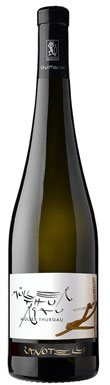
From the new vintage just bottled, this is slightly understated but very fresh and appealing on the nose, with its citrus, sage and apple peel...
2025
Trentino-Alto AdigeItaly
ZanotelliTrentino Superiore
Vignaiolo Fanti, Nosiola, Vigneti delle Dolomiti, Trentino, Italy 2024
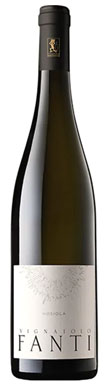
The nose has the delicate hazelnut aromas of the variety together with distinctive notes of herbs and wet stones. Dry and savoury with a mid-palate...
2024
Trentino-Alto AdigeItaly
Vignaiolo FantiVigneti delle Dolomiti
Cembra Cantina Di Montagna, Müller-Thurgau, Trentino, Italy 2025
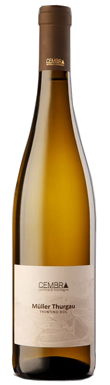
The very youthful white blossom alongside lemon and lime aromas are slow to emerge on the nose, but will open with a little bottle time....
2025
Trentino-Alto AdigeItaly
Cembra Cantina Di MontagnaTrentino
Azienda Agricola Viola, Nero Viola Rosso, Vigneti delle Dolomiti, Trentino, Italy 2019
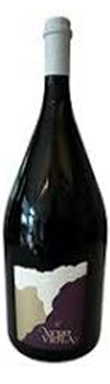
Very attractive, deep ruby shade. On the nose, raspberry, white pepper, dark chocolate and pressed flowers jostle for the front in an aromatic profile of...
2019
Trentino-Alto AdigeItaly
Azienda Agricola ViolaVigneti delle Dolomiti
Martinelli, Teroldego Rotaliano, Trentino, Italy 2021
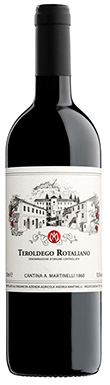
The very expressive nose has the classic cherry, dark chocolate and violets of the variety, while on the palate there is lively fruit, finely judged...
2021
Trentino-Alto AdigeItaly
MartinelliTeroldego Rotaliano
Dorigati, Luigi Cru Sottodossi, Teroldego Rotaliano Riserva, Trentino, Italy 2021
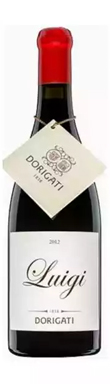
This has the typical deep ruby shade of the variety and a very precise violet and bilberry nose, full of freshness. Ripe tannins give texture...
2021
Trentino-Alto AdigeItaly
DorigatiTeroldego Rotaliano Riserva
Cantina D'Isera, Vigna Coré, Trentino Superiore, Marzemino d'Isera, Trentino, Italy 2022
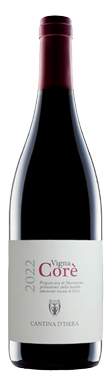
Great depth of ruby-purple colour. On the nose there is ripe wild berry fruit with hints of savoury dried herbs, and on the palate great...
2022
Trentino-Alto AdigeItaly
Cantina D'IseraTrentino Superiore
Foradori, Sgarzon, Vigneti delle Dolomiti, Trentino, Italy 2024
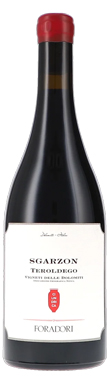
The very personal, pale violet shade immediately grabs attention. The vibrant nose bursts with the freshness of crushed raspberry, mint leaf, almonds and white pepper....
2024
Trentino-Alto AdigeItaly
ForadoriVigneti delle Dolomiti
Fedrizzi Cipriano, Due Vigneti, Teroldego Rotaliano, Trentino, Italy 2020
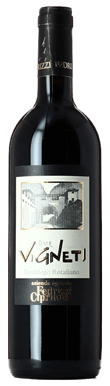
Very dark, intense, ruby shade with a violet rim. The nose has the ripe, slightly baked fruit of the hot vintage and signs of maturity...
2020
Trentino-Alto AdigeItaly
Fedrizzi CiprianoTeroldego Rotaliano
Breccia, Arilli Cru Sottodossi, Teroldego Rotaliano Riserva, Trentino, Italy 2022
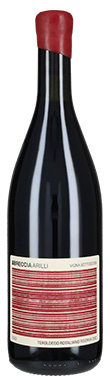
The nose has ripe blackberry fruit and the slightly scented phenolic character of long traditional maceration. The fruit returns on the palate which has the...
2022
Trentino-Alto AdigeItaly
BrecciaTeroldego Rotaliano Riserva
De Tarczal, EOS Rosso, Vigneti delle Dolomiti, Trentino, Italy 2024
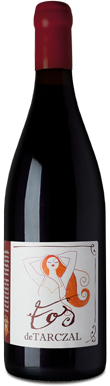
Pale violet shade. This starts with a great burst of energy on the nose, with aromas of red cherry, cinnamon and jasmine and carries over...
2024
Trentino-Alto AdigeItaly
De TarczalVigneti delle Dolomiti
Maso Salengo, Trentino Superiore, Marzemino dei Ziresi, Trentino, Italy 2022
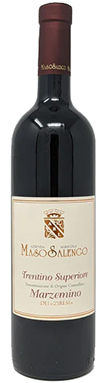
Very precise red cherry fruit on the nose, with touches of dark blossom in the background. The mid-weight palate has nice concentration of fruit, a...
2022
Trentino-Alto AdigeItaly
Maso SalengoTrentino Superiore
Maso Salengo, Trentino Superiore, Marzemino dei Ziresi, Trentino, Italy 2022

Very precise red cherry fruit on the nose, with touches of dark blossom in the background. The mid-weight palate has nice concentration of fruit, a...
2022
Trentino-Alto AdigeItaly
Maso SalengoTrentino Superiore
Tonini, Trentino Superiore Marzemino d'Isera, Trentino, Italy 2020
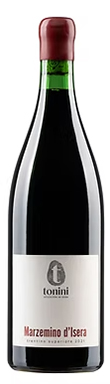
This has the typical pale ruby-violet shade of the variety and the classic sweet red cherries on the nose, with a touch of spicy cinnamon....
2020
Trentino-Alto AdigeItaly
ToniniTrentino Superiore
Gino Pedrotti, Vino Santo, Trentino, Italy 2008
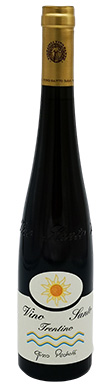
Bright, deep gold shade. On the nose, a parade of aromas of bitter orange, dried apricot, bruised apple, acacia honey, juicy pineapple, with a touch...
2008
Trentino-Alto AdigeItaly
Gino PedrottiTrentino
Francesco Poli, Nobles Vino Santo, Trentino, Italy 2007
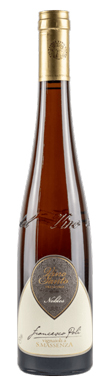
This is a pale gold shade with bright reflections. Very fresh and precise on the nose, with notes of apricot and sultana, baked apple, and...
2007
Trentino-Alto AdigeItaly
Francesco PoliTrentino

Richard Baudains was born and bred in Jersey in the Channel Islands and trained to be a teacher of English as a foreign language. After several years in various foreign climes, Baudains settled down in beautiful Friuli-Venezia Giulia, having had the good fortune to reside previously in the winemaking regions of Piemonte, Tuscany, Liguria and Trentino-Alto Adige. Baudains wrote his first article for Decanter in 1989 and has been a regular contributor on Italian wines ever since. His day job as director of a language school conveniently leaves time for a range of wine-related activities including writing for the Slow wine guide, leading tastings and lecturing in wine journalism at L’Università degli Studi di Scienze Gastronomiche and for the web-based Wine Scholars’ Guild.